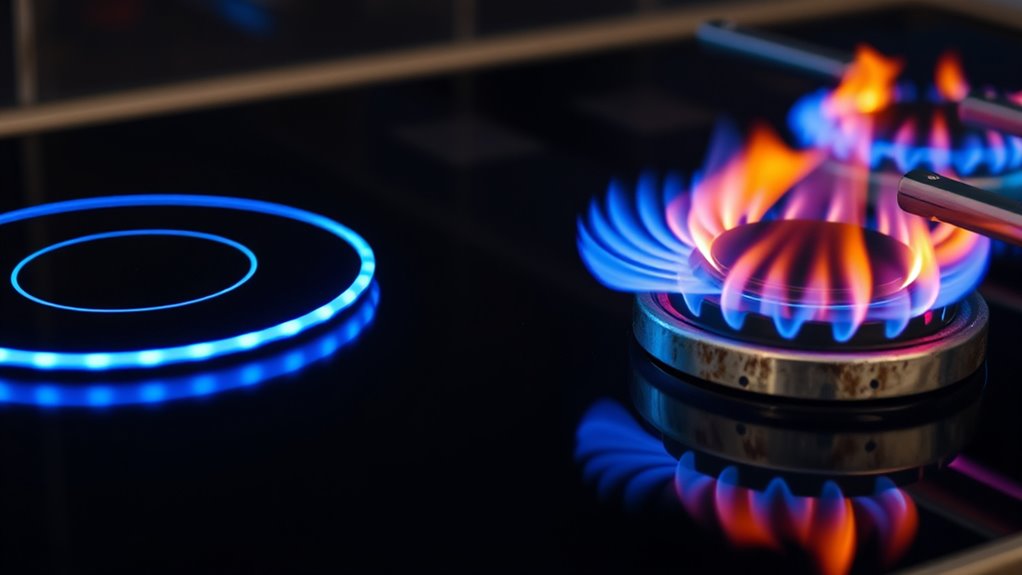

Induction cooktops generate heat using electromagnetic fields that excite molecules in ferromagnetic cookware, resulting in rapid, precise heating. Gas stoves produce heat through combustion, where natural gas or propane burns to create a flame, transferring heat via conduction. Induction is more efficient and offers better control, while gas provides immediate heat with visual feedback. To understand how these methods compare and their underlying science, you’ll find more details ahead.

Get home appliances delivered free with Prime
- Fast, free delivery on millions of items
- Prime Video, Amazon Music and more included
- Member-only deals all year
Key Takeaways
- Induction heats cookware directly through electromagnetic fields, causing molecular vibrations, while gas heats via combustion and flame contact.
- Induction offers high efficiency and rapid response, with heat generated within the cookware, unlike gas which transfers heat through conduction from the flame.
- Gas stoves produce visible flames for immediate control, but involve some energy loss and less precise temperature regulation.
- Induction provides precise temperature adjustment by monitoring electromagnetic induction, whereas gas control relies on flame intensity.
- The electromagnetic heat in induction minimizes heat loss and enhances safety, whereas gas combustion involves combustion gases and potential safety concerns.
induction cooktop with magnetic cookware
As an affiliate, we earn on qualifying purchases.
As an affiliate, we earn on qualifying purchases.
How Induction Cooktops Generate Heat Through Electromagnetic Fields

Induction cooktops generate heat by using electromagnetic fields to directly excite the molecules in the cookware. When you turn on an induction stove, an electric current flows through a coil beneath the cooking surface, creating an oscillating magnetic field. This magnetic field penetrates the ferromagnetic material of compatible pots and pans. As the magnetic field fluctuates, it causes the molecules in the cookware to vibrate rapidly. These molecular vibrations produce heat directly within the cookware itself, rather than through an intermediary like a flame or heating element. Because the heat is generated directly in the cookware, induction cooking heats up quickly and offers precise temperature control. This method is highly efficient, reducing wasted energy and providing fast, responsive cooking performance. High efficiency is one of the key advantages of induction cooking compared to traditional gas methods. Additionally, the direct transfer of heat minimizes heat loss and enhances safety by reducing the risk of accidental burns. The ability to monitor and adjust temperature accurately further improves cooking performance and helps prevent overheating.
The Combustion Process and Heat Transfer in Gas Stoves
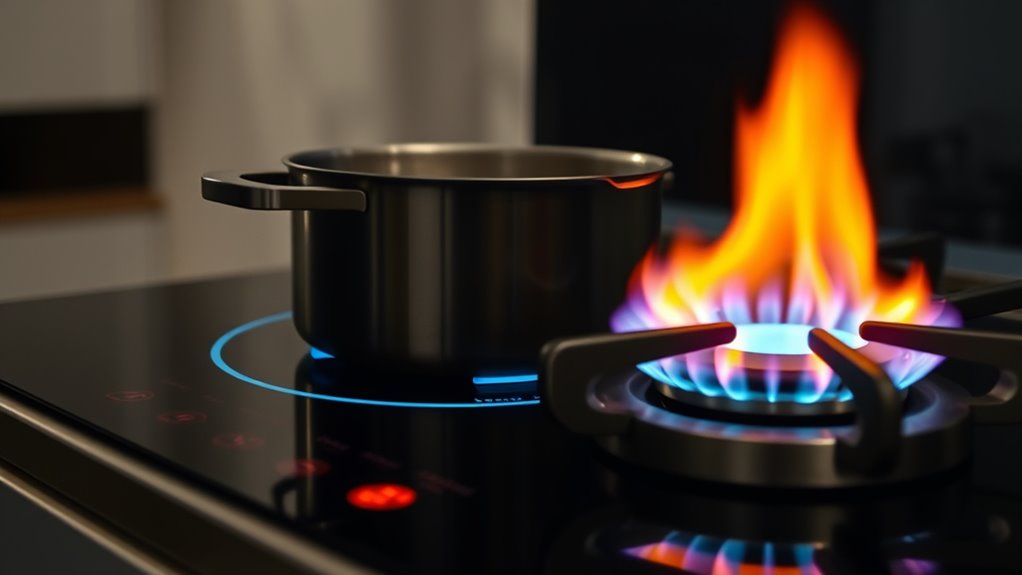
Gas stoves generate heat through a combustion process that involves burning natural gas or propane to produce a flame. When you turn on the stove, a gas valve releases fuel, which mixes with air, creating a combustible mixture. Ignition sparks or a pilot light ignite the mixture, forming a visible flame. This flame directly heats your cookware by transferring thermal energy through conduction. The intensity of the flame controls the heat level, allowing you to cook at high or low temperatures. Heat transfer in gas stoves is efficient because the flame touches the cookware directly, making it responsive to adjustments. However, some heat is lost to the surrounding air, which can affect energy efficiency. This combustion process is fundamental to how gas stoves deliver immediate, controllable heat for cooking.
Frequently Asked Questions
How Energy-Efficient Are Induction Cooktops Compared to Gas Stoves?
You’re wondering how energy-efficient induction cooktops are compared to gas stoves. Induction cooktops are more efficient because they directly transfer heat to your cookware, reducing energy waste. Gas stoves lose a significant amount of heat to the surrounding air. This means you’ll use less energy with induction, saving money and reducing your environmental impact. In short, induction cooktops give you faster, more precise heat with less energy consumption.
What Safety Features Do Induction and Gas Cooktops Offer?
Imagine cooking safely with a flickering flame or a sleek, touch-sensitive surface. You’ll find gas cooktops often come with flame failure devices, shutting off gas if the flame goes out, while induction stoves have automatic shut-offs if no cookware is detected or if overheating. Both offer safety features that protect you from accidental burns, gas leaks, and electrical issues, making your kitchen a safer space to create culinary delights.
Can Induction Cooktops Be Used With Any Cookware?
You might wonder if induction cooktops work with any cookware. The truth is, induction requires ferromagnetic materials like cast iron or some stainless steel. If a magnet sticks to your pot or pan, it’ll likely work on an induction cooktop. Non-magnetic cookware, like glass or aluminum, won’t heat directly. So, check if a magnet adheres to before using your cookware on an induction stove to confirm compatibility.
How Do Temperature Controls Differ Between Induction and Gas Stoves?
Did you know that induction cooktops can change temperature instantly, unlike gas stoves? You’ll find that induction offers precise digital controls, allowing you to set exact temperatures and see adjustments immediately. Gas stoves, on the other hand, rely on manual flame adjustments, which can be less consistent. This means induction is perfect if you want quick, accurate control, while gas offers a more traditional feel with variable heat.
What Environmental Impacts Are Associated With Each Cooking Method?
You should consider the environmental impacts of each cooking method. Gas stoves emit greenhouse gases like methane and CO2, contributing to climate change and air pollution. Induction stoves, on the other hand, are more energy-efficient and produce no direct emissions during use. However, they rely on electricity, which may come from fossil fuels, so their environmental footprint depends on how your electricity is generated.
Conclusion
So, whether you prefer the instant control of induction or the classic sizzle of gas, remember that both methods have their science and charm. Just like two sides of the same coin, they each bring unique heat to your kitchen. The choice ultimately depends on your cooking style and preferences. After all, isn’t it the passion for good food that truly heats up your home? Your perfect stove awaits—choose what sparks your culinary fire!
NFL season / tailgating Picks
team gear
As an affiliate, we earn on qualifying purchases.