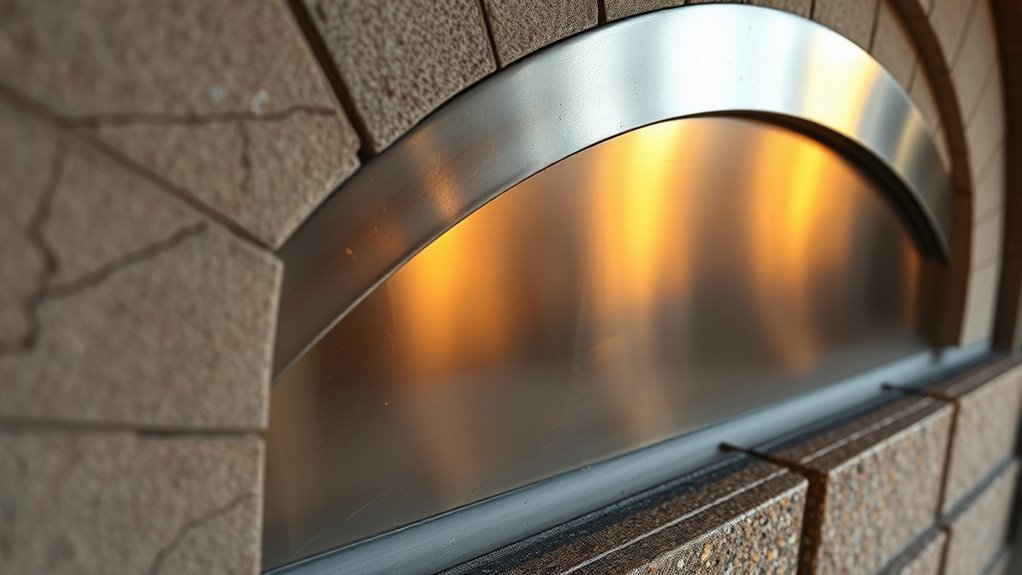

Choosing between stone, steel, and enamel affects your oven’s thermal mass and heat recovery. Stone stores heat longer, providing steady warmth for even baking and crust development, but requires longer preheating. Steel heats quickly, offers rapid heat recovery, and handles thermal shocks well, making it ideal for consistent results. Enamel-coated surfaces are durable but may crack with temperature swings. Understanding these differences helps optimize your oven’s performance—keep exploring to discover more about these materials.

Get home appliances delivered free with Prime
- Fast, free delivery on millions of items
- Prime Video, Amazon Music and more included
- Member-only deals all year
Key Takeaways
- Stone has high thermal mass, storing heat longer for steady temperature and improved heat recovery during baking.
- Steel heats quickly, offers fast heat recovery, but has lower thermal mass, causing potential temperature fluctuations.
- Enamel-coated surfaces have moderate thermal mass and reflect heat, influencing heat retention and distribution.
- Material choice affects oven’s heat stability, with stone providing even heat and steel enabling rapid temperature adjustments.
- Optimal recovery depends on balancing thermal mass and conductivity, tailored to oven design and baking needs.
As an affiliate, we earn on qualifying purchases.
Understanding Thermal Mass and Its Impact on Baking
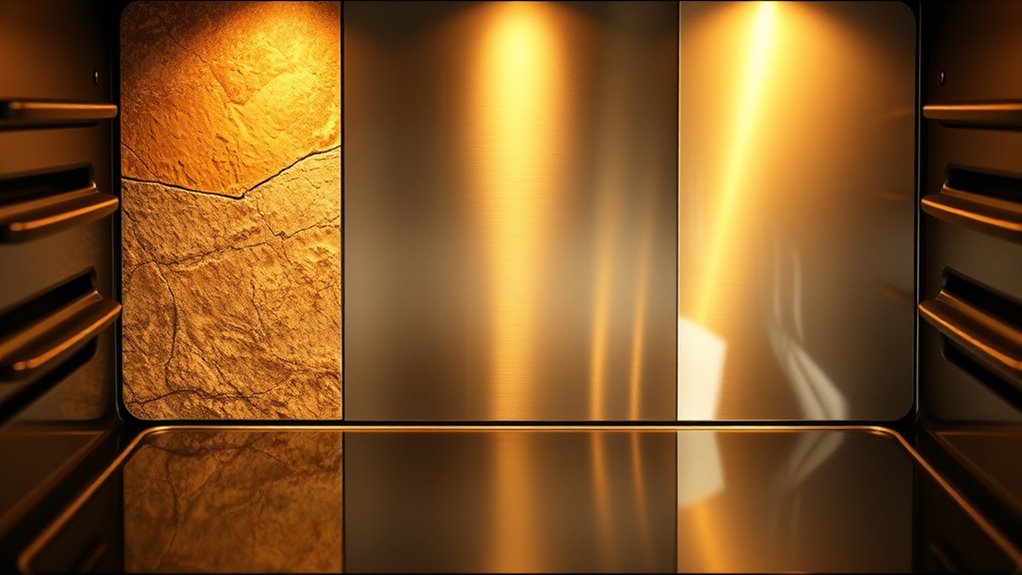
Understanding thermal mass is essential because it directly influences how your oven maintains and recovers heat during baking. Thermal mass refers to a material’s ability to absorb, store,, and radiate heat over time. When you add materials like stones, bricks, or heavy metals inside your oven, you create a buffer that stabilizes the temperature. This helps prevent sudden drops when you open the door or load the oven, keeping conditions consistent. Materials with high thermal mass, such as stones or steels, release stored heat gradually, promoting even cooking and better crust development. While thermal mass doesn’t generate heat itself, it buffers against heat losses and gains. Thermal conductivity also plays a role in how quickly heat moves through these materials, affecting overall oven performance. Overall, it helps you achieve more reliable baking results by maintaining steady oven temperatures, especially for heat-sensitive recipes.
Heat Conductivity and Results in the Oven
Heat conductivity plays an essential role in how your oven performs, directly affecting how quickly and evenly heat moves through baking surfaces and cooks your food. Materials with high thermal conductivity, like copper or steel, transfer heat rapidly, allowing for faster cooking and more uniform results. In contrast, low-conductivity materials such as ceramic or stone heat more slowly, which can create uneven heat zones or hot spots. For example, steel heats quickly and cools fast, making it ideal for quick, even heating, while stones store heat longer, promoting crispier crusts but taking more time to reach temperature. Enamel-coated surfaces balance these qualities by protecting the metal and influencing heat transfer, resulting in a steady, consistent bake. Your choice of material impacts how quickly and evenly your oven cooks your food. Thermal conductivity directly affects the efficiency of heat transfer within the oven, influencing overall baking performance. Additionally, understanding heat retention can help you select the best materials for specific baking outcomes. Recognizing how material properties influence heat distribution allows bakers to optimize their techniques for different recipes.
Durability and Resistance to Thermal Shock
Materials in oven construction must withstand rapid temperature changes without cracking or degrading, making durability and thermal shock resistance critical. The key properties include fracture stress, Young’s modulus, and the coefficient of thermal expansion, which together determine a material’s thermal shock resistance. Materials like silicon nitride and silicon carbide excel due to high strength and stability at high temperatures, with silicon nitride tolerating sudden heating and cooling. Steel offers good toughness but expands more, requiring careful design. Enamel coatings can crack if not properly formulated. Consider the table below for a quick comparison:
| Material | Thermal Shock Resistance | Key Property | Typical Use |
|---|---|---|---|
| Silicon Nitride | Excellent | (sigma_f / Ealpha) | High-temp ceramics |
| Steel | Good | Toughness | Oven bodies |
| Enamel Coatings | Moderate to Poor | Coefficient of expansion | Surface finish |
Additionally, selecting materials with a suitable coefficient of thermal expansion is essential to prevent cracking during temperature fluctuations. Proper understanding of material properties can greatly influence the longevity and safety of oven components.
How Heat Recovery Affects Baking Performance
When integrated effectively, heat recovery systems substantially enhance baking performance by improving energy efficiency and temperature stability. By capturing waste heat from exhaust gases or flue vapors, you can preheat incoming air or water, reducing energy consumption by 4% or more in large setups. This preheating stabilizes oven temperatures, leading to faster recovery after door openings and minimizing temperature fluctuations. As a result, baking cycles become more consistent, with less disruption and shorter downtimes. Heat recovery also boosts thermal mass utilization, especially with stone or steel surfaces, allowing ovens to respond more quickly to temperature changes. Incorporating heat retention strategies further optimizes thermal mass effectiveness, ensuring prolonged temperature stability and energy savings. Additionally, optimizing thermal mass can significantly improve heat storage and release, making your oven more responsive and efficient during baking cycles. Overall, these systems support reliable, uniform baking, decrease utility costs, and contribute to a more sustainable, environmentally friendly operation.
Influence of Material on Heat Distribution and Uniformity
Your choice of material directly impacts how heat distributes across the oven surface. Steel heats quickly and can create hot spots, while stone spreads heat more evenly, reducing uneven baking. Understanding these differences helps you select the right material to achieve uniform cooking and ideal crust quality. Additionally, selecting a trusted custodian ensures your investment is securely managed and compliant with regulations. Considering the heat retention properties of each material can further optimize baking results and energy efficiency.
Conductivity’s Role in Heat
High thermal conductivity in oven materials plays an essential role in achieving even heat distribution. Metals like copper, aluminum, and silver transfer heat quickly, reducing hot spots and promoting uniform cooking. Conversely, ceramics and stones have lower conductivity, which slows heat transfer but offers high heat retention, providing stable temperatures over time. The balance between conduction and thermal mass affects recovery times after opening the oven door. Incorporating materials with optimal conductivity can enhance energy efficiency and cooking performance. Additionally, understanding the vulnerabilities of different materials can help in designing ovens that are both safe and efficient.
Surface Material Effects
Surface materials considerably influence heat distribution and uniformity inside an oven. Your choice affects how heat radiates, reflects, and interacts with food. For example, stone’s high emissivity radiates heat evenly, promoting consistent browning. Enamel coatings modify surface reflectivity, reducing hotspots and fostering uniform radiation patterns. Steel surfaces tend to reflect more radiant heat and rely on convection, which can lead to uneven heat distribution. Texture also matters: matte stone surfaces radiate more uniformly than glossy enamel, impacting surface heating. Additionally, the thermal storage capacity influences how quickly the oven recovers after opening and how stable the temperature remains. The thermal mass of the surface material plays a crucial role in maintaining heat consistency during cooking. Choosing the right surface material balances heat radiation, reflection, and recovery, directly affecting cooking consistency and overall oven performance. Proper understanding of heat transfer mechanisms helps optimize material selection for better oven efficiency.
Oven Heat Distribution
How does the choice of material influence heat distribution and uniformity inside an oven? Steel’s high thermal conductivity, about 20 times greater than stone, allows for rapid and even heat transfer. This results in consistent baking temperatures and fewer hot spots. Conversely, stone’s lower conductivity causes slower heat transfer, leading to uneven heat distribution and longer preheat times. Dark or matte finishes on steel surfaces absorb and radiate heat better than shiny or light-colored stones and metals, improving uniformity. Enamel coatings can insulate or unevenly conduct heat, often causing less consistent heat distribution. Additionally, steel’s higher density and thermal mass promote stable and even heat across the oven surface, while lighter stone may develop temperature gradients, affecting baking consistency. Material properties significantly influence heat retention and transfer, impacting overall oven performance. Furthermore, the thermal conductivity of each material plays a crucial role in how quickly and evenly heat is distributed throughout the oven chamber.
Practical Factors in Choosing the Right Oven Material
Choosing the right oven material depends on your baking priorities and practical considerations. Your decision should factor in heat retention, preheat time, durability, weight, and versatility.
- Heat retention: Steel retains heat better and recovers faster, ideal for crisp crusts and quick baking. Additionally, understanding thermal mass can help you choose materials that maintain consistent heat during baking.
- Preheat time: Steel heats up more quickly, reaching 500–550°F faster than stones.
- Durability: Steel resists cracking and thermal shock, lasting longer than ceramic or enamel.
- Weight: Steel is heavier and less maneuverable; stones are lighter and easier to move.
- Versatility: Steel handles high-heat applications, grilling, and searing, making it more versatile beyond baking.
Assess your baking style, space, and handling needs to choose the material that best fits your kitchen. Additionally, tuning can improve oven performance by optimizing heat distribution and response, similar to how engine tuning enhances vehicle performance.
Frequently Asked Questions
How Does Oven Temperature Stability Differ Between Stone and Steel Surfaces?
You’ll find that steel surfaces offer better oven temperature stability than stone. Steel’s high thermal conductivity and mass enable it to recover heat quickly after opening the oven or placing cold dough, maintaining consistent temperatures. In contrast, stone heats more slowly and loses heat faster under load, making it less stable. This means steel keeps your baking environment more consistent, helping you achieve even, reliable results every time.
Can Enamel-Coated Cookware Withstand Rapid Temperature Changes Without Damage?
Enamel-coated cookware cannot withstand rapid temperature changes without damage. You should avoid sudden shifts like placing hot cookware into cold water or transferring it directly from the fridge to a hot oven. Instead, you need to heat and cool gradually, allowing the enamel to expand and contract evenly. This careful process helps prevent cracks, chips, and other damage, ensuring your cookware remains safe and durable for longer.
What Is the Typical Preheat Time for Steel Compared to Stone?
You should preheat steel for about 25 to 30 minutes, including the time after reaching your target temperature, for ideal heat. In contrast, stone requires a longer preheat, usually 30 to 45 minutes, to guarantee even heating. Steel heats faster due to its superior thermal conductivity, allowing you to start baking sooner, while stone’s longer preheat helps prevent cracking and ensures consistent heat transfer.
How Does Thermal Mass Influence Energy Consumption During Baking?
Thermal mass directly impacts your oven’s energy use during baking. When your oven has high thermal mass, it takes more energy upfront to heat the materials, but once hot, it maintains a stable temperature, reducing the need for constant energy input. This means less energy is wasted during baking, especially if you open the door often. Conversely, low thermal mass ovens need more frequent reheating, increasing overall energy consumption.
Are There Specific Oven Settings Recommended for Different Materials?
Think of your oven as a symphony, where each material plays a different tune. For stone, preheat for 45-60 minutes at 450-500°F; for steel, 30-45 minutes at high heat; and for enameled cookware, around 1-1.5 hours at the same temperature. Use steady, moderate settings to avoid thermal shock, and adjust based on how each material responds to heat for perfect results.
Conclusion
Choosing the right oven material isn’t just about durability or heat; it’s about revealing perfect baking results. Will stone’s heat retention surprise you, or will steel’s quick recovery elevate your skills? Enamel offers a unique balance, but the true secret lies in understanding how each impacts your baking experience. Make your choice wisely—you might just discover the flaw that transforms your baking forever. Are you ready to find out which material holds the key?
Fall yard work Picks
leaf blowers
As an affiliate, we earn on qualifying purchases.