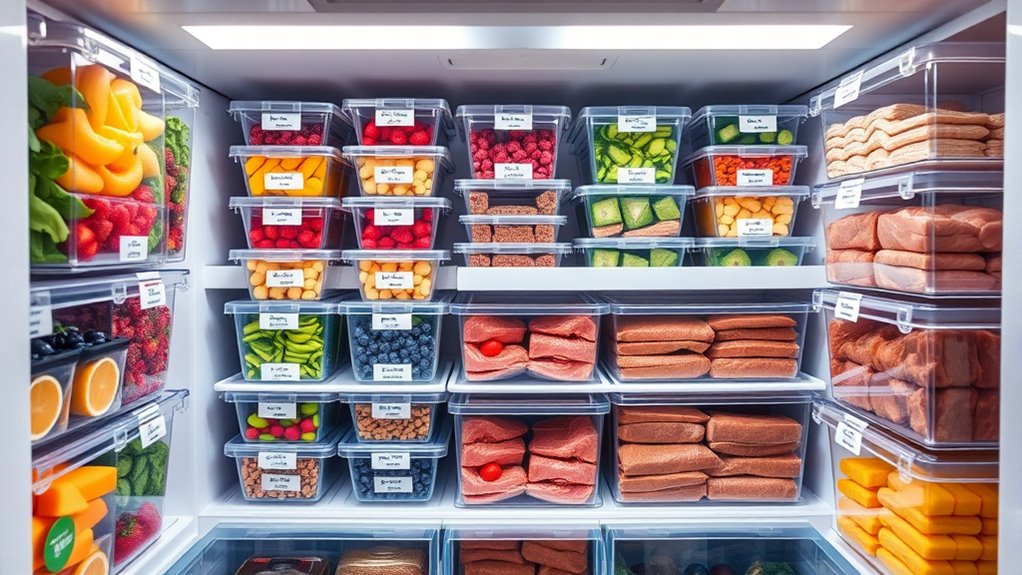
To reduce food waste through freezer organization, start by creating designated zones for different food types like vegetables, meats, and leftovers. Label all items with dates to track freshness and regularly audit your freezer to discard spoiled or outdated items. Prepping meals in advance and using pre-portioned servings help prevent leftovers from sitting unused. Organizing your freezer not only saves space but also makes it easier to use older items first. Keep exploring for more tips to optimize your waste reduction.
Key Takeaways
- Implement meal prep to plan usage and prevent leftovers from sitting unused.
- Label all frozen items with date and contents to track freshness and prioritize older foods.
- Organize the freezer into designated zones for different food categories, improving visibility and access.
- Conduct regular content audits to discard spoiled items and rotate older foods to the front.
- Use organization tools to maximize space, maintain quality, and reduce food waste efficiently.
Have you ever wondered how much food goes to waste simply because it’s lost or forgotten in the back of your freezer? It’s a common problem, but with some simple organization strategies, you can cut down on unnecessary waste and save money. One effective way is to incorporate meal prep into your routine. When you prepare meals ahead of time, you create a clear plan for what needs to be used up first, which helps prevent leftovers from languishing in the freezer for months. Plus, pre-portioned meals make it easier to grab exactly what you need for busy days, reducing impulse buys and overlooked leftovers.
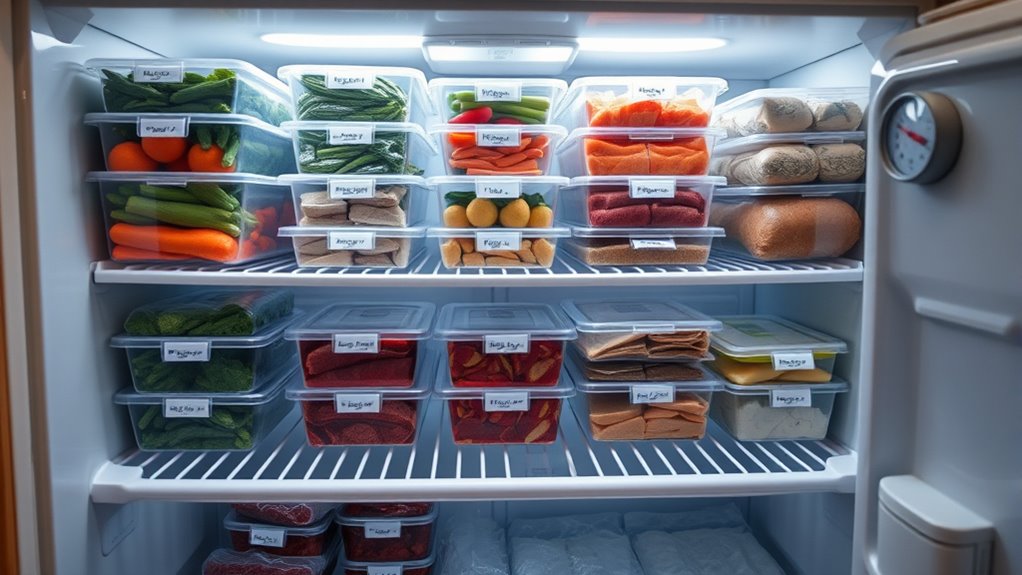
Another key to reducing food waste is adopting proper labeling techniques. When you freeze leftovers, ingredients, or prepped meals, always label them with the date and contents. Use waterproof markers on freezer-safe containers or invest in labels that stick securely and are easy to read. This way, you’ll know exactly how long items have been stored and can prioritize using older items first. It’s a simple habit that prevents food from getting buried in the back and forgotten, which often leads to moldy or freezer-burned food that you’d otherwise toss out.
Organizing your freezer into designated zones can make a huge difference. Allocate specific shelves or bins for different food categories—vegetables, meats, cooked meals, or baked goods. When you know where everything is, it becomes easier to see at a glance what needs to be used soon. Keeping similar items together minimizes the chance of losing track of stored food and helps you plan meals around what’s already available. This kind of organization also makes meal prep more efficient because you don’t waste time searching through piles of frozen items.
To further improve, regularly audit your freezer contents. Take a few minutes every month to check what’s inside and discard anything past its prime. Incorporate a system to rotate older items to the front, so they get used before newer ones. This practice, combined with consistent labeling, keeps your freezer tidy and your food fresh longer. Additionally, using freezer organization tools can help maximize space and improve visibility of stored items. By planning your meals, labeling everything clearly, and organizing logically, you’re not just reducing waste—you’re also making your weekly cooking smoother and more economical. With these habits, you’ll find that your freezer becomes a tool for efficiency rather than a graveyard for forgotten food.

Heyuzb 8 PACK Freezer Organizer Bins Fridge Organizers and Storage Stackable Refrigerator Organizers Bins with Side Handles Clear Storage Bins for Pantry, Under Sink, Kitchen Cabinet
HIGH QUALITY FREEZER ORGANIZERS- made of the food-grade PET material. In addition, we have increased the weight by…
As an affiliate, we earn on qualifying purchases.
As an affiliate, we earn on qualifying purchases.
Frequently Asked Questions
How Often Should I Defrost My Freezer to Prevent Food Spoilage?
You should defrost your freezer at least once a year to maintain ideal freezer maintenance and energy efficiency. Regular defrosting prevents ice buildup, which can cause the freezer to work harder and consume more energy. If you notice significant ice accumulation more often, it’s a sign to defrost sooner. Keeping the freezer clean and well-maintained ensures your food stays fresh longer and helps save on energy costs.
What Are the Best Containers for Freezing Different Types of Food?
You should choose airtight containers for freezing liquids, leftovers, and small items to prevent freezer burn and keep food fresh. For fruits, vegetables, and bulk items, use stackable storage containers to maximize space and keep everything organized. Glass or BPA-free plastic containers work well, as they’re durable and easy to label. Always guarantee containers seal tightly to maintain freshness and make it simple to find what you need later.
How Can I Tell if Frozen Food Has Gone Bad?
Oh, the thrill of discovering your once-frozen treasure has turned into a frosty horror show! Check for freezer burn—dry, discolored patches or ice crystals—those are bad signs. Also, trust your nose; if it smells off or rancid, food safety’s gone awry. If the texture feels slimy or the flavor’s weird, toss it. Better safe than sorry, because eating spoiled frozen food isn’t worth risking illness.
Is There an Ideal Temperature Setting for My Freezer?
You should set your freezer to a proper temperature of 0°F (-18°C) for maximum food preservation. Regular freezer maintenance helps maintain this temperature and prevents items from thawing or freezing improperly. Use a thermometer to monitor the temperature consistently, and adjust the settings as needed. Keeping your freezer at the right temperature not only reduces food waste but also ensures your frozen foods stay safe and fresh longer.
How Can I Organize My Freezer for Quick Access and Efficiency?
Imagine your freezer as a well-oiled machine—organized for efficiency. You should use labeling techniques to clearly mark food items and their dates, making quick identification a breeze. Implement storage rotation so older items stay accessible, preventing waste. Place frequently used items at the front and less-used ones at the back. This method keeps your freezer tidy, saves time, and guarantees you always grab what you need without rummaging through chaos.

1000 PCS Removable Freezer Labels with Dispenser – 1" x 3" Food Labels for Containers Freezer Tape, Easy to Peel Off, No Residue (Blue+ Red)
【Package Included】You will get 2 rolls of red and blue food labels, 500 labels per roll, 1"x3", a…
As an affiliate, we earn on qualifying purchases.
As an affiliate, we earn on qualifying purchases.
Conclusion
By giving your freezer a little extra care, you gently let go of unnecessary clutter and make space for what truly matters. With smarter organization, you’ll naturally find yourself saving more and wasting less—like discovering hidden treasures in your own kitchen. Embrace these small changes, and you’ll enjoy fresher food and a lighter conscience. After all, a well-kept freezer isn’t just about storage; it’s a quiet step toward a more sustainable, mindful lifestyle.

50 Pack (100-Piece) 32 oz Meal Prep Containers Reusable with Lids 3-Compartment, To Go Take Out Plastic Food Storage Containers, Sturdy Leakproof Food Safe, Microwave Freezer Dishwasher Safe, Black
【Sturdy & Reusable】Made of premium thick plastic and strong construction, Dealusy meal prep containers with lids 3 Compartment…
As an affiliate, we earn on qualifying purchases.
As an affiliate, we earn on qualifying purchases.

Dealusy 50 Pack (100-Piece) 24 oz Meal Prep Containers Reusable with Lids, Sturdy Leakproof & Food Safe, Microwave, Freezer, Dishwasher Safe Prep Containers, To Go Take Out Plastic Food Storage
【Sturdy & Reusable】Made of premium thick plastic and strong construction, Dealusy meal prep containers with lids ensure no…
As an affiliate, we earn on qualifying purchases.
As an affiliate, we earn on qualifying purchases.