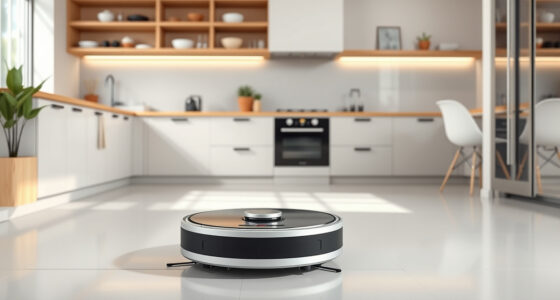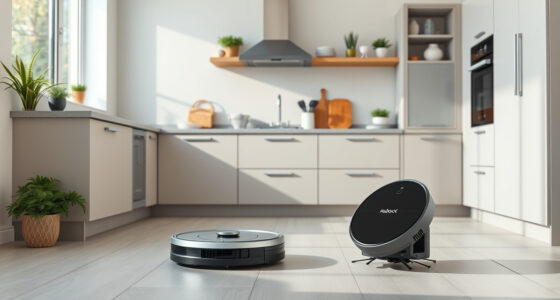
Integrating renewable energy sources with smart appliances allows you to optimize your home’s energy use by coordinating with solar, wind, and storage systems. Your devices can automatically respond to real-time data, run when renewable generation is high, and store excess energy for later use. This setup helps reduce reliance on the grid, lowers bills, and promotes sustainability. Keep exploring to discover how these smart systems can transform your home’s energy efficiency even further.

Get home appliances delivered free — and shop member deals
- Fast, free delivery on millions of items
- Access to Prime Big Deal Days deals on October 6–7
- Prime Video, Amazon Music and more included
Key Takeaways
- Smart appliances communicate with home energy systems to optimize renewable energy consumption and storage.
- Integration with battery storage allows appliances to use excess renewable energy efficiently.
- Real-time data enables appliances to adjust operations based on renewable generation and grid signals.
- Automation coordinates appliance activity with renewable supply, reducing waste and enhancing efficiency.
- Grid integration supports demand response, net metering, and balancing load for a sustainable home energy ecosystem.
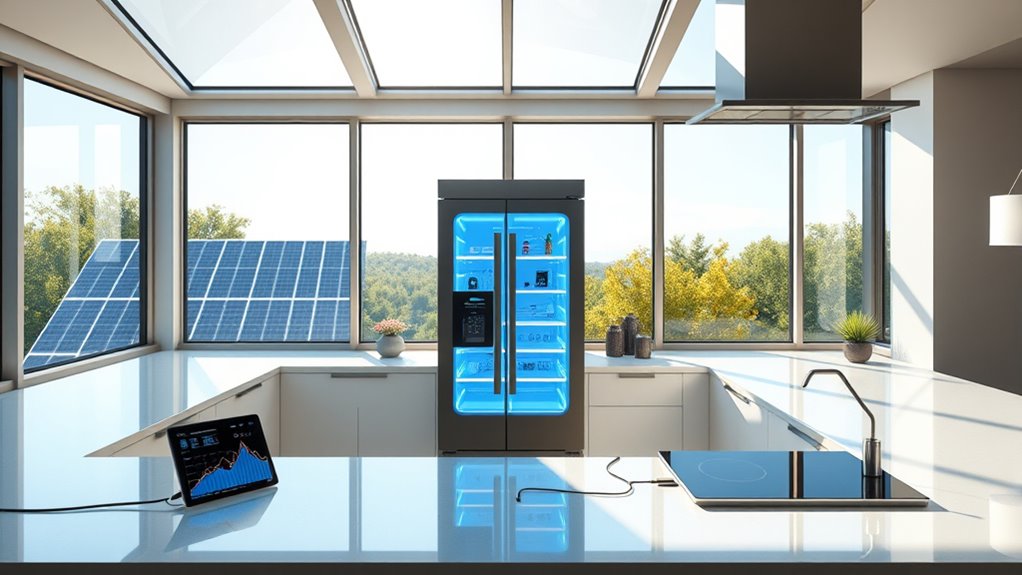
As renewable energy sources like solar and wind become more accessible, smart appliances are transforming the way you use and manage power at home. These appliances don’t just perform tasks; they also communicate with your energy system, optimizing when and how they draw power. One vital advantage is their ability to seamlessly integrate with battery storage systems, allowing you to store excess energy generated during sunny or windy periods. Instead of letting surplus power go to waste, your smart appliances coordinate with your battery storage, making sure that you can use stored energy during cloudy days or at night. This combination maximizes your renewable energy investment, reducing reliance on the grid and lowering energy bills. Understanding energy efficiency is essential for maximizing the benefits of smart appliance integration with renewable sources.
Grid integration plays a key role in making your home energy system more resilient and efficient. Smart appliances can respond to signals from the grid, such as demand response events or price fluctuations, to operate during off-peak hours when electricity is cheaper or cleaner. By doing so, they help balance the overall load on the grid, preventing outages and enhancing stability. When your appliances are integrated with grid management systems, you gain the flexibility to contribute excess energy back to the grid through mechanisms like net metering. This not only benefits you financially but also supports the broader shift to renewable energy sources, making your home part of a sustainable energy network.
With smart appliances, you’re empowered to create a more autonomous energy ecosystem. These devices can automatically adjust their operation based on real-time data from your solar panels, wind turbines, or local energy market. For example, your washing machine or dishwasher might run when solar production peaks, or your HVAC system could modulate its activity to align with periods of high renewable generation. This level of automation reduces waste, enhances efficiency, and guarantees you’re making the most of your renewable resources. It also means fewer disruptions and a smoother energy flow, as your system intelligently responds to fluctuations in renewable supply and grid demands.
smart home solar energy management system
As an affiliate, we earn on qualifying purchases.
As an affiliate, we earn on qualifying purchases.
Frequently Asked Questions
How Do Smart Appliances Communicate With Renewable Energy Sources?
You can see smart appliances communicate with renewable energy sources through wireless protocols like Wi-Fi or Zigbee, allowing seamless data exchange. They send and receive real-time information on energy availability and usage. To keep this data secure, they use data encryption, safeguarding your system from unauthorized access. This communication enables your appliances to optimize energy consumption, automatically adjusting based on renewable energy supply, making your home more efficient and eco-friendly.
What Are the Cost Implications of Integrating Renewable Energy With Smart Appliances?
The initial installation of renewable energy systems with smart appliances can be costly, but it often leads to long-term savings on your energy bills. You might face expenses for equipment, integration, and setup, but over time, reduced energy costs and potential incentives can offset these costs. The investment boosts your home’s efficiency, helping you save money in the long run while supporting sustainable energy use.
How Secure Is Data Transmission Between Smart Appliances and Energy Sources?
You should know that data transmission between smart appliances and energy sources is generally secure, but cybersecurity threats can pose risks. Manufacturers use data encryption to protect your information, reducing the chances of hacking or unauthorized access. However, stay vigilant by regularly updating device firmware and using strong, unique passwords. This way, you help maintain the security of your smart energy system and protect your personal data from potential cyber threats.
Can Existing Appliances Be Upgraded to Work With Renewable Energy Systems?
Yes, you can upgrade existing appliances through appliance retrofitting to work with renewable energy systems. Retrofitting improves energy efficiency and allows your appliances to better utilize renewable sources like solar or wind power. You might need to install smart controllers or energy management systems, which help optimize energy use. Consulting a professional ensures compatibility and maximizes the benefits of renewable energy integration, making your appliances more efficient and eco-friendly.
What Are the Maintenance Requirements for Integrated Renewable and Smart Appliance Systems?
Think of your system as a living garden; to thrive, it needs regular care. You should perform routine inspections to catch issues early and guarantee everything runs smoothly. Component replacements might be needed over time to keep up with technological advances and wear. Maintaining this harmony ensures your renewable energy and smart appliances operate efficiently, saving energy and extending their lifespan. Consistent upkeep is key to a resilient, eco-friendly home.
Conclusion
By integrating renewable energy with smart appliances, you can cut your carbon footprint and save money. Did you know that homes equipped with smart energy management can reduce energy costs by up to 30%? This seamless combination not only makes your daily routine more efficient but also supports a sustainable future. Embrace this technology today, and you’ll be part of the solution, helping to create a cleaner, greener planet for everyone.
NFL season / tailgating Picks
team gear
As an affiliate, we earn on qualifying purchases.