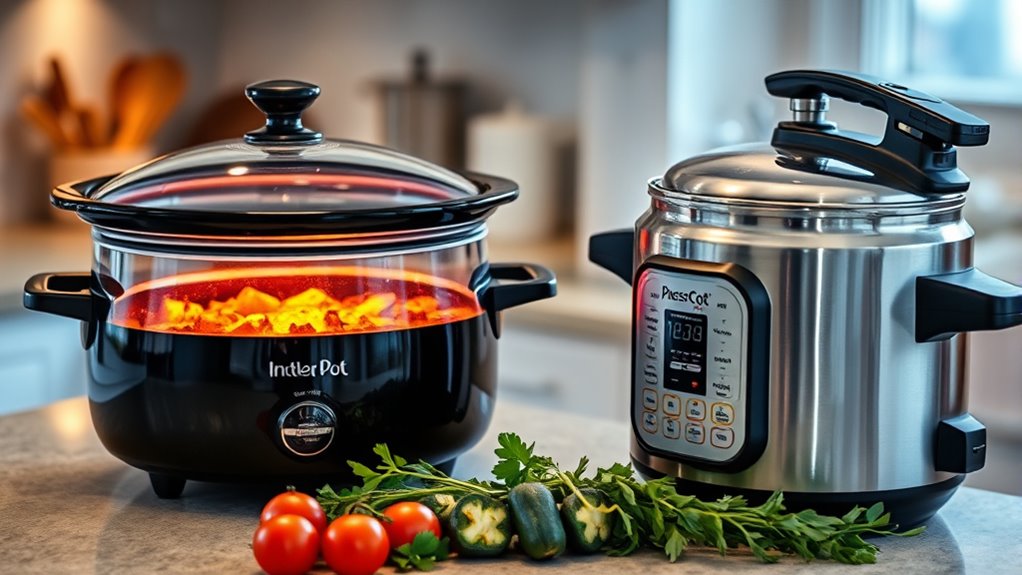

Using energy-efficient techniques like slow cooking and pressure cooking can help you save energy, cut costs, and lower your environmental impact. Slow cookers use low, steady heat to prepare meals over several hours, while pressure cookers trap steam to cook food faster. Both methods reduce overall energy use compared to conventional stovetop or oven cooking. Keep exploring to discover how these techniques can make your kitchen more efficient and eco-friendly.

Get home appliances delivered free with Prime
- Fast, free delivery on millions of items
- Prime Video, Amazon Music and more included
- Member-only deals all year
Key Takeaways
- Slow cooking uses low, steady heat over extended periods, consuming less energy than traditional stovetop or oven methods.
- Pressure cooking traps steam to cook food faster, significantly reducing overall cooking time and energy use.
- Both techniques enable batch cooking, maximizing energy efficiency by preparing multiple meals simultaneously.
- Slow cookers and pressure cookers promote even heat distribution, reducing the need for higher temperatures.
- Combining these methods with meal prep strategies minimizes stove and oven usage, further saving energy.
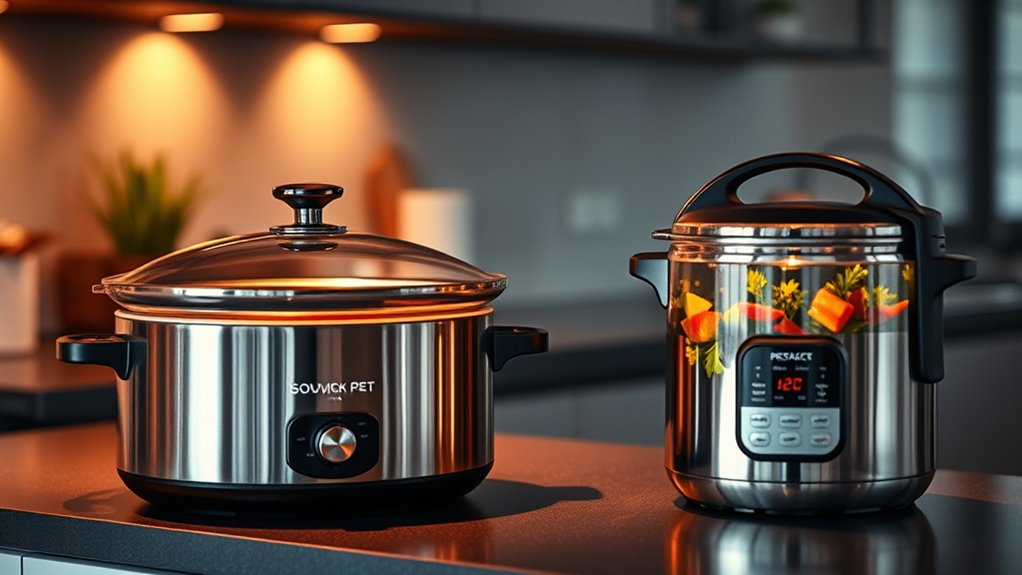
Cooking efficiently not only saves energy but also reduces your utility bills and environmental impact. When you focus on smart techniques like meal prep and choosing the right cookware, you can make a substantial difference in your kitchen’s energy consumption. Proper meal prep allows you to batch cook multiple meals at once, minimizing the number of times you turn on your stove or oven. This approach guarantees you’re using energy more effectively, as you can cook larger quantities in one session rather than repeatedly heating your appliances. Additionally, selecting the right cookware plays an essential role. Opt for pots and pans that distribute heat evenly and are designed for energy-efficient cooking, such as those made from materials like cast iron or aluminum with good heat conduction. Using the right cookware also means cooking at lower temperatures because the heat transfer is more efficient, saving you energy in the long run.
Slow cooking is an excellent method for energy-efficient meal prep. By using a slow cooker, you take advantage of low, steady heat over an extended period. This method uses less energy than traditional stovetop or oven cooking because it maintains a consistent temperature without the need for constant attention. Plus, slow cookers are perfect for preparing stews, soups, and even some desserts, so you can prepare meals in advance and have them ready when you need them. They’re especially helpful when you want to cook large batches, which can be stored for future meals. This way, you reduce the frequency of cooking sessions, saving energy and time.
Pressure cooking is another powerful technique for maximizing energy efficiency. It uses a sealed vessel to trap steam, which raises the internal pressure and cooks food faster. This considerably cuts down cook times compared to conventional methods. Because pressure cookers reduce cooking duration, they consume less energy overall. They’re ideal for preparing tough cuts of meat, beans, grains, and vegetables quickly, helping you save both time and energy. When combined with good meal prep habits—like preparing ingredients in advance—you can streamline your cooking process even further.
In essence, by integrating these techniques—timely meal prep, careful cookware selection, slow cooking, and pressure cooking—you optimize your kitchen’s energy use. These strategies not only help you cut down on utility bills but also lessen your environmental footprint. The key is to plan ahead, choose the appropriate cookware, and embrace methods that cook food faster and more efficiently. Using energy-efficient cookware can further enhance your savings. In doing so, you’ll enjoy delicious meals without wasting energy, making your cooking habits more sustainable and budget-friendly.
As an affiliate, we earn on qualifying purchases.
Frequently Asked Questions
How Long Do Slow Cookers Typically Last With Daily Use?
A slow cooker typically lasts about 5 to 10 years with daily use, depending on its durability and how well you sustain it. To extend its lifespan, follow maintenance tips like cleaning the insert regularly, avoiding overfilling, and inspecting the cord for damage. Proper care ensures your appliance remains reliable, making it a worthwhile investment in energy-efficient cooking.
Can Pressure Cooking Destroy Nutrients in Vegetables?
Think of pressure cooking as a swift, intense dance that can sometimes lead to nutrient loss if you’re not careful. While it preserves some nutrients well, overly extended or high-pressure cooking can break down delicate vitamins, especially in vegetables. To maximize nutrient preservation, choose ideal cooking times and methods, like quick pressure releases, ensuring your veggies stay vibrant and nutritious, not just perfectly cooked.
What Safety Precautions Are Essential for Pressure Cookers?
You should always follow safety precautions when using a pressure cooker. Make sure you perform a proper pressure release, either natural or quick, to prevent accidents. Regularly check and replace the gasket to maintain a good seal, avoiding leaks or explosions. Never overfill the cooker, and always follow the manufacturer’s instructions. Staying attentive to these safety steps helps prevent mishaps and keeps your cooking experience safe and efficient.
Are There Energy-Efficient Alternatives to Traditional Slow Cookers?
Yes, you can save energy with alternatives like solar ovens and electric pressure cookers. Solar ovens harness the sun’s heat, reducing electricity use and delivering delicious meals sustainably. Electric pressure cookers cook quickly, conserving energy and time, making them a smart, space-saving solution. By switching to these savvy, solar or electric options, you streamline your cooking, slash your energy bills, and support a more sustainable, eco-friendly environment.
How Do I Choose the Right Size for My Pressure Cooker?
You should choose a pressure cooker size based on your typical cooking volume and capacity needs. If you often cook for a family or batch meals, opt for a larger pressure cooker with higher capacity. For smaller meals or singles, a smaller size works efficiently. Consider your typical recipes and the quantity you usually prepare to guarantee the pressure cooker’s capacity matches your cooking habits, saving energy and time.
Conclusion
Think of your kitchen as a garden, where each cooking method is a seed you choose wisely. By embracing energy-efficient techniques like slow and pressure cooking, you’re nurturing a garden that blooms with savings and sustainability. These methods are your tending hands, guiding your energy and resources gently but effectively. With each meal prepared thoughtfully, you’re cultivating a greener, more mindful world—one delicious, energy-smart dish at a time.
NFL season / tailgating Picks
team gear
As an affiliate, we earn on qualifying purchases.