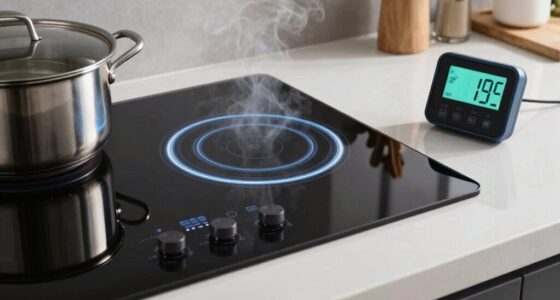

Induction cooking offers many environmental benefits that can directly impact your household. It’s highly energy-efficient, converting more electricity into heat and reducing waste, which lowers your energy bills. Since it relies on electricity, especially from renewable sources, it produces fewer greenhouse gases and air pollutants than gas stoves. Additionally, it eliminates indoor air pollution from combustion byproducts, creating a healthier home environment. To discover how induction can help create a greener kitchen, keep exploring these innovative benefits.
Key Takeaways
- Induction cooking is highly energy-efficient, reducing overall electricity consumption and lowering household energy bills.
- It produces fewer greenhouse gases and air pollutants compared to gas stoves, helping mitigate climate change.
- Since it uses electricity, especially from renewable sources, it minimizes indoor air pollution and emissions.
- Induction appliances are durable and long-lasting, decreasing waste and resource use in manufacturing and disposal.
- Less heat generation in the kitchen reduces cooling needs and conserves energy for a more sustainable household.

Induction cooking offers several environmental advantages that can help reduce your household’s carbon footprint. One of the most significant benefits is its high energy efficiency. Unlike traditional gas or electric stoves, induction cooktops heat cookware directly through electromagnetic fields, which means less energy is wasted during the cooking process. This direct transfer of heat results in faster cooking times and less overall energy consumption, making it a smarter choice for your household and the environment. Because induction devices convert more of the electrical energy into heat, you use less power to achieve the same cooking results, thereby reducing your energy bills and your household’s reliance on fossil fuels.
In addition to energy efficiency, induction cooking contributes to pollution reduction. Since it relies on electricity, especially when powered by renewable energy sources like wind or solar, it produces fewer emissions compared to gas stoves, which burn natural gas and release greenhouse gases directly into the atmosphere. By choosing induction, you’re helping to lower the amount of air pollutants and carbon dioxide emissions associated with cooking. This reduction in pollution not only benefits the environment but also improves indoor air quality, as it eliminates combustion byproducts like nitrogen oxides and carbon monoxide that are common with gas appliances. Over time, adopting induction can considerably decrease your household’s contribution to climate change and air pollution, aligning your cooking habits with a more sustainable lifestyle.
Another environmental advantage is that induction cooktops tend to have a longer lifespan and are easier to maintain than traditional stoves. Since they have fewer moving parts and are built with durable materials, they’re less likely to break down or require replacements. This durability means fewer appliances end up in landfills, reducing waste and conserving resources used in manufacturing new units. Furthermore, because induction cooktops heat only the cookware and not the surrounding air or surface, they generate less heat in your kitchen. This lower heat output can lead to reduced energy consumption for cooling your home during warmer months, further lessening your overall environmental impact. Additionally, the energy efficiency of induction cooking makes it a more sustainable choice compared to other cooking methods.
Frequently Asked Questions
Can Induction Cooktops Be Used With All Types of Cookware?
Induction cooktops aren’t compatible with all cookware. You need cookware with the right material requirements, typically ferrous metals like cast iron or certain stainless steels, for effective Cookware compatibility. To check if your pots and pans work, see if a magnet sticks to their base. If it does, you’re good to go. Otherwise, you’ll need to switch to suitable cookware to enjoy the efficiency and environmental benefits of induction cooking.
How Safe Are Induction Cooktops for Children and Pets?
Induction cooktops are generally safe for children and pets, as studies show they produce no harmful electromagnetic radiation. You can rest easy knowing they offer child safety features like automatic shut-off and touch controls that prevent accidental activation. For pet safety, the cooktop’s surface stays cool, reducing burn risks. Always supervise around any cooking appliance, but induction cooktops provide a safer environment for your loved ones.
Do Induction Cooktops Emit Any Harmful Electromagnetic Fields?
Induction cooktops do emit electromagnetic fields (EMF), but they’re generally considered safe for everyday use. Electromagnetic safety standards ensure EMF exposure stays within safe limits, reducing health risks. When you use an induction cooktop correctly, it minimizes your EMF exposure, especially since the fields are localized and diminish rapidly with distance. If you’re concerned, using cookware properly and maintaining a safe distance can further lessen any potential electromagnetic safety risks.
Are Induction Stoves Compatible With Existing Kitchen Setups?
Like fitting puzzle pieces together seamlessly, induction stoves are generally compatible with most existing kitchen setups, making them easy to incorporate during your kitchen remodeling. They work with standard electrical outlets, and many models fit common cutouts, guaranteeing appliance compatibility. Before installing, double-check your electrical system and cabinet space to guarantee a smooth shift. This way, you can enjoy modern cooking without overhauling your entire kitchen.
What Is the Typical Lifespan of an Induction Cooktop?
You can expect your induction cooktop to last around 10 to 15 years with proper care. Its durability depends on quality and usage, but generally, it’s quite resilient. To maximize its lifespan, follow the manufacturer’s maintenance requirements, like keeping the surface clean and avoiding impacts. Regularly check for any signs of wear or damage, and address issues promptly to guarantee ideal performance and extended cooktop durability.
Conclusion
By choosing induction cooking, you reduce energy consumption, lower your carbon footprint, and enjoy faster, more efficient meals. You cut down on wasted heat, minimize environmental impact, and embrace a cleaner kitchen. You save energy, save money, and support a healthier planet. Induction cooking isn’t just convenient; it’s a smart, sustainable choice that benefits you and the environment alike. Make the switch today and cook with purpose, efficiency, and care for our planet’s future.