Proper ventilation helps you remove smoke, steam, and odors from your kitchen by creating a steady airflow that pulls contaminated air outside. Installing a powerful exhaust fan directly above your stove and maintaining it guarantees smoke doesn’t linger. Opening windows and keeping filters clean also boost air quality. Good ventilation helps maintain a safe, comfortable space and prevents buildup of stubborn smells. To learn how to optimize your kitchen’s ventilation, keep exploring these simple yet effective tips.
Key Takeaways
- Effective exhaust fans directly remove smoke and odors from the kitchen, improving air quality during cooking.
- Proper installation and regular maintenance of ventilation systems prevent blockages and ensure optimal performance.
- Creating steady airflow with exhaust fans and open windows dilutes airborne smoke and odors quickly.
- Adequate ducting and minimal obstructions enhance the efficiency of smoke and odor removal.
- Complementary ventilation practices, like using range hoods and proper kitchen layout, further reduce lingering smoke and smells.

Proper ventilation is essential for a safe and comfortable cooking environment. When you cook, smoke, steam, and odors can quickly build up, making your kitchen uncomfortable and potentially harmful. To combat this, focusing on effective kitchen airflow is crucial. Good airflow helps move airborne particles out of your space efficiently, ensuring that smoke and strong smells don’t linger long after you’ve finished cooking. One of the most effective ways to improve airflow is by using an exhaust fan that’s properly rated for your kitchen size and cooking habits. When your exhaust fan operates efficiently, it draws in contaminated air and expels it outside, significantly reducing the concentration of smoke and odors in your kitchen.
Effective kitchen ventilation relies on properly rated exhaust fans for safe, fresh cooking environments.
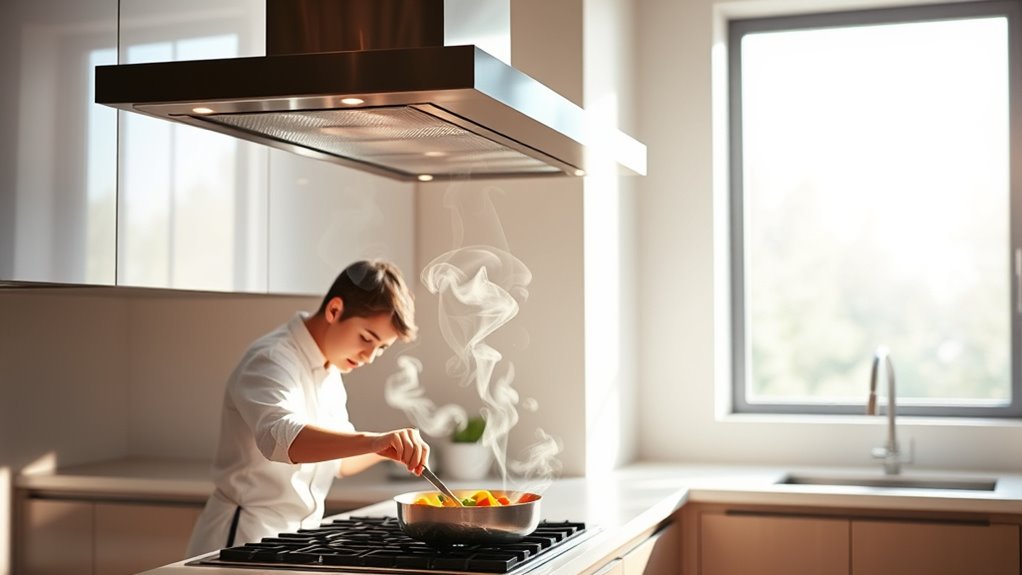
The key to maximizing exhaust fan efficiency lies in proper installation and regular maintenance. If your exhaust fan isn’t correctly vented, or if the filters are dirty, its ability to clear out smoke diminishes. When you keep the fan’s vents clear and check that it’s functioning properly, you’ll notice a marked difference in how quickly smoke and cooking odors disappear. An efficient exhaust system creates a steady, continuous flow of air, which is vital during high-heat cooking or when frying. This consistent airflow prevents smoky pockets from forming and keeps the air fresh. You should also consider the placement of your exhaust fan—ideally, it should be directly above your cooktop or stove to capture smoke at its source.
Complementing the exhaust fan with good kitchen airflow practices further enhances ventilation. Keep windows open when possible, and use range hoods that are powerful enough to handle your cooking volume. When the airflow is balanced and consistent, it prevents the buildup of airborne particles and reduces lingering smells. Remember, the goal is to create a system where fresh air replaces the stale, smoky air as quickly as possible. This not only improves air quality but also protects your health and makes cooking more enjoyable.
In addition to installing a quality exhaust fan, ensure that your kitchen has proper ducting and minimal obstructions. Regularly cleaning the fan and vent system prevents blockages that could hinder airflow. Proper ventilation isn’t just about eliminating smoke and odors—it’s about creating a safer, more comfortable space where you can cook without worry. When your kitchen airflow is optimized and your exhaust fan works efficiently, you’ll notice a cleaner, fresher environment that makes every meal preparation more pleasant. Incorporating data-driven strategies can also help you identify the most effective ventilation setup for your specific needs.

COMFEE' Range Hood 30 Inch Under Cabinet 200 CFM Ducted/Ductless
- Improves Kitchen Air Quality: Strong suction with low noise
- Ductless and Ducted Options: Includes two reusable filters
- Durable Stainless Steel Design: Space-saving, easy to clean
As an affiliate, we earn on qualifying purchases.
As an affiliate, we earn on qualifying purchases.
Frequently Asked Questions
How Often Should Kitchen Vents Be Cleaned for Optimal Performance?
You should clean your kitchen vents every three to six months for ideal performance. Regular air filter maintenance helps prevent grease buildup and keeps airflow smooth. Additionally, stick to duct cleaning schedules, typically once every 1-2 years, to remove accumulated dust and debris. Doing this ensures your vent system works efficiently, reduces smoke and odors, and keeps your kitchen environment healthier and fresher.
Are There Specific Ventilation Systems Better for Small Kitchens?
Did you know that choosing the right ventilation system can cut indoor air pollution by up to 70%? For small kitchens, compact range hoods or high-quality exhaust fans work best. These systems efficiently remove smoke and odors without taking up much space. Look for models with strong airflow and adjustable settings, so you keep your small kitchen fresh and odor-free without sacrificing valuable counter space.
Can Natural Ventilation Effectively Reduce Cooking Odors?
Natural ventilation can effectively reduce cooking odors if you guarantee proper air exchange. Opening windows and using exhaust fans help bring in fresh air and push out smoky, odorous air, improving odor control. To maximize its effectiveness, keep windows open during and after cooking, especially in good weather. While natural ventilation can work well for small kitchens, combining it with other methods can provide even better odor reduction.
What Are the Signs of Inadequate Kitchen Ventilation?
You notice poor air quality, persistent odors, or lingering smoke after cooking, indicating inadequate kitchen ventilation. These signs suggest your ventilation system isn’t effectively removing smoke and odors, which hampers odor control. Investigating these issues reveals how insufficient airflow traps airborne particles, reducing air quality and making your kitchen uncomfortable. Addressing these signs guarantees better odor control and healthier air, confirming the importance of proper ventilation for a clean, fresh cooking environment.
How Does Ventilation Impact Indoor Air Quality During Cooking?
Proper ventilation enhances your indoor air quality during cooking by increasing air exchange, which helps remove smoke, steam, and cooking odors. It guarantees fresh air flows in while contaminated air exits, reducing pollutants and preventing buildup. Effective ventilation supports odor control, keeps your kitchen smelling fresh, and minimizes health risks from airborne particles. You’ll notice a cleaner, healthier environment, making cooking more enjoyable and safer for you and your family.
Conclusion
By ensuring proper ventilation while you cook, you markedly reduce smoke and odors, making your kitchen healthier and more pleasant. Did you know that poor kitchen ventilation can increase indoor pollutant levels by up to 80%? Taking simple steps like using exhaust fans or opening windows can make a huge difference. So, next time you cook, remember that good airflow isn’t just about comfort — it’s about safeguarding your health and keeping your home fresh.