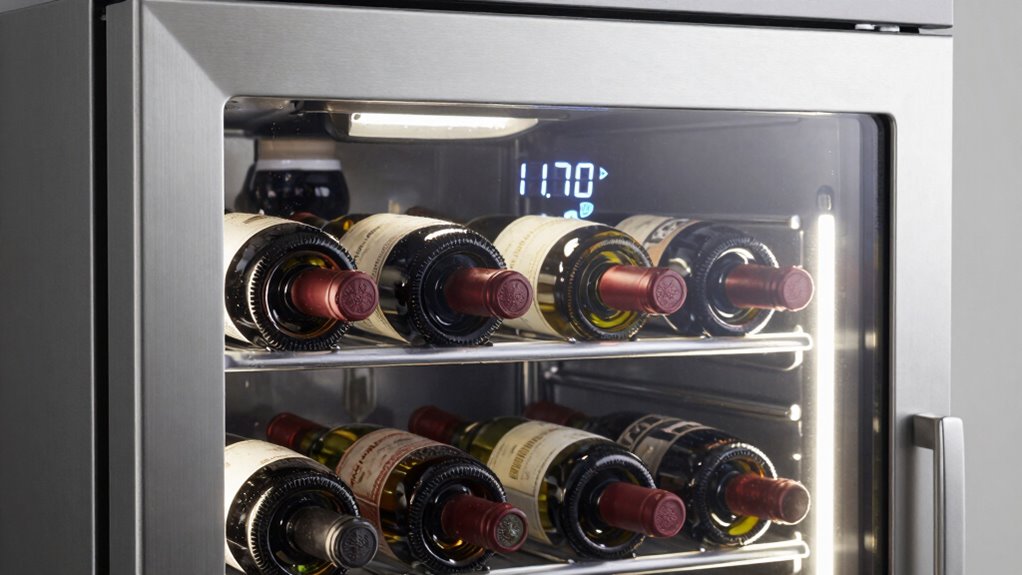

To best preserve your wine, set your fridge to around 55°F (13°C). This temperature balances long-term aging and immediate enjoyment, preventing spoilage and flavor loss. Maintaining a steady temperature is essential—avoid fluctuations that can cause cork issues or oxidation. Using a reliable control system and regularly checking with a thermometer helps keep conditions stable. Keep these tips in mind to protect your bottles; there’s more to discover for perfect storage.
Key Takeaways
- Maintain a steady temperature around 55°F (13°C) for optimal wine preservation and aging.
- Avoid setting your wine fridge below 45°F (7°C) to prevent freezing and cork damage.
- Do not exceed 65°F (18°C) to prevent accelerated aging and flavor deterioration.
- Use a reliable thermostat to ensure consistent temperature control and prevent fluctuations.
- Regularly monitor and adjust the temperature to keep it within the ideal range for your wines.
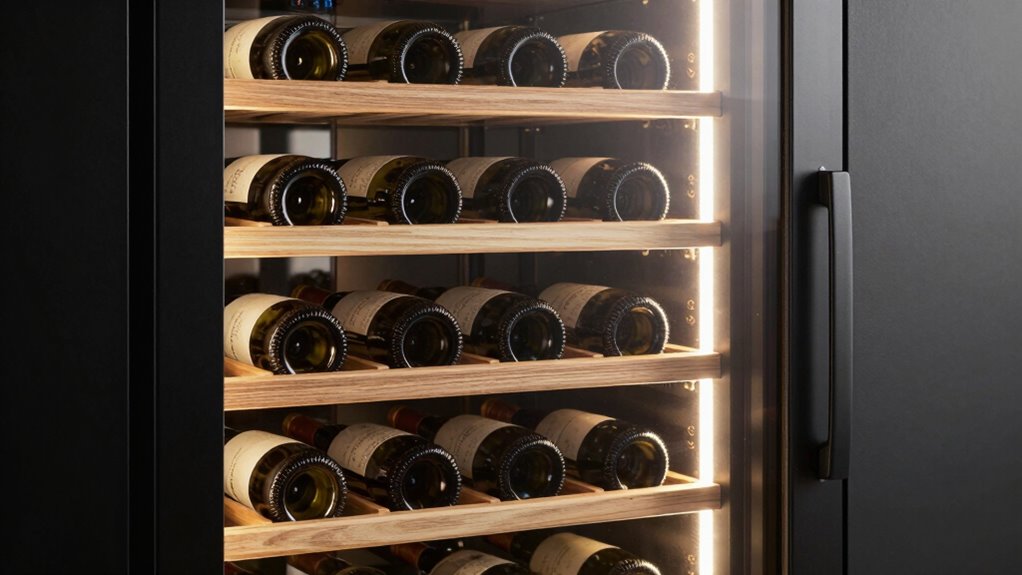
Maintaining the right temperature in your wine fridge is essential for preserving the wine’s quality and flavor. Proper wine storage isn’t just about keeping bottles out of the sun; it’s about creating an environment that supports aging and preserves the wine’s intended characteristics. Temperature control plays a pivotal role in this process. When your wine fridge maintains a consistent, ideal temperature, you help prevent the wine from aging too quickly or developing undesirable flavors. Fluctuations in temperature can cause the wine to expand and contract, which may lead to corks drying out or pushing the corks out, risking oxidation and spoilage. That’s why understanding and managing your wine fridge’s temperature is vital for safeguarding your collection. Temperature consistency is crucial for ensuring your wine ages properly and maintains its quality over time. Most experts recommend setting your wine fridge between 45°F and 65°F (7°C to 18°C), with the perfect range often around 55°F (13°C). This range balances the need for aging wines and serving wines at the right temperature. For long-term wine storage, cooler temperatures close to 55°F help slow down chemical reactions, ensuring the wine ages gracefully. If you’re storing wine for immediate drinking, slightly warmer temperatures within the recommended range can bring out more aromatic qualities. The key is to keep the temperature steady; sudden changes or frequent fluctuations can undermine your efforts, leading to compromised wine quality. Many modern wine fridges feature precise temperature control systems, allowing you to fine-tune the environment and maintain consistent conditions. If your fridge lacks this feature, you might consider investing in a reliable thermometer and regularly checking the temperature to prevent any surprises.

EUHOMY Mini Fridge 130 Can Beverage Refrigerator Cooler Glass Door for Soda Wine Beer, Beverage Cooler for Home, Bar, Office with Digital Temperature Control Removable Shelves, Black
- Spacious Capacity: Holds up to 130 cans
- Customizable Shelves: 5 removable shelves for flexible organization
- Precise Temperature Control: Adjusts from 37°F to 61°F
As an affiliate, we earn on qualifying purchases.
As an affiliate, we earn on qualifying purchases.
Frequently Asked Questions
How Often Should I Calibrate My Wine Fridge Thermometer?
You should calibrate your wine fridge thermometer at least once every six months to ensure thermometer accuracy. Regular calibration helps you catch any deviations that could affect your wine’s storage conditions. If you notice temperature inconsistencies or if the fridge has been moved or bumped, calibrate more frequently. Maintaining accurate readings ensures your bottles stay at ideal temperatures, preserving their quality and flavor over time.
Can Temperature Fluctuations Damage My Wine?
Temperature fluctuations can damage your wine by causing it to expand and contract, which may lead to premature aging or spoilage. To protect your bottles, maintain consistent storage humidity and minimize light exposure, as both can accelerate deterioration. You should regularly monitor your wine fridge’s temperature, calibrate your thermometer, and avoid frequent opening. Keeping a stable environment guarantees your wine ages gracefully and stays flavorful.
What’s the Best Location for Placing My Wine Fridge?
Place your wine fridge in a cool, stable spot with consistent ambient room temperature, ideally away from sunlight, heat sources, or drafts. A wine cellar placement in a basement or closet is perfect because it helps maintain steady conditions. Avoid kitchens or near appliances that generate heat. This guarantees your bottles stay at the ideal temperature, preserving their quality and flavor over time.
Do Different Wine Styles Require Different Fridge Settings?
You don’t need a different fridge setting for every wine style, but it’s close! Red wines thrive at around 55°F, while whites prefer a crisper 45°F. Your wine storage relies on proper fridge insulation and consistent temps, so don’t let fluctuations ruin your collection. Keep your fridge steady, and your wines will thank you with perfect taste and aroma—no matter the style. It’s like giving each wine a custom-tailored suit!
How Long Can Wine Stay in the Fridge at Optimal Temperature?
You can typically store wine in the fridge at the ideal temperature for up to five days without markedly affecting its quality. For short-term storage, keeping it at the right temperature helps preserve flavor and aroma. However, if you plan to store wine longer, consider a dedicated wine fridge or wine cellar, as proper storage duration directly impacts wine preservation. Always keep bottles sealed and upright to prevent spoilage.
Conclusion
By setting your wine fridge to the perfect temperature, you protect your bottles from spoilage, preserve their flavors, and enhance your enjoyment. Keep your wines at the right temperature, maintain consistent conditions, and enjoy your collection for years to come. Proper temperature control guarantees your wines age gracefully, taste their best, and remain a source of pleasure. In your wine fridge, set the right temperature, safeguard your bottles, and savor every sip.