To guarantee safe kitchen ventilation for your gas stove, you need a properly sized range hood with high airflow capacity that’s connected to external venting. Regularly clean filters and inspect ductwork to keep airflow ideal. Recirculating hoods with quality filters can help if external venting isn’t possible, but external venting is more effective at removing pollutants. Proper setup improves air quality, reduces grease buildup, and protects your health—learn more to perfect your ventilation system.

Get home appliances delivered free with Prime
- Fast, free delivery on millions of items
- Prime Video, Amazon Music and more included
- Member-only deals all year
Key Takeaways
- Use a properly sized range hood with sufficient airflow (CFM) for effective fume removal.
- Connect the ventilation system to external venting to direct pollutants outside.
- Regularly clean and maintain filters and ductwork to ensure optimal airflow and pollutant removal.
- Prioritize external venting over recirculating hoods for better removal of combustion gases.
- Ensure the ventilation setup is properly designed and installed for safety, efficiency, and indoor air quality.
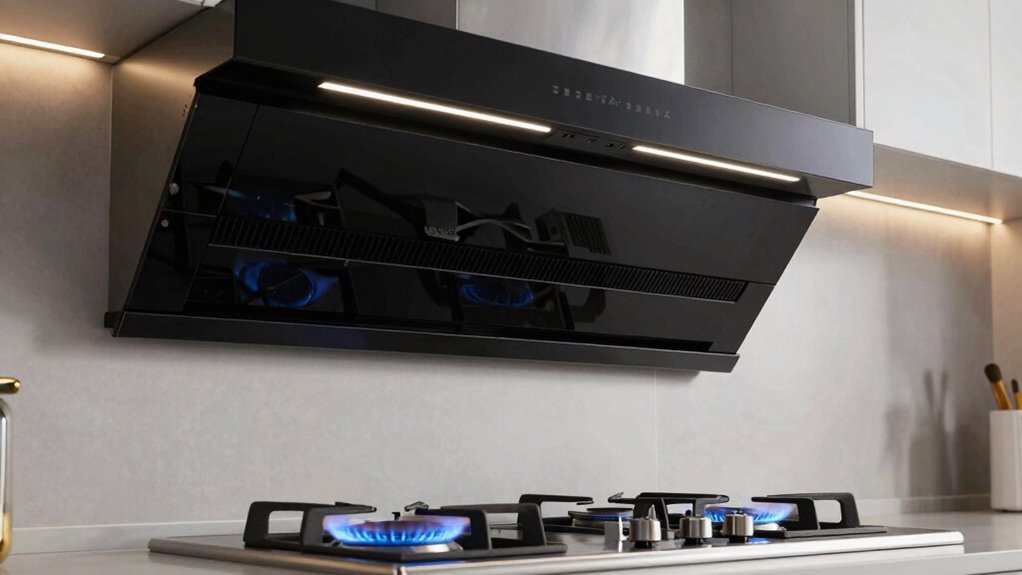
Cooking with gas stoves can improve your culinary experience, but without proper ventilation, it can also introduce harmful fumes and pollutants into your kitchen. That’s why setting up an effective ventilation system is essential. A good ventilation system helps to remove smoke, grease, and combustion byproducts, contributing to healthier indoor air quality. When you cook on a gas stove, combustion releases nitrogen dioxide, carbon monoxide, and particulate matter, which can accumulate quickly if not properly ventilated. These pollutants can cause respiratory issues, headaches, and long-term health problems, especially in enclosed spaces. Consequently, investing in a reliable ventilation system isn’t just about comfort; it’s about safeguarding your health.
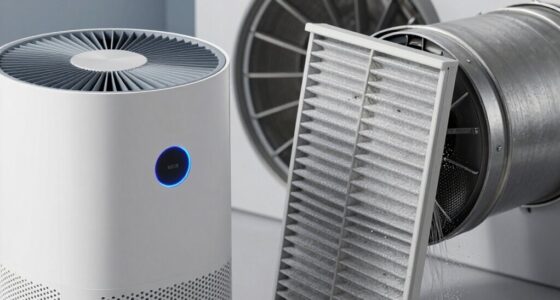
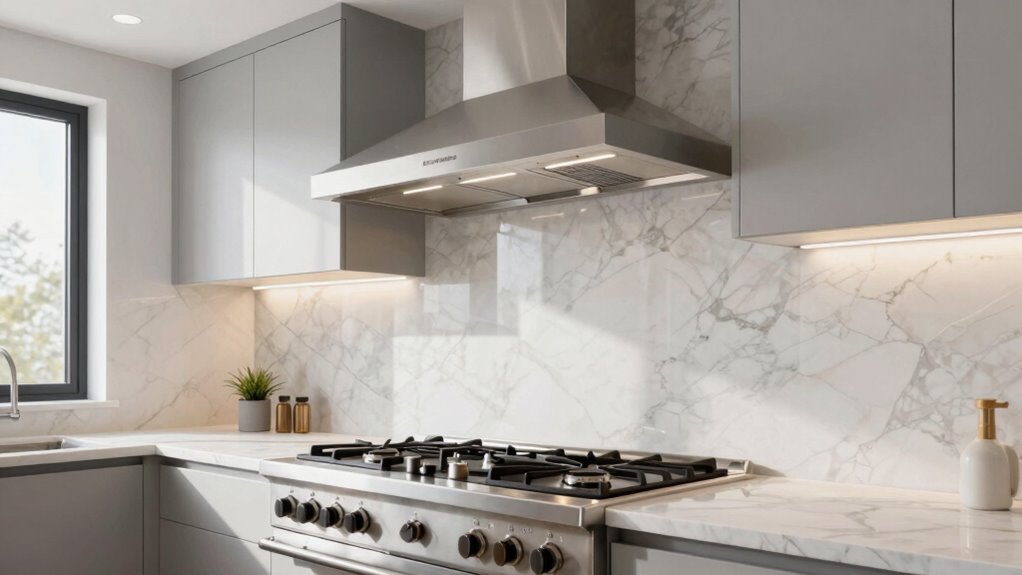
Your goal should be to install a ventilation setup that efficiently captures and expels pollutants. An effective range hood is your best ally here. It needs to be properly sized for your stove and capable of ventilating the entire cooking area. You want a vent that can move enough air to clear out fumes quickly. When selecting a range hood, look for one with a high airflow rate, usually measured in cubic feet per minute (CFM). The higher the CFM, the better it can handle grease and fumes. It’s also important to guarantee your range hood has a good filter system—preferably a combination of grease filters and charcoal filters—that traps airborne particles and odors before they escape into your kitchen.
Choose a range hood with high CFM and effective filters for optimal kitchen ventilation.
Connecting your range hood to an external vent is essential for maintaining indoor air quality. An exhaust vent directs pollutants outside, preventing them from recirculating. If external venting isn’t possible, consider a high-quality recirculating hood with efficient filters. Keep in mind, however, that recirculating hoods are generally less effective at removing combustion gases than external vents. Regular maintenance, such as cleaning filters and inspecting ductwork, is equally necessary. Dirty filters reduce airflow and can lead to poor air quality, negating the benefits of your ventilation system. Additionally, high refresh rates in projectors can enhance visual clarity during cooking tutorials or entertainment, making your kitchen a more engaging space.
Your ventilation setup impacts more than just comfort; it influences your overall indoor air quality. By guaranteeing your gas stove is properly ventilated, you minimize the risk of pollutant buildup, creating a healthier environment for you and your family. Proper ventilation reduces smoky odors, prevents grease accumulation, and diminishes airborne toxins. It’s a simple yet essential step that enhances safety, keeps your kitchen cleaner, and makes cooking a more enjoyable experience. Don’t overlook the importance of a well-designed ventilation system—it’s the key to a safer, healthier kitchen.
range hood with high CFM for gas stove
As an affiliate, we earn on qualifying purchases.
As an affiliate, we earn on qualifying purchases.
Frequently Asked Questions
How Often Should I Clean My Kitchen Ventilation System?
You should clean your ventilation system at least every three to six months, depending on your cooking habits. Regular ventilation maintenance ensures it operates efficiently and prevents grease buildup. If you cook frequently or notice reduced airflow or odors lingering, increase your cleaning frequency. Keeping your system clean not only improves air quality but also extends its lifespan. Make it a habit to inspect and clean your ventilation system regularly for peak performance.
Can I Install a Vent Hood Myself or Need Professional Help?
You can attempt a DIY installation of a vent hood if you’re comfortable with basic tools and follow the manufacturer’s instructions carefully. However, for safety, ideal performance, and code compliance, it’s best to seek professional assistance. A professional ensures proper installation, correct venting, and adherence to local building codes, reducing potential hazards and costly errors down the line. When in doubt, professional help is always the smarter choice.
What Are the Energy Costs Associated With Different Ventilation Types?
The energy costs vary based on the ventilation type you choose. Exhaust fans typically consume less energy, but their efficiency depends on proper installation and size. Range hoods with high ventilation efficiency may use more energy, especially if they have powerful motors or lighting features. To save on energy consumption, opt for energy-efficient models with good airflow and consider using them only when needed. Proper maintenance also helps reduce overall energy costs.
Are There Specific Regulations for Kitchen Ventilation in Rental Properties?
Yes, there are specific regulations for kitchen ventilation in rental properties, designed to protect tenant rights. Landlords must comply with local building codes and health standards, guaranteeing proper ventilation systems are in place, especially for gas stoves. Rent regulation often includes requirements for safe and adequate ventilation, and tenants can request improvements if these standards aren’t met. Staying informed about your rights helps you ensure a safe, well-ventilated living environment.
How Does Ventilation Affect Indoor Air Quality Over Time?
Ventilation plays a vital role in maintaining good air quality over time, preventing the buildup of pollutants like cooking fumes, smoke, and gases. Poor ventilation can lead to long-term effects such as respiratory issues and allergies. By ensuring your kitchen is properly ventilated, you help protect your indoor air quality, reducing health risks, and creating a safer, healthier environment for you and your family over the years.
Conclusion
Proper kitchen ventilation is essential to keep your space safe and comfortable. Did you know that improperly ventilated gas stoves can release pollutants that worsen indoor air quality and cause health issues? By ensuring your setup includes a powerful range hood and regular maintenance, you reduce these risks considerably. Investing in good ventilation isn’t just about comfort—it’s about protecting your health and creating a safer cooking environment for everyone in your home.
Cold & flu season Picks
humidifiers
As an affiliate, we earn on qualifying purchases.