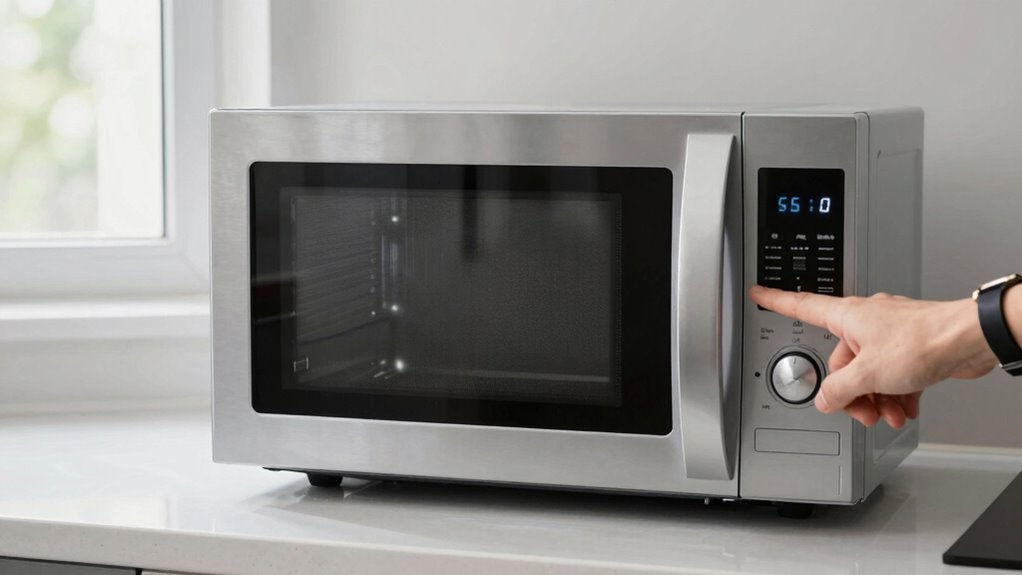

If your microwave suddenly stops heating, start by checking that it’s properly plugged into a functioning outlet and that the circuit breaker hasn’t tripped. Make certain the door is fully closed and latched, as a faulty door switch can prevent operation. Sometimes, a blown fuse or internal safety features may activate, stopping the heat. If these basics don’t solve it, there could be a problem with the magnetron or other internal parts—learning more will help you troubleshoot further.
Key Takeaways
- Ensure the microwave’s door is fully closed and the latch is secure, as safety interlocks prevent heating if not properly closed.
- Verify the power outlet is functioning correctly by testing with another device; reset the circuit breaker if needed.
- Check the door switch for proper operation using a multimeter; a faulty switch can stop the microwave from heating.
- Inspect internal thermal cutoffs or overheating protections that may have triggered, causing the microwave to shut down.
- Consider potential issues with the magnetron, high-voltage diode, or capacitor, which may require professional diagnosis and repair.
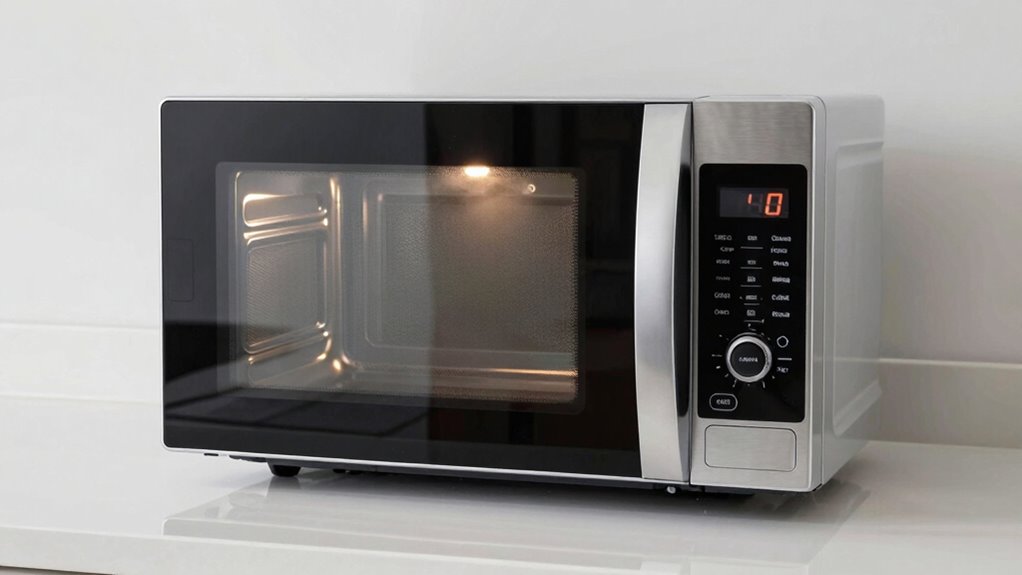
If your microwave suddenly stops heating, it can be frustrating, but there are several common causes you can troubleshoot. Before calling in professional microwave repair, it’s helpful to understand what might be causing the issue and how you can fix it yourself. Many times, the problem is something simple that you can resolve with a few troubleshooting tips, saving you time and money.
First, check the power supply. Make sure the microwave is plugged in securely and that the outlet is functioning properly. You can test the outlet by plugging in another device. If the outlet isn’t working, resetting the circuit breaker or trying a different outlet might restore power. If your microwave still isn’t heating, the problem could be with the internal fuse. Usually, this fuse blows when there’s a power surge or a malfunction. Replacing a blown fuse is a common step in microwave repair, but keep in mind you should disconnect the microwave from the power source before attempting any repairs.
Check the power supply and internal fuse if your microwave stops heating.
Next, examine the door switch or door latch. Many microwaves have safety interlocks that prevent operation if the door isn’t securely closed. If the door switch is faulty or stuck, it might falsely signal that the door is open, stopping the microwave from heating. You can test the door switch with a multimeter to see if it’s functioning properly. If it’s defective, replacing the switch is usually straightforward and can resolve the issue.
Another common cause involves the magnetron, which is responsible for generating microwave radiation to heat food. If the magnetron fails, the microwave will turn on but won’t produce heat. Diagnosing a magnetron problem can be tricky, but if you’ve ruled out power issues and door switches, it might be time to contemplate professional microwave repair. Handling the magnetron involves high voltages, so unless you’re experienced, it’s best to leave this to the experts.
Finally, check the high-voltage diode and capacitor, as these components work together to power the magnetron. A broken diode or capacitor can prevent the microwave from heating even if the magnetron itself is fine. Testing these parts requires specific tools and knowledge, so if you suspect an issue here, it’s wise to seek professional help. Additionally, modern microwaves often incorporate thermal cutoffs that can shut down heating if overheating occurs, so inspecting these safety features might also be necessary.
As an affiliate, we earn on qualifying purchases.
Frequently Asked Questions
Can a Microwave Still Operate Without Heating?
No, a microwave can’t operate without its heating mechanisms because they’re essential for cooking food. While it may turn on and run, it won’t heat anything unless those components are functioning properly. For microwave safety, avoid using it when it’s malfunctioning. Check the door latch and internal fuse first, as issues here can cause it to run but not heat. Proper maintenance ensures safe operation and effective heating.
Is It Safe to Use a Microwave With a Broken Turntable?
Think of your microwave like a well-oiled machine; a broken turntable can cause uneven cooking, but it’s generally safe to use if the motor is just malfunctioning. Just make certain the plate is properly aligned and not wobbling, as an unbalanced turntable can damage the motor or cause sparks. If the turntable won’t spin at all, it’s best to have it checked, but using it with a non-spinning plate isn’t inherently dangerous.
How Long Should a Microwave Last Before Needing Replacement?
A microwave typically lasts about 8 to 10 years, depending on usage and maintenance. Over time, the appliance’s components, like the magnetron that generates microwave energy, can wear out, leading to reduced performance. If your microwave isn’t heating properly or shows signs of frequent malfunctions, it’s a good idea to contemplate replacement. Proper care can extend its appliance lifespan, but eventually, replacing your microwave guarantees safety and efficiency.
Do Microwave Repairs Require Professional Service?
Microwave repairs often require professional service, especially for complex issues like faulty magnetrons or high-voltage components. While DIY troubleshooting can help you identify simple problems, handling electrical parts can be dangerous if you’re not experienced. If basic checks don’t resolve the issue, it’s wise to call in a professional repair technician. They have the proper tools and knowledge to fix your microwave safely and effectively.
Can External Damage Affect Microwave Heating?
Think of your microwave like a car; external damage is like a dent that messes with its performance. Yes, external damage can affect microwave heating by damaging internal components or disrupting the microwave’s ability to generate heat. If you notice dents or cracks, it’s smart to have a professional inspect it. Ignoring external damage might lead to more serious heating issues or safety hazards down the line.
Conclusion
So, before panicking when your microwave suddenly stops heating, take a breath and check the basics. Often, a simple solution like resetting it or inspecting the door latch does the trick. Remember, sometimes you’ve just got to look under the hood rather than throwing in the towel. With a little patience and a quick troubleshoot, you might find the fix is easier than you thought—just don’t forget, every cloud has a silver lining.