
Most people overlook regular membrane cleaning in their reverse osmosis systems, but it’s one of the most essential maintenance steps. Skipping this can cause mineral buildup, clogged filters, and decreased water quality, which shortens your system’s lifespan and raises your costs. Cleaning your membrane at least once a year guarantees peak performance and safe drinking water. Keep going to discover how to keep your RO system running efficiently and save money in the long run.
Key Takeaways
- Many users neglect regular membrane cleaning, risking decreased water quality and system efficiency.
- Skipping cleaning leads to mineral buildup that clogs the membrane and impairs filtration.
- Proper maintenance typically involves at least an annual cleaning, especially in hard water areas.
- Neglecting membrane cleaning accelerates system wear, increases operational costs, and shortens system lifespan.
- Regular cleaning restores performance, prolongs filter life, and ensures safe, high-quality drinking water.
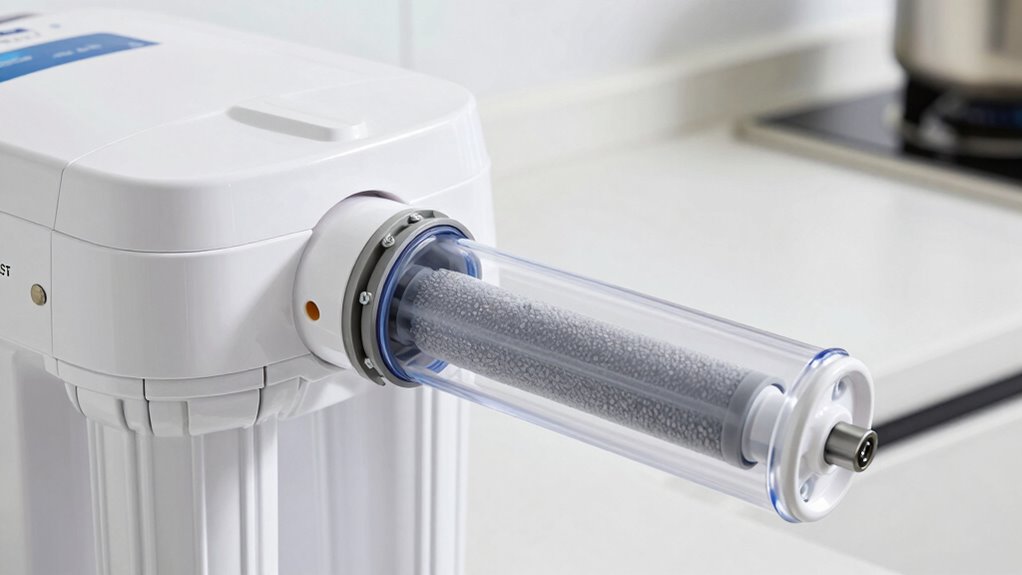
Have you ever wondered how drinking clean, pure water is possible? The answer lies in your reverse osmosis (RO) system, which filters out contaminants and provides you with fresh, safe drinking water. But maintaining this system isn’t just about installing it and forgetting about it. One essential step many people overlook is regular membrane cleaning, and understanding how this affects your RO filter lifespan is indispensable for optimal performance. When you neglect membrane cleaning, your system’s efficiency drops, and the filter’s lifespan shortens markedly. Over time, mineral buildup and accumulated impurities clog the membrane, making it less effective at removing contaminants. This not only compromises water quality but also forces your system to work harder, increasing wear and tear on other components.
The membrane is the heart of your RO system, acting as the primary barrier that separates impurities from water. Its performance directly influences the overall effectiveness of the filtration process. If you skip membrane cleaning, you risk allowing deposits to settle on its surface, which diminishes its ability to produce pure water. This can lead to increased pressure drops, longer filtration times, and, ultimately, system failure if not addressed. To prevent this, it’s essential to schedule regular membrane cleaning sessions based on your water quality and usage. Most manufacturers recommend cleaning at least once a year, but if your water source has high mineral content or you notice a decrease in flow rate, more frequent cleaning might be necessary. Regular maintenance also helps prevent mineral buildup, which can cause irreversible damage to the membrane.
Maintaining your RO filter lifespan depends heavily on proper membrane cleaning routines. When you keep the membrane clean, you extend its functional life, avoiding the need for costly replacements. Regular cleaning not only restores performance but also guarantees your system remains energy-efficient. It’s a simple step that often gets overlooked because people assume the filters will last forever or forget to check the system’s performance indicators. However, neglecting this critical maintenance can lead to a decline in water quality, increased operational costs, and ultimately, the premature failure of your RO system.
reverse osmosis membrane cleaning kit
As an affiliate, we earn on qualifying purchases.
As an affiliate, we earn on qualifying purchases.
Frequently Asked Questions
How Often Should I Replace My Reverse Osmosis Filters?
You should replace your reverse osmosis filters every 6 to 12 months, depending on your filter lifespan and your maintenance schedule. Regularly check your system for signs of reduced water quality or flow rate, which indicate it’s time for a change. Sticking to a consistent maintenance schedule helps guarantee your filters work efficiently, providing you with clean, safe drinking water and prolonging your system’s life.
Can I Clean the RO Membrane Myself?
Yes, you can perform membrane cleaning yourself with DIY maintenance. Start by turning off the system and relieving pressure. Remove the membrane carefully, then soak it in a cleaning solution designed for RO membranes. Gently scrub if needed, rinse thoroughly, and reinstall. Regular membrane cleaning helps maintain ideal water flow and quality, saving you money and prolonging your system’s lifespan. Always follow manufacturer instructions for safety and effectiveness.
What Signs Indicate My RO System Needs Maintenance?
Did you know that poor water quality can shorten your RO system’s lifespan by up to 50%? If your water looks cloudy, tastes off, or has a foul odor, it’s time for maintenance. Reduced water flow or increased filter pressure also signal issues. Regular checks help maintain ideal system performance and extend its life, ensuring you always enjoy clean, fresh water.
Is There a Way to Extend the Lifespan of Filters?
Yes, you can extend your filter lifespan with proper maintenance tips. Regularly replace pre-filters and post-filters as recommended, and keep your system clean. Avoid overloading the filters by not exceeding the suggested water flow rate. Monitoring your water quality and pressure helps catch issues early. By staying proactive with routine checks and timely replacements, you guarantee your filters last longer, saving you money and maintaining ideal water quality.
Are There Specific Water Conditions That Harm RO Systems?
You’re playing with fire if your water has high hardness or an unbalanced pH, as it can damage your RO system. Hard water causes mineral buildup, leading to clogged filters, while improper pH levels can corrode components. To keep your system running smoothly, test your water regularly and consider pretreatment options, like softeners or pH adjustment. Don’t wait until it’s too late—staying proactive saves you headaches later on.
Conclusion
Neglecting regular maintenance might save you time today, but it risks costly repairs tomorrow. Your reverse osmosis system works tirelessly to purify your water, yet many skip the one essential step—filter replacement. Don’t let convenience compromise quality. By staying on top of maintenance, you guarantee pure, healthy water flows effortlessly. Remember, a small effort now prevents bigger problems later—peace of mind, invigoratingly simple, and worth every moment.