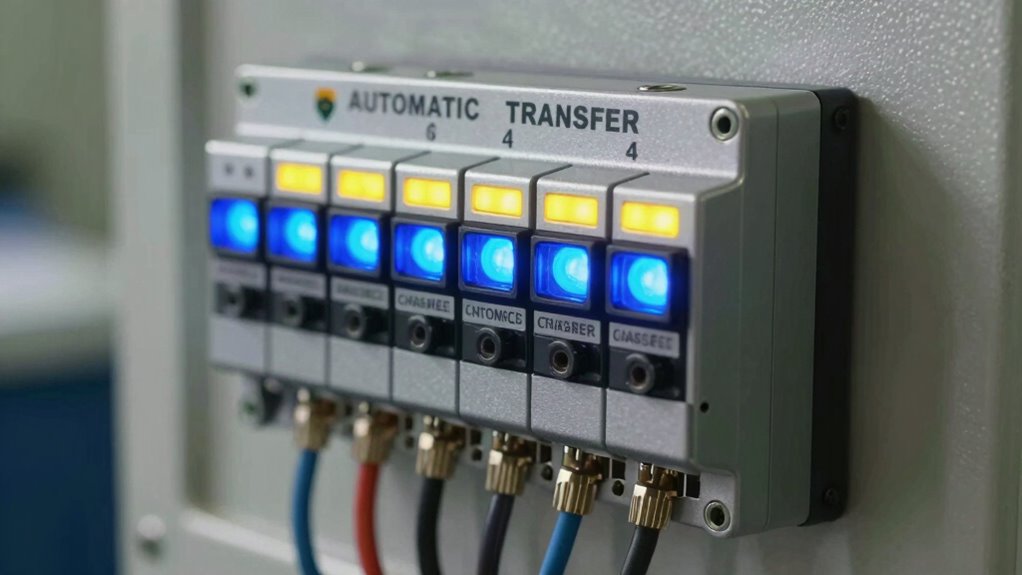
An automatic transfer switch (ATS) automatically shifts your power supply from the main grid to a backup generator when it detects a power outage. It responds instantly, so you don’t experience interruptions or outages. The ATS continuously monitors the electrical current to make quick, seamless transfers. This device guarantees your appliances and systems keep running smoothly without manual work. If you want to understand how it works and why it’s essential, there’s more to discover below.

Get home appliances delivered free with Prime
- Fast, free delivery on millions of items
- Prime Video, Amazon Music and more included
- Member-only deals all year
Key Takeaways
- An automatic transfer switch detects power outages and switches your electrical load from the main power to a backup generator automatically.
- It ensures continuous power supply without manual intervention, preventing disruptions in homes, businesses, or critical facilities.
- The switch monitors voltage and frequency, quickly responding to failures and initiating generator start-up when needed.
- When main power is restored, it automatically switches back to the grid and isolates the generator for safety.
- Proper installation and regular maintenance of the switch and generator are essential for reliable, safe operation.
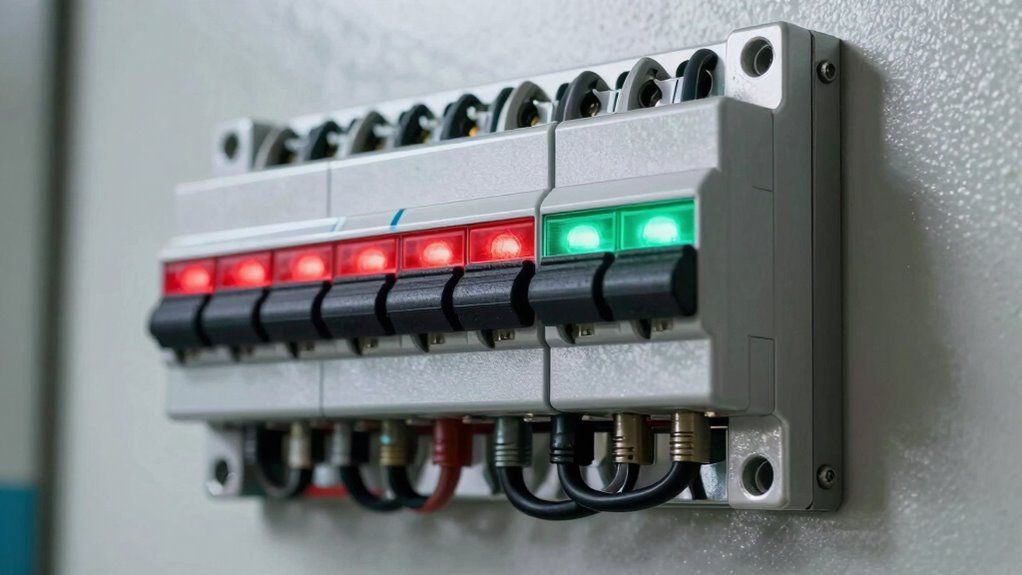
Automatic transfer switches (ATS) are essential devices that guarantee your power supply remains uninterrupted during outages. When the main power source fails, the ATS detects the problem instantly and switches your electrical load to a backup generator, ensuring your critical systems keep running smoothly. This seamless transition is fundamental for homes, businesses, hospitals, and data centers that can’t afford downtime. Proper generator maintenance is vital to keep this process reliable. Regular checks and servicing ensure your generator is ready to kick in when needed, preventing failures that could compromise your backup power system. Without consistent maintenance, the switch might not operate correctly during an outage, leaving you vulnerable.
Understanding power outage protocols helps you appreciate the role of an ATS. When the main power goes out, the switch responds automatically, eliminating the need for manual intervention. This quick reaction time minimizes disruptions, prevents equipment damage, and maintains safety standards. The switch continuously monitors the supply voltage and frequency, so it can detect even minor irregularities that signal an outage. Once the switch confirms a power failure, it promptly engages the generator, transferring the load without causing interruptions. When power is restored, the ATS switches back to the main grid and isolates the generator, which should then undergo routine generator maintenance to ensure readiness for the next outage. Proper installation and navigation and mapping explainers are crucial for seamless operation and safety.
automatic transfer switch for home generator
As an affiliate, we earn on qualifying purchases.
As an affiliate, we earn on qualifying purchases.
Frequently Asked Questions
How Long Does an Automatic Transfer Switch Typically Last?
An automatic transfer switch typically lasts around 10 to 20 years, depending on its battery lifespan and switch durability. You should regularly inspect and maintain it to guarantee it functions properly. Battery lifespan is vital because it affects backup power reliability, while switch durability determines how well it withstands frequent switching. Proper care and timely replacements help extend its lifespan, keeping your power system dependable for years to come.
Can ATS Systems Be Integrated With Smart Home Technology?
Yes, ATS systems can be integrated with smart home technology, allowing you to monitor and control them remotely. You need to verify system compatibility, as not all ATS models support smart home integration. By connecting your ATS to a compatible smart home hub or system, you can automate backup power processes, receive alerts, and streamline your home’s energy management for added convenience and peace of mind.
Are Automatic Transfer Switches Suitable for Residential Use?
You might be surprised, but automatic transfer switches are indeed suitable for residential use. They seamlessly switch power sources during outages, ensuring your home stays powered. When considering generator compatibility and installation requirements, make sure your system is designed for home use and installed by a professional. This way, you get reliable backup power without hassle, making your home safer and more resilient during unexpected outages.
What Maintenance Is Required for an Automatic Transfer Switch?
You should perform routine inspections on your automatic transfer switch every six months to guarantee it operates smoothly. Check for signs of corrosion, which can affect performance, and clean any debris or dust. Test the switch periodically to confirm it transfers power correctly. Additionally, tighten connections and replace worn parts as needed. Regular maintenance helps prevent failures, extending the lifespan of your transfer switch and maintaining reliable power during outages.
How Do Automatic Transfer Switches Handle Power Surges?
You might think automatic transfer switches are just sitting ducks during power surges, but they actually handle them pretty smartly. With built-in power surge protection, they act swiftly, thanks to their quick switch response time. This means they detect and respond to surges fast enough to protect your equipment, often before you even notice. So, in a way, they’re the unsung heroes fighting off power chaos behind the scenes.
Conclusion
Automatic transfer switches keep your power running smoothly, switching sources instantly when outages occur. Imagine this: every year, over 50 million homes experience power interruptions, but with an ATS, you’re protected from that chaos. It’s like having a silent guardian watching over your electricity, ensuring your appliances stay on no matter what. So, investing in an ATS means peace of mind, knowing your power will switch seamlessly, keeping your life uninterrupted and secure.
Cold & flu season Picks
humidifiers
As an affiliate, we earn on qualifying purchases.