
TL;DR
Open a free Amazon Business account
Business pricing, bulk buying and tax-exempt orders.
Create a free accountAs an affiliate, we earn on qualifying purchases.
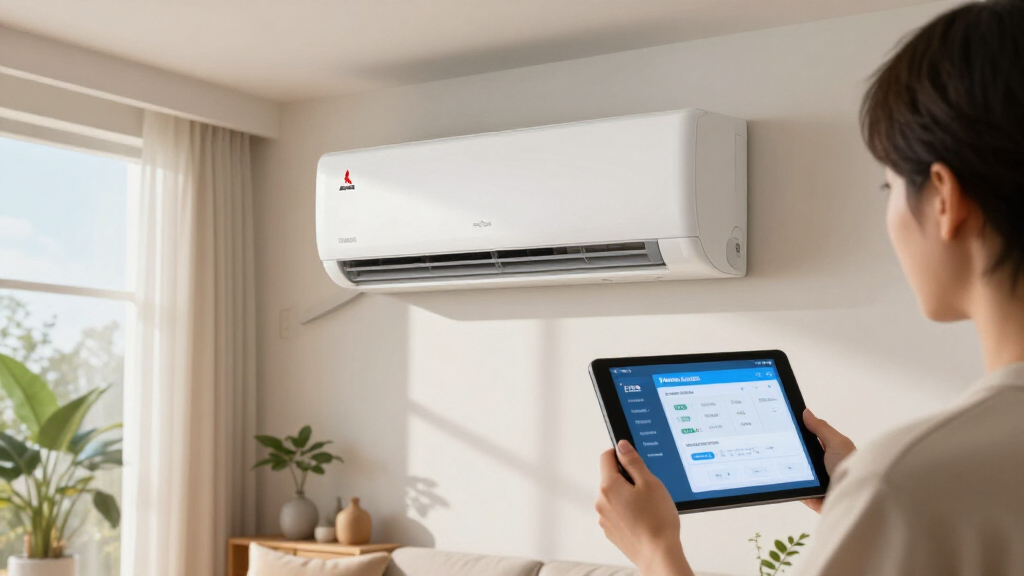
A smart home enthusiast has integrated a Mitsubishi air conditioner lacking Wi-Fi into Home Assistant. This demonstrates potential for broader compatibility with legacy HVAC units, sparking interest among DIY smart home users.
A home automation enthusiast has achieved a breakthrough by integrating a non-Wi-Fi Mitsubishi air conditioner into the Home Assistant platform. This development allows users to control older Mitsubishi AC units without built-in wireless capabilities through a smart home system, expanding accessibility for legacy HVAC equipment. The user’s successful setup highlights potential for broader DIY solutions in the smart home community, especially for devices lacking modern connectivity features.
The user, whose identity remains anonymous, shared their experience on a popular online forum dedicated to home automation. They reported that their Mitsubishi AC, which does not have Wi-Fi or smart features, was successfully connected to Home Assistant using a custom approach. The method involved interfacing with the AC’s IR remote control signals and integrating these commands into Home Assistant via a custom component or script. This approach circumvents the need for built-in Wi-Fi or proprietary Mitsubishi cloud services, which are typically required for modern smart AC units.
While the exact technical details of the implementation are still being refined, the user confirmed that basic functions such as power, temperature control, and mode switching are now operable through Home Assistant’s interface. This achievement signals the possibility of retrofitting older HVAC units with smart controls without replacing the hardware or relying on Mitsubishi’s cloud-based systems. The process reportedly involves capturing IR signals with a compatible IR blaster or sensor, then programming Home Assistant to send these signals as commands to the AC.
Experts in the home automation community note that this method could be adapted for other non-smart appliances, provided the IR signals can be captured and replicated. However, the approach is still in experimental stages, and the user has cautioned that it requires technical knowledge to implement successfully. The community is watching closely as this could pave the way for more DIY solutions for legacy appliances that lack native smart features.
Implications for Legacy HVAC Integration in Smart Homes
This development is significant because it demonstrates a potential pathway to control older, non-connected Mitsubishi air conditioners through modern smart home systems like Home Assistant. For homeowners with legacy HVAC units, this could mean avoiding costly replacements or upgrades solely for smart compatibility. The approach, if further refined, could extend to other brands and appliances that rely on IR remote control signals. It highlights an increasing trend toward DIY solutions that bypass manufacturer restrictions, making smart home automation more accessible and inclusive for users with existing equipment.
Moreover, this success could encourage broader community-driven innovation, reducing reliance on proprietary cloud services that may pose privacy or security concerns. It also underscores a shift in the smart home landscape toward integrating older devices, which historically have been difficult to connect to modern systems, thereby expanding the scope of home automation beyond new, Wi-Fi-enabled devices.
As an affiliate, we earn on qualifying purchases.
Background on Mitsubishi AC Connectivity and DIY Efforts
Mitsubishi air conditioners, like many legacy HVAC units, traditionally relied on infrared remote controls and lacked built-in Wi-Fi or smart features. In recent years, the industry has shifted toward cloud-connected, Wi-Fi-enabled units that can be integrated into smart home ecosystems via manufacturer apps or third-party platforms. However, many older Mitsubishi models remain in use, especially in homes where replacing HVAC units is costly or impractical.
While some Mitsubishi AC units do have Wi-Fi capabilities, a significant number of models still operate solely via IR remote controls. Enthusiasts and DIYers have long sought methods to control these older units remotely, often resorting to IR blasters, universal remotes, or custom hardware setups. Prior to this recent development, there was limited documentation or confirmed success in integrating non-Wi-Fi Mitsubishi units directly into platforms like Home Assistant without additional hardware or cloud services.
This trend of retrofitting legacy appliances aligns with broader efforts in the smart home community to extend the lifespan and functionality of existing devices, rather than replacing them prematurely. The current spike in coverage and interest appears to be driven by a combination of community experimentation and the increasing availability of affordable IR control hardware.
Technical Details and Reliability of the IR Control Method
It is still unclear how reliable and scalable this method will be across different Mitsubishi models or other brands. The exact process of capturing and reproducing IR signals can vary in complexity, and some users may face challenges in setting up or maintaining the system. Additionally, it remains to be seen whether this approach can support all functions of the AC, such as scheduling or advanced modes, without further customization.
Furthermore, since the method relies on community-developed scripts or custom components, there is uncertainty about long-term support and compatibility with future Home Assistant updates. The community is actively testing and sharing experiences, but a comprehensive, standardized solution has yet to emerge.
Next Steps for Broader Adoption and Technical Refinement
Moving forward, community members and developers are likely to focus on refining the IR control scripts, improving stability, and expanding functionality. Documentation and tutorials are expected to be shared to help less technically inclined users replicate the setup. Developers may also work on creating more user-friendly integrations or automations that can handle multiple models or brands.
In addition, further experimentation with hardware options, such as different IR blasters or sensors, could enhance reliability. Industry observers will be watching whether manufacturers or third-party developers create official or semi-official integrations for legacy units, potentially reducing the technical barrier for end users.
Finally, as interest grows, the community may explore similar solutions for other non-smart appliances, broadening the scope of DIY home automation beyond HVAC systems to include various legacy devices.
Key Questions
Can I control my Mitsubishi AC without Wi-Fi?
Yes, using IR signal capture and scripting, it is possible to control non-Wi-Fi Mitsubishi AC units through platforms like Home Assistant, as demonstrated by recent community efforts.
What hardware do I need to set this up?
You will need an IR blaster or sensor compatible with Home Assistant, along with some technical knowledge to configure the IR commands and scripts.
Will this work with all Mitsubishi AC models?
This approach has been tested on specific models, but compatibility may vary. Users should verify IR signal compatibility for their particular unit.
Is this method reliable for everyday use?
While promising, the method is still experimental and may require troubleshooting. Long-term reliability depends on hardware quality and proper setup.
Could this approach be adapted for other brands?
Yes, in principle, any IR-controlled appliance could be integrated similarly, provided IR signals can be captured and replicated accurately.
Source: hn
NFL season / tailgating Picks
team gear
As an affiliate, we earn on qualifying purchases.