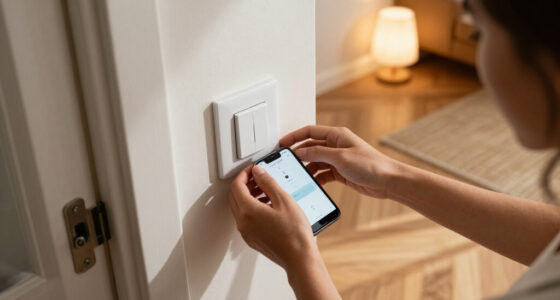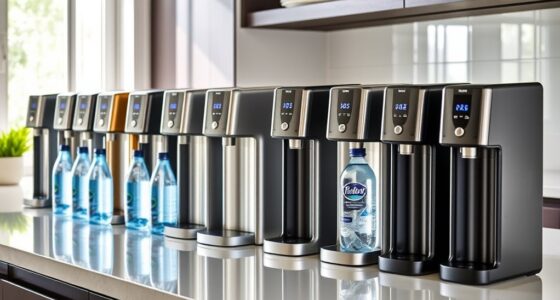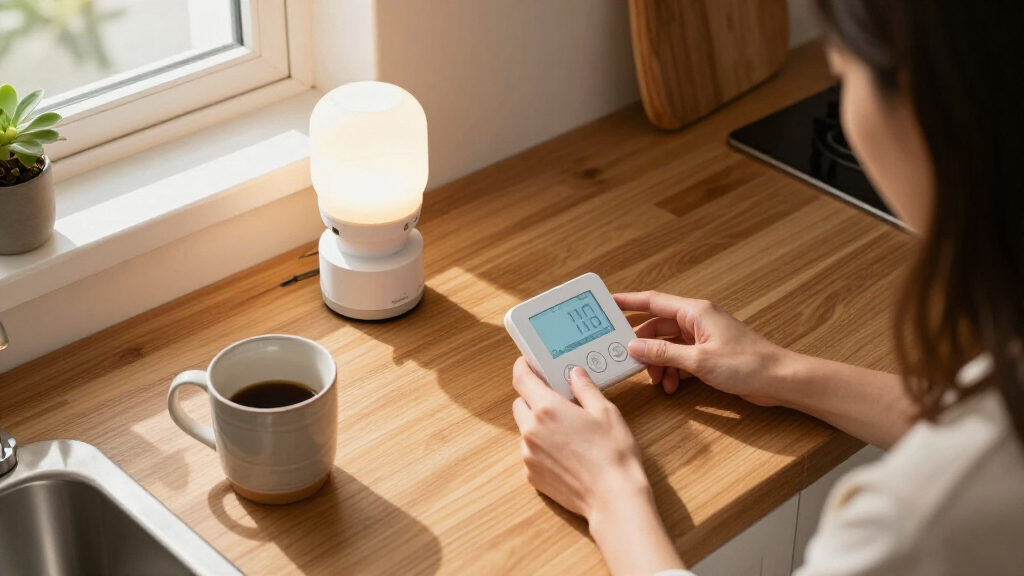
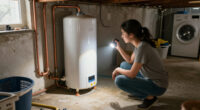
The best energy-efficient home products make it easier to cut wasted electricity without adding more complexity than your household can manage. My best overall pick is the Emporia Vue 3 Home Energy Monitor, which helps identify where power is going; the Amazon Smart Thermostat is a simpler route to more efficient heating and cooling, while GE Refresh LED bulbs offer a straightforward lighting upgrade. These options solve different problems, so the right choice depends on whether you need energy insight, HVAC scheduling, moisture control, or lower-wattage lighting. Smart features, system compatibility, installation effort, and the scale of potential savings all involve tradeoffs. Read on for the full breakdown and a guide to choosing products that fit your home.

Get home appliances delivered free — and shop member deals
- Fast, free delivery on millions of items
- Access to Prime Big Deal Days deals on October 6–7
- Prime Video, Amazon Music and more included
Complete the kit

![[Genuine] Waterdrop PF-01A Water Filter Replacement for W...](https://m.media-amazon.com/images/I/41+5tl9EiKL._SX342_SY445_QL70_FMwebp_.jpg)
Key Takeaways
- The amazon.com/dp/B0C79PNK84?tag=applianceslabs.com-20&ascsubtag=dc-1148316″ target=”_blank” rel=”nofollow sponsored noopener”>Emporia Vue 3 ranks first because it can show electricity use across the home, helping owners identify which habits or appliances deserve attention before buying more equipment.
- The two ecobee thermostats serve different needs: Essential is the more straightforward HVAC upgrade, while Enhanced is the better fit for buyers who want a more capable thermostat and broader control features.
- Amazon Smart Thermostat is the simple value-focused choice for compatible systems and households comfortable using Alexa-connected controls; it offers less flexibility than the ecobee options.
- The AEOCKY dehumidifier addresses a specific load, not whole-home energy use: it may suit a large, persistently damp area, but its capacity and operating needs can be excessive for a small room.
- GE LED bulbs are the easiest starting point because replacing compatible incandescent bulbs is a low-effort change, though lighting upgrades alone cannot deliver the HVAC-level impact some households seek.
| Emporia Vue 3 Home Energy Monitor – Smart Home Automation Module and Real-Time Electricity Usage Monitor |  | Best for Whole-Home Energy Tracking | Manufacturer: Emporia Corp. | Part number: EMV3A-2P-16 | Monitoring: Whole-home monitor with 16 circuit sensors | VIEW LATEST PRICE | See Our Full Breakdown |
| Amazon Smart Thermostat |  | Best Value Smart Thermostat | Model number: S6ED3R | HVAC compatibility: Most 24V systems; C-wire required | Certifications: ENERGY STAR, ECOLOGO Gold | VIEW LATEST PRICE | See Our Full Breakdown |
| ecobee Smart Thermostat Essential – WiFi Thermostat, Energy Star Certified |  | Best for Smart-Home Flexibility | Product type: Wi-Fi smart thermostat | Controllers: Amazon Alexa, Android, Apple HomeKit, Google Assistant, iOS | Power source: Battery powered | VIEW LATEST PRICE | See Our Full Breakdown |
| AEOCKY 5500 Sq.Ft ENERGY STAR Most Efficient 2025 Dehumidifier Max 80 Pint/D |  | Best for Large Damp Areas | Dehumidification capacity: 80 pints per day | Coverage area: Up to 5,500 sq. ft. | Dimensions: 14.45 x 8.66 x 24.09 inches | VIEW LATEST PRICE | See Our Full Breakdown |
| GE Refresh LED Light Bulbs, 10 Watts (60 Watt Eqv), Daylight HD, A19 Standard Bulbs (4 Pack) |  | Best Simple Lighting Upgrade | Bulb type: LED, A19 shape | Wattage: 10 watts | Incandescent equivalent: 60 watts | VIEW LATEST PRICE | See Our Full Breakdown |
| ecobee Smart Thermostat Enhanced, Programmable Wi-Fi Thermostat |  | Best for Occupancy-Based Energy Savings | Connectivity: Wi-Fi | Compatible controllers: Amazon Alexa, Android, Apple HomeKit, Google Assistant, iOS | Supported HVAC uses: Air conditioner, boiler, furnace, heat pump, humidifier | VIEW LATEST PRICE | See Our Full Breakdown |
More Details on Our Top Picks
Emporia Vue 3 Home Energy Monitor – Smart Home Automation Module and Real-Time Electricity Usage Monitor
I’d choose the Emporia Vue 3 when the goal is to find which circuits are driving household electricity use, rather than simply adjust heating and cooling. Its 16 included sensors give a more detailed view than a thermostat’s energy monitoring, and solar and net-metering support make it a stronger fit for homes generating their own power. App-based readings can help owners identify loads worth shifting or automating, though the monitor itself does not guarantee lower consumption.
Compared with the Amazon Smart Thermostat, this is a broader diagnostic tool, but it requires installation in the electrical panel and a 2.4 GHz Wi-Fi connection. App inactivity can limit data retention, and three-phase systems need extra sensors. I’d pick it for hands-on energy tracking, not for a simple plug-in setup.
Pros:- Sixteen sensors provide detailed monitoring across household circuits.
- Solar and net-metering support helps owners track grid and generation patterns.
- Real-time app data can reveal which loads may be worth reducing or rescheduling.
- UL certification offers a defined safety credential.
Cons:- Requires a 2.4 GHz Wi-Fi connection for app access.
- Installation involves the home electrical panel and may not suit DIY beginners.
- Three-phase systems require separately purchased sensors, and data retention is limited when the app is inactive.
Best for: Homeowners with solar or several high-use circuits who want circuit-level electricity data to guide energy-saving changes.
Not ideal for: Renters or buyers seeking a simple, no-panel-work solution; installation requires access to the electrical panel, and three-phase monitoring needs additional sensors.
- Manufacturer:Emporia Corp.
- Part number:EMV3A-2P-16
- Monitoring:Whole-home monitor with 16 circuit sensors
- Certification:CE, UL
- Product dimensions:10 x 5 x 5 inches
- Item weight:4.99 pounds
- Color:White
Our verdict“Choose the Vue 3 if you want circuit-level insight into whole-home electricity use, especially alongside solar, and are prepared for panel installation.”
Amazon Smart Thermostat
The Amazon Smart Thermostat is my straightforward pick for reducing heating and cooling waste without adding a separate energy monitor. Its ENERGY STAR certification, schedules, presence-based adjustments, and vacation mode give households several ways to avoid conditioning an empty home. Guided setup in the Alexa app is a practical advantage for buyers comfortable with basic wiring, while remote control makes schedule changes possible when plans shift.
Compared with the ecobee Smart Thermostat Essential, Amazon’s model is more tightly tied to Alexa and lacks the ecobee’s stated support for several major ecosystems. It also needs a C-wire or separate power adapter, so compatibility is the first hurdle, not an afterthought. There’s no built-in microphone, and its Wi-Fi support is limited to 2.4 GHz. I’d favor it for Alexa households with compatible HVAC wiring, not buyers seeking broad platform flexibility.
Pros:- ENERGY STAR certification and automated adjustments support more efficient heating and cooling.
- Guided app setup can make installation manageable for suitable systems.
- Scheduling, vacation mode, and remote control help limit conditioning in empty homes.
- Energy monitoring and humidity sensing add useful context to temperature control.
Cons:- Requires a C-wire or separate power adapter.
- Works on 2.4 GHz Wi-Fi rather than 5 GHz networks.
- No built-in microphone for direct voice commands.
Best for: Alexa households with a compatible 24V HVAC system and C-wire that want scheduled and presence-aware temperature control.
Not ideal for: Buyers without a C-wire who want to avoid a power adapter, or households relying on 5 GHz Wi-Fi or non-Alexa smart-home platforms.
- Model number:S6ED3R
- HVAC compatibility:Most 24V systems; C-wire required
- Certifications:ENERGY STAR, ECOLOGO Gold
- Network:2.4 GHz, 802.11 b/g/n
- Dimensions:3.56 x 3.56 x 0.84 inches
- Weight:3.86 ounces
- Controls:Three on-device touch buttons; Alexa app control
- Features:Scheduling, energy monitoring, humidity sensing, emergency heat, vacation mode
Our verdict“Pick this thermostat for an Alexa-centered home with compatible wiring; choose the ecobee Essential if broader smart-home compatibility matters more.”
ecobee Smart Thermostat Essential – WiFi Thermostat, Energy Star Certified
I’d shortlist the ecobee Smart Thermostat Essential for households that want energy-conscious temperature control without being locked into one assistant. The listing names Alexa, Google Assistant, and Apple HomeKit, while auto-scheduling and Auto-Away can reduce heating or cooling when routines change. Its color touchscreen also puts core adjustments on the wall, rather than making the app the only convenient control point. The stated savings claim is up to 23% on heating and cooling, not a guaranteed result for every home.
Compared with the Amazon Smart Thermostat, ecobee has wider ecosystem support and is listed as battery-powered, avoiding that model’s stated C-wire requirement. The tradeoff is that SmartSensors are optional, so room-by-room temperature balancing adds another purchase. Wi-Fi is needed for full functionality, and HVAC compatibility still needs checking. I’d choose it for multi-platform homes, not buyers who need included remote sensors.
Pros:- Works with Alexa, Google Assistant, and Apple HomeKit.
- Auto-Away and auto-scheduling can reduce unnecessary heating and cooling.
- Color touchscreen provides direct on-device temperature control.
- Battery-powered design is listed without the Amazon thermostat’s C-wire requirement.
Cons:- SmartSensors for room-specific monitoring are sold separately.
- Full functionality depends on Wi-Fi.
- Compatibility is limited to supported HVAC systems and should be checked before purchase.
Best for: Households using a mix of Apple, Google, and Alexa devices that want app-connected scheduling and the option to add room sensors.
Not ideal for: Buyers who need included room-by-room sensors or cannot verify that their HVAC system is compatible.
- Product type:Wi-Fi smart thermostat
- Controllers:Amazon Alexa, Android, Apple HomeKit, Google Assistant, iOS
- Power source:Battery powered
- Display:3.74-inch LCD touchscreen
- Mounting:Wall mount
- Connectivity:Wi-Fi
- Features:Auto-Away, auto-scheduling, fan control, programmable temperature display
- Finish and material:Matte finish, plastic
Our verdict“Choose the ecobee Essential if broad smart-home compatibility matters and you may add room sensors later.”
AEOCKY 5500 Sq.Ft ENERGY STAR Most Efficient 2025 Dehumidifier Max 80 Pint/D
For a persistently damp basement or a large home that needs humidity control, I’d put the AEOCKY RHEA-001 ahead of smaller, less capable appliances. Its stated capacity of 80 pints per day and coverage up to 5,500 square feet target spaces where a modest unit may run hard or struggle to keep pace. The ENERGY STAR Most Efficient 2025 designation makes efficiency a central part of its pitch, while a low setting of 44 dB may be more livable in occupied areas than a louder unit.
This is a different kind of energy-saving choice from the Emporia Vue 3: it controls moisture directly rather than showing where electricity goes. At 31 pounds and nearly two feet tall, it takes room to place, and its advanced humidity features may be more than a small, dry home needs. I’d reserve it for substantial moisture problems, not occasional humidity.
Pros:- 80-pint daily capacity is suited to substantial moisture loads.
- Rated to cover spaces up to 5,500 square feet.
- ENERGY STAR Most Efficient 2025 designation highlights its efficiency focus.
- 44 dB lowest-setting noise level and operation down to 65°F suit more occupied spaces.
Cons:- Its 14.45 x 8.66 x 24.09-inch dimensions need a dedicated placement area.
- Advanced humidity controls may be unnecessary for basic or occasional use.
- High capacity can be more appliance than small homes or dry rooms require.
Best for: Owners of large basements, multi-room spaces, or damp homes who need high-capacity humidity control and value certified efficiency.
Not ideal for: People with small or mostly dry rooms who need an occasional-use appliance; its capacity and physical footprint may be excessive.
- Dehumidification capacity:80 pints per day
- Coverage area:Up to 5,500 sq. ft.
- Dimensions:14.45 x 8.66 x 24.09 inches
- Weight:31 pounds
- Temperature range:Down to 65°F
- Noise level:44 dB at lowest setting
- Efficiency designation:ENERGY STAR Most Efficient 2025
Our verdict“Choose the AEOCKY for a large, persistently damp area where high extraction capacity and certified efficiency matter more than compact size.”
GE Refresh LED Light Bulbs, 10 Watts (60 Watt Eqv), Daylight HD, A19 Standard Bulbs (4 Pack)
The GE Refresh HD LED bulbs are the simplest energy-efficiency change in this group: they provide 800 lumens while using 10 watts, replacing the light output of a stated 60-watt incandescent equivalent. That makes them a practical choice for frequently used indoor fixtures, where lower wattage can cut lighting electricity use without changing the fixture. Their 5000K daylight tone and CRI of 90 favor clear, cool-looking light for a home office, garage, or active living space rather than a warm, relaxed evening atmosphere.
Unlike the Amazon Smart Thermostat, these bulbs do not automate energy use; the savings come from the LED’s lower wattage and long listed lifespan. Dimming adds flexibility, but only with a compatible dimmer, and the bulbs are specified for indoor use. I’d choose them for bright task areas, not bedrooms where warmer light is preferred.
Pros:- 10-watt LED output replaces a 60-watt incandescent equivalent.
- 800 lumens and 5000K daylight color suit task-focused spaces.
- CRI 90 supports more accurate-looking colors.
- Dimmable design and a stated 13.7-year lifespan offer flexibility and long service life.
Cons:- 5000K light can feel too cool for bedrooms or warm, relaxed living spaces.
- Dimming requires a compatible switch.
- Specified for indoor use only.
Best for: People replacing frequently used indoor incandescent bulbs in home offices, garages, or other spaces where bright daylight-colored light is useful.
Not ideal for: Buyers seeking warm ambient lighting, outdoor bulbs, or dimming with an unverified switch.
- Bulb type:LED, A19 shape
- Wattage:10 watts
- Incandescent equivalent:60 watts
- Brightness:800 lumens
- Color temperature:5000K
- Color rendering index:90
- Base and voltage:E26, 120 volts
- Dimming and lifespan:Dimmable; listed lifespan up to 13.7 years
- Pack and use:Four bulbs; indoor use
Our verdict“Choose these bulbs for frequently used indoor task areas if you want lower-wattage, cool daylight output and have compatible dimmers.”
ecobee Smart Thermostat Enhanced, Programmable Wi-Fi Thermostat
I’d choose the ecobee Smart Thermostat Enhanced for households that want the thermostat to respond to when rooms are occupied, rather than relying only on a schedule. Its occupancy sensing can prompt automatic adjustments, while app and voice-assistant controls make it easier to change settings without standing at the wall. The manufacturer cites up to 26% savings on heating and cooling costs; actual results depend on the home, HVAC system, and settings.
Compared with the ecobee Smart Thermostat Essential, this model’s clearest advantage is its included occupancy sensing. Room-specific comfort requires separately purchased SmartSensors, though, and Wi-Fi is needed for remote features. Installation is described as easy, but setup may take more effort for buyers new to smart thermostats. I’d pick it over a simpler option when occupancy-based adjustments matter; buyers seeking the most straightforward setup may prefer the Amazon Smart Thermostat.
Pros:- Built-in occupancy sensing can adjust heating and cooling when household activity changes.
- Remote app control and compatibility with Alexa, Siri, and Google Assistant offer flexible access.
- Designed for compatibility with most HVAC systems, including furnaces, boilers, heat pumps, and air conditioners.
- Manufacturer cites potential heating and cooling cost savings of up to 26%.
Cons:- SmartSensors for room-specific comfort are sold separately.
- Remote features require a Wi-Fi connection.
- Setup may feel complex to people without prior smart thermostat experience.
Best for: Households with changing daily schedules that want occupancy-based temperature adjustments, app control, and compatibility with major voice assistants.
Not ideal for: Buyers who want room-by-room comfort without buying extra sensors, lack reliable Wi-Fi, or prefer a simple thermostat setup with minimal configuration.
- Connectivity:Wi-Fi
- Compatible controllers:Amazon Alexa, Android, Apple HomeKit, Google Assistant, iOS
- Supported HVAC uses:Air conditioner, boiler, furnace, heat pump, humidifier
- Power source:Corded electric
- Voltage:24 volts
- Display:4-inch LCD screen
- Mounting:Wall mount
- Warranty:3-year manufacturer’s warranty
Our verdict“Choose this ecobee if occupancy-based adjustments and broad voice-assistant support matter more than the simplest setup or built-in room-by-room sensing.”

How We Picked
I compared these products by the energy use they can influence, how clearly they help a household act on that opportunity, and how much setup or system compatibility they demand. I also weighed practical fit: a whole-home monitor is useful only if buyers can interpret its data, a thermostat must match the HVAC system, a dehumidifier needs an appropriate room and moisture problem, and bulbs must fit existing fixtures.
The ranking favors versatility and the ability to support informed, repeatable energy decisions, which puts the Emporia Vue 3 first. The thermostat picks follow, with simpler operation and broad household relevance ahead of more specialized capacity; the AEOCKY is valuable for a defined humidity issue, while GE bulbs are accessible but affect a narrower part of household use. These are distinct tools rather than interchangeable measures, so the strongest choice depends on the source of waste in a particular home.
Factors to Consider When Choosing Best Energy Efficient Home Products
Energy-efficient upgrades work best when they target a real source of consumption rather than adding smart features for their own sake. I would start by identifying the household problem, then check compatibility, operating patterns, and the effort required to keep the product useful.
Start With the Energy Load You Want to Change
Heating and cooling, lighting, moisture control, and always-on electronics call for different solutions. A thermostat cannot correct inefficient lighting, and efficient bulbs will not address an HVAC schedule that runs an empty home. If you are unsure where electricity goes, monitoring can reveal patterns before you commit to a targeted purchase. Avoid buying multiple devices based only on broad efficiency claims; identify a problem each one is meant to solve. A product aimed at a large load may have more potential impact, but only when that load is actually present in your home.
Check HVAC Compatibility Before Choosing a Thermostat
Smart thermostats are not universally compatible, even when they look similar and support common heating or cooling setups. Check the wiring, system type, and any heat-pump or multi-stage requirements against the manufacturer’s compatibility information before ordering. Some installations need a C-wire or an adapter, which can add work or require help from an installer. Also check whether your household wants app control, voice assistant links, or basic schedule changes; extra functions are of little value if no one uses them. A less feature-rich model that fits the system and routine can be a better efficiency purchase than a more capable thermostat that is hard to set up.
Treat Energy Data as a Tool, Not a Saving by Itself
A home energy monitor can reveal unexpected usage, but a display or app does not reduce consumption on its own. Before buying one, decide who will review the information and what decisions might follow, such as shifting a routine or investigating an appliance. Circuit-level readings can be more actionable than a single household total, though installation may involve work inside the electrical panel. Do not assume every appliance or utility charge will be identified perfectly; monitoring systems have limits in how they interpret loads. Choose this category when you are willing to act on what the data shows, rather than expecting automatic savings.
Match Dehumidifier Capacity to the Moisture Problem
Dehumidifier capacity should fit both the affected area and the amount of moisture, not just the largest room size printed on a product listing. A high-capacity unit may be poorly suited to a small space, where placement, noise, drainage, and runtime matter more than maximum extraction. Check how water is collected or drained and whether filters or other upkeep will fit your routine. Persistent dampness can also point to leaks, poor ventilation, or a building issue that a dehumidifier cannot fix. Addressing the source may reduce both runtime and electricity use.
Compare Ownership Effort, Not Just Smart Features
Connected controls can make a product easier to manage, but they may also require app setup, a stable network, account access, or a compatible voice assistant. Think about whether you prefer automatic schedules or direct manual control, and whether everyone in the household can use the chosen interface. A thermostat’s schedule needs occasional adjustment as routines change; a monitor needs attention to its data; a dehumidifier needs maintenance; LED bulbs need little ongoing effort. These differences affect whether an efficiency measure stays in use. If you want the simplest entry point, prioritize a change that fits existing habits over a feature list you may never use.
Judge Value by Fit and the Whole-House Plan
A low-effort product is not automatically the best value, and a premium device is not automatically a better energy choice. Compare the product’s role with the cost and effort of installation, maintenance, and any required accessories, without assuming a guaranteed savings period. A smart thermostat may be more useful where HVAC dominates consumption, while efficient bulbs may make more sense as an easy first step across frequently used fixtures. Monitoring can guide later upgrades, but it is most valuable when its findings lead to action. Build a plan around the home’s actual loads instead of treating six different product types as a checklist.
Frequently Asked Questions
Should I buy an energy monitor before replacing appliances?
A monitor can be a sensible first purchase if you do not know which loads drive your electricity use and you are prepared to review the information. It may help distinguish a high-use appliance or circuit from assumptions based on age or size. It will not identify every device perfectly or make changes automatically, so its value depends on what you do with the findings. If a clear problem already exists, such as an inefficient HVAC schedule, addressing that directly may be more useful. Consider monitoring when it will guide a specific next step rather than serve only as a dashboard.
How do I choose between the Amazon and ecobee thermostats?
Start with HVAC compatibility, since that can rule out a model before features matter. Then compare how much control your household wants: the Amazon option suits buyers who prefer a simpler Alexa-centered setup, while ecobee offers two distinct choices, from Essential to the more feature-rich Enhanced. Check which functions are included, what accessories or wiring may be needed, and whether your home uses a system with special requirements. Do not choose based on brand or smart-home support alone; a thermostat should match both your equipment and the way you manage heating and cooling.
Is the high-capacity AEOCKY dehumidifier suitable for a small room?
It may be more capacity than a small room needs, depending on the moisture level and how the space is used. A larger unit can still be relevant for a persistently damp area, but buyers should account for its footprint, drainage approach, noise, and likely runtime. For a small, mildly humid room, a smaller-capacity option may be easier to place and manage. Look for the source of moisture as well; leaks or poor ventilation can keep a dehumidifier running without fixing the underlying cause. Match the capacity claim to the actual room and conditions rather than choosing the biggest specification by default.
Are LED bulbs enough to make a noticeable home energy upgrade?
LED bulbs are a straightforward way to reduce the electricity used for compatible lighting, especially in fixtures that are on for long periods. Their effect is limited to lighting, so they will not address heating, cooling, or other major household loads. Check bulb base, brightness, color temperature, and fixture compatibility before replacing bulbs; choosing a daylight color may not suit every room. They work well as a low-effort first step or as part of a wider efficiency plan. If your main concern is a large HVAC load, a thermostat or other targeted measure may deserve attention first.
Which product is the best first purchase if I want a simple change?
For a change with minimal setup, the GE LED bulbs are the easiest place to begin if the bulb type and light color suit your fixtures. If heating or cooling schedules are the clear source of waste, a compatible smart thermostat may have a more direct role, though installation and configuration take more effort. The Emporia monitor is better as a first step for someone who wants information before deciding what to change. There is no single best starting point for every home; choose the product that addresses a known issue and fits your willingness to manage it.
Conclusion
For the broadest starting point, I recommend the Emporia Vue 3 Home Energy Monitor as best overall because it can guide decisions across multiple household loads. The Amazon Smart Thermostat is my best value-oriented choice for buyers with a compatible HVAC system who want a simpler connected control, while ecobee Smart Thermostat Enhanced is the best premium fit for shoppers seeking more thermostat capability; choose ecobee Smart Thermostat Essential for a more approachable ecobee option. For beginners who want a low-effort change, start with GE Refresh LED bulbs. If dampness in a large area is the specific problem, consider the AEOCKY dehumidifier after checking capacity, drainage, and the source of moisture. Match the purchase to the home’s actual energy issue, and the right pick becomes clearer.
Fall Picks
fall essentials
As an affiliate, we earn on qualifying purchases.