
TL;DR

Get home appliances delivered free with Prime
- Fast, free delivery on millions of items
- Prime Video, Amazon Music and more included
- Member-only deals all year
A Hunker report recommends using a steam cleaner to loosen residue and address odors inside household garbage cans. It describes a hand steamer as sufficient for the task, but provides no test results or evidence comparing steam cleaning with other methods.
Hunker has recommended steam cleaning as a way to remove stuck-on residue and reduce odors in indoor and outdoor garbage cans, offering a household-cleaning tip for bins that smell even after the trash is removed. The report says a basic hand steamer can be used, though it does not provide independent test results or compare the method with other cleaning approaches.
The instructions begin with emptying the bin: remove its liner and any scraps that have fallen inside. For outdoor cans with insects, the report advises addressing them before cleaning; while sufficiently hot steam may kill some insects, it cautions that a small hand steamer may be an inconvenient way to deal with a large number. A model with a longer reach can keep hands farther from the bin.
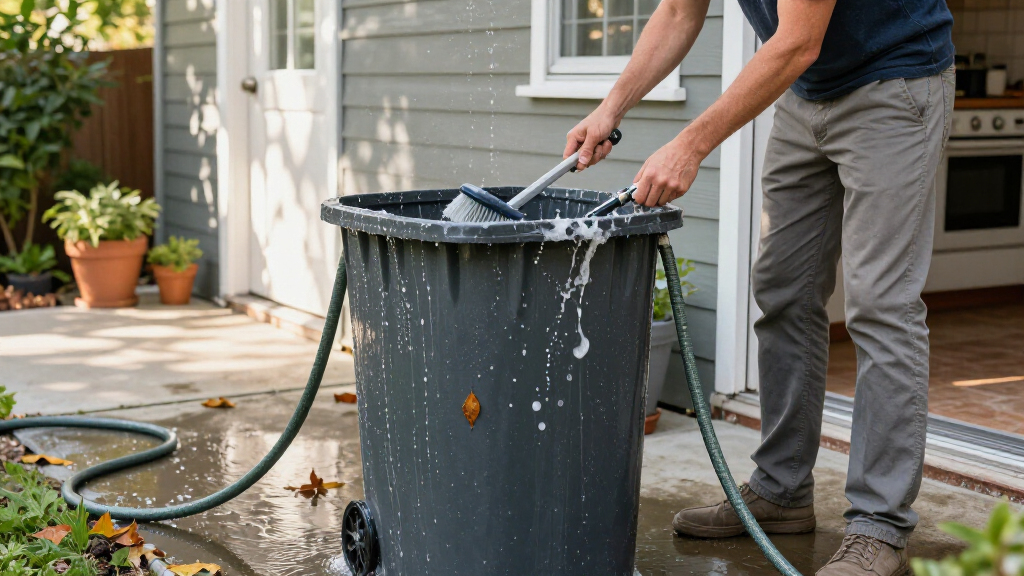
To clean, move the steamer up and down along each interior side, then repeat on the exterior if needed. The report recommends spending extra time on stuck-on grime or residue and wiping it away with a sponge, paper towel or scraper. If an odor has no obvious source, wiping down the interior after steaming may help remove remaining material. The source says residual moisture can be left to evaporate, but gives no drying time.
Hunker says hot steam can loosen grime and that heat may kill a range of bacteria. Those points are presented as the rationale for the method; the article does not identify specific bacteria, specify temperatures or establish how much sanitization a household steamer provides. It also says the approach avoids harsh chemicals, but offers no product-specific assessment or environmental comparison.
A Cleaner Bin Without Added Chemicals
Garbage cans collect food scraps, spills and other residue that can contribute to unpleasant smells. Removing the source of an odor matters more than masking it, and the recommended process combines heat with wiping to loosen and remove deposits. For people who already own a steamer, it may offer a way to clean a bin without buying a dedicated cleaner.
The advice is practical rather than a new scientific finding. Hunker’s report does not document controlled testing, establish that steam eliminates all odor-causing material, or show that it sanitizes a bin to a defined standard. Readers should treat the cleaning and sanitizing claims as the article’s explanation, not as verified performance figures. The method’s usefulness will also depend on the steamer, the soil in the bin and whether the source of the smell is removed.
For homes with recurring smells, the tip highlights a simple maintenance task: clean the container itself, not just replace the bag. That may be particularly relevant before guests arrive or when residue has leaked past a liner. It is not a substitute for removing rubbish regularly or dealing separately with pests.
As an affiliate, we earn on qualifying purchases.
How Hunker Says to Steam a Bin
The report frames steam cleaning as an extension of a tool often used on household fabrics and surfaces. Its main point is that hot steam can loosen residues while the user wipes them away. It says an expensive or unusually powerful machine is not required and suggests a hand steamer can do the job.
The steps are limited to preparation, steaming and wiping: empty the can, clear loose scraps, treat each side, focus on visible deposits and wipe the inside if an odor persists. The source does not give a recommended cleaning schedule, a specific steam temperature, or instructions for every bin material. It also does not say that all manufacturers approve steam exposure, so users should check the steamer manual and the bin’s care instructions before starting.
“A simple hand steamer will work just fine.”
— Hunker report
Limits of the Cleaning Advice
The supplied report does not provide testing data to show how effectively steam reduces odors or bacteria, or how the method performs against soap, disinfectants or other cleaning products. It does not specify a minimum temperature, exposure time, or level of sanitization. As a result, the claim that heat can kill bacteria should not be read as a guarantee that a particular bin will be disinfected.
It is also unclear whether steam is suitable for every garbage-can material or finish. The article does not list material-specific precautions, and it does not explain how to handle bins with electrical components or coatings that could be damaged by heat. Users should follow the steamer’s operating instructions and check the container maker’s care guidance. The source does not name cleaning companies or establish how widely this service is available.
Check Equipment Before Cleaning
Anyone trying the method should first read the steamer’s manual, empty the can and remove loose waste. Use the device as directed, keep hands away from the hot steam and avoid prolonged exposure on surfaces unless the equipment and bin instructions allow it. Wipe away loosened residue, then let any remaining moisture evaporate as the source describes.
If the smell remains, inspect for material trapped under a liner, in the lid or around the base, and clean those areas using a method compatible with the bin. For an insect problem, handle that separately rather than relying on a small steamer to remove a large infestation. Hunker says professional cleaning may be available in some areas, but readers would need to check local providers; the report does not identify a scheduled follow-up or further testing.
Key Questions
Can a hand steamer clean a smelly garbage can?
Hunker says a basic hand steamer can be used to loosen grime in a bin. The report does not include comparative tests, so it does not establish how well every model works.
Do I need to dry the bin after steaming?
The report says leftover moisture can evaporate on its own. It does not provide a drying time, which can vary with conditions.
Will steam kill insects in an outdoor garbage can?
Hunker says sufficiently hot steam can kill some insects, but cautions that a small hand steamer may be impractical for dealing with many at once. It recommends addressing bugs before cleaning.
Does steam sanitize every garbage can?
The report says heat can kill a variety of bacteria, but it gives no temperature, exposure time or test results. It does not establish that steam sanitizes every bin or meets a particular standard.
What should I check before using steam on a bin?
Read the steamer’s instruction manual and check the bin’s care guidance. The source does not give material-specific advice, so confirm that the surface can tolerate steam before cleaning.
Source: rss
NFL season / tailgating Picks
team gear
As an affiliate, we earn on qualifying purchases.