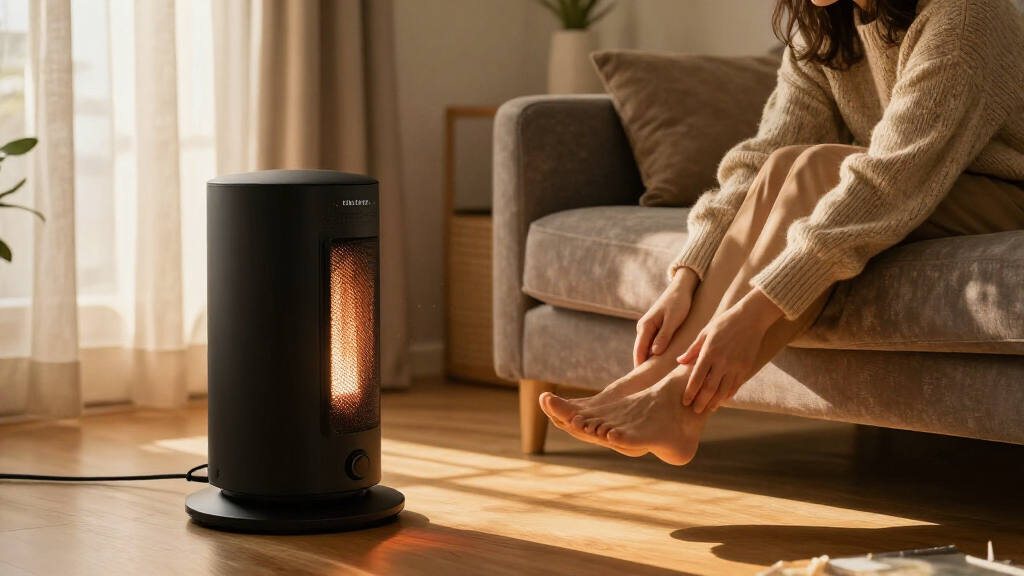

Among these energy-efficient space heaters, I’d choose the DREO 1500W Ceramic Space Heater with Thermostat as the best overall for its thermostat-led control in a compact format. The DREO Convection Panel Heater suits buyers who want steady, quiet warmth, while the De’Longhi oil-filled radiator is a better fit for longer heating sessions. The main tradeoffs are how quickly a heater warms a space, how evenly it distributes heat, and how much control it gives you over operation. A 1500W label alone does not tell you which model will suit your room or reduce energy use. Read on for the full breakdown, buying advice, and picks by need.

Get home appliances delivered free with Prime
- Fast, free delivery on millions of items
- Prime Video, Amazon Music and more included
- Member-only deals all year
Complete the kit



Key Takeaways
Thermostat control matters more than wattage differences here: Most models are listed at 1500W, so the standout distinction is how each lets you manage temperature and run time.
The DREO 1500W Ceramic Space Heater is the most balanced choice for focused room heating, while the taller DREO towers prioritize broader air movement and added reach.
Heater type changes the experience: The convection panel and De’Longhi oil-filled radiator are better suited to sustained warmth than buyers seeking a quick blast of heat.
Compact models trade reach for easy placement: The Comfort Zone desktop heater and GiveBest portable heater fit smaller personal spaces better than full-height tower units.
Oscillation and remote controls improve convenience, not efficiency by themselves: A correctly sized heater, a sensible thermostat setting, and limited use remain central to controlling energy consumption.
| Pelonis 23-Inch Oscillating Ceramic Tower Space Heater with Remote, Thermostat, and ECO Mode |  | Best for Flexible Everyday Control | Heater type: Ceramic tower | Power: 1500 watts maximum; 900 watts on low | Listed coverage: 167–200 sq. ft. | VIEW LATEST PRICE | See Our Full Breakdown |
| Lasko 23″ Ceramic Tower Space Heater with Remote Control, Silver (Model 751320) |  | Best for Simple, Set-and-Forget Heating | Heater type: Ceramic tower | Power: 1500 watts | Heat settings: 2 | VIEW LATEST PRICE | See Our Full Breakdown |
| DREO 1500W Ceramic Space Heater with Thermostat |  | Best for Quiet, Broad-Room Coverage | Model: DR-HSH003 Gold | Heating element: PTC ceramic | Power modes: 1000 W and 1500 W; listing also states 1800 W heat output | VIEW LATEST PRICE | See Our Full Breakdown |
| DREO 25-Inch Electric Space Heater with Thermostat and Remote |  | Best for Quiet Bedroom Heating | Model: DR-HSH013 | Form and height: Ceramic tower; 25 inches | Listed heat output: 1500 watts | VIEW LATEST PRICE | See Our Full Breakdown |
| DREO 1500W Convection Panel Space Heater with Remote, 24-Hour Timer, and IP24 Protection |  | Best for Wind-Free, Scheduled Heating | Model: DR-HSH041 | Heating method: Convection | Power: 1500 watts | VIEW LATEST PRICE | See Our Full Breakdown |
| Dr. Infrared Heater DR-968 Portable Space Heater, 1500W, Cherry |  | Best for Longer, Quiet Room Heating | Model: DR-968 | Power: 1,500 watts | Heating capacity: 5,200 BTU | VIEW LATEST PRICE | See Our Full Breakdown |
| GiveBest Portable Ceramic Space Heater with Fan |  | Best Simple Pick for Small Rooms | Heating modes: 750W and 1500W | Stated coverage: Up to 200 square feet | Thermostat: Electronic, adjustable | VIEW LATEST PRICE | See Our Full Breakdown |
| WINHL Portable 1500W Ceramic Space Heater with 70° Oscillation |  | Best Compact Heater with Oscillation | Model: PTC-150A | Power: 1,500 watts | Heating element: PTC ceramic | VIEW LATEST PRICE | See Our Full Breakdown |
| DREO Atom One 1500W PTC Ceramic Space Heater with Thermostat |  | Best for Precise Small-Room Temperature Control | Model: DR-HSH004 | Power: 1,500 watts | Stated coverage: Up to 200 square feet | VIEW LATEST PRICE | See Our Full Breakdown |
| De’Longhi EW7707CM 1500W Oil-Filled Radiator Heater |  | Best for Quiet, Steady Radiant Heat | Model: EW7707CM | Heater type: Oil-filled radiator | Power and electrical supply: 1,500 watts; 120 volts; 12.5 A | VIEW LATEST PRICE | See Our Full Breakdown |
| DREO Quiet Space Heater, 1500W Portable Indoor Heater with Remote and 70° Oscillation |  | Best for Quiet, Precise Bedroom Heating | Model: DR-HSH019 | Power: 1500W | Voltage: 120V | VIEW LATEST PRICE | See Our Full Breakdown |
| Toonars YND-2000H 1500W PTC Ceramic Space Heater with Thermostat, Remote, Oscillation & Timer |  | Best for ECO-Mode Controls | Model: YND-2000H | Heat output: 1500W | Form factor: Tower | VIEW LATEST PRICE | See Our Full Breakdown |
| Comfort Zone Personal Ceramic Desktop Heater with Thermostat |  | Best for Spot Heating | Heating element: Ceramic | Heat output: 1500W | Heat settings: 2 | VIEW LATEST PRICE | See Our Full Breakdown |
| DREO 30-Inch Ceramic Tower Space Heater with Remote |  | Best for Larger Rooms | Model: DR-HSH008 | Heat output: 1500W | Heating coverage: Up to 300 sq. ft. | VIEW LATEST PRICE | See Our Full Breakdown |
| DREO Portable Ceramic Space Heater with Remote |  | Best Portable All-Rounder | Model: DR-HSH006 | Heating element: PTC ceramic | Power: 1500W | VIEW LATEST PRICE | See Our Full Breakdown |
| energy efficient space heater | Model | Temperature range | Power | Timer |
|---|---|---|---|---|
| Pelonis 23-Inch Oscillating Ce | — | 40°F–95°F | 1500 watts maximum; 900 watts on low | Up to 8 hours |
| Lasko 23" Ceramic Tower Space | — | 60°F–85°F | 1500 watts | 7-hour programmable |
| DREO 1500W Ceramic Space Heate | DR-HSH003 Gold | 41°F–95°F | — | — |
| DREO 25-Inch Electric Space He | DR-HSH013 | 41°F–95°F | — | — |
| DREO 1500W Convection Panel Sp | DR-HSH041 | 41°F–95°F | 1500 watts | 1–24 hours |
| Dr. Infrared Heater DR-968 Por | DR-968 | — | 1,500 watts | 12-hour automatic shut-off |
| GiveBest Portable Ceramic Spac | — | — | — | — |
| WINHL Portable 1500W Ceramic S | PTC-150A | — | 1,500 watts | Up to 12 hours |
| DREO Atom One 1500W PTC Cerami | DR-HSH004 | — | 1,500 watts | 1–12 hours |
| De’Longhi EW7707CM 1500W Oil-F | EW7707CM | — | — | — |
| DREO Quiet Space Heater | DR-HSH019 | 41–95°F | 1500W | — |
| Toonars YND-2000H 1500W PTC Ce | YND-2000H | 59–95°F | — | Up to 12 hours |
| Comfort Zone Personal Ceramic | — | — | — | — |
| DREO 30-Inch Ceramic Tower Spa | DR-HSH008 | 41–95°F | — | — |
| DREO Portable Ceramic Space He | DR-HSH006 | 41–95°F, adjustable in 1°F increments | 1500W | Up to 12 hours |
More Details on Our Top Picks
Pelonis 23-Inch Oscillating Ceramic Tower Space Heater with Remote, Thermostat, and ECO Mode
The Pelonis makes sense for buyers who want several ways to manage heat without moving from the couch: ECO mode, adjustable temperature control, oscillation, and a remote give it more day-to-day control than the Lasko 751320, which has only two heat settings. Its 900-watt low setting can use less power than running at its 1500-watt maximum, though neither setting makes electric resistance heat inherently more efficient at producing warmth; the benefit comes from using less output when the room needs less heat. The 70-degree sweep and compact footprint suit small-to-medium rooms better than the large-room wording might suggest. I’d rank it below the DREO DR-HSH003 for quiet operation and stated room coverage, and the product data gives inconsistent coverage and noise figures. Choose it for flexible controls, not a guaranteed large-room solution.
Pros:- 900-watt low setting offers a lower-output alternative to maximum heat.
- ECO mode and adjustable temperature control support more tailored operation.
- Remote, 70-degree oscillation, and an 8-hour timer simplify room-to-room comfort.
- Tip-over and overheat protection are listed, and the carry handle aids repositioning.
Cons:- Listed coverage and noise figures vary across the product information.
- The room guidance points to small-to-medium spaces despite large-room wording in the title.
- At 1500 watts on high, it draws substantial power when used at full output.
Best for: People heating a small-to-medium bedroom or home office who want a lower-output setting, ECO mode, and remote control.
Not ideal for: Buyers who need dependable coverage for a large room or who prioritize clearly stated noise and coverage figures.
- Heater type:Ceramic tower
- Power:1500 watts maximum; 900 watts on low
- Listed coverage:167–200 sq. ft.
- Oscillation:70 degrees
- Temperature range:40°F–95°F
- Timer:Up to 8 hours
- Controls:Touch controls and remote
- Safety:Tip-over switch and overheat protection
Our verdict“Pick the Pelonis for adjustable everyday heating in a smaller room, but choose the DREO DR-HSH003 if quieter operation and broader stated coverage matter more.”
Lasko 23″ Ceramic Tower Space Heater with Remote Control, Silver (Model 751320)
The Lasko 751320 is the straightforward pick for buyers who prefer a simple thermostat and timer over a long list of modes. Its 1500-watt output, adjustable thermostat, remote, and wide oscillation cover the basics for warming a medium-sized room, while the cool-touch housing and overheat protection add practical safeguards. Compared with the Pelonis, it offers fewer heat settings and a shorter timer, so it gives up fine-grained control; the Pelonis also has an ECO mode and a lower 900-watt setting that can reduce draw when full output is unnecessary. The Lasko’s three-year limited warranty is longer than the one-year terms listed for several alternatives here. It remains a relatively tall tower, and its two settings make it less suited to buyers who want to tune output closely to changing room conditions.
Pros:- Adjustable thermostat and remote support hands-off temperature management.
- Wide oscillation helps spread warmth beyond the area directly in front of the unit.
- Cool-touch housing and overheat protection are useful household safety features.
- Three-year limited warranty is longer than the one-year terms listed for the Pelonis and DREO DR-HSH003.
Cons:- Only two heat settings provide less output flexibility than the Pelonis.
- The 7-hour timer is shorter than the Pelonis 8-hour and DREO DR-HSH003 12-hour timers.
- Tall tower form can take up awkward floor space in a small room.
Best for: People who want a remote-operated tower heater for a medium room and value simple controls and a longer stated warranty.
Not ideal for: Energy-conscious buyers seeking a dedicated ECO mode, multiple low-output choices, or a compact heater for a crowded room.
- Heater type:Ceramic tower
- Power:1500 watts
- Heat settings:2
- Thermostat:Adjustable
- Timer:7-hour programmable
- Temperature range:60°F–85°F
- Voltage and amperage:110 V; 12.5 A
- Warranty:3-year limited
Our verdict“Choose the Lasko if you want uncomplicated remote-controlled warmth and a longer stated warranty, but skip it if ECO control or more heat-setting options are priorities.”
DREO 1500W Ceramic Space Heater with Thermostat
The DREO DR-HSH003 pairs an energy-saving use case with features that make it easier to heat only the room you occupy: ECO mode, an adjustable thermostat, and a 12-hour timer can help avoid running maximum heat longer than needed. Its stated coverage of up to 270 square feet is broader than the Pelonis’s listed 167–200 square feet, and its listed 34 dB noise level is well below the Pelonis’s conflicting 50–52 dB figures. That makes this a stronger fit for a bedroom or work area where sound matters. The tradeoff is specification uncertainty: the listing calls it a 1500-watt heater and lists 1000- and 1500-watt modes, but also gives an 1800-watt heat-output figure. It must be plugged directly into a wall outlet, so it is less convenient to position than a heater used with an extension cord.
Pros:- ECO mode and an adjustable thermostat provide more control than the Lasko’s two heat settings.
- Listed 34 dB operation is quieter than the stated Pelonis noise figures.
- Listed coverage up to 270 square feet exceeds the Pelonis’s stated 167–200 square feet.
- 12-hour timer, remote, tip-over protection, and overheat protection support convenient scheduled use.
Cons:- Product data conflicts on power, listing 1500-watt modes and an 1800-watt heat-output figure.
- Manufacturer guidance says to plug it directly into a wall outlet, limiting placement flexibility.
- Coverage is a listed maximum, not a guarantee of uniform warmth in every room.
Best for: Sleepers and home-office users who want quiet ceramic heat, thermostat control, and stated coverage up to 270 square feet.
Not ideal for: People who need to place a heater far from an outlet or want fully consistent power specifications before buying.
- Model:DR-HSH003 Gold
- Heating element:PTC ceramic
- Power modes:1000 W and 1500 W; listing also states 1800 W heat output
- Listed coverage:Up to 270 sq. ft.
- Noise level:34 dB
- Oscillation:70 degrees
- Temperature range:41°F–95°F
- Timer and safety:12-hour timer; tip-over and overheat protection; 24-hour automatic shutoff
Our verdict“Choose the DR-HSH003 for quieter, thermostat-led heating across a larger stated area, provided its conflicting power figures and direct-outlet requirement work for you.”
DREO 25-Inch Electric Space Heater with Thermostat and Remote
For rooms where fan noise can be as distracting as running heat, this 25-inch DREO stands out with a listed 25 dB noise level, 70-degree oscillation, and temperature control from 41°F to 95°F. Its 1°F ECO-mode adjustments can help maintain a chosen setting without relying on constant full-output operation. Compared with the DR-HSH003, this model is listed as quieter, though the DR-HSH003 provides more detailed controls and a 12-hour timer in its specifications. The 25-inch tower also takes more vertical space than the compact DR-HSH003. One electrical detail deserves attention: the listing gives 1500 watts but also states 16 amps at 120 volts, figures that do not align. Buyers should verify circuit requirements in the product documentation rather than assume it suits any ordinary outlet. Its stated 100–270-square-foot range is broad, but room conditions affect results.
Pros:- Listed 25 dB noise level suits spaces where operating sound is a concern.
- ECO mode offers 1°F temperature adjustments for more controlled heating.
- 70-degree oscillation and stated 100–270-square-foot coverage support use across different room sizes.
- Tip-over protection and child lock add useful safety controls.
Cons:- The listed 16 A at 120 V does not align with the stated 1500 W output, so electrical requirements need checking.
- At 25 inches tall, it is less compact than the DR-HSH003.
- The provided specs do not list a timer, unlike the DR-HSH003’s 12-hour timer.
Best for: Light sleepers and remote workers who want a quiet oscillating tower with fine temperature adjustments for a bedroom or office.
Not ideal for: Buyers with limited floor space or anyone unable to confirm the heater’s electrical requirements for their circuit.
- Model:DR-HSH013
- Form and height:Ceramic tower; 25 inches
- Listed heat output:1500 watts
- Listed coverage:100–270 sq. ft.
- Noise level:25 dB
- Temperature range:41°F–95°F
- Oscillation:70 degrees
- Electrical listing:120 V; 16 A
Our verdict“Pick this DREO for quiet, finely adjusted bedroom heating if its electrical requirements are confirmed and you have room for a taller tower.”
DREO 1500W Convection Panel Space Heater with Remote, 24-Hour Timer, and IP24 Protection
Unlike the ceramic towers above, this DREO uses convection heating for quiet, wind-free warmth, making it a better match for people who dislike a direct stream of heated air. Its ECO mode and temperature sensing can adjust output around a set temperature, while a 1–24-hour timer allows longer scheduling than the Pelonis’s 8-hour timer or the Lasko’s 7-hour timer. That convenience does not change the basic energy math: at 1500 watts, it still draws that maximum when operating at full output, so thermostat settings and timed use matter more than the panel format alone. Wheels help move its 19.4-pound body between rooms, but it is much heavier than either ceramic tower. The listed IP24 protection may appeal to buyers comparing protection ratings, though the supplied details do not spell out the permitted placement conditions.
Pros:- Convection design provides wind-free warmth rather than a focused forced-air stream.
- ECO mode and temperature sensing can moderate output around the chosen temperature.
- 24-hour timer offers a longer scheduling window than the Pelonis and Lasko timers.
- Wheels make the 19.4-pound panel easier to reposition between rooms.
Cons:- At 19.4 pounds, it is much heavier than the Pelonis and DR-HSH003 ceramic heaters.
- No room-coverage figure is provided in the supplied specifications.
- The 1500-watt maximum still draws substantial power when the heater runs at full output.
Best for: People who want quiet, wind-free warmth in a bedroom, study, or living room and plan to use thermostat sensing and scheduled operation.
Not ideal for: Buyers seeking a lightweight portable heater, oscillating air circulation, or a clearly listed room-coverage figure.
- Model:DR-HSH041
- Heating method:Convection
- Power:1500 watts
- Temperature range:41°F–95°F
- Timer:1–24 hours
- Controls:LED touch panel and remote
- Dimensions and weight:7.17 × 33.9 × 21.46 inches; 19.4 lb
- Listed features:ECO mode, temperature sensing, child lock, overheat protection, wheels, IP24 protection
Our verdict“Choose this DREO if quiet, wind-free convection and a long timer matter more than low weight or oscillating airflow.”
Dr. Infrared Heater DR-968 Portable Space Heater, 1500W, Cherry
The DR-968 combines infrared and PTC heating with a larger stated coverage area than the compact GiveBest and WINHL heaters, making it a better fit for warming a shared room rather than just a desk or nearby seat. Its adjustable thermostat and 12-hour timer can help manage operation around your routine, while the remote and quiet 39 dB operation reduce the need to get up or put up with a fan-heavy sound. The tradeoff is its size and weight: at 19 pounds, it is less convenient to shift between rooms than the lightweight DREO Atom One. Like the other 1500W corded models here, it still needs a suitable outlet, and its coverage rating should not be read as a promise of uniform warmth in every room. I’d choose it for sustained supplemental heat, not frequent carrying.
Pros:- Dual infrared and PTC heating system
- Remote, adjustable thermostat, and 12-hour timer
- Quiet 39 dB operation
- Caster wheels and tip-over and overheat protection
Cons:- At 19 pounds, it is heavier to relocate than compact ceramic options such as the DREO Atom One
- Requires a corded outlet and draws up to 1500 watts
- The stated 576-square-foot coverage does not guarantee even heating throughout a large or poorly insulated room
Best for: People seeking quiet supplemental heat for a larger living area who want a remote, timer, and caster wheels.
Not ideal for: Buyers who regularly carry a heater between rooms or need heat without a nearby electrical outlet; its 19-pound body and cord limit flexibility.
- Model:DR-968
- Power:1,500 watts
- Heating capacity:5,200 BTU
- Stated coverage:Up to 576 square feet
- Thermostat range:50–85 °F
- Timer:12-hour automatic shut-off
- Noise level:39 dB
- Dimensions and weight:13 × 11 × 16 inches; 19 pounds
- Safety:Tip-over and overheat protection
Our verdict“Choose the DR-968 for quiet, feature-rich supplemental heat in a room where you can leave a heavier heater plugged in.”
GiveBest Portable Ceramic Space Heater with Fan
The GiveBest suits buyers who want straightforward heat for a small room without the extra controls found on the DREO Atom One or WINHL tower. Its two heat settings let you choose between 750W and 1500W, while the cool-air fan adds a use beyond heating season. That lower setting can reduce the heater’s power draw while it runs, though it also produces less heat; it does not make the unit more efficient at converting electricity into warmth. The compact body and carry handle make it easier to move than the heavier Dr. Infrared DR-968. Coverage is rated for up to 200 square feet, so it is a better match for a bedroom or office than an open-plan space. Tip-over and overheat shutoffs add a safety layer, but the noted restart behavior after righting it may interrupt operation.
Pros:- 750W and 1500W settings provide a lower-power option for milder heating needs
- Cool-air fan adds seasonal flexibility
- Compact design with a carry handle
- Tip-over and overheat shutoff protections
Cons:- Rated for small to medium rooms rather than larger shared spaces
- No timer or remote control is listed
- Tip-over protection may restart the heater after it is returned upright
Best for: People who need portable, basic supplemental heat for a bedroom, home office, or other room up to about 200 square feet.
Not ideal for: Buyers who want a timer, remote, or wide-area heat distribution; this model has basic controls and is intended for smaller spaces.
- Heating modes:750W and 1500W
- Stated coverage:Up to 200 square feet
- Thermostat:Electronic, adjustable
- Fan mode:Cool-air mode
- Voltage and amperage:120V; 12.5A
- Safety:Overheat and tip-over protection
- Cord length:6 feet
- Form factor:Compact, portable design with carry handle
Our verdict“Pick the GiveBest for uncomplicated, portable heat in a small room, and choose the DREO Atom One instead if you want a thermostat, timer, and remote.”
WINHL Portable 1500W Ceramic Space Heater with 70° Oscillation
The WINHL is the smallest-footprint choice in this group, with a compact tower body and 70° oscillation to spread warmth across a nearby area instead of focusing it in one direction. Its ECO mode, thermostat, remote, and 12-hour timer offer more day-to-day control than the simpler GiveBest, while the five listed speeds add flexibility. Those controls can help match operation to comfort needs, but the 1500W maximum remains a substantial electrical load; the supplied data does not establish lower energy use than another 1500W heater under the same conditions. Compared with the room-rated DREO Atom One, WINHL’s description is more clearly aimed at small spaces and personal heating, not a room-wide solution. It is light and easy to position, but requires a suitable wall outlet, and its remote needs two AAA batteries that are not included.
Pros:- Compact 1.47 kg body for easy repositioning
- 70° oscillation helps spread warmth around a small area
- Remote, thermostat, ECO mode, and 12-hour timer
- Tip-over shutoff, overheat protection, and ETL listing
Cons:- Designed for supplemental heat in small spaces, not whole-house use
- Remote requires two AAA batteries that are not included
- Must connect directly to a suitable wall outlet; extension cords and power strips are not recommended
Best for: People heating a small personal area who want oscillation, remote controls, ECO mode, and a compact heater that is easy to reposition.
Not ideal for: Anyone expecting whole-room or whole-house heating, or who needs to run a heater from an extension cord or power strip.
- Model:PTC-150A
- Power:1,500 watts
- Heating element:PTC ceramic
- Oscillation:70°
- Controls:Five speeds, thermostat, and ECO mode
- Timer:Up to 12 hours
- Dimensions and weight:5.91 × 5.91 × 9.85 inches; 1.47 kg
- Safety and certification:Tip-over shutoff, overheat protection, ETL listed
- Use:Indoor; direct connection to a suitable wall outlet recommended
Our verdict“Choose WINHL when compact size and oscillation matter more than room-wide coverage or included remote batteries.”
DREO Atom One 1500W PTC Ceramic Space Heater with Thermostat
The DREO Atom One stands out for buyers who want to set a specific room temperature rather than choose only a broad heat level. Its thermostat adjusts in 1°F increments across a 41–95°F range, and ECO mode, five heat settings, and a timer give more control than the GiveBest’s simpler two-setting design. The 70° oscillation helps distribute warmth across a room rated for up to 200 square feet; it remains a supplemental heater, not a replacement for central heating in a larger or drafty space. At 1.75 kg, it is far easier to relocate than the 19-pound Dr. Infrared DR-968. Its listed 37.5 dB minimum noise level also makes it a quieter-style compact option, though actual sound can vary by setting. The tradeoff is limited stated coverage and indoor-only use.
Pros:- Thermostat adjusts in 1°F increments from 41–95°F
- ECO mode, five heat settings, 70° oscillation, and 1–12-hour timer
- Compact 1.75 kg design with detachable filter
- Tip-over and overheat protection plus enhanced safety plug
Cons:- Coverage is limited to rooms up to 200 square feet
- Indoor use only
- Like other 1500W electric heaters, it requires a suitable outlet and can draw substantial power at full output
Best for: People heating a bedroom or home office up to about 200 square feet who value fine thermostat adjustments, oscillation, and a remote.
Not ideal for: Buyers who need heat for a large open area, outdoor use, or a heavy-duty primary heating source.
- Model:DR-HSH004
- Power:1,500 watts
- Stated coverage:Up to 200 square feet
- Heating element:PTC ceramic
- Thermostat range:41–95°F, adjustable in 1°F increments
- Oscillation and settings:70° oscillation; five heat settings
- Timer:1–12 hours
- Noise level:As low as 37.5 dB
- Safety:Tip-over protection, overheat protection, enhanced safety plug
Our verdict“Choose the DREO Atom One for compact room heating with more precise controls than the basic GiveBest.”
De’Longhi EW7707CM 1500W Oil-Filled Radiator Heater
The De’Longhi EW7707CM takes a different approach from the ceramic heaters here: its sealed oil-filled radiator provides quiet radiant heat without a fan, which can suit a bedroom or study where moving air and fan noise are unwelcome. Its ComfortTemp feature and adjustable thermostat are aimed at maintaining comfort rather than rapidly directing warmth at one spot, so it is a steadier choice than the oscillating DREO Atom One or WINHL. The three heat settings offer some control over output, but a 1500W maximum does not guarantee lower electricity use than other 1500W heaters; consumption depends on how long it runs and the setting used. Built-in wheels help move it, though a radiator is less compact than the small ceramic units. It also lacks a listed timer and remote, limiting scheduled or distance control.
Pros:- Fan-free radiant heating avoids circulating air through the room
- Three heat settings and adjustable thermostat
- ComfortTemp feature supports steady temperature control
- Built-in wheels and thermal cutoff with antifreeze setting
Cons:- No timer or remote control is listed
- Less compact than the GiveBest and small DREO Atom One
- Designed for small to medium indoor spaces rather than large open areas
Best for: People who want quiet, fan-free supplemental heat for a bedroom, home office, or study and can leave the radiator in place.
Not ideal for: Buyers who need quick directional warmth, remote operation, a timer, or a compact heater for frequent room-to-room moves.
- Model:EW7707CM
- Heater type:Oil-filled radiator
- Power and electrical supply:1,500 watts; 120 volts; 12.5 A
- Heating method:Radiant
- Heat settings:Three
- Heating element:Permanently sealed diathermic oil reservoir
- Temperature controls:ComfortTemp and adjustable thermostat
- Safety features:Thermal cutoff and antifreeze setting
- Recommended use:Indoor; small to medium spaces
Our verdict“Choose the De’Longhi for quiet, steady heat in a bedroom or study, but pick a ceramic model if you need oscillation, a timer, or remote control.”
DREO Quiet Space Heater, 1500W Portable Indoor Heater with Remote and 70° Oscillation
The DREO Heater 319 earns this spot for buyers who want quiet operation and fine thermostat control in a room of up to 200 sq. ft. Its stated 34 dB noise level and 1°F temperature increments make it better suited to sleeping or focused work than a heater where loud airflow or coarse controls are a concern. The 70° oscillation helps spread warmth beyond the area directly in front of it, though the DREO 30-Inch Ceramic Tower offers a wider adjustable sweep and a larger stated coverage area. That taller model may suit shared rooms better; this one is the more targeted pick. Its 1500W draw is still a full-power household heater, so precise settings can help manage comfort, but they do not make it use less energy for the same heat output. No app or smart-home control is listed.
Pros:- Stated 34 dB operation suits bedrooms and quiet work areas.
- Thermostat adjusts in 1°F increments for more controlled comfort.
- 70° oscillation distributes airflow across a broader area than fixed-direction heating.
- Includes remote control and tip-over, overheat, and child-lock protections.
Cons:- 70° oscillation is narrower than the adjustable sweep offered by the DREO 30-Inch Ceramic Tower.
- No app or smart-home integration is listed.
- At 1500W, it still draws full heater power when operating at its highest setting.
Best for: Bedroom users and home-office workers who prioritize low operating noise, remote control, and fine temperature adjustments in a room around 200 sq. ft.
Not ideal for: People heating a large shared space or seeking smart-home app control; its stated coverage is smaller than the DREO 30-Inch Ceramic Tower’s, and no app integration is listed.
- Model:DR-HSH019
- Power:1500W
- Voltage:120V
- Heating coverage:Up to 200 sq. ft.
- Noise level:34 dB
- Temperature range:41–95°F
- Oscillation:70°
- Safety features:Tip-over and overheat protection; child lock
Our verdict“Choose this DREO for quiet, closely controlled warmth in a bedroom or office rather than for broad coverage or connected controls.”
Toonars YND-2000H 1500W PTC Ceramic Space Heater with Thermostat, Remote, Oscillation & Timer
The Toonars YND-2000H stands out for combining ECO mode, a thermostat, and a 12-hour timer in a 1500W tower heater. Those controls give buyers practical ways to match operation to a schedule and avoid leaving the heater running longer than needed; they do not change the heater’s maximum draw. Compared with the Comfort Zone Personal Ceramic Desktop Heater, the Toonars is designed to circulate warmth around a room rather than concentrate it near a desk. Its 70° oscillation and stated 35 dB noise level make it a more room-oriented choice, while the Comfort Zone is smaller and simpler for close-range use. The Toonars thermostat starts at 59°F, so it offers less low-temperature flexibility than the DREO Heater 319, which goes down to 41°F. It is indoor-only and comes in a specific black-and-gold finish.
Pros:- ECO mode and thermostat provide controls for managing room comfort and operating time.
- 12-hour timer supports scheduled shutoff.
- 70° oscillation helps spread warmth across a room.
- Remote control and tip-over and overheat protections are included.
Cons:- Thermostat range begins at 59°F, above the 41°F minimum on the DREO Heater 319.
- Indoor use only; it is not suited to patios or other outdoor areas.
- Black-and-gold is the only listed color, limiting finish choice.
Best for: People who want a remote-controlled tower heater with ECO mode and scheduled shutoff for a bedroom, office, or living room.
Not ideal for: Buyers who need settings below 59°F, outdoor use, or a small desktop heater; its tower format and minimum thermostat setting may not fit those needs.
- Model:YND-2000H
- Heat output:1500W
- Form factor:Tower
- Temperature range:59–95°F
- Oscillation:70°
- Timer:Up to 12 hours
- Noise level:35 dB
- Safety features:Flame-retardant materials, overheat protection, and tip-over protection
Our verdict“Pick the Toonars if ECO mode, oscillation, and timer control matter more than a lower thermostat minimum or compact desktop size.”
Comfort Zone Personal Ceramic Desktop Heater with Thermostat
For energy-conscious use, the Comfort Zone makes most sense when the goal is warming one person or a small area, not bringing an entire room up to temperature. Its tabletop size and two heat settings let users direct heat where they are seated, which can be a better fit than running a room-sized heater for a single desk. By comparison, the DREO Heater 319 adds oscillation, remote control, and more precise temperature increments for broader room comfort, but its larger feature set may be unnecessary for close-range warmth. The Comfort Zone’s listed coverage of 100–150 sq. ft. should not be read as a promise of even heating in every room; placement and room conditions matter. It has tip-over and overheat protection and a cool-touch housing, though it requires a corded outlet and offers fewer controls than the tower options.
Pros:- Compact 2.5-pound tabletop design fits desks and small spaces.
- Two heat settings and a manual thermostat provide basic output control.
- Tip-over and overheat protection are included.
- Cool-touch housing is useful around a desk or small workspace.
Cons:- Designed for localized warmth rather than broad whole-room heat distribution.
- No remote, oscillation, or timer is listed.
- Requires a corded electric outlet and draws up to 1500W.
Best for: Desk workers or people seated in one spot who want localized warmth without relying on a larger oscillating heater.
Not ideal for: Households seeking even heat across a large or shared room, or anyone who needs cordless operation, a remote, or a timer.
- Heating element:Ceramic
- Heat output:1500W
- Heat settings:2
- Listed coverage:100–150 sq. ft.
- Dimensions:6.5 × 5.7 × 10.1 in
- Weight:2.5 lb
- Mounting type:Tabletop
- Safety features:Tip-over and overheat protection; cool-touch housing
Our verdict“Choose the Comfort Zone for close-range desk warmth, but pick an oscillating tower such as the DREO Heater 319 for wider room coverage and remote control.”
DREO 30-Inch Ceramic Tower Space Heater with Remote
Among these five, the DREO 30-Inch tower has the strongest stated case for heating a larger area: its coverage claim reaches 300 sq. ft., compared with 200 sq. ft. for the DREO Heater 319 and the portable DREO DR-HSH006. Its adjustable 30°–120° oscillation also lets buyers choose between directing airflow and sweeping it widely, a useful distinction in shared spaces. The listed 25 dB noise level is lower than the other DREO models here, though actual room acoustics and placement affect perceived sound. ECO mode, a thermostat, and a timer add useful controls, but a 1500W heater still uses substantial power while producing heat; the controls help manage operation rather than create more heat per watt. The tradeoff is its nearly 30-inch height and floor footprint, which make it less convenient than a compact personal heater.
Pros:- Largest stated coverage in this batch, at up to 300 sq. ft.
- Oscillation can be set from 30° through 120° to suit room layout.
- Includes ECO mode, adjustable thermostat, remote, and 1–12-hour timer.
- Listed 25 dB noise level is the quietest stated figure among these five products.
Cons:- Tall tower design takes up floor space and may be awkward for desktop or close-range placement.
- Maximum heat output is 1500W, so its controls do not reduce the energy needed to produce heat at full output.
- Coverage is a stated claim and may vary with room layout and conditions.
Best for: People who need a remote-controlled heater for a larger living area and want adjustable oscillation, ECO mode, and timer controls.
Not ideal for: Desk users or people with little open floor space; its 29.7-inch tower body is less compact than the Comfort Zone tabletop heater.
- Model:DR-HSH008
- Heat output:1500W
- Heating coverage:Up to 300 sq. ft.
- Oscillation:30°–60°–90°–120°
- Noise level:25 dB
- Temperature range:41–95°F
- Dimensions:7.9 × 7.9 × 29.7 in
- Features:Remote, ECO mode, 1–12-hour timer, child lock, tip-over and overheat protection
Our verdict“Choose this model when wider stated coverage and adjustable oscillation matter more than a compact footprint.”
DREO Portable Ceramic Space Heater with Remote
The DREO DR-HSH006 is a flexible pick for buyers who want portable warmth with several ways to control operation: it has Power Heat, ECO, and Fan Only modes, a 12-hour timer, and temperature adjustment in 1°F increments. Its stated 200 sq. ft. coverage places it alongside the DREO Heater 319, but the Heater 319 lists 70° oscillation while this model’s supplied specs do not state an oscillation angle. The DR-HSH006 instead offers a fan-only mode, which can be handy when heat is unnecessary. At 34 dB, it is listed as quiet, and its child lock, safety plug, tip-over protection, and overheat protection add safeguards. Like the other 1500W options here, ECO mode is a control feature, not a guarantee of lower energy use in every setting; this heater is best used to warm an occupied area rather than a larger space.
Pros:- Three modes include Power Heat, ECO, and Fan Only.
- Thermostat adjusts in 1°F increments across a 41–95°F range.
- 12-hour timer and remote support convenient operation.
- Includes child lock, safety plug, flame-retardant materials, tip-over and overheat protection.
Cons:- Listed coverage is 200 sq. ft., below the DREO 30-Inch Tower’s stated 300 sq. ft.
- No oscillation angle is provided in the supplied specifications.
- At up to 1500W, it is not a low-draw alternative when running at full heat.
Best for: People who want a portable indoor heater with multiple modes, fine temperature adjustment, a timer, and child-safety controls.
Not ideal for: Buyers needing documented wide oscillation or heat for a space larger than the listed 200 sq. ft. coverage.
- Model:DR-HSH006
- Heating element:PTC ceramic
- Power:1500W
- Heating coverage:Up to 200 sq. ft.
- Temperature range:41–95°F, adjustable in 1°F increments
- Modes:Power Heat, ECO, Fan Only
- Noise level:34 dB
- Timer:Up to 12 hours
Our verdict“Choose the DR-HSH006 for portable, mode-flexible heating in a modest indoor space, and favor the taller DREO tower for broader stated coverage.”
How We Picked
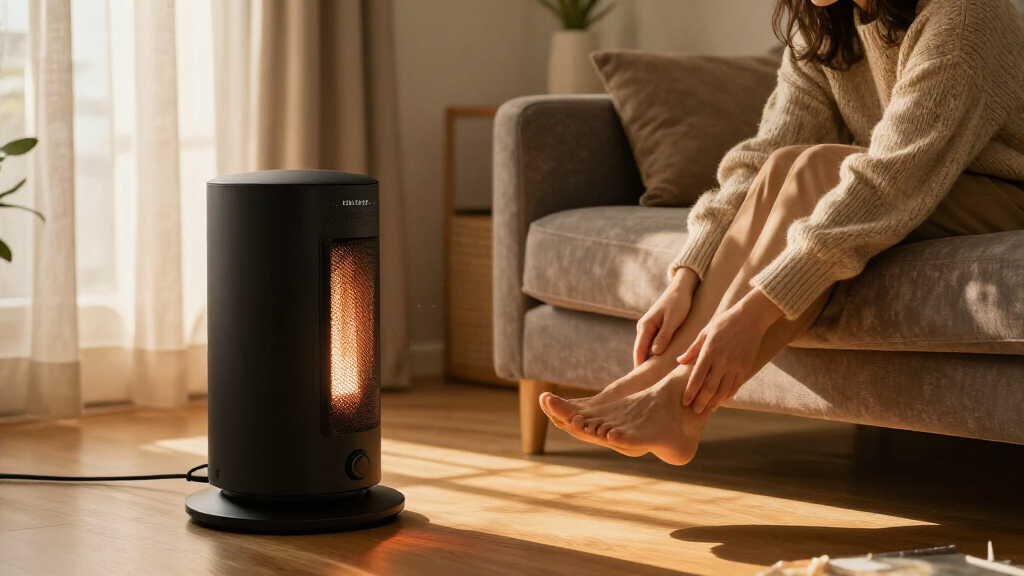
I compared these 15 heaters by the features that can change day-to-day heating decisions: thermostat and ECO controls, timer and remote availability, oscillation, heater format, and portability. I also weighed how each design fits a use case—from quick, directional warmth to quieter, sustained heating—rather than treating every 1500W unit as interchangeable. Since the lineup gives limited information about measured energy use, room coverage, or operating cost, I do not claim that one model consumes less electricity at the same heat output.
The ranking favors useful temperature control and practical versatility first, then gives specialized formats credit when they suit a clear need. Models with few listed controls or a narrower use case rank lower, even if their basic heating function may be adequate. Product names and listed features inform these comparisons; actual results depend on room size, insulation, placement, and how the heater is operated.
Factors to Consider When Choosing Energy Efficient Space Heaters
Space-heater efficiency is less about finding a magic low-wattage model and more about matching heat output and controls to the area you actually use. I’d make the decision by checking the room, the heating pattern, and the way you plan to operate the unit.
Match the Heater to the Space You Use
Before choosing a heater, identify whether you need warmth for a desk, one occupied room, or a larger shared area. A compact personal heater can avoid heating unused space, but it may feel inadequate when several people need warmth across a room. Taller oscillating units spread warm airflow across a wider area, though they still do not replace central heating for an entire home. Check the manufacturer’s stated coverage and compare it with your room dimensions rather than assuming that a similar wattage means similar comfort. Drafts, high ceilings, and poor insulation can make a room feel colder than its floor area suggests. Buying more heater than your regular use requires can encourage unnecessary operation.
Treat Thermostats and ECO Modes as Usage Controls
A thermostat can help a heater stop or reduce output once the surrounding area reaches a set temperature, which may prevent continuous full-power operation. ECO modes can make adjustments automatically, but their names do not prove a particular level of energy savings. Placement affects what the thermostat senses: a unit near a cold window or an obstructed corner may behave differently from one placed in open space. Avoid setting the temperature higher than you need in hopes of warming the room faster; a higher setting does not make the heater deliver heat more quickly. If you prefer manual control, simple settings may be less confusing than a feature-heavy interface. Compare the control options with your routine, not just the number of buttons listed.
Choose a Heating Style for Your Routine
Ceramic fan heaters are often chosen for quick, directed warmth, making them convenient when you enter a chilly room and want heat promptly. Convection panels and oil-filled radiators are better matched to longer sessions where steady warmth and less emphasis on moving air matter. Neither style is automatically more efficient in every home: the room, thermostat use, and duration of operation shape consumption. Fan-driven warmth can be noticeable quickly, but it may also create airflow and sound that some people dislike. Radiators take a different approach and can remain warm after their heating element cycles off. Choose for how you occupy the room rather than assuming one heater type always costs less to run.
Use Timers and Remotes to Support Better Habits
A timer can limit operation to the hours you expect to be in a room, while a remote makes it easier to adjust settings without approaching a hot appliance. Those features can support energy-conscious use only if you set them deliberately. A timer left on for longer than needed may waste electricity, and a remote does not reduce power consumption by itself. Think through your routine: a bedroom heater used before bedtime has different control needs from a unit used intermittently at a desk. If you will rarely use a feature, a simpler model may be easier to operate consistently. Check whether the controls are clear enough to change temperature and shutoff settings without guesswork.
Account for Placement, Safety, and Maintenance
Safe placement is part of choosing a heater, not an afterthought. Keep the unit on a stable, level surface and follow its clearance instructions around curtains, bedding, furniture, and other materials. A heater should not be covered or placed where airflow is blocked, since poor placement can impair operation and create hazards. If you want to use a heater in a bathroom or another damp area, look for explicit suitability and protection details; an IP rating alone should be read alongside the manufacturer’s instructions. Dust can collect around vents, so check the cleaning guidance and unplug the heater before maintenance. A model that is easy to place and care for is more practical than one whose features are hard to use safely.
Compare Total Use, Not Just the Product Label
Most heaters in this lineup are specified at 1500W, so their maximum electrical draw may be similar when operating at full power. That figure does not tell you how long a unit will run to maintain comfort, or how much energy it will use under your conditions. A smaller heater may suit a personal zone but struggle in a room that is too large, leading to longer or less comfortable use. A thermostat, timer, or suitable heating style can help you tailor operation, though none guarantees a lower bill. Consider whether you will heat one occupied room instead of the whole home, and whether the heater is meant to supplement another system. Focus on your likely hours of use and the controls available to manage them.
Frequently Asked Questions
Does a 1500W space heater use less electricity if it has an ECO mode?
Not automatically. A 1500W rating describes the heater’s maximum power draw, while an ECO mode may adjust output or switch the heater on and off to maintain a set temperature. Actual electricity use depends on how often it runs, the room’s heat loss, and the setting you choose. Compare the manual’s explanation of ECO operation rather than relying on the label alone. A realistic thermostat setting and heating only the occupied room can matter more than the mode name.
Is a ceramic heater or an oil-filled radiator a better choice for a bedroom?
Choose based on your preferred heating pattern and sensitivity to airflow or noise. A ceramic fan heater can provide more immediate directed warmth, which may suit short periods before bed. An oil-filled radiator is better suited to longer sessions of steady warmth, but it takes a different approach and may be bulkier to place. Neither option is universally more energy efficient; thermostat use and room conditions affect how much it runs. Check operating instructions and keep any heater well clear of bedding and curtains.
Can a compact personal heater warm a whole room?
A compact heater can be a sensible choice for warming the area around one person, but that does not mean it will provide even comfort across a larger room. Room size, insulation, ceiling height, and drafts all affect how far the warmth reaches. Look for the maker’s stated coverage and treat it as a guide rather than a guarantee. If more than one person needs warmth around the room, a taller or oscillating design may fit better. Using an undersized heater for a large space can lead to disappointing comfort and extended operation.
Do oscillation and remote controls make a space heater more energy efficient?
Neither feature reduces energy use on its own. Oscillation moves warm airflow across a broader area, which may help people in different parts of a room feel more comfortable. A remote can make temperature adjustments or shutoff easier, while a thermostat may regulate operation around a chosen setting. The energy outcome still depends on how long the heater runs and how much heat the room loses. Treat convenience features as tools for better control, not proof of lower electricity consumption.
What should I check before using a space heater in a bathroom?
Check the specific model’s manual for approved locations and any moisture-protection limits before bringing it into a bathroom. An IP rating, such as IP24 on a product listing, is not a blanket statement that a heater can be placed anywhere near water. Follow required clearances, keep the heater away from sinks and tubs, and use an appropriate electrical outlet as directed by the manufacturer. If the instructions do not clearly allow bathroom use, choose another location or a product explicitly designed for that setting. Never operate a heater where it can be splashed or where its cord creates a hazard.
Conclusion
For the strongest all-around balance, I’d start with the DREO 1500W Ceramic Space Heater with Thermostat; its control-focused feature set makes it the best overall pick in this lineup. The GiveBest Portable Ceramic Space Heater is my best-value-style choice for buyers who want a straightforward portable option, while the DREO 30-Inch Ceramic Tower is the premium-style pick for those prioritizing a taller format and room-facing features. For beginners, the Comfort Zone Personal Desktop Heater is the simplest fit for a small personal area, provided that its compact scale matches the need. Choose the DREO Convection Panel for a quieter, sustained-heating approach, or the De’Longhi oil-filled radiator for longer sessions where steady warmth is the priority. Whichever model you select, match it to the occupied space and use its thermostat or timer to avoid heating longer than needed.