TL;DR
For softer bath towels, use a low or medium dryer setting rather than high heat, and remove them promptly when the cycle ends. Shaking towels out before drying and avoiding fabric softeners and dryer sheets may also help preserve their texture and absorbency. Kitchen towels are an exception: the guidance recommends washing and drying them separately on high heat to address bacteria from food preparation.
Bath towels may stay softer when dried on low or medium heat instead of a high setting, according to practical laundry guidance that also recommends shaking towels out before drying and skipping fabric softeners and dryer sheets. The advice matters for households trying to preserve towel texture and absorbency without relying on hotter, faster dryer cycles.

Get home appliances delivered free with Prime
- Fast, free delivery on millions of items
- Prime Video, Amazon Music and more included
- Member-only deals all year
High heat can speed up drying, but the guidance says repeated exposure may wear down towel fibers and make them feel less plush over time. For bath towels, it recommends using medium heat at most, or a lower setting, rather than treating the highest dryer setting as the default. Actual drying time can vary with the dryer, load size and towel material; the guidance does not give a set cycle length.
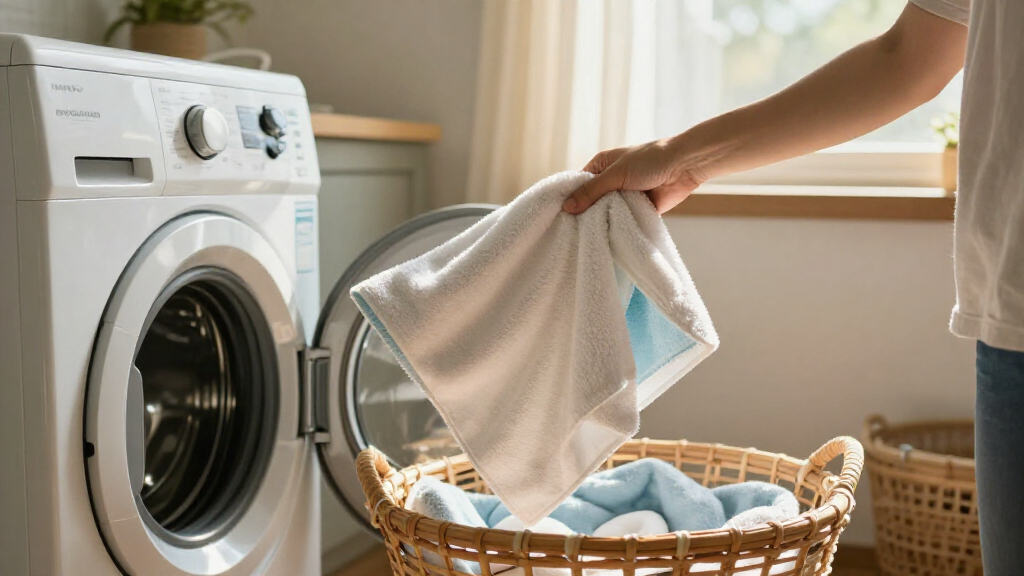
Before transferring towels from the washer, shake each one out separately. This can help loosen folds and allow towels to dry more evenly, potentially reducing the need to turn up the heat. Avoid overloading the dryer, too: although the guidance does not specify a load-size rule, towels need room to tumble for air to circulate around them.
The advice also cautions against fabric softeners and dryer sheets. These products can leave residue on towel fibers, which may reduce absorbency and contribute to stiffness with repeated use. Once the cycle finishes, take towels out and fold them promptly rather than leaving them in the dryer. That step is presented as a way to help preserve their feel, not as a guaranteed fix for towels that have already stiffened.
Softer Towels, Lower Heat
A gentler dryer routine may help bath towels keep their softness and absorbency. Kitchen towels need separate care.
Dry bath towels gently
Use low or medium heat; medium is the recommended maximum for bath towels.
Shake each towel separately after washing to loosen folds and help it dry evenly.
Avoid overloading the dryer so air can circulate as towels tumble.
Take towels out when the cycle ends and fold them promptly.
Protect absorbency
Laundry products and repeated high heat may affect how towels feel and perform.
- Low or medium heat for bath towels
- Prompt removal after the cycle
- Short drying intervals if towels remain damp
- High heat as the default
- Fabric softeners and dryer sheets
- Overloading the dryer
Kitchen towels are different
Keep items used around food preparation separate from bath towels.
Gentler routine
Choose low or medium heat to help maintain softness and absorbency.
Separate, then dry hot
The guidance recommends washing and drying them separately on high heat to address bacteria from food preparation.
Keep Bath Towels Soft and Absorbent
For readers, the main trade-off is drying speed versus fabric care: high heat may finish a load faster, but the guidance says it can gradually affect towel softness. A lower setting can take longer, but may be a more suitable routine for bath towels that are used repeatedly and expected to remain absorbent.
Skipping softener is also a reminder that a product marketed to make laundry feel softer may not suit every fabric. With towels, the stated concern is a residue that can affect how well they absorb water. These suggestions are low-cost changes to normal laundry routines, though they cannot reverse wear caused by age, material or previous washing and drying.
Products Worth Considering

Levoit Core 400S-P Smart Air Purifier for Large Rooms

Dyson V8 Cyclone Cordless Vacuum

Roborock Robot Vacuum and Mop with LiDAR Navigation and Self-Empty Dock
As an affiliate, we earn on qualifying purchases.
Bath Towels and Kitchen Laundry Differ
Towel softness depends on more than the dryer setting. The guidance points to material and age as factors, so a change in heat may not make every towel feel plush. It focuses on maintaining softness in good-quality towels rather than promising to restore all stiff or worn towels.
It also draws a distinction between bath and kitchen towels. Because kitchen towels and dishcloths are used around food preparation, the guidance recommends washing and drying them separately and using a high dryer setting for them to address potentially harmful bacteria. This is a specific exception to the lower-heat advice for bath towels; it is not a claim that a dryer setting alone guarantees sanitation in every situation.
Limits of the Laundry Advice
No test results, named expert or research study are provided to quantify how much low or medium heat extends towel life, or how quickly high heat affects different fibers. The advice gives no temperature range for dryer settings, which can vary by appliance, and does not specify a drying time or moisture level for deciding when a towel is done.
The guidance also mentions that methods may help soften towels that have already become stiff, but does not describe those methods. It is therefore unclear which recovery steps are recommended or how effective they may be. Results can also depend on towel age, fabric, detergent, water conditions and dryer performance.
Try a Lower-Heat Routine
For bath towels, try a low or medium dryer setting, shake each towel out before loading, and remove the load promptly when the cycle ends. Leave out fabric softener and dryer sheets if absorbency and long-term texture are priorities. If towels remain damp, continue drying in short intervals rather than assuming a single setting will work for every load.
Keep kitchen towels and dishcloths separate from bath towels and follow appropriate laundry and appliance guidance for items used in food preparation. No follow-up study or formal update is identified; the practical next step is to see whether these routine changes suit the towels and dryer in a particular household.
Source: rss
Key Questions
What dryer setting should I use for bath towels?
Use a low or medium setting; the guidance recommends medium heat at most for bath towels to limit repeated exposure to high heat.
Should I use fabric softener on towels?
The guidance advises against fabric softener and dryer sheets because residue can reduce absorbency and contribute to stiffness over time.
What should I do before putting towels in the dryer?
Shake each towel out separately after washing. This can loosen folds and help towels dry without turning to a hotter setting.
Should kitchen towels be dried the same way as bath towels?
No. The guidance recommends washing kitchen towels and dishcloths separately from bath towels and using high heat for them to address potentially harmful bacteria from food preparation.
Can these steps restore towels that are already stiff?
They may help maintain softness, but the guidance does not detail a method for restoring already stiff towels. Material, age and prior care can affect the result.
Source: hunker.com