Choosing the best water filters requires balancing filtration power with convenience and cost. The Waterdrop G5P500A stands out as the best overall pick for households wanting tankless reverse osmosis with added minerals, while the Brita UltraMax 27-Cup Dispenser remains the go-to choice for high-volume gravity filtration. This roundup addresses the core tradeoff most buyers face: do you prioritize the deep contaminant removal of reverse osmosis systems or the low-maintenance simplicity of pitcher and dispenser models? I have curated these 14 options to highlight where each product excels and where it falls short, helping you decide based on your specific water quality and lifestyle needs. Read on for a detailed breakdown of performance, maintenance, and value for each model.

Get home appliances delivered free with Prime
- Fast, free delivery on millions of items
- Prime Video, Amazon Music and more included
- Member-only deals all year
Complete the kit



Key Takeaways
- Tankless reverse osmosis systems like the Waterdrop G5P500A eliminate storage tanks, saving under-sink space while delivering higher flow rates than traditional RO units.
- Pitcher-style filters like the Brita Metro offer the lowest entry cost but require frequent manual refilling and filter changes, making them less ideal for large families.
- Gravity-fed dispensers like the Purewell 2.25-Gallon system provide off-grid reliability and high capacity without electricity, but they occupy significant counter space.
- TDS meters included with options like the Culligan ZeroWater pitcher allow users to verify filtration effectiveness, a feature largely absent from standard carbon-filter pitchers.
- Emergency straws like the Practical Survival set serve a niche role for hiking or disaster prep, lacking the capacity or chemical filtration needed for daily home use.
| Brita Metro 6-Cup Water Filter Pitcher with 1 Standard Filter, White | 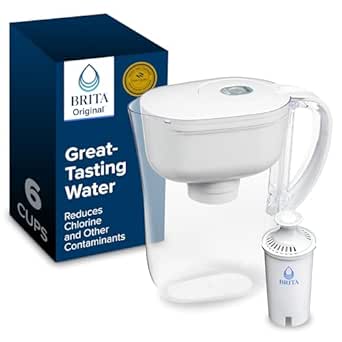 | Best Compact Pitcher | Capacity: 6 cups | Dimensions: 9.1 × 4.6 × 9.7 inches | Material: Polystyrene | VIEW LATEST PRICE | See Our Full Breakdown |
| Waterdrop WFD-40L Water Filter Dispenser, 35-Cup, Black |  | Best High-Capacity Refrigerator Dispenser | Capacity: 35 cups total; 19 cups in dispenser body | Dimensions: 14.4 × 5.5 × 10.2 inches | Weight: 4.2 lb | VIEW LATEST PRICE | See Our Full Breakdown |
| Brita UltraMax 27-Cup Water Dispenser with Standard Filter, Black |  | Best for Families Who Prefer Brita Filters | Capacity: 27 cups | Dimensions: 18 × 5.67 × 10.47 inches | Weight: 3 lb | VIEW LATEST PRICE | See Our Full Breakdown |
| Waterdrop G5P500A Tankless Reverse Osmosis System with Alkaline Mineralization |  | Best Premium Under-Sink System | Filtration: 8-stage reverse osmosis | RO membrane pore size: 0.0001 μm | Capacity: 500 GPD | VIEW LATEST PRICE | See Our Full Breakdown |
| Waterdrop T3-C 8-Stage Tankless Reverse Osmosis Water Filtration System, 450 GPD |  | Best for Filter-Maintenance Alerts | Filtration method: Reverse osmosis, 8 stages | Flow capacity: 450 GPD | RO membrane pore size: 0.0001 μm | VIEW LATEST PRICE | See Our Full Breakdown |
| Practical Survival Reusable Emergency Water Filter Straws, 5-Pack |  | Best for Emergency Kits and Outdoor Trips | Pack size: 5 filters | Filter method: Hollow fiber membrane | Bacteria and parasite removal: Over 99.99% | VIEW LATEST PRICE | See Our Full Breakdown |
| Culligan ZeroWater 12-Cup Water Filter Pitcher with TDS Meter |  | Best Pitcher for Dissolved Solids Monitoring | Capacity: 96 fluid ounces (12 cups) | Filtration: 5-stage; activated carbon and ion exchange | Contaminants reduced: Total PFAS, lead, chlorine, mercury, fluoride, and other dissolved solids | VIEW LATEST PRICE | See Our Full Breakdown |
| Purewell 2.25-Gallon Gravity Water Filter System with Water Level Window |  | Best Gravity-Fed Countertop System | Capacity: 2.25 gallons | Filtration stages: 3 | Filter pore size: 0.01 microns | VIEW LATEST PRICE | See Our Full Breakdown |
| Waterdrop PT-11W 7-Cup Water Filter Pitcher with 6 Filters, White |  | Best Value Pitcher Bundle | Capacity: 7 cups | Included components: Pitcher, 6 replacement filters, user manual | Filtration method: Activated carbon, 4-stage filtration | VIEW LATEST PRICE | See Our Full Breakdown |
| Brita UltraMax 27-Cup Water Filter Dispenser with BritaPlus Filter, Black | 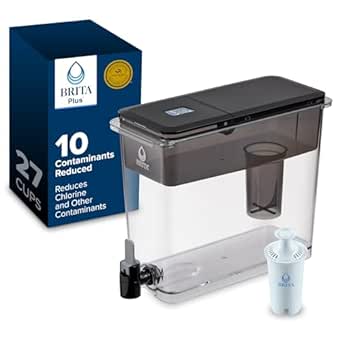 | Best High-Capacity Dispenser | Capacity: 27 cups | Material: BPA-free plastic | Included components: 1 BritaPlus filter | VIEW LATEST PRICE | See Our Full Breakdown |
| Brita 10-Cup Water Filter Pitcher with 1 Filter, Bright White |  | Best Basic Pitcher | Capacity: 10 cups | Material and color: Plastic, bright white | Purification method: Granular activated carbon | VIEW LATEST PRICE | See Our Full Breakdown |
| Waterdrop G3P600 Tankless Reverse Osmosis Water Filter System with Silver Faucet |  | Best Under-Sink Reverse Osmosis System | Filtration stages: 8 | Purification method: Reverse osmosis and carbon block | Capacity: Up to 600 gallons per day | VIEW LATEST PRICE | See Our Full Breakdown |
| Brita 10-Cup Elite Water Filter Pitcher with 1 Filter, White |  | Best Pitcher for Less-Frequent Filter Changes | Capacity: 10 cups | Material and BPA status: Plastic; BPA-free | Purification method: Activated carbon | VIEW LATEST PRICE | See Our Full Breakdown |
| DREO Countertop Reverse Osmosis Water Filter with Two Autofill Pitchers |  | Best Install-Free Reverse Osmosis Pick | Purification method: Reverse osmosis | Contaminant reduction claim: Filters out 99.9% of possible contaminants | Pure-to-drain ratio: 3:1 | VIEW LATEST PRICE | See Our Full Breakdown |
| water filter | Capacity | Dimensions | Filter life | Purification method |
|---|---|---|---|---|
| Brita Metro 6-Cup Water Filter | 6 cups | 9.1 × 4.6 × 9.7 inches | Up to 40 gallons or about 2 months | — |
| Waterdrop WFD-40L Water Filter | 35 cups total; 19 cups in dispenser body | 14.4 × 5.5 × 10.2 inches | Up to 200 gallons or 2 months | Gravity-fed activated carbon fiber |
| Brita UltraMax 27-Cup Water Di | 27 cups | 18 × 5.67 × 10.47 inches | — | Carbon block, gravity fed |
| Waterdrop G5P500A Tankless Rev | 500 GPD | 16.69 × 5.69 × 13.9 inches | — | — |
| Waterdrop T3-C 8-Stage Tankles | — | 13.39 × 6.22 × 17.95 inches | CF: 6 months; CB: 12 months; RO: 24 months | — |
| Practical Survival Reusable Em | Up to 1,800 gallons per filter | 8 x 1.5 x 1.5 inches | — | — |
| Culligan ZeroWater 12-Cup Wate | 96 fluid ounces (12 cups) | 10.3 x 5 x 10.5 inches | — | — |
| Purewell 2.25-Gallon Gravity W | 2.25 gallons | 8.8 x 8.8 x 20 inches | Up to 3,000 gallons per filter; replace every 6 months | — |
| Waterdrop PT-11W 7-Cup Water F | 7 cups | 13.7 × 5.04 × 10.67 inches | Up to 40 gallons or 2 months per filter | — |
| Brita UltraMax 27-Cup Water Fi | 27 cups | 11.18 x 14.57 x 5.63 inches | 40 gallons or approximately 60 days | Carbon block |
| Brita 10-Cup Water Filter Pitc | 10 cups | 10.7 × 5.4 × 10.1 in (L × W × H) | 40 gallons or approximately 2 months with Standard filter | Granular activated carbon |
| Waterdrop G3P600 Tankless Reve | Up to 600 gallons per day | — | — | Reverse osmosis and carbon block |
| Brita 10-Cup Elite Water Filte | 10 cups | 10.94 × 5.59 × 10.47 in (L × W × H) | Up to 120 gallons or about 6 months | Activated carbon |
| DREO Countertop Reverse Osmosi | 5 liters | — | 6 months | Reverse osmosis |
More Details on Our Top Picks
Brita Metro 6-Cup Water Filter Pitcher with 1 Standard Filter, White
The Brita Metro suits a one-person household or a crowded kitchen where a full-size dispenser would be awkward. Its 6-cup capacity and compact footprint make it easier to fit in many mini-fridges than the 27-cup Brita UltraMax, though you’ll refill it more often. The included Standard filter reduces chlorine taste and odor, copper, mercury, and cadmium in potable water; it is not a reverse-osmosis system like the Waterdrop G5P500A, so it is a simpler choice for taste and the listed contaminants rather than broad under-sink treatment. A SmartLight indicator helps track filter changes, but the Standard filter is rated for about 40 gallons or two months. Choose this for convenient, small-batch filtering—not for high-volume use or water that needs treatment beyond the stated reductions.
Pros:- Compact 6-cup design fits in many mini-fridges.
- SmartLight indicator signals when the filter needs changing.
- Reduces chlorine taste and odor, copper, mercury, and cadmium in potable water.
- Easy-fill lid and BPA-free construction.
Cons:- Small capacity means frequent refills for households with multiple people.
- The included Standard filter needs replacement about every 40 gallons or two months.
- Designed for potable water and does not provide reverse-osmosis treatment.
Best for: Single-person households, dorm residents, and anyone who needs a small pitcher that can fit in a mini-fridge.
Not ideal for: Families or frequent water users who would find a 6-cup capacity too small, or buyers seeking reverse-osmosis filtration.
- Capacity:6 cups
- Dimensions:9.1 × 4.6 × 9.7 inches
- Material:Polystyrene
- Filtration:Reduces chlorine taste and odor, copper, mercury, and cadmium
- Filter life:Up to 40 gallons or about 2 months
- Filter indicator:SmartLight
- Included:1 Standard filter
- Filter compatibility:Brita Standard and Elite filters; Standard filters are compatible with Brita pitchers and dispensers except Stream
Our verdict“Choose the Brita Metro if compact storage and straightforward pitcher filtration matter more than capacity or broad contaminant treatment.”
Waterdrop WFD-40L Water Filter Dispenser, 35-Cup, Black
For households that go through filtered water quickly, the Waterdrop WFD-40L offers far more capacity than the Brita Metro pitcher, holding up to 35 cups while keeping a slim profile intended for refrigerator storage. Its gravity-fed carbon fiber filter reduces chlorine, odors, and other listed substances, and NSF/ANSI 42 and 372 certifications speak to its stated filtration and material standards. The tradeoff is that the dispenser is tall enough that refrigerator fit needs checking, and its system does not lower TDS. That makes it a less suitable pick for shoppers seeking dissolved-solids reduction than a reverse-osmosis option like the Waterdrop G5P500A. A replacement indicator and sliding cover add convenience, but the filter still has a two-month replacement recommendation even though its rated capacity is up to 200 gallons.
Pros:- Large 35-cup capacity reduces refill frequency.
- Slim format is designed for refrigerator storage.
- NSF/ANSI 42 and 372 certifications are listed.
- Replacement indicator and sliding cover add everyday convenience.
Cons:- Does not lower TDS.
- Refrigerator dimensions should be checked before choosing this dispenser.
- Filter replacement is recommended every two months or up to 200 gallons.
Best for: Families and shared households that want a large supply of chlorine-reduced water stored in the refrigerator.
Not ideal for: Buyers who need TDS reduction or cannot verify that a 14.4-inch-tall dispenser will fit their refrigerator.
- Capacity:35 cups total; 19 cups in dispenser body
- Dimensions:14.4 × 5.5 × 10.2 inches
- Weight:4.2 lb
- Purification method:Gravity-fed activated carbon fiber
- Filter life:Up to 200 gallons or 2 months
- Filtration time:About 5 minutes
- Certifications:NSF/ANSI 42 and 372
- Maximum supported TDS:600 ppm
Our verdict“Pick the Waterdrop WFD-40L for a high-volume refrigerator supply if TDS reduction is not a requirement and the dispenser fits your shelf.”
Brita UltraMax 27-Cup Water Dispenser with Standard Filter, Black
The Brita UltraMax lands between the small Metro pitcher and the larger Waterdrop WFD-40L: its 27-cup capacity suits shared household use without reaching the Waterdrop’s 35-cup size. A precision-pour spigot makes dispensing easier than lifting a full pitcher, while the locking lid helps keep the contents contained when the dispenser is moved. Its included Standard filter reduces chlorine taste and odor, copper, mercury, and other impurities, and the system also accepts Brita Elite filters. That compatibility gives buyers a choice between the Standard filter’s roughly two-month life and the Elite’s longer rated life, unlike the Waterdrop dispenser’s specified filter schedule. The compromise is its long 18-inch footprint, which can limit refrigerator placement, and the included Standard filter still needs regular replacement. It is a practical capacity upgrade, not a substitute for reverse osmosis.
Pros:- 27-cup capacity works well for shared household use.
- Precision-pour spigot avoids lifting a full pitcher.
- Locking lid helps contain water when moving the dispenser.
- Compatible with Brita Standard and Elite filters.
Cons:- Its 18-inch length may restrict refrigerator placement.
- The included Standard filter is rated for about 40 gallons or two months.
- Gravity-fed filtration does not offer the treatment approach of a reverse-osmosis system.
Best for: Families who want a refrigerator dispenser with a spigot and the option to use Brita Standard or Elite filters.
Not ideal for: People with limited refrigerator shelf space or shoppers looking for under-sink reverse-osmosis filtration.
- Capacity:27 cups
- Dimensions:18 × 5.67 × 10.47 inches
- Weight:3 lb
- Purification method:Carbon block, gravity fed
- Included filter:1 Standard filter
- Standard filter life:40 gallons or approximately 2 months
- Elite filter life:120 gallons or approximately 6 months
- Filter compatibility:Brita Standard and Elite filters
Our verdict“Choose the Brita UltraMax if you want a sizable refrigerator dispenser with a spigot and flexible Brita filter compatibility.”
Waterdrop G5P500A Tankless Reverse Osmosis System with Alkaline Mineralization
The Waterdrop G5P500A is the most treatment-focused option in this group, using eight-stage reverse osmosis and a 0.0001 μm membrane to reduce listed contaminants including lead, fluoride, chlorine, and PFAS. That is a different level of system from the Brita UltraMax, which is a gravity-fed dispenser aimed at chlorine taste and specified impurities rather than under-sink RO treatment. Mineralization adds calcium, magnesium, sodium, and potassium, giving this model a different output from a basic RO system. Its tankless design saves storage space, and a 500 GPD capacity plus appliance connections can suit a busy kitchen. Those capabilities bring installation demands: it needs electricity, and the mechanical faucet requires a drilled countertop hole. Choose it for fixed, higher-capacity treatment, not for renters or anyone who wants a no-install pitcher.
Pros:- Eight-stage RO filtration with a 0.0001 μm membrane.
- Designed to reduce listed contaminants including lead, fluoride, chlorine, and PFAS.
- Alkaline mineralization adds calcium, magnesium, sodium, and potassium.
- Tankless format saves under-sink space and supports appliance connections.
Cons:- Faucet installation requires drilling a countertop hole.
- Requires a corded electrical connection.
- Under-sink installation is more involved than using a pitcher such as the Brita UltraMax.
Best for: Homeowners seeking under-sink reverse osmosis with alkaline mineralization and connections for a refrigerator or ice maker.
Not ideal for: Renters, buyers who cannot drill a countertop for the faucet, or households without a nearby electrical connection.
- Filtration:8-stage reverse osmosis
- RO membrane pore size:0.0001 μm
- Capacity:500 GPD
- Pure-to-drain ratio:2:1
- Maximum flow rate:1.31 liters per minute
- Installation:Under sink; faucet installation requires drilling a countertop hole
- Certifications:NSF/ANSI 58 and 372
- Dimensions:16.69 × 5.69 × 13.9 inches
- Power source:Corded electric
Our verdict“Choose the G5P500A if you want high-capacity under-sink RO with mineralization and can accommodate its electrical and faucet installation needs.”
Waterdrop T3-C 8-Stage Tankless Reverse Osmosis Water Filtration System, 450 GPD
The Waterdrop T3-C is a strong fit for buyers who want under-sink RO but value prompts for upkeep: it combines automatic flushing, LED lighting, and filter replacement alerts with an eight-stage system. Like the G5P500A, it uses a 0.0001 μm membrane and a 2:1 pure-to-drain ratio, but its listed flow capacity is 450 GPD rather than 500 GPD, and the supplied data does not describe alkaline mineralization. Its tankless unit can sit under the sink or be wall-mounted, giving it more placement flexibility than the G5P500A’s under-sink installation. The system reduces listed substances including heavy metals, chlorine, PFOA, and PFOS. It still requires electricity, and the faucet installation requires a countertop hole, so it is less convenient than a pitcher such as the Brita Metro. Its staged filter schedule also means ongoing replacements remain part of ownership.
Pros:- Eight-stage RO system uses a 0.0001 μm membrane.
- Automatic flushing and filter replacement alerts support routine maintenance.
- Tankless unit can be installed under the sink or wall-mounted.
- 2:1 pure-to-drain ratio.
Cons:- Requires an electrical connection.
- Faucet installation requires drilling a countertop hole.
- Filter replacement intervals vary by stage, with the carbon filter rated for six months.
Best for: Homeowners who want under-sink RO and clear filter-change prompts, with the option to wall-mount the unit.
Not ideal for: Renters or anyone who cannot drill a faucet hole, provide electricity, or accommodate a multi-filter replacement schedule.
- Filtration method:Reverse osmosis, 8 stages
- Flow capacity:450 GPD
- RO membrane pore size:0.0001 μm
- Pure-to-drain ratio:2:1
- Installation:Under sink or wall-mounted
- Filter life:CF: 6 months; CB: 12 months; RO: 24 months
- Dimensions:13.39 × 6.22 × 17.95 inches
- Certifications:NSF/ANSI 372
- Electrical connection:Required
Our verdict“Pick the T3-C if maintenance alerts and flexible tankless placement matter more than the G5P500A’s higher listed capacity and mineralization.”
Practical Survival Reusable Emergency Water Filter Straws, 5-Pack
Five portable filters make this a practical choice for households that want individual backup units for hiking, travel, or emergency supplies. Each hollow-fiber straw is rated for up to 1,800 gallons and filters bacteria, parasites, and microplastics down to 0.1 micron; the included backflushing plunger helps clear the filter. Unlike the countertop Purewell system, this pack needs no dedicated container or setup, but it also does not provide an easy way to fill a glass or serve several people at once. You must drink through a straw or arrange gravity-fed use, and the plastic build is less suited to buyers seeking a durable countertop appliance. I’d choose it for portable backup, not as a substitute for routine household filtration.
Pros:- Five filters provide separate units for group or emergency use.
- Each filter is rated for up to 1,800 gallons.
- Filters bacteria, parasites, and microplastics down to 0.1 micron.
- Backflushing plunger is included for each filter.
Cons:- Requires drinking through the straw or arranging gravity-fed filtration.
- Does not offer the ready-to-pour convenience of the Purewell countertop system.
- Plastic construction may not suit buyers who prefer a rigid stainless steel system.
Best for: Campers, hikers, and households assembling emergency kits who want separate lightweight filters for several people.
Not ideal for: People who want filtered water ready to pour at home, or buyers seeking a filter specified to reduce dissolved solids.
- Pack size:5 filters
- Filter method:Hollow fiber membrane
- Bacteria and parasite removal:Over 99.99%
- Microplastic filtration:Down to 0.1 micron
- Capacity:Up to 1,800 gallons per filter
- Weight:56.7 g
- Dimensions:8 x 1.5 x 1.5 inches
- Included components:1 backflushing plunger per filter
Our verdict“Choose this five-pack for portable outdoor and emergency filtration, but pick a pitcher or gravity system for everyday serving at home.”
Culligan ZeroWater 12-Cup Water Filter Pitcher with TDS Meter
The built-in TDS meter gives this 12-cup pitcher a different emphasis from the Waterdrop PT-11W: it helps indicate changes in total dissolved solids, while the Waterdrop is geared toward taste, odor, and sediment reduction. Culligan’s five-stage filtration is described as reducing total PFAS, lead, chlorine, mercury, fluoride, and other dissolved solids, making it the more targeted choice for buyers focused on that mix of contaminants. The tradeoff is a slow listed flow rate of 0.18 liters per minute, so filling the pitcher takes patience. It also accepts only newer Culligan with ZeroWater Technology filters, not legacy ZeroWater replacements. I’d favor it over a basic taste-focused pitcher when its stated reductions and meter match the buyer’s priorities, but not for quick refills or legacy-filter owners.
Pros:- Five-stage filtration is described as reducing total PFAS, lead, chlorine, mercury, fluoride, and other dissolved solids.
- Built-in TDS meter helps indicate when the filter needs changing.
- 12-cup capacity offers more water per fill than the 7-cup Waterdrop PT-11W.
- Slide lid and ergonomic handle support countertop or refrigerator use.
Cons:- Listed maximum flow rate is 0.18 liters per minute.
- Does not fit legacy ZeroWater filters.
- Requires countertop or refrigerator space for a pitcher.
Best for: Households seeking a countertop pitcher with stated reductions for PFAS, lead, fluoride, and other dissolved solids, plus a TDS meter.
Not ideal for: People who need fast pitcher refills or already own legacy ZeroWater filters.
- Capacity:96 fluid ounces (12 cups)
- Filtration:5-stage; activated carbon and ion exchange
- Contaminants reduced:Total PFAS, lead, chlorine, mercury, fluoride, and other dissolved solids
- TDS meter:Built-in
- Maximum flow rate:0.18 liters per minute
- Dimensions:10.3 x 5 x 10.5 inches
- Materials:BPA-free plastic, polystyrene
- Filter compatibility:Compatible with new Culligan with ZeroWater Technology filters; not compatible with legacy ZeroWater filters
Our verdict“Pick this pitcher if dissolved-solids monitoring and its stated contaminant reductions matter more than fast refills or legacy-filter compatibility.”
Purewell 2.25-Gallon Gravity Water Filter System with Water Level Window
For buyers who want a larger reservoir without electricity, the Purewell offers 2.25 gallons of storage and gravity filtration at up to 4 gallons per hour. Its stainless steel chambers and water level window make it more like a self-contained household station than the portable Practical Survival straws, while the two filters combine a 0.01-micron hollow fiber membrane, silver ion membrane, and activated carbon block. That capacity suits shared use, but gravity flow is slower than a direct-pour pitcher, and the system does not reduce TDS. There is also a specific leak risk: refilling the upper chamber while the lower chamber is full can cause leakage. I’d choose this for off-grid flexibility and higher-volume dispensing, not for compact kitchens or dissolved-solids reduction.
Pros:- 2.25-gallon capacity supports more shared use than a standard pitcher.
- Gravity operation needs no electricity.
- Two filters use a 0.01-micron membrane with silver ion membrane and activated carbon block.
- Water level window lets users check the reservoir without opening it.
Cons:- Does not reduce the water’s TDS value.
- Refilling the upper chamber while the lower chamber is full may cause leakage.
- At 20 inches tall, it needs more counter clearance than a pitcher.
Best for: Households, cabins, or outdoor setups that need a larger gravity-fed reservoir and do not require TDS reduction.
Not ideal for: Small-kitchen households, buyers seeking TDS reduction, or anyone likely to refill the upper chamber while the lower chamber is full.
- Capacity:2.25 gallons
- Filtration stages:3
- Filter pore size:0.01 microns
- Filter life:Up to 3,000 gallons per filter; replace every 6 months
- Maximum flow rate:4 gallons per hour
- Power source:Gravity; no electricity required
- Materials:Polypropylene, stainless steel
- Dimensions:8.8 x 8.8 x 20 inches
Our verdict“Choose the Purewell for high-capacity, electricity-free dispensing if you have room for it and do not need TDS reduction.”
Waterdrop PT-11W 7-Cup Water Filter Pitcher with 6 Filters, White
The PT-11W pairs a slim, refrigerator-friendly pitcher with six included replacement filters, so it makes sense for buyers who want a straightforward supply of taste-focused filtration. Its activated carbon system helps reduce chlorine, odors, bad taste, sand, and sediment; a mechanical dial provides a simple reminder to track filter life. Compared with the 12-cup Culligan ZeroWater pitcher, this one holds less and does not reduce TDS or claim the same range of dissolved-contaminant reductions. In exchange, its narrower profile is easier to fit into a crowded refrigerator, and the included filters reduce the need to shop for replacements right away. Each filter is rated for only up to 40 gallons or two months, so frequent use means regular changes. I’d pick it for compact, routine improvement in taste rather than broader contaminant concerns.
Pros:- Includes six replacement filters.
- Slim shape suits refrigerator storage.
- Helps reduce chlorine, odors, bad taste, sand, and sediment.
- Mechanical filter-life dial makes replacement tracking straightforward.
Cons:- Does not reduce TDS.
- Each filter lasts up to 40 gallons or two months.
- Seven-cup capacity is smaller than the Culligan 12-cup pitcher.
Best for: Individuals or small households who want a refrigerator-friendly pitcher for reducing chlorine taste and odor, with replacement filters included.
Not ideal for: Buyers who need TDS reduction, higher capacity, or longer intervals between filter replacements.
- Capacity:7 cups
- Included components:Pitcher, 6 replacement filters, user manual
- Filtration method:Activated carbon, 4-stage filtration
- Filter life:Up to 40 gallons or 2 months per filter
- Certifications:NSF/ANSI 42 and 372
- Dimensions:13.7 × 5.04 × 10.67 inches
- Material:BPA-free
- TDS reduction:Does not reduce TDS
Our verdict“Choose the PT-11W for compact refrigerator storage and a ready supply of taste-focused filters, not for TDS reduction or high-volume use.”
Brita UltraMax 27-Cup Water Filter Dispenser with BritaPlus Filter, Black
The Brita UltraMax is the clearest fit here for households that want 27 cups ready to dispense rather than repeatedly filling a pitcher. Its spigot makes serving easier than lifting and tilting the smaller Waterdrop PT-11W, and the included BritaPlus carbon block filter is certified to reduce chlorine, mercury, cadmium, copper, and zinc while helping retain naturally occurring minerals and electrolytes. That focus is different from the Purewell’s gravity-fed, larger-system format and the Culligan pitcher’s stated reduction of total PFAS and dissolved solids. Brita’s filter needs replacement every 40 gallons or about 60 days, so this is not a low-maintenance choice for heavy use. The dispenser also takes more room than a pitcher. I’d choose it for shared daily drinking water and convenient dispensing, not for buyers prioritizing compact storage or longer filter life.
Pros:- 27-cup capacity reduces repeated refilling for shared use.
- Spigot supports dispensing without lifting a full pitcher.
- BritaPlus filter is certified to reduce chlorine, mercury, cadmium, copper, and zinc.
- BPA-free construction suits countertop or refrigerator placement.
Cons:- Filter replacement is specified every 40 gallons or about 60 days.
- Larger footprint takes more storage space than the Waterdrop PT-11W pitcher.
- Listed reduction and mineral-retention results may vary with the water.
Best for: Families or shared households that want a large supply of filtered water and a spigot for easy serving.
Not ideal for: Small households with limited refrigerator or counter space, or buyers seeking a filter specified to reduce PFAS or TDS.
- Capacity:27 cups
- Material:BPA-free plastic
- Included components:1 BritaPlus filter
- Purification method:Carbon block
- Filter life:40 gallons or approximately 60 days
- Features:Change filter indicator, spigot
- Dimensions:11.18 x 14.57 x 5.63 inches
- Maximum supported water TDS:1500 ppm
Our verdict“Choose the UltraMax if a large, spigot-equipped supply matters more than compact storage or a longer filter replacement interval.”
Brita 10-Cup Water Filter Pitcher with 1 Filter, Bright White
I’d pick this Brita 10-cup pitcher for straightforward improvement to tap-water taste without an installation or a large countertop appliance. Its Standard activated carbon filter reduces chlorine taste and odor, along with copper, mercury, and cadmium; the locking, easy-fill lid also makes routine refills less fiddly. Compared with the Brita Elite 10-Cup pitcher, this model has a shorter stated filter life—about 40 gallons or two months versus up to 120 gallons or six months for Elite. That means more frequent replacements, but the basic filter’s schedule may suit households that prefer regular changes. Unlike the under-sink Waterdrop G3P600, it needs no power or cabinet installation. The tradeoff is that it offers a narrower filtration scope than the listed reverse osmosis systems and requires space in the refrigerator.
Pros:- 10-cup capacity fits many refrigerator shelves.
- Reduces chlorine taste and odor, copper, mercury, and cadmium.
- Locking, easy-fill lid simplifies refilling.
- BPA-free plastic pitcher needs no installation or electricity.
Cons:- Standard filter lasts about 40 gallons or two months, so replacements are relatively frequent.
- A pitcher requires refilling and refrigerator space rather than providing a continuous filtered supply.
Best for: Households seeking a refrigerator-friendly pitcher for reducing chlorine taste and odor and select metals, without installing a filter system.
Not ideal for: Buyers who want longer intervals between filter changes, broad reverse osmosis filtration, or a large supply of filtered water ready at once.
- Capacity:10 cups
- Material and color:Plastic, bright white
- Purification method:Granular activated carbon
- Filter life:40 gallons or approximately 2 months with Standard filter
- Compatible filters:Brita Standard and Longlast
- Dimensions:10.7 × 5.4 × 10.1 in (L × W × H)
- Weight:2.29 lb
- Maximum supported water TDS:500 ppm
Our verdict“Choose this Brita for uncomplicated pitcher filtration and refrigerator storage; choose the Brita Elite if fewer filter changes matter more.”
Waterdrop G3P600 Tankless Reverse Osmosis Water Filter System with Silver Faucet
The Waterdrop G3P600 suits buyers who want high-volume reverse osmosis filtration integrated into the kitchen rather than a pitcher that needs constant refilling. Its stated output of up to 600 gallons per day and smart faucet’s TDS and filter-life displays make it a more capable fixed setup than either Brita pitcher here. The tankless body saves storage space compared with systems that use a separate tank, though the unit itself still needs room under the sink. Its 2:1 pure-to-drain ratio gives it a clear efficiency advantage over many RO setups, but it still sends some water to drain. Tool-free filter changes simplify upkeep; they don’t remove the need to buy and replace filters. Compared with the install-free DREO countertop RO system, this one frees counter space but requires under-sink installation and electricity.
Pros:- Tankless design avoids a separate storage tank.
- Smart faucet displays TDS and filter-life information.
- Tool-free filter changes simplify replacement.
- Stated 600-gallon-per-day capacity and 2:1 pure-to-drain ratio.
Cons:- Requires under-sink electricity and enough cabinet space for the unit.
- Fixed installation is less portable and more involved than the DREO countertop RO system.
- Reverse osmosis produces drain water and requires ongoing filter replacements.
Best for: Homeowners or renters with suitable under-sink space and an outlet who want a fixed, high-output RO system with faucet-based status information.
Not ideal for: People who cannot modify or fit out the sink cabinet, lack under-sink power, or want a portable, no-installation filter.
- Filtration stages:8
- Purification method:Reverse osmosis and carbon block
- Capacity:Up to 600 gallons per day
- Pure-to-drain ratio:2:1
- Maximum flow rate:0.42 gpm
- Installation and power:Under sink; corded electric
- Dimensions and weight:18.12 × 5.67 × 17.72 in; 31 lb
- Certifications:NSF/ANSI 42, 58, and 372; FCC
Our verdict“Choose the G3P600 for a high-output, space-conscious under-sink RO setup if your cabinet and electrical access can accommodate it.”
Brita 10-Cup Elite Water Filter Pitcher with 1 Filter, White
The Brita Elite 10-cup pitcher is the stronger fit for buyers who like pitcher convenience but want to replace the filter less often than with the standard Brita pitcher. Its included Elite filter is rated for up to 120 gallons or about six months, compared with 40 gallons or about two months for the Brita Bright White Standard pitcher. The Elite filter is also described as reducing lead, along with chlorine taste and odor and other contaminants. A SmartLight indicator helps track replacement timing, though it does not eliminate the need to keep a spare filter on hand. Like the standard Brita, it stores in the refrigerator and needs manual refilling; it cannot match the continuous output of the Waterdrop G3P600. This is a practical middle ground, not a substitute for an installed RO system.
Pros:- Elite filter is rated for up to 120 gallons or about six months.
- Reduces lead and chlorine taste and odor.
- SmartLight signals when a filter change is due.
- 10-cup BPA-free pitcher has an easy-fill lid.
Cons:- Still needs manual refilling and refrigerator storage.
- Not compatible with Brita Stream pitchers and dispensers.
- Its 0.05 gpm maximum flow rate is slow compared with a fixed high-output RO system.
Best for: Refrigerator-pitcher users who want lead reduction and longer stated filter life, with an indicator to help track changes.
Not ideal for: Buyers seeking continuous high-volume filtration, a countertop-free setup, or compatibility with Brita Stream pitchers and dispensers.
- Capacity:10 cups
- Material and BPA status:Plastic; BPA-free
- Purification method:Activated carbon
- Filter life:Up to 120 gallons or about 6 months
- Change indicator:SmartLight
- Maximum flow rate:0.05 gpm
- Dimensions:10.94 × 5.59 × 10.47 in (L × W × H)
- Warranty:Limited 1-year warranty
Our verdict“Choose the Elite over the standard Brita pitcher if lead reduction and longer stated filter life matter more than a continuous water supply.”
DREO Countertop Reverse Osmosis Water Filter with Two Autofill Pitchers
The DREO countertop RO system brings reverse osmosis filtration to buyers who want to avoid plumbing work. Unlike the under-sink Waterdrop G3P600, it is install-free and includes two autofill pitchers, so filtered water can be stored and served without adding a separate faucet. Its built-in TDS meter, filter-life indicator, and self-cleaning function make routine monitoring easier, while the stated 3:1 pure-to-drain ratio uses less drain water than the G3P600’s 2:1 ratio. The tradeoff is a countertop footprint and a six-month filter life, so it needs visible space and regular replacement. Its 5-liter capacity is also less suited to households wanting a large, continuous supply. The listed SGS testing to NSF/ANSI 58 standards is useful context, but buyers should check which specific claims and conditions that testing covers.
Pros:- Install-free countertop setup avoids under-sink plumbing.
- Includes two autofill water pitchers for storing and serving filtered water.
- Built-in TDS meter and filter-life indicator help track operation and maintenance.
- Self-cleaning function and stated 3:1 pure-to-drain ratio.
Cons:- Takes up countertop space and weighs 10.8 pounds.
- Filter life is listed as six months, requiring regular replacement.
- Five-liter capacity may not suit households needing a large, continuous supply.
Best for: Renters and households seeking countertop reverse osmosis filtration without plumbing changes, especially those who value included storage pitchers and on-unit monitoring.
Not ideal for: Buyers with crowded counters, high daily water demand, or a preference for an under-sink system that keeps the filtration unit out of sight.
- Purification method:Reverse osmosis
- Contaminant reduction claim:Filters out 99.9% of possible contaminants
- Pure-to-drain ratio:3:1
- Capacity:5 liters
- Filter life:6 months
- Installation:Countertop; install-free
- Dimensions and weight:15.7 × 6.7 × 13.4 in; 10.8 lb
- Features:Built-in TDS meter, filter-change indicator, touch control, self-cleaning
- Certification testing:Tested by SGS to meet NSF/ANSI 58 standards
Our verdict“Choose the DREO if you want countertop RO filtration without installation and have room for the unit and its pitchers.”
How We Picked
To select these 14 water filters, I evaluated each product based on filtration technology, capacity, installation complexity, and long-term maintenance costs. Reverse osmosis systems were ranked higher for their ability to remove a wider spectrum of contaminants, including heavy metals and dissolved solids, compared to standard carbon filters. However, I also weighed the convenience factor: tankless systems offer space efficiency, while gravity dispensers offer simplicity. I prioritized products with clear replacement filter availability and transparent performance metrics, ensuring that each recommendation offers a tangible benefit for a specific user scenario, whether that is high-volume household use, compact apartment living, or outdoor survival.
Factors to Consider When Choosing Best Water Filters
Selecting the right water filtration system involves more than just picking the one with the most stages. You need to match the technology to your water source, household size, and willingness to perform maintenance. This guide breaks down the critical factors that should drive your decision.Filtration Technology: Carbon vs. Reverse Osmosis
Most homeowners struggle to distinguish between simple carbon filtration and reverse osmosis (RO). Carbon filters, found in pitchers like the Brita Metro, primarily reduce chlorine taste and odor, along with some larger particles. They do not remove dissolved solids, lead, or fluoride effectively. In contrast, RO systems like the Waterdrop G3P600 force water through a semi-permeable membrane, removing up to 99% of contaminants, including heavy metals and bacteria. If your local water supply is treated and safe to drink but tastes poor, a carbon pitcher may suffice. However, if you are concerned about lead, arsenic, or high mineral content, an RO system is the only robust solution. Consider the waste ratio; RO systems produce wastewater, which might be a concern in drought-prone areas.
Capacity and Flow Rate for Household Size
A common mistake is buying a filter that cannot keep up with daily consumption. A single-person household might be fine with a 6-cup pitcher, but a family of four will constantly wait for refills with such a small capacity. The Brita UltraMax 27-Cup Dispenser addresses this by holding enough water for multiple refills throughout the day. For high-flow needs, such as cooking and drinking simultaneously, tankless RO systems like the Waterdrop T3-C offer high gallons-per-day (GPD) ratings, ensuring you never run out of cold, filtered water during dinner prep. Always calculate your daily water usage in cups and compare it to the filter’s total capacity and refill speed to avoid frustration.
Installation Requirements and Space Constraints
Consider where the unit will live. Countertop models like the DREO Countertop Reverse Osmosis are ideal for renters or homes without under-sink plumbing access, requiring no installation. Under-sink systems, such as the Waterdrop G5P500A, free up counter space but require drilling into the sink for a dedicated faucet and connecting to the water line. If you have limited under-sink storage, tankless RO designs are superior to traditional systems with bulky storage tanks. Measure your available space before purchasing, especially if you have a garbage disposal or existing plumbing components that might obstruct installation.
Filter Lifespan and Replacement Costs
The upfront price of a water filter is only part of the total cost of ownership. Replacement filter frequency varies wildly; some pitcher filters need changing every two months, while RO membranes can last 1-2 years. However, RO systems often have multiple pre-filters that need regular replacement, adding to annual expenses. Calculate the cost per gallon filtered rather than just the unit price. A cheaper pitcher might end up costing more over five years than a premium RO system due to frequent filter purchases. Check the availability of third-party compatible filters versus proprietary ones, as proprietary filters can lock you into higher long-term costs.
Special Features: TDS Meters and Mineralization
Some units offer added value through specialized features. The Culligan ZeroWater pitcher includes a Total Dissolved Solids (TDS) meter, giving you immediate feedback on water purity, which builds trust in the filtration process. Meanwhile, alkaline mineralization in systems like the Waterdrop G5P500A adds calcium and magnesium back into the water after RO filtration, improving taste and potentially offering health benefits. These features are not necessary for basic safety but significantly enhance the user experience and perceived value. If you enjoy tasting the difference in water, these extras are worth the premium; if you just want safe water, they may be unnecessary add-ons.
Frequently Asked Questions
Do I really need a reverse osmosis system if I already have city water?
City water is generally treated to meet safety standards, but it can still contain residual chlorine, sediment, and trace amounts of contaminants like lead from aging pipes. A standard carbon pitcher improves taste and removes chlorine, which is sufficient for many people. However, if you are sensitive to taste, want to remove fluoride, or live in an area with known water quality issues, reverse osmosis provides a higher level of purity. It is a personal health decision based on your specific risk tolerance and water source conditions.
How often should I replace the filters in a pitcher versus an RO system?
Pitcher filters, such as those in the Brita Metro, typically require replacement every 40 to 60 days or after filtering 40 gallons. RO systems have a more complex schedule: pre-filters might need changing every 3-6 months, while the main RO membrane can last 2-3 years, depending on water hardness and usage. Always follow the manufacturer’s guidelines, but also monitor flow rate and taste; a noticeable drop in flow or change in taste often indicates a filter needs changing sooner than scheduled.
Are countertop RO systems as effective as under-sink models?
Yes, countertop reverse osmosis systems like the DREO use the same multi-stage filtration technology as under-sink models. The primary difference is installation and plumbing connection. Countertop units are portable and require no drilling, making them excellent for renters. However, they occupy counter space and often require manual tank refilling, which can be less convenient than the automatic flow of under-sink systems. Filtration performance is comparable, so choose based on space and installation preference rather than purity concerns.
What is the benefit of an alkaline mineralization stage in RO systems?
Reverse osmosis removes almost everything from water, including beneficial minerals, which can result in slightly acidic, flat-tasting water. An alkaline mineralization stage, found in models like the Waterdrop G5P500A, reintroduces calcium and magnesium. This raises the pH level and improves the taste, making the water smoother and less ’empty’ feeling. While the health benefits of alkaline water are debated, the taste improvement is noticeable to many users, justifying the extra stage for those who prioritize drinking water quality.
Can emergency water filter straws replace a home water filter?
No, emergency water filter straws like the Practical Survival set are designed for portable, single-person use in outdoor or disaster scenarios. They effectively remove bacteria and protozoa from natural water sources but do not filter chemicals, heavy metals, or dissolved solids found in municipal tap water. They also lack the capacity for household drinking and cooking needs. Keep them for travel or emergencies, but rely on a dedicated home system for daily water consumption.
Conclusion
Selecting the best water filters ultimately depends on your specific constraints and priorities. For most households seeking the highest purity and space efficiency, the Waterdrop G5P500A is the best overall choice, offering tankless RO with mineral enhancement. If you want a simple, high-capacity solution without installation, the Brita UltraMax 27-Cup Dispenser is the best value pick for families. Beginners or renters should look at the DREO Countertop RO for its ease of use and portability, while the Practical Survival Straws serve as a necessary backup for emergencies only. Match the technology to your water quality concerns and lifestyle to ensure you choose a filter you will actually use and maintain.