There are several types of dishwashers, each designed for different spaces and needs. Built-in models are installed into cabinetry for a seamless look, while freestanding units can be moved around your kitchen. Portable dishwashers are great for renters or flexible setups, and compact models fit smaller spaces or secondary use. Each type works by spraying water and detergent to clean your dishes efficiently. To find out which fits your home best, explore the details of each option below.
Key Takeaways
- Built-in dishwashers are installed into cabinetry for a seamless look and typically feature multiple wash cycles and energy-efficient options.
- Freestanding dishwashers are portable units that can be placed anywhere with water supply and drain connections, offering flexibility.
- Compact or countertop models are small, energy-efficient, and ideal for limited spaces or secondary use.
- Portable dishwashers are movable units with easy hookup features, suitable for renters or adaptable kitchen layouts.
- All dishwasher types operate using water jets, filtration systems, and various wash cycles to clean dishes effectively while managing energy and water use.
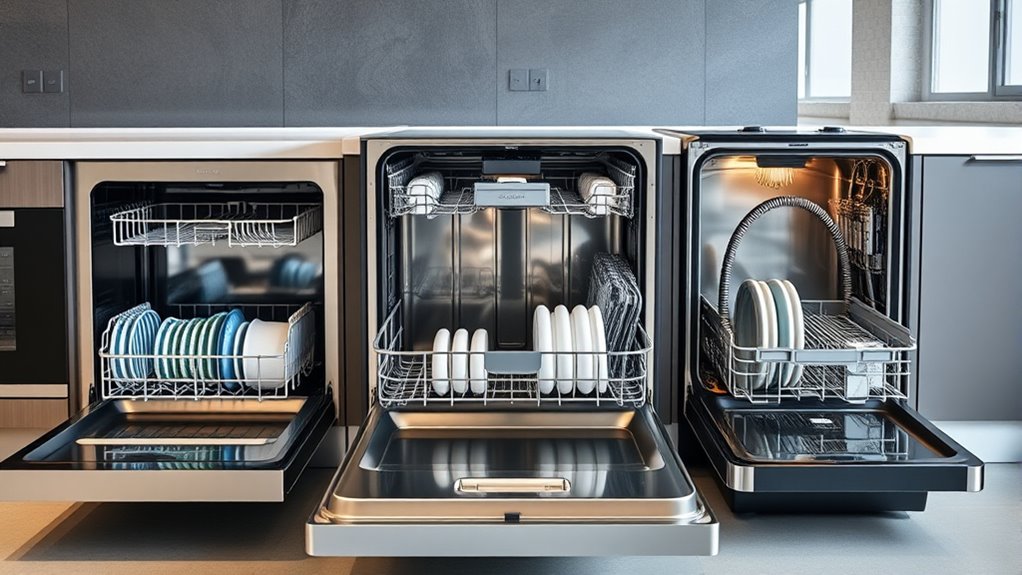
When it comes to choosing a dishwasher, you’ll find several types designed to suit different kitchen spaces and needs. One of the first considerations is energy efficiency, which not only helps reduce your utility bills but also minimizes your environmental impact. Modern dishwashers are built with advanced technology to optimize water and power consumption, so you can clean your dishes effectively without wasting resources. Look for models with high energy efficiency ratings—these often feature eco-friendly cycles that use less water and electricity. Additionally, noise levels are a significant factor, especially if your kitchen is open-plan or close to living spaces. Today’s dishwashers are quieter than ever, with some models operating at noise levels as low as 40 decibels. This means you can run the dishwasher overnight or during busy hours without disturbing conversation or sleep.
There are built-in dishwashers, which are installed directly into your kitchen cabinetry, providing a seamless look. These are ideal if you want a sleek, integrated appearance and don’t mind the permanent installation. They tend to have a range of energy-efficient features, making them a popular choice for those conscious of power consumption. Freestanding dishwashers are more versatile—they can be placed anywhere with a water supply and drain. Though they might not blend as seamlessly into your kitchen decor, they often come with multiple wash cycles and energy-saving options, giving you flexibility and control. Compact or countertop models are perfect if you have limited space or need a secondary dishwasher. While smaller, many of these units are designed with energy efficiency in mind, and some operate quietly enough to fit into a variety of living environments.
Another type to think about is the portable dishwasher, which can be moved around your kitchen and hooked up when needed. These are excellent for renters or those who don’t have built-in space. Portable models often feature energy-efficient settings, although they may produce slightly more noise compared to built-in or integrated units. Regardless of the type you choose, always check the specifications for energy efficiency ratings and noise levels. Modern dishwashers with eco-friendly cycles and low decibel ratings help you enjoy clean dishes without sacrificing peace and quiet. An increasing number of models now incorporate advanced filtration systems, which improve cleaning performance and reduce maintenance needs. By prioritizing these factors, you ensure that your dishwasher works efficiently, saves energy, and keeps noise to a minimum—making your kitchen more comfortable and environmentally friendly.
Frequently Asked Questions
What Are the Main Differences Between Built-In and Portable Dishwashers?
Built-in dishwashers are permanently installed under your kitchen counter, providing a seamless look and saving space, but they can be more costly and complex to install. Portable dishwashers, on the other hand, are mobile and connect to your sink, making them ideal if you have limited space or rent. They’re generally less expensive upfront and easier to set up, but may take up more room and be less integrated into your kitchen design.
How Energy-Efficient Are Various Dishwasher Types?
It’s no coincidence that energy consumption varies across dishwasher types. You’ll find that Energy Star-rated models are more eco-friendly, offering lower energy use and water efficiency. Built-in dishwashers often have advanced eco-friendly features, making them more energy-efficient, while portable models may consume more due to their design. To save energy, look for those with efficient wash cycles and smart sensors, helping you reduce your environmental impact effortlessly.
Can Different Dishwasher Types Handle Specific Kitchen Layouts?
You can find a dishwasher type that fits your kitchen layout, especially with options like compact integration and countertop compatibility. Compact dishwashers seamlessly blend into small spaces or cabinetry, perfect for tight kitchens. Countertop models are ideal if you need portability or have limited space, as they sit on your counter and connect easily. By choosing the right style, you guarantee your dishwasher suits your kitchen’s design and your cleaning needs.
What Maintenance Is Required for Each Dishwasher Type?
You need to regularly clean the dishwasher filters and run cleaning cycles to keep your dishwasher running smoothly. For built-in models, check and rinse the filters monthly, and use a dishwasher cleaner during cycles to remove buildup. Portable and countertop units also benefit from filter cleaning and occasional cleaning cycles. Proper maintenance prevents clogs, improves efficiency, and extends the lifespan of each dishwasher type.
Are There Sound Level Differences Among Dishwasher Models?
You’ll notice sound level differences among dishwasher models, especially with newer, quieter designs. For example, a recent case study shows that high-end dishwashers with advanced sound insulation operate at around 40 decibels, making them barely noticeable. Cheaper models can reach 55-60 decibels, creating more noise during cycles. So, if noise levels matter, look for models with sound insulation features and low decibel ratings to keep your kitchen peaceful.
Conclusion
No matter which type of dishwasher you choose, understanding how they work helps you make better decisions. Recognize the differences, appreciate the features, and consider your needs. Whether you’re loading, selecting, or maintaining, each step matters. Embrace the variety, enjoy the efficiency, and trust in the technology. Because when you know your dishwasher, you guarantee sparkling dishes, a cleaner kitchen, and a smoother day—every time, every load, and every wash.