When choosing a quiet dishwasher, focus on its decibel (dBA) rating, which measures noise levels. Models at or below 45 dBA are typically considered very quiet for home use and won’t disturb conversations or sleep. Trustworthy dBA ratings help you compare options accurately and avoid surprises. Keep in mind that proper installation and extra soundproofing can make an even bigger difference. If you keep exploring, you’ll discover how to pick the ideal quiet dishwasher for your needs.
Key Takeaways
- dBA ratings measure dishwasher noise levels; lower values (45 dBA or below) indicate quieter operation.
- Ratings are a reliable way to compare dishwasher noise, with trusted models providing consistent sound data.
- Energy-efficient dishwashers often feature advanced insulation, reducing noise alongside energy savings.
- Proper installation, including leveling and soundproofing, enhances the effectiveness of low noise levels.
- Certified quiet dishwashers meet specific dBA standards, ensuring trustworthy noise performance for home use.
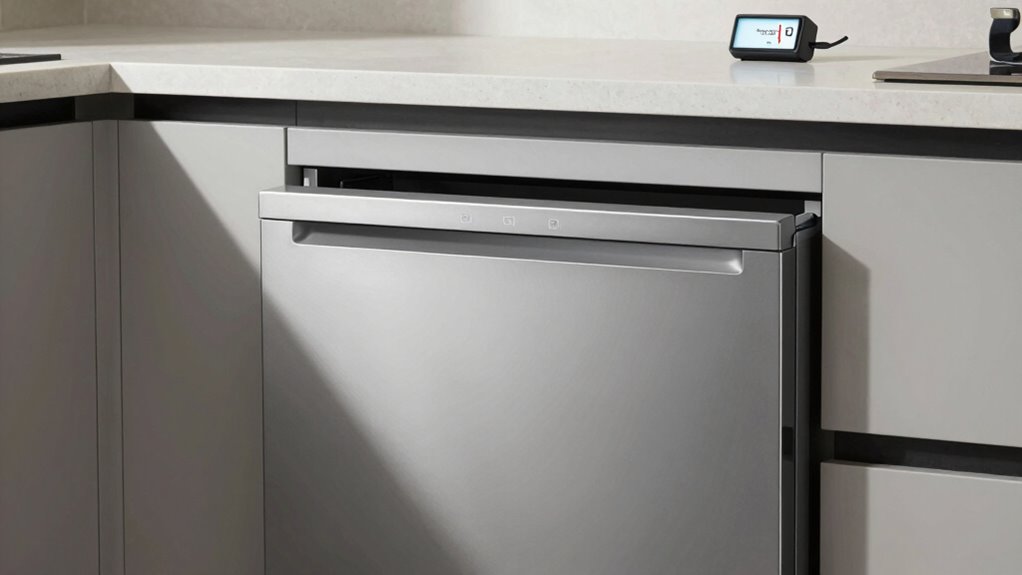
If you’ve ever been disturbed by the loud noise of a traditional dishwasher, you’ll appreciate the benefits of quiet dishwashers. These models operate at lower noise levels, measured in decibels (dBA), making them ideal for open-concept kitchens, homes with children, or anyone who values a peaceful environment. When choosing a quiet dishwasher, it’s essential to pay attention to the dBA ratings, as these figures give you a clear idea of how loud the machine will be during operation. Generally, a dishwasher with a rating of 45 dBA or lower is considered discreet enough for most homes, allowing you to run it without disturbing conversations, TV watching, or sleep.
Quiet dishwashers operate at lower noise levels, ensuring a peaceful home environment during every cycle.
One critical aspect often overlooked is how energy efficiency plays a role in quiet dishwashers. Many models designed for lower noise levels also incorporate energy-saving features, making them more environmentally friendly and cost-effective to run. Look for dishwashers with Energy Star certification, which indicates they meet strict standards for energy efficiency. Not only do these models help reduce your electricity bills, but they often feature advanced insulation and soundproofing materials that contribute to their quiet operation. When shopping, consider how the dishwasher’s energy efficiency complements its noise level to get the best balance of performance and savings.
Installing a quiet dishwasher involves some specific tips to maximize its soundproofing potential. First, ensure the dishwasher is level, as uneven placement can cause vibrations that increase noise. Use a level tool during installation to confirm proper positioning. Next, pay attention to the placement of the dishwasher’s sound insulation panels—many models come with these built-in, but ensuring they’re properly fitted can make a significant difference. Additionally, consider installing the dishwasher away from bedrooms or living areas, if possible. Using anti-vibration pads beneath the unit can also dampen sound transmission through the floor. Properly securing the dishwasher to the surrounding cabinetry reduces movement and resulting noise during operation.
Finally, always read the manufacturer’s installation tips carefully. Correct installation not only enhances the dishwasher’s efficiency but also ensures it operates at the lowest possible noise level. If you’re unsure about the process, hiring a professional installer can be a worthwhile investment. They’ll ensure your dishwasher is correctly integrated with your plumbing and electrical systems, while also optimizing its placement for maximum noise reduction. It’s also helpful to understand the soundproofing techniques used in designing quiet dishwashers, as these can significantly impact overall noise levels. With the right approach to installation and a focus on energy efficiency, you’ll enjoy the quiet comfort of your new dishwasher, transforming what used to be a noisy chore into a nearly silent one.
Frequently Asked Questions
How Do Decibel Levels Affect Dishwasher Performance?
Lower decibel levels mean your dishwasher operates more quietly, thanks to better sound insulation and vibration reduction. When the noise is reduced, it doesn’t compromise performance; instead, it creates a more pleasant kitchen environment. Pay attention to dBA ratings, as they reflect how well sound insulation and vibration reduction are integrated. A quieter dishwasher allows you to run cycles without disturbance, providing effective cleaning while maintaining a peaceful space.
Are Quieter Dishwashers More Energy-Efficient?
Imagine a peaceful kitchen where the hum of your dishwasher barely stirs the air—that’s what a quieter dishwasher offers. Yes, they often improve energy savings because their efficient motors use less power. When considering installation, guarantee your space accommodates any special electrical or plumbing needs. You’ll enjoy a serene environment while saving energy, making your daily routine both calmer and more eco-friendly.
Do Quiet Dishwashers Cost More Than Standard Models?
Quiet dishwashers typically cost more than standard models due to their advanced insulation and soundproofing features. When you do a cost comparison, you’ll see the higher upfront price but potential benefits like less noise and better home comfort. Keep in mind, installation challenges might add to the overall cost if specialized setup is needed. Overall, investing in a quiet dishwasher can be worthwhile if noise reduction is a priority for your household.
Can Noise Levels Vary During Different Washing Cycles?
Think of your quiet dishwasher as a modern starship—noise levels do vary during different washing cycles. During heavy-duty modes, sound insulation and vibration reduction features work harder, often making noise slightly louder. In gentler cycles like rinsing or drying, it whispers quietly. Your dishwasher’s design guarantees that, even with these variations, the overall sound remains comfortably low, maintaining a peaceful kitchen environment.
How Long Do Quiet Dishwashers Typically Last?
Quiet dishwashers usually last about 9 to 12 years when you prioritize sound insulation and vibration reduction. These features help minimize noise and wear on components, extending the appliance’s lifespan. Proper maintenance, like regular cleaning and avoiding overloading, also contributes to durability. Choosing a model with good sound insulation and vibration reduction guarantees you enjoy quieter operation over many years, making it a smart investment for your kitchen.
Conclusion
When choosing a quiet dishwasher, don’t just chase the lowest dBA rating—remember, silence is golden, but clarity matters too. Trust ratings you can actually rely on, and prioritize features that fit your lifestyle. After all, a whisper-quiet machine isn’t worth much if it doesn’t clean well. So, weigh your options carefully, and let your new dishwasher bring peace and efficiency to your home—because in the end, silence speaks volumes.