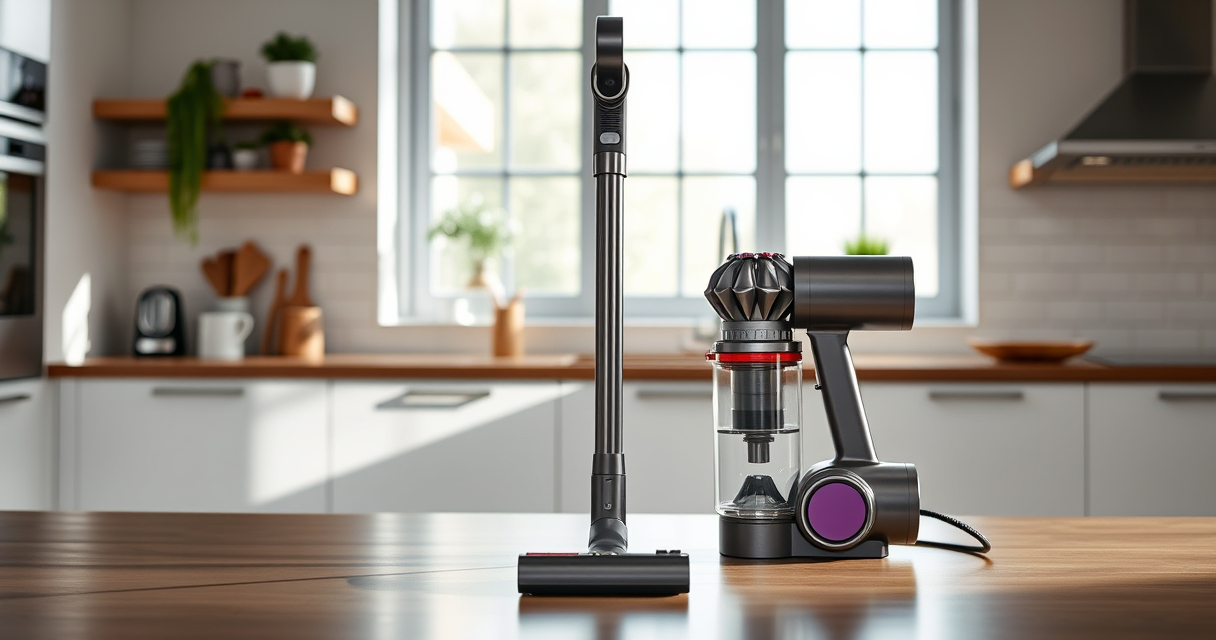

If your Dyson cordless vacuum isn’t providing suction, it can be frustrating and hinder your cleaning. This guide walks you through common causes and practical solutions to restore suction and get your vacuum working like new.

Get home appliances delivered free with Prime
- Fast, free delivery on millions of items
- Prime Video, Amazon Music and more included
- Member-only deals all year
Follow these step-by-step instructions to identify and fix the problem safely, ensuring your Dyson V15 Detect™ Origin or similar model performs at its best.
Key Takeaways
| Clogged filters reduce suction | Regularly clean or replace filters to maintain optimal airflow. |
| Blockages in the wand or brush bar | Inspect and clear obstructions in the wand, cleaner heads, and brush bar. |
| Loose or disconnected parts | Ensure all attachments, seals, and connections are properly fitted. |
| Battery or motor issues | Check for power and motor function if suction remains absent after cleaning. |
Step 1: Turn Off and Unplug Your Dyson Vacuum
Before starting any troubleshooting, turn off your Dyson cordless vacuum and detach it from any charging source to prevent accidents and ensure safety.
Step 2: Inspect and Clean the Filters
- Remove the pre-filters and main filters from the vacuum according to the user manual.
- Rinse the filters with cold water until clean, avoiding soap or harsh cleaners.
- Allow the filters to air dry completely, ideally 24 hours, before reinstalling.
Clean filters regularly to prevent reduced suction caused by clogging or dirt buildup.
Step 3: Check for Blockages in the Wand and Cleaner Heads
- Detach the wand and cleaner heads from the vacuum body.
- Look for visible debris or hair obstructing the airflow pathways.
- Use a long, flexible brush or the crevice tool to clear any blockages.
Removing obstructions ensures unobstructed airflow for optimal suction.
Step 4: Verify Attachments and Seals
Ensure all attachments are securely connected and that seals are intact. A loose connection or broken seal can cause loss of suction. Refit any loose parts tightly.
Step 5: Test the Vacuum
Once you’ve cleaned filters, cleared blockages, and checked connections, power on your vacuum and test suction on a clean surface. If suction is restored, you’re done. If not, proceed to further troubleshooting or contact support.
The Products in This Guide

Dyson V15 Detect™ Origin Cordless Vacuum
- ✔ Charge Time: 3.5 hours
- ✔ Filter Type: HEPA
- ✔ Weight: 6.8 lbs

LANMU Crevice Tool Vacuum Attachments Compatible
- ✔ Nozzle Width: 1 inch
- ✔ Weight: 0.3 lbs
- ✔ Material: Plastic
Dyson V15 Detect™ Origin Cordless Vacuum
The Dyson V15 Detect™ Origin offers advanced cleaning with real-time particle detection, high power, and versatile heads, making it a top choice for thorough home cleaning.
Pros:
- Powerful suction with 100% more power
- Intelligent cleaning adapts to debris and floor type
- Long battery life of 60 minutes
- LCD screen displays real-time data
Cons:
- Higher price point
- Heavier than some handhelds
- Requires regular filter maintenance
Best for: Whole-home deep cleaning, pet hair removal, hard floors and carpets
Not ideal for: Light cleaning or quick pick-ups, small spaces with tight corners
Bottom line: A powerful, intelligent vacuum perfect for comprehensive home cleaning.
LANMU Crevice Tool Vacuum Attachments Compatible
The LANMU Crevice Tool offers a narrow, flexible nozzle to reach tricky spots, complementing your Dyson for detailed cleaning tasks.
Pros:
- Narrow, flexible design
- Compatible with multiple Dyson models
- Easy to attach and use
- Ideal for tight corners
Cons:
- Additional attachment needed
- May require extra storage space
- Not for heavy debris
Best for: Cleaning hard-to-reach spots, car interiors, corners
Not ideal for: Large debris or heavy-duty cleaning
Bottom line: A versatile tool for reaching the toughest spots with ease.
Frequently Asked Questions
Why does my Dyson vacuum have no suction after cleaning filters?
Clogged or dirty filters can restrict airflow, causing loss of suction. Cleaning or replacing filters often restores performance.
How often should I clean or replace the filters?
Filters should be washed every 1-3 months and replaced every 6-12 months, depending on usage and model instructions.
What if cleaning the filters doesn’t fix the suction problem?
Check for blockages in the wand, cleaner head, or hose. Ensure all parts are tightly connected and seals are intact.
Can I fix suction issues myself, or should I contact support?
Most issues can be fixed with basic cleaning and checks. If problems persist, contact Dyson support or a professional technician.
Restore Your Dyson’s Power and Keep It Running Smoothly
By following these troubleshooting steps, you can often resolve no suction issues yourself, saving time and repair costs. Regular maintenance, especially filter cleaning and checking for blockages, will ensure your Dyson cordless vacuum remains powerful and effective for years to come.
Affiliate disclosure: As an Amazon Associate we earn from qualifying purchases. Prices and availability are accurate as of the time of publishing.
Halloween Picks

Kalolary 11 ft Halloween Inflatable Archway Ghost House Tunnel

Kalolary 12ft Halloween Witch Haunted House Inflatable Archway

11.2-Foot Halloween Inflatable Pumpkin with LED Lights
As an affiliate, we earn on qualifying purchases.