
Front-load washers use less water and electricity, making them more energy-efficient and better at extracting water for faster drying. They tend to operate more quietly and have advanced features that boost convenience and performance. Top-load washers are usually more affordable upfront and easier to load and unload. To find the best fit for your household, consider your budget, space, and preferences—stay tuned to learn more about their key differences.
Key Takeaways
- Front-load washers use less water and energy, offering long-term savings and better efficiency.
- They operate more quietly due to their horizontal drum design and noise-reduction features.
- Front-load models typically have higher upfront costs but may require more maintenance over time.
- Top-load washers are usually more affordable initially and easier to load and unload.
- Choice depends on household needs, space, budget, and preference for energy efficiency and noise levels.
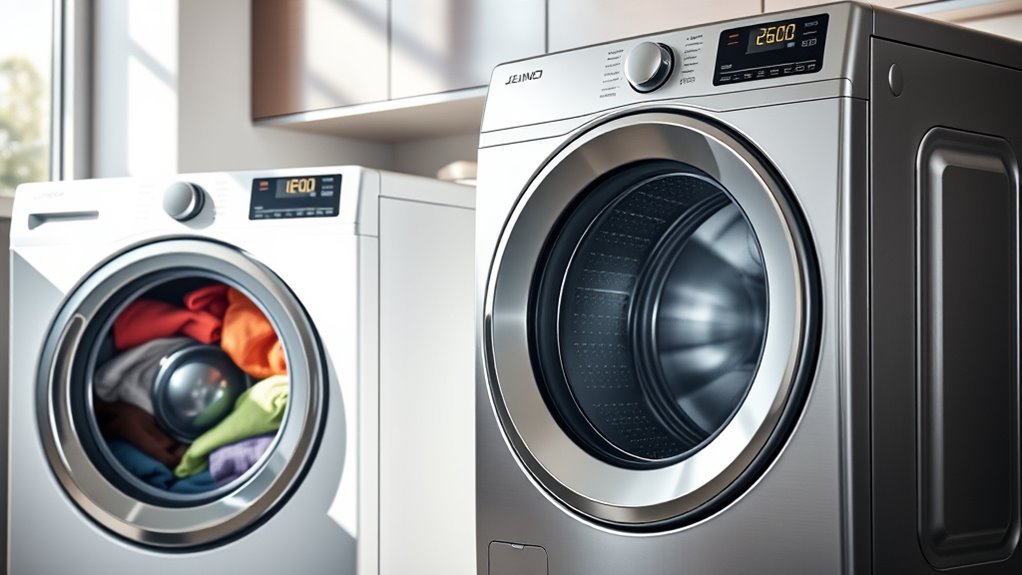
When choosing a washing machine, understanding the differences between top-load and front-load models can help you make an informed decision. One major factor to contemplate is energy efficiency. Front-load washers typically use less water and electricity than their top-load counterparts because they rely on tumbling motions that require less energy to operate. This means that over time, a front-load machine can save you money on utility bills, especially if you do laundry frequently. Additionally, front-load washers often have better spin speeds, extracting more water from clothes and reducing drying time, which further conserves energy. On the other hand, some top-load models are improving in efficiency, but generally, they tend to use more resources. If you’re focused on reducing your environmental footprint or lowering monthly expenses, a front-load machine might be the smarter choice.
Furthermore, advancements in automation technology are making front-load washers more user-friendly and efficient, enhancing their appeal for modern households. Noise levels are another critical aspect that can influence your decision. Typically, front-load washers operate more quietly than top-load models. That’s because their design generally involves a horizontal drum that spins smoothly, and many models include noise-reduction features like insulated cabinets or advanced suspension systems. If your laundry space is near bedrooms, living areas, or in an open-plan home, a front-load washer’s quieter operation can make a noticeable difference. Top-load machines, by contrast, tend to produce more noise during agitation and spinning cycles. Their vertical drum design often results in louder vibrations, especially during the spin cycle. Some newer top-load models include noise-dampening features, but they still generally won’t match the quiet performance of front-load machines.
In essence, if quiet operation is a priority, you’ll likely prefer a front-load washer. When contemplating energy efficiency, front-load models again tend to offer better savings, making them appealing for those looking to cut costs or reduce environmental impact. However, it’s worth noting that front-load washers can sometimes be more expensive upfront and may require more maintenance due to their door seals and gasket systems. Conversely, top-load washers are often more affordable initially and tend to be easier to load and unload, which can be a convenience for many users. Ultimately, your choice depends on weighing these factors against your household’s needs and preferences, but understanding the distinctions in energy efficiency and noise levels will guide you toward the best fit.
Frequently Asked Questions
Which Type Lasts Longer, Top-Load or Front-Load Washing Machines?
Front-load washing machines generally last longer than top-load models because of their better durability comparison and lower wear and tear on components. They often have more advanced designs, but they may require more maintenance to prevent mold and mildew. Top-load washers tend to have simpler mechanics, which can make them more resilient over time. Ultimately, your choice depends on how you prioritize durability and maintenance needs.
How Do Energy Efficiencies Compare Between Top-Load and Front-Load Models?
Front-load washing machines are more energy-efficient than top-load models, using less energy per load due to their design and water usage. This makes them more cost-effective over time, especially if you do frequent laundry. While top-load machines may have a lower initial purchase price, front-loads save you money on energy bills in the long run. So, if energy efficiency is a priority, front-load models are the smarter choice.
Are There Specific Laundry Types Better Suited for Each Washer Type?
Think of your laundry as a garden—each plant needs the right environment. Front-load washers are perfect for delicate fabrics and heavily soiled items, while top-loads excel with quick loads and bulky items. Use gentle detergents for delicate laundry and save heavier-duty detergents for tougher stains. Proper laundry sorting and choosing the right machine make certain your clothes get the care they deserve, keeping your wardrobe fresh and lasting longer.
What Are the Warranty Differences Between Top-Load and Front-Load Washers?
You’ll find that warranty policies often differ between top‑load and front‑load washers. Generally, front‑load machines come with longer manufacturer coverage, sometimes up to five years for parts and labor, because they’re more complex. Top‑load washers might have shorter warranties, typically around one to three years. Always check the manufacturer’s warranty details, as coverage varies by brand and model, ensuring you understand what’s included before purchasing.
Can I Upgrade From a Top-Load to a Front-Load Washing Machine Easily?
You can upgrade from a top-load to a front-load washer, but expect some installation challenges and cost considerations. The new machine might require different hookups, space adjustments, or plumbing modifications, making the process more complex than a simple swap. While the upgrade offers efficiency benefits, plan for potential expenses and installation effort, ensuring your laundry area can accommodate the front-loader’s size and setup needs.
Conclusion
So, whether you choose a top-load or front-load washer, remember—this isn’t just about laundry, it’s about saving your sanity in the chaos of life. A good machine can turn laundry day from a dreaded chore into a moment of peace or a battlefield of frustration. Pick the right one, and you might just discover the secret to hours of stress-free laundry—because your clothes deserve a machine that treats them like royalty, not rubble.

With a keen eye for detail and a relentless pursuit of quality, Alex leads our editorial team. Bringing over a decade of experience in technology journalism and a deep passion for innovation, Alex ensures that Appliances Labs remains at the forefront of the industry. Under his leadership, our content meets and exceeds the highest accuracy, relevancy, and usefulness standards. Alex’s expertise in curating content that resonates with our readers has made Appliances Labs the go-to source for trustworthy appliance and smart home advice.