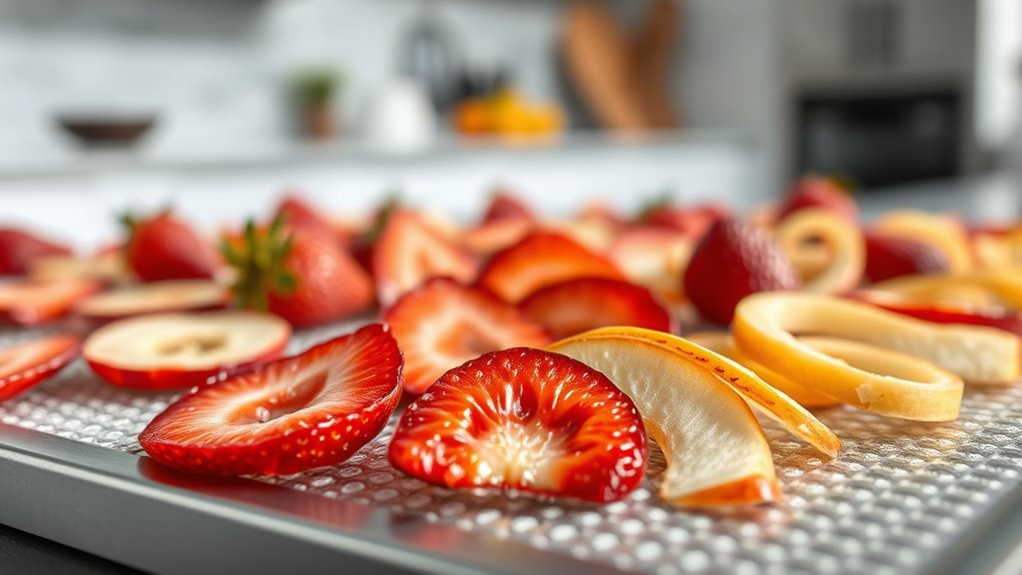

Dehydrators preserve food without cooking by gently removing moisture at low temperatures, which inhibits bacterial growth and prevents spoilage. This process retains much of the food’s original flavor, nutrients, and enzymes, making it healthier than traditional cooking methods. Proper storage in airtight containers helps maintain quality for months or years. If you want to discover how to optimize this process and extend your food’s shelf life even further, stay tuned for more insights.
Key Takeaways
- Dehydrators remove moisture from food, inhibiting bacterial growth and spoilage without using heat or cooking.
- They use low-temperature air circulation to gently dry food, preserving nutrients and enzymes.
- The process maintains flavor and nutrients better than traditional cooking methods that involve heat.
- Proper storage in airtight containers prevents reintroduction of moisture, extending shelf life.
- Controlled drying times and temperatures allow customization of texture and flavor without cooking.
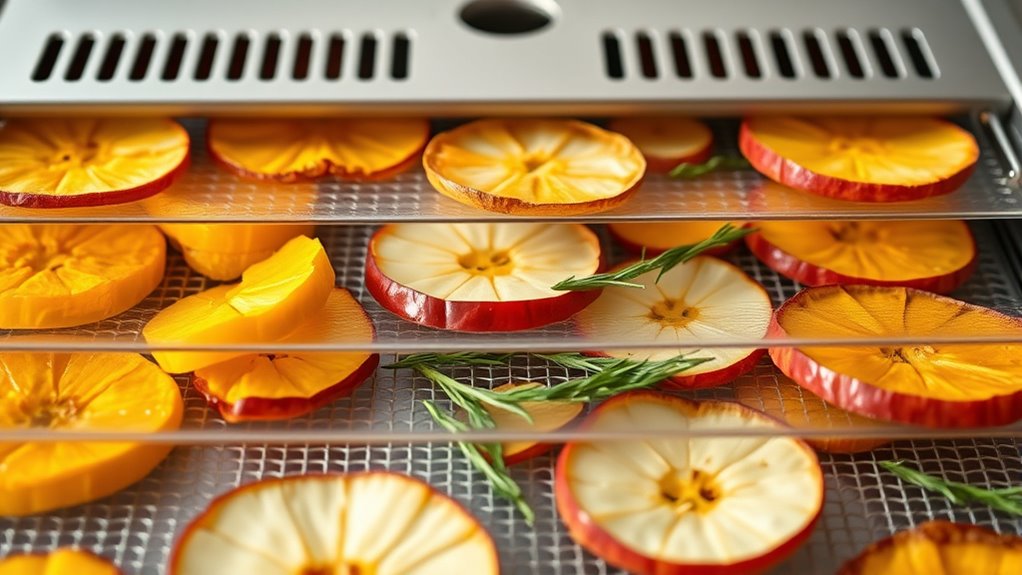
Dehydrators are an effective way to preserve food by removing moisture, which inhibits bacterial growth and extends shelf life. When you use a dehydrator, you’re essentially drying out fruits, vegetables, herbs, and even meats, so they last longer without the need for refrigeration or canning. This method helps you retain much of the food’s original flavor and nutrients, making it a popular choice for health-conscious individuals who want to maximize nutritional benefits. Unlike cooking, which often destroys delicate vitamins and enzymes, dehydration preserves many of these crucial nutrients, ensuring your dried foods remain healthy and nourishing. Plus, the process is gentle, so you don’t have to worry about losing essential nutrients through heat damage.
One of the main advantages of using a dehydrator is its effectiveness in employing proper storage techniques. After drying your food thoroughly, you can store it in airtight containers, vacuum-sealed bags, or jars, which keeps out moisture and oxygen—two elements that can cause spoilage. This makes dehydrated foods incredibly portable and ideal for long-term storage, whether you’re prepping for emergencies, outdoor adventures, or simply reducing waste. When you master storage techniques for dehydrated foods, you’ll find that your pantry stays organized and your supplies remain fresh for months or even years. Proper storage also prevents the reintroduction of moisture, which could lead to mold or bacterial growth, defeating the purpose of dehydration.
Dehydrators also provide you with a way to customize texture and flavor, which can be especially beneficial if you’re creating snacks or meal ingredients. You can control the drying time and temperature, tailoring the process to suit different foods. For example, thin slices of fruit dry faster and become crisp, while thicker pieces retain a chewy texture. This flexibility means you can produce everything from crunchy fruit chips to savory herbs, all while maintaining their nutritional value. Because dehydration doesn’t involve cooking at high temperatures, you preserve the natural enzymes and phytochemicals that support your health. This makes dehydrated foods a smarter, more nutritious choice compared to processed or canned options. Additionally, understanding shelf life and storage is essential to maximize the benefits of dehydrated foods and prevent spoilage.
Frequently Asked Questions
Can Dehydrators Kill Bacteria Without Heat?
Dehydrators don’t kill bacteria or bacterial spores without heat. The dehydration temperature, usually around 125°F to 135°F, only inhibits bacterial growth but doesn’t eradicate spores. To guarantee food safety, you need to reach temperatures that can destroy bacteria, typically above 140°F, and properly dry the food. Without enough heat, spores can survive, so dehydration alone isn’t enough to fully eliminate harmful microorganisms.
How Long Can Dehydrated Food Be Stored Safely?
Imagine you’re living in the age of the Pony Express; dehydrated food can last you 6 to 12 months if stored properly. You should keep it in airtight containers in a cool, dark place to maximize storage duration and prevent spoilage. Proper storage prevents bacteria and mold growth, ensuring your dehydrated foods stay safe and fresh longer. Always check for signs of spoilage before consuming.
Do All Foods Dehydrate at the Same Rate?
Not all foods dehydrate at the same rate because moisture content and dehydration speed vary. Foods with higher moisture content, like fruits and vegetables, take longer to dry, while lean meats or herbs dry faster. You should monitor dehydration progress regularly, adjusting time as needed. Thin, uniform slices dehydrate more evenly, speeding up the process. So, understanding each food’s moisture content helps you achieve ideal preservation without over-drying.
Can Dehydrators Be Used for Making Yogurt?
Dehydrators aren’t suitable for making yogurt because they focus on dehydration, not fermentation preservation. Yogurt dehydration involves removing moisture from already fermented yogurt, which can extend shelf life and make portable snacks. However, using a dehydrator for yogurt fermentation isn’t effective, as it doesn’t provide the controlled environment needed for proper fermentation. Stick to incubators or warm, stable spots for yogurt fermentation, then use dehydrators for yogurt dehydration.
Is Dehydration Suitable for Preserving Liquids Like Soups?
You might think liquid dehydration isn’t suitable for preserving soups, but it actually works well. By removing the moisture, you turn soup into a concentrated, lightweight form perfect for storage and quick rehydration. Soup preservation through dehydration keeps flavors intact and prevents spoilage, making it a handy method for meal prep or camping trips. Just be sure to fully dehydrate the liquid to prevent mold or spoilage during storage.
Conclusion
Now that you know how dehydrators work without cooking, you can confidently preserve your favorite foods for the long haul. Think of it as your own modern-day alchemy, turning fresh produce into lasting snacks or ingredients. With just a little patience and the right technique, you’ll keep flavors vibrant and nutrients intact—no need for a magic wand, just a trusty dehydrator. So go ahead, embrace this timeless method and enjoy your preserved treasures for seasons to come.