Heat pump dryers work by recycling heat from the air to dry your clothes, instead of creating new heat like traditional models. They draw in moist air, pass it over a refrigerant coil to extract moisture, and then reheat the air to dry clothes efficiently. This process uses less energy, lowers utility bills, and is gentler on fabrics. If you’re curious about how this eco-friendly technology offers benefits beyond efficiency, continue exploring further.
Key Takeaways
- Heat pump dryers recycle heat from moist air, reducing energy use compared to traditional dryers.
- They operate via a closed-loop system, condensing moisture and reheating air for efficient drying.
- These dryers consume less electricity, lowering utility bills and environmental impact.
- They dry clothes gently at lower temperatures, extending garment lifespan and preventing damage.
- Their design eliminates the need for external venting, making them suitable for various living spaces.
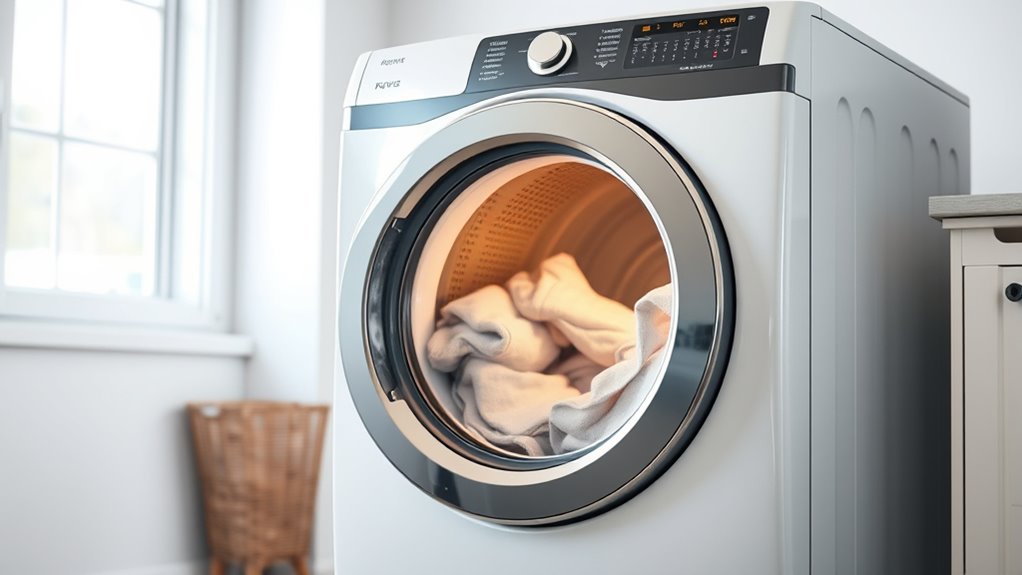
Have you ever wondered if there’s a more energy-efficient way to dry your clothes? Traditional dryers use a lot of electricity and can contribute notably to your household’s energy consumption. That’s where heat pump dryers come into play. Unlike conventional models that generate heat through resistive elements or gas burners, heat pump dryers recycle heat from the air, making them much more energy-efficient. This process not only saves you money on your energy bills but also reduces your overall environmental impact. By consuming less power, heat pump dryers help lower greenhouse gas emissions, making them a smarter and more sustainable choice for eco-conscious consumers.
Understanding how heat pump dryers work can give you a clearer picture of their benefits. The process begins with the dryer pulling in moist air from your clothes. Instead of venting this air outside, the dryer passes it through a series of components, including an evaporator coil containing a refrigerant. As the air passes over the coil, the refrigerant absorbs the heat and cools the air, causing the moisture to condense into water, which is then collected in a reservoir or drained away. The cooled, dehumidified air is then heated again by the heat pump’s compressor and circulated back into the drum, starting the cycle anew. This closed-loop system continuously reuses heat, making the drying process highly energy-efficient. It requires considerably less electricity than traditional dryers, which constantly generate new heat and exhaust moist air outside. Additionally, the recycling of heat reduces the need for external energy sources, further enhancing efficiency.
One of the main advantages of heat pump dryers is their low energy consumption, which directly translates into lower utility bills. Since they operate at lower temperatures, they also gently dry your clothes, reducing wear and tear and extending their lifespan. Additionally, by avoiding the need to vent hot, moist air outside, these dryers are ideal for apartments and homes where venting options are limited or nonexistent. On the environmental front, their reduced energy use means fewer emissions, helping you lessen your carbon footprint. Plus, because they operate quietly and produce less heat, they are more comfortable to use in close quarters.
Frequently Asked Questions
Are Heat Pump Dryers Suitable for All Types of Fabrics?
Heat pump dryers are suitable for most fabric types, but you should verify fabric compatibility before drying delicate items. They gently dry clothes at lower temperatures, making them ideal for delicate fabrics like silk or lace. However, some heavy or bulky fabrics may take longer to dry or might not be suitable. Always follow care labels and manufacturer’s instructions to ensure your fabrics stay in great condition.
How Long Does a Typical Heat Pump Drying Cycle Take?
A typical heat pump drying cycle takes about 1.5 to 4 hours, depending on the load size and fabric type. While this may seem longer than traditional dryers, it’s more energy-efficient because it uses less electricity. You’ll notice the energy efficiency benefits over time, saving you money on utility bills. Patience pays off, as these dryers balance longer cycles with lower energy consumption for a greener, cost-effective drying process.
Can Heat Pump Dryers Be Used in Cold Climates?
Yes, you can use heat pump dryers in cold climates, but outdoor installation might be challenging due to low temperatures. Cold weather can slow down the drying process or reduce efficiency. To guarantee proper operation, consider installing the dryer indoors or in a sheltered area. Make sure the space maintains a consistent temperature, so your heat pump dryer performs at its best even in colder conditions.
What Is the Average Lifespan of a Heat Pump Dryer?
You can expect a heat pump dryer to last around 10 to 15 years. This longevity is impressive, especially given its energy efficiency, which can reduce your electricity bills by up to 50%. When compared to traditional dryers, they often have a higher upfront cost but save you money long-term. Proper maintenance guarantees your dryer remains efficient, making it a smart investment for your home over many years.
Do Heat Pump Dryers Require Special Maintenance or Filters?
Yes, heat pump dryers do require regular filter maintenance to keep them running efficiently. You should clean the filter after each cycle to remove lint and debris, which helps maintain their energy efficiency. Regularly checking and replacing filters as needed ensures maximum airflow and performance, saving energy and extending the dryer’s lifespan. Keeping up with filter maintenance is simple and essential for your heat pump dryer’s continued efficiency and effectiveness.
Conclusion
Now, imagine opening your laundry room door and feeling the fresh, warm air, all thanks to your heat pump dryer. It’s no coincidence that you’re saving energy and reducing your bills while taking care of your clothes gently. With smarter technology working quietly in the background, you’re not just drying your laundry—you’re making a small, meaningful difference for the planet. It’s a perfect harmony of innovation and everyday comfort, just waiting to become part of your routine.