Before buying an induction range, make certain your electrical system supplies the right voltage, usually 240V in North America, and that your circuit can handle 40 to 50 amps dedicated to the stove. Check if your existing wiring and panel can support this load, and consider upgrades if necessary. Proper grounding and using the correct outlet and plug are crucial for safety and performance. Keep exploring to learn more about safely preparing your electrical setup.
Key Takeaways
- Verify your home provides the recommended 240V power supply for safe operation.
- Ensure the electrical circuit can handle 40-50 amps or plan for necessary upgrades.
- Use a dedicated circuit with proper wiring to prevent overloads and ensure optimal performance.
- Confirm the outlet and plug types match manufacturer specifications for compatibility.
- Consult a licensed electrician to assess grounding, wiring, and circuit capacity before installation.
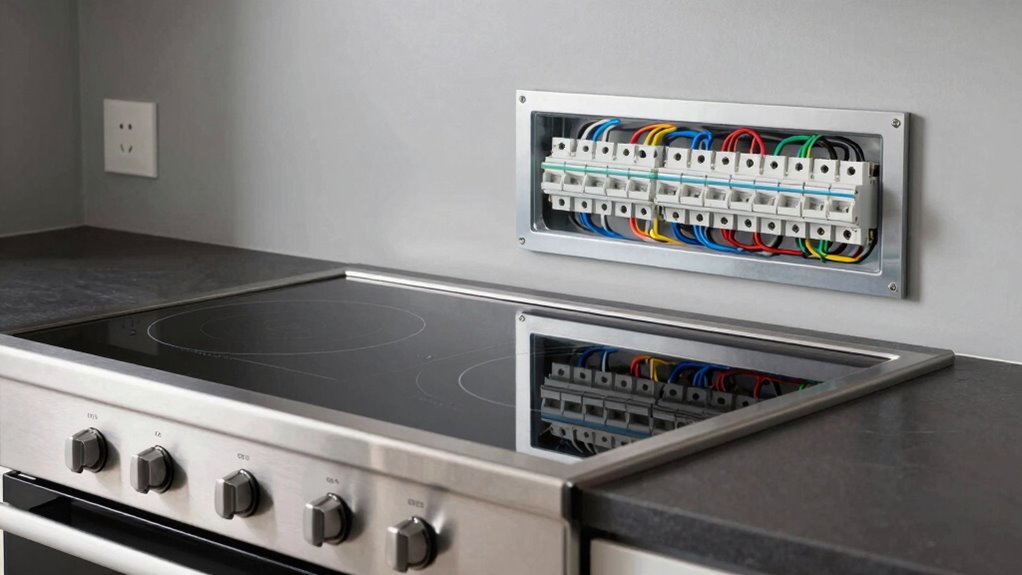
If you’re considering installing an induction range, understanding its electrical requirements is essential for safe and efficient operation. One of the most critical aspects is ensuring your home’s power supply can handle the load. Induction ranges typically demand a dedicated circuit because they draw a significant amount of power during operation. If your existing electrical system isn’t configured correctly, you risk tripping breakers or causing electrical hazards. Before making a purchase, you should verify that your power supply matches the specifications recommended by the manufacturer, usually detailed in the product manual. This means checking whether your home’s electrical system provides the correct voltage, usually 240 volts in North America, and that the circuit can handle the current draw.
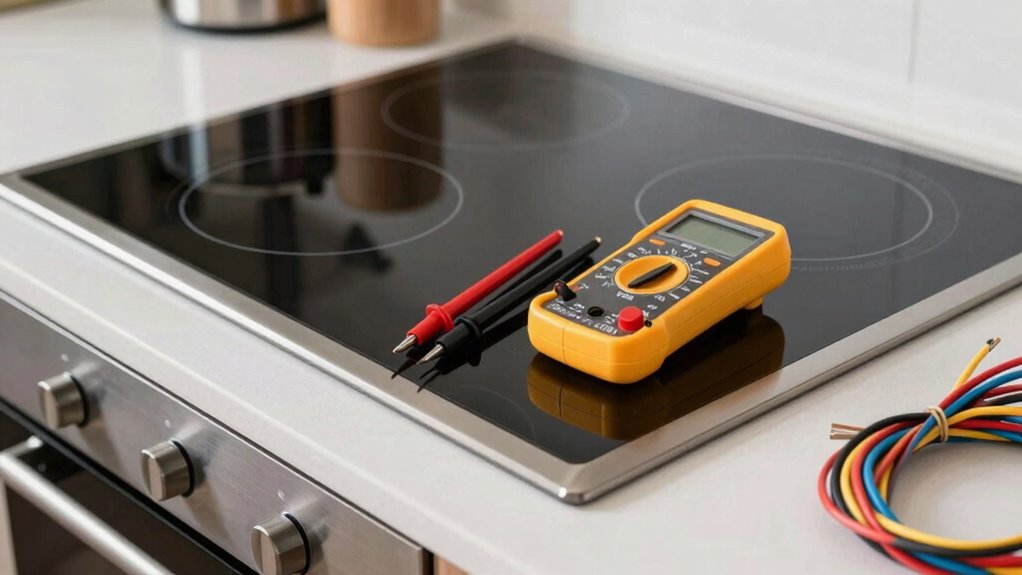
Ensure your home’s electrical system provides the correct voltage and dedicated circuit for safe induction range operation.
The circuit capacity is equally important. Most induction ranges require a dedicated circuit with a specific amperage rating—often 40 to 50 amps—depending on the model. If your current circuit capacity is lower, you might need to upgrade your wiring or install a new circuit entirely. This process involves consulting a licensed electrician, who can assess your existing electrical panel and determine whether it can accommodate the additional load. Upgrading your circuit capacity isn’t just about meeting the appliance’s requirements; it’s about ensuring safety and preventing overloads that could lead to electrical fires or damage to your home’s wiring.
You should also consider the location of the range and the length of the power cord, as longer cords can cause voltage drop, reducing performance and increasing the risk of overheating. A proper power supply setup guarantees consistent power delivery, optimizing the range’s cooking efficiency. Furthermore, it’s imperative to use the correct type of outlet and plug as specified by the manufacturer. Using incompatible hardware not only risks electrical failure but can also void any warranty or safety certifications associated with the appliance.
In addition to ensuring the correct power supply and circuit capacity, you should confirm that your electrical system includes proper grounding. Proper grounding minimizes the risk of electrical shock and protects your appliance and household. If you’re unsure about your electrical setup, don’t attempt to modify it yourself—consult a professional. Taking these steps before buying and installing your induction range guarantees safer operation, enhances performance, and helps you avoid costly electrical issues down the line. Remember, the right electrical foundation is key to enjoying the full benefits of your new appliance without risking safety or efficiency. Additionally, understanding high load demands is crucial for maintaining the safety and longevity of your electrical system when installing high-power appliances.
Frequently Asked Questions
Can Existing Home Wiring Support a New Induction Range?
Your existing home wiring might support a new induction range if it’s compatible with the required outlet types and wiring standards. Check the wiring compatibility to verify it can handle the power demands. Most induction ranges need a dedicated 240V outlet, often a NEMA 14-50 or 6-50 type. If your current wiring doesn’t match these outlet types, you’ll likely need an upgrade to safely operate your new range.
What Amperage Is Typically Required for Induction Ranges?
Induction ranges typically require a power supply of 30 to 50 amps, depending on the model and size. You need to make certain your circuit capacity can handle this load without overloading. Check your home’s electrical system to see if the wiring and breaker can support the power requirements of the range. Upgrading your circuit may be necessary to safely operate the induction cooktop at its full capacity.
Is a Dedicated Circuit Necessary for Installation?
Yes, a dedicated circuit is necessary for your induction range. This guarantees circuit compatibility and prevents overloads. You should verify that your wiring capacity matches the range’s electrical demands, typically a 40-50 amp circuit. Using a dedicated circuit minimizes risks, promotes safety, and maintains ideal performance. Always consult a professional electrician to confirm your wiring setup meets the specific electrical requirements for your induction range.
Can I Upgrade My Current Electrical Panel for an Induction Range?
Yes, you can upgrade your electrical panel for an induction range, but you must prioritize electrical compatibility and safety precautions. Consult a licensed electrician to evaluate your current system and determine if an upgrade is feasible. They’ll ensure your panel can handle the new load safely and meet electrical codes. Upgrading may involve installing a dedicated circuit or panel, but always emphasize safety and proper electrical practices.
Are Special Outlets Needed for Specific Induction Models?
You need to verify power outlet compatibility and match the plug configuration to your induction range. Some models require special outlets, like a 240V outlet, while others may use standard configurations. Always check the manufacturer’s specifications for your specific model. If your current outlet isn’t compatible, you’ll need to upgrade or install a new outlet. Confirming these details helps avoid electrical issues and ensures safe, efficient operation of your induction range.
Conclusion
Think of your induction range as a skilled musician needing the perfect instrument. Just like tuning strings, ensuring your electrical setup matches the range’s requirements keeps everything harmonious. Ignoring these details is like trying to play a symphony on a broken instrument—you’ll never get the beautiful music you want. So, check those electrical requirements carefully, and you’ll enjoy a smooth, powerful performance every time, turning your kitchen into a concert hall of culinary delights.