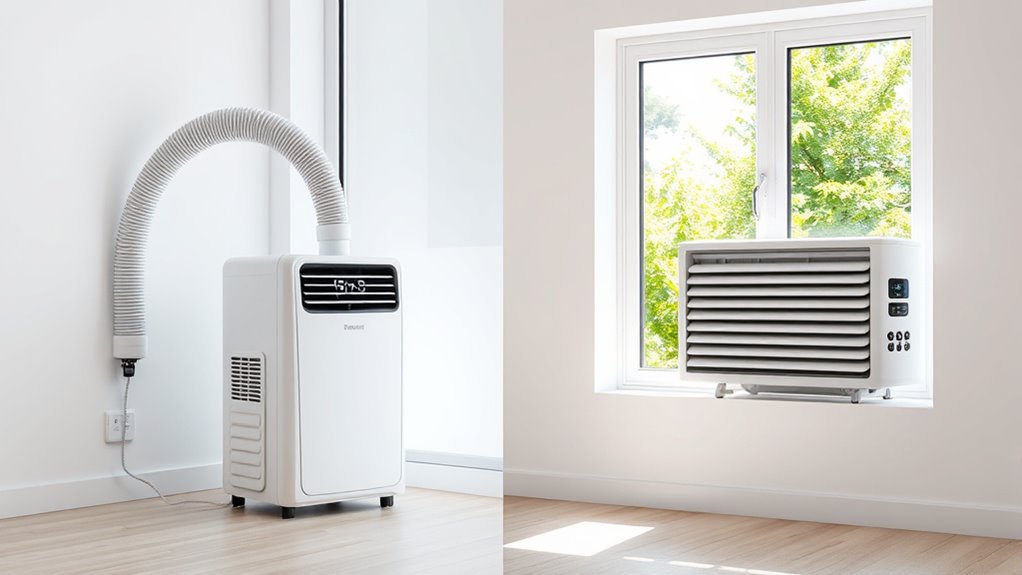

If you’re choosing between portable and window air conditioners, consider your priorities. Window units are more energy-efficient, offer better cooling and are more permanent, but they require installation and installation can be tricky. Portable units are easy to set up and move around, ideal for temporary use, but they tend to leak air and may have less effective cooling. To weigh the benefits and drawbacks suited to your needs, explore the full details below.
Key Takeaways
- Window units generally offer better energy efficiency due to tighter seals and fixed installation.
- Portable units are easier to install and move, making them ideal for temporary or room-specific cooling.
- Fixed window units provide more consistent and effective cooling performance than portable models.
- Portable air conditioners require minimal setup but may have limited venting options and slightly lower efficiency.
- Long-term use favors window units for energy savings, while portability suits flexible, short-term cooling needs.

When choosing an air conditioner for your space, understanding the differences between portable and window units is vital. One of the first factors to consider is energy efficiency. Generally, window air conditioners tend to be more energy-efficient than portable units. This is because they sit directly in the window frame, creating a tighter seal that minimizes cool air loss and reduces energy consumption. Portable units, on the other hand, often have a less secure fit, which can lead to air leaks and increased energy use. If you’re aiming to keep your energy bills low, a window unit might be the better choice, especially for long-term use. However, it’s worth noting that some high-end portable models are designed with better insulation and may offer comparable efficiency, so it’s important to compare specific models. Additionally, floating on water principles like harnessing natural airflow can sometimes be incorporated into building designs to improve overall cooling efficiency. Installation complexity is another vital aspect. Window units require more effort and some technical skill to install properly. You’ll need to measure your window, ensure it can support the weight of the unit, and secure it safely in place, often involving tools and possibly assistance. This process can be time-consuming and might require modifications to your window or frame. On the flip side, portable air conditioners are designed for easy setup. You typically just roll them into the desired spot, connect the exhaust hose to a window vent kit, and you’re ready to go. They’re ideal if you want a quick, hassle-free solution without the need for permanent installation. However, keep in mind that portable units may also require a dedicated power outlet and can be somewhat bulky, which could limit placement options. Another point to consider is mobility. Portable units excel here, allowing you to move them from room to room as needed. This flexibility can be very appealing if you only want cooling in certain areas or if you’re renting and don’t want to make permanent modifications. Window units are fixed in place, which means you’ll need to uninstall and reinstall them if you want to move them elsewhere. This can be inconvenient but offers a more permanent cooling solution that, if installed correctly, often provides better overall performance.
Frequently Asked Questions
Which Type Is More Energy-Efficient Overall?
You’ll find window air conditioners generally more energy-efficient overall because they have lower energy consumption and a smaller environmental impact. They’re designed to cool specific spaces directly and lose less heat to the outside, making them more effective. Portable units tend to use more energy due to their design and the need to circulate air more extensively. So, if efficiency is your priority, opting for a window AC is usually the better choice.
Can Portable Units Cool Multiple Rooms Effectively?
Portable units generally struggle to cool multiple rooms effectively, especially if your space isn’t well-insulated. You need good room insulation to contain cool air and proper ventilation requirements to prevent heat from entering. Without these, a portable AC will have to work harder, reducing its effectiveness. For multiple rooms, consider a central system or window units designed to handle larger areas, ensuring better cooling and energy efficiency.
How Noisy Are Portable Air Conditioners Compared to Window Units?
Think of portable air conditioners as a lively drummer—they can be noisier than the steady hum of a window unit. You’ll find the noise levels of portable units are generally higher, making sound comparison important. While window units tend to operate more quietly, portable models can be louder, especially during high fan speeds. If you value peace and quiet, a window AC might suit you better, but portable units offer flexibility.
Are Portable Air Conditioners Suitable for Large Spaces?
Portable air conditioners aren’t ideal for large spaces because their cooling capacity is limited, especially if your room size exceeds their specified coverage. They’re easy to install and move around, but for bigger areas, window units with higher BTU ratings are more effective. If you want efficient cooling for large rooms, consider the room size and installation ease, but a portable might struggle to maintain a comfortable temperature.
What Is the Typical Lifespan of Each Air Conditioner Type?
Your air conditioner will likely last a lifetime—well, almost! Portable units tend to last around 5-7 years due to frequent movement and potential wear, while window units can last 8-10 years with proper maintenance. Installation challenges and maintenance requirements influence longevity; portable models need regular cleaning and careful handling, whereas window units benefit from easier upkeep. Keep up with upkeep, and your AC will serve you well for years to come!
Conclusion
Ultimately, choosing between portable and window air conditioners depends on your needs and space. Portable units offer flexibility, but window units often provide better cooling efficiency. Remember, “A penny saved is a penny earned,” so weigh your options carefully. If you value convenience and mobility, portable might be your best bet. However, if you want powerful cooling, a window unit could serve you better. Make the choice that fits your lifestyle and keeps you cool all summer long.