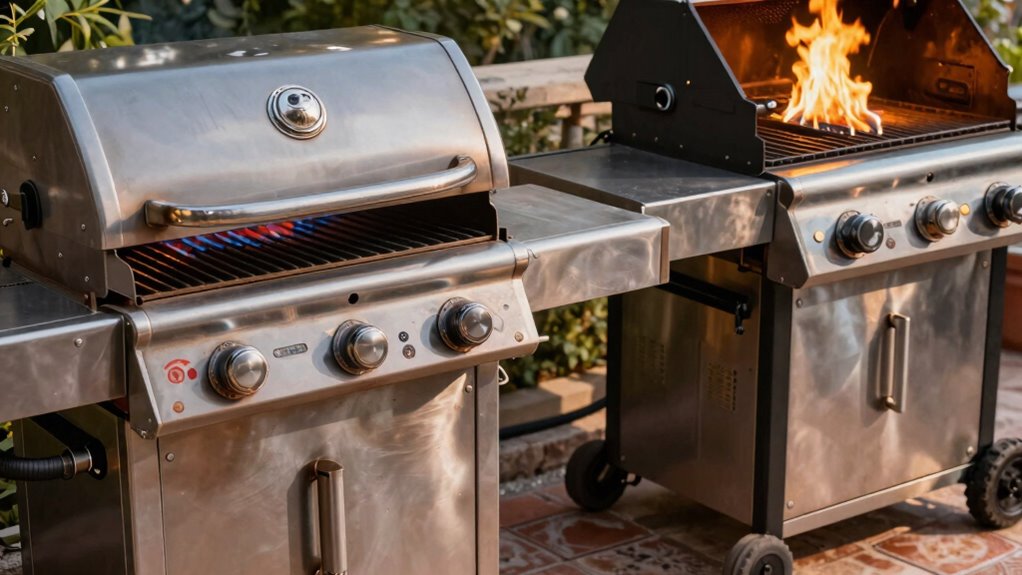

Switching between propane and natural gas grills requires understanding their differences and proper conversion procedures. Propane tanks are portable, needing refills, while natural gas connects directly to your home’s supply for continuous use. Changing fuels involves specific conversion kits and adjustments to burners and regulators, so safety is key. Not all grills are convertible, so check compatibility first. To guarantee safety and ideal performance, it’s best to follow proper steps—keep exploring to learn more.

Get home appliances delivered free with Prime
- Fast, free delivery on millions of items
- Prime Video, Amazon Music and more included
- Member-only deals all year
Key Takeaways
- Converting between propane and natural gas requires specific kits and possible modifications to burners and regulators.
- Not all grills are convertible; verify compatibility before attempting a fuel source change.
- Proper safety procedures, including leak testing, are essential during conversion to prevent hazards.
- Natural gas grills connect permanently to home lines, while propane grills use refillable tanks, affecting portability and setup.
- Consulting a professional ensures safe, correct conversion and optimal grill performance.
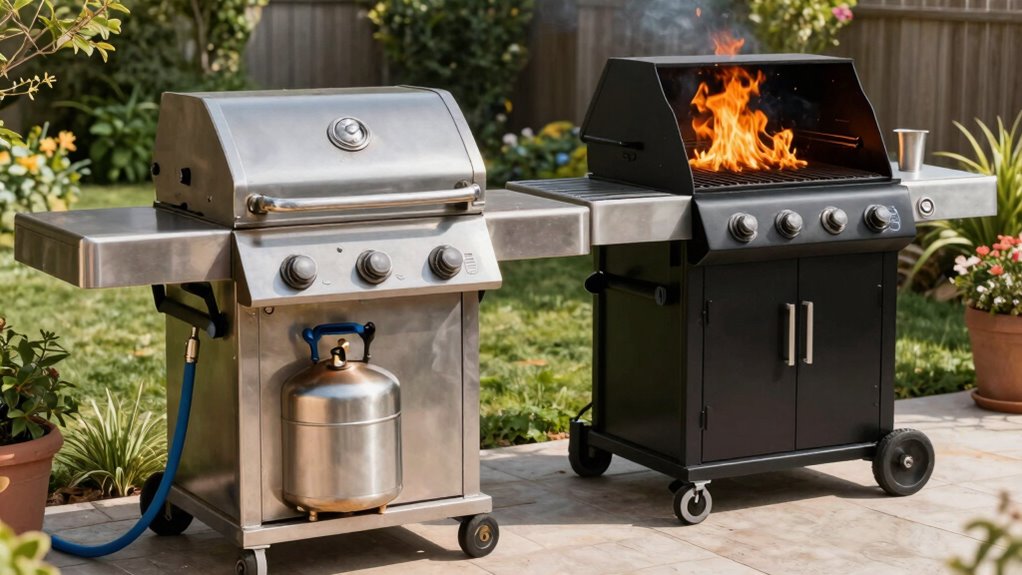
When choosing a grill, understanding the differences between propane and natural gas options can help you make an informed decision. Both fuel sources have their advantages, but knowing how they work and what’s involved in switching between them is key to safe and effective grilling. Alternative fuel sources like propane tanks and natural gas lines each come with their own setup requirements and safety considerations. Before you invest, it’s important to understand these differences, especially if you’re thinking about converting your grill from one fuel type to another.
Propane grills are popular for their portability and ease of use. They rely on tanks that you can refill or replace, making them ideal if you enjoy grilling in various locations or don’t have a natural gas line nearby. Natural gas grills are typically permanently installed, connected directly to your home’s gas line. This setup eliminates the need for refilling tanks, offering convenience for frequent grilling. However, switching between these fuels isn’t always straightforward. Converting a grill from propane to natural gas or vice versa generally involves specific conversion kits and sometimes modifications to the grill’s burner and regulator. If you’re considering a conversion, it’s essential to follow manufacturer instructions carefully and ensure the process aligns with local codes. Proper conversion procedures are crucial to ensure safety and optimal performance.
Propane grills offer portability, while natural gas grills provide convenience for permanent setups. Conversion requires careful attention.
Safety is paramount when dealing with any fuel source. Whether you’re using propane or natural gas, always adhere to grill safety tips to prevent accidents. For propane, check the tank for leaks and ensure connections are tight before lighting. Don’t store tanks indoors or near heat sources. For natural gas, ensure the supply line is secure and free of leaks—using a soap solution to check for bubbles can help confirm there are no leaks. Regularly inspect hoses, connectors, and burners for signs of wear or damage. Proper maintenance reduces the risk of gas leaks or fire hazards, making your grilling experience safer and more enjoyable.
Switching between fuel sources also involves understanding the specific requirements for each. Propane tanks require a regulator to control pressure, while natural gas lines operate at a different pressure level and may need a different regulator or conversion kit. Keep in mind that not all grills are convertible, so check if your model supports such a change before attempting it. If you’re unsure, consult a professional to handle the conversion safely. Doing so ensures your grill operates efficiently and safely, giving you peace of mind during your cookouts.
In the end, choosing between propane and natural gas depends on your setup, preferences, and willingness to invest in conversions if needed. Prioritize safety and proper handling of each fuel type, and always follow grill safety tips to enjoy your grilling season without risks. When you understand the differences and requirements, you can confidently select the best fuel source for your lifestyle and enjoy delicious meals with peace of mind.
propane to natural gas grill conversion kit
As an affiliate, we earn on qualifying purchases.
As an affiliate, we earn on qualifying purchases.
Frequently Asked Questions
Can I Use Propane and Natural Gas Interchangeably on the Same Grill?
You can’t use propane and natural gas interchangeably on the same grill without modifications. Gas pressure and burner compatibility are vital; natural gas requires a different pressure setting than propane. Using the wrong gas can cause uneven flames or damage your grill. To switch between them, you need appropriate conversion kits designed for your grill model. Always check your grill’s specifications and consult a professional if needed to guarantee safe operation.
What Are the Safety Concerns When Converting Between Propane and Natural Gas?
When converting between propane and natural gas, safety is key. You must check for gas leaks after the conversion, ensuring all connections are secure. Use the correct regulator compatibility for each gas type, as mismatched regulators can cause leaks or pressure issues. Always turn off the gas supply before working on the grill, and test for leaks with a soapy water solution to avoid dangerous gas leaks.
How Does Conversion Affect Grill Warranty and Lifespan?
Converting your grill can impact warranty coverage and potentially shorten its lifespan if not done properly. Many manufacturers specify warranty implications for conversions, and using incorrect parts may void your warranty. Additionally, improper conversion can cause undue stress on components, reducing your grill’s lifespan. To protect both warranty and longevity, follow manufacturer guidelines closely, consider professional conversion services, and always use approved parts to guarantee your grill performs safely and reliably over time.
Are There Cost Differences in Operating Propane Vs Natural Gas Grills?
You’ll find that the cost comparison between propane and natural gas grills varies based on fuel expenses. Natural gas typically costs less per BTU, making it cheaper to operate over time. Propane, while often more convenient, tends to have higher fuel expenses. Your choice impacts ongoing costs, so consider your fuel source availability and budget. Overall, natural gas usually offers lower operating costs compared to propane.
Is Professional Installation Required for Gas Conversion Kits?
You don’t necessarily need professional installation for gas conversion kits, but it’s highly recommended. Properly connecting the gas line and guaranteeing adequate ventilation are essential for safety. If you’re unfamiliar with gas systems, a professional can verify the connection, prevent leaks, and ensure proper ventilation. This minimizes risks like gas buildup or fire hazards, giving you peace of mind while enjoying your grill safely and efficiently.
Conclusion
Ultimately, choosing between propane and natural gas grills is like weighing convenience against sustainability. Propane offers portability and quick heat, making it perfect for spontaneous cookouts. Natural gas, on the other hand, provides a steady, eco-friendly supply for long-term grilling. While they differ in setup and fuel source, both deliver delicious results. Your decision boils down to whether you value flexibility or environmental friendliness—either way, you’re set to enjoy great grilled meals.
NFL season / tailgating Picks
team gear
As an affiliate, we earn on qualifying purchases.