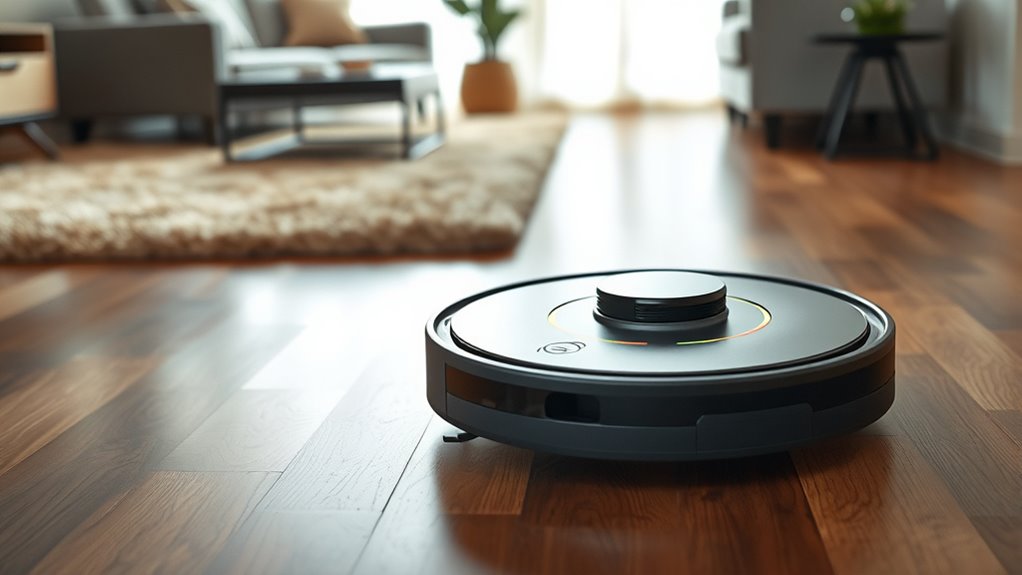
Robot vacuum cleaners use advanced mapping technology and obstacle sensors to navigate your home efficiently. They create a virtual map of your rooms, analyze furniture and obstacles, and plan the best cleaning routes. These devices detect objects like furniture or toys, slowing down or rerouting to avoid collisions or falls. This smart navigation guarantees thorough cleaning without you having to supervise, and if you want to understand how these features work together in detail, there’s more to discover.
Key Takeaways
- Robot vacuum cleaners use mapping technology to create and update virtual maps of home layouts for efficient navigation.
- They utilize obstacle detection sensors to identify and avoid furniture, objects, and prevent collisions.
- The devices plan optimized cleaning routes based on the mapped environment, ensuring thorough coverage.
- Equipped with cliff sensors, they prevent falls from stairs or ledges during operation.
- Advanced models adapt to changes, such as moved furniture or new obstacles, for continuous effective cleaning.

Have you ever wondered how robot vacuum cleaners have transformed tidying up? These sleek devices now navigate your home with surprising precision, thanks to advanced features like mapping technology and obstacle detection. When you press start, you’re not just pushing a vacuum around randomly; you’re activating a smart system that understands your space. Mapping technology plays a pivotal role here. It allows the robot to create a virtual map of your home, analyzing each room, furniture placement, and potential obstacles. This mapping isn’t just for show—it helps the vacuum plan the most efficient cleaning route, avoiding missed spots and reducing time spent cleaning. As the robot moves, it continuously updates its map, adapting to changes like moved furniture or new objects. This ongoing process guarantees thorough coverage and minimizes the chances of bouncing around aimlessly. Additionally, some models incorporate real-time data processing, which further enhances navigation accuracy and efficiency during cleaning sessions.
Obstacle detection is another essential feature that elevates these devices above traditional vacuums. Equipped with sensors, the robot constantly scans its surroundings to identify objects in its path. Whether it’s a chair leg, a stray sock, or pet toys, obstacle detection prevents collisions and potential damage. When the robot approaches an obstacle, it gently slows down, reroutes, or navigates around it with ease. This real-time responsiveness not only protects your belongings but also keeps the cleaning process smooth and uninterrupted. Some models even combine obstacle detection with cliff sensors, preventing the vacuum from falling down stairs or off ledges. The seamless coordination between mapping technology and obstacle detection creates a smart cleaning experience where the robot moves confidently, covering every inch without getting stuck or missing spots.
You’ll notice that with these features, your robot vacuum becomes more than a simple cleaner; it acts like a diligent assistant that understands your home’s layout. It learns the most efficient paths, recognizes areas that need more frequent attention, and avoids obstacles that could cause delays. This intelligent navigation means fewer user interventions and a more consistent cleaning schedule. Plus, many models allow you to customize cleaning zones or set no-go areas, thanks to their detailed maps. Essentially, the combined power of mapping technology and obstacle detection turns a basic device into an intelligent partner, making household chores less of a hassle and more effective. With every sweep, your robot vacuum demonstrates how cutting-edge technology can redefine the way you keep your home tidy.
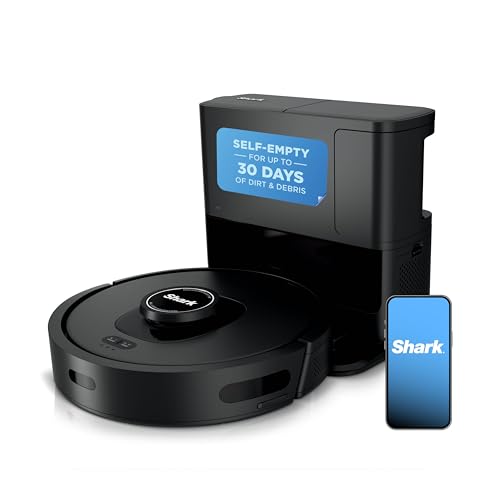
Shark AV2501S AI Ultra Robot Vacuum, with Matrix Clean, Home Mapping, 30-Day Capacity HEPA Bagless Self Empty Base, Perfect for Pet Hair, Wifi, Dark Grey
INCREDIBLE SUCTION: Powerful Shark suction picks up dirt and debris on all floor types—tackling even the toughest of…
As an affiliate, we earn on qualifying purchases.
As an affiliate, we earn on qualifying purchases.
Frequently Asked Questions
How Do Robot Vacuums Avoid Falling Down Stairs?
You might wonder how robot vacuums avoid falling down stairs. They use stair detection sensors that recognize drop-offs, and obstacle avoidance technology to navigate safely. When these sensors detect a staircase edge, the vacuum pauses or changes direction, preventing falls. This smart combination guarantees your device cleans efficiently without risking damage or accidents, giving you peace of mind while it keeps your floors spotless.
Can Robot Vacuums Detect and Avoid Pet Waste?
Yes, many robot vacuums now feature pet waste detection and obstacle avoidance technology. When you run your robot, it actively scans the floor for pet waste and obstacles, avoiding them to prevent messes or damage. This smart navigation helps keep your home clean and your pet’s waste intact, giving you peace of mind. Make sure to choose a model with these features for the best cleaning experience around your furry friends.
How Do Robot Vacuums Handle Different Floor Types?
Imagine your robot vacuum gliding seamlessly across hardwood, tile, or carpet as if it’s part of your home’s rhythm. It adjusts its cleaning strategies based on the floor type, switching suction power or brush rotation to optimize dirt removal. With smart sensors, it detects different surfaces, ensuring thorough cleaning without damage. You can trust it to adapt effortlessly, making every corner spotless regardless of your floor’s material.
What Is the Battery Life of Most Robot Vacuum Cleaners?
Most robot vacuum cleaners offer a battery life of around 90 minutes to two hours, depending on the model. You’ll find that their battery capacity varies, impacting how long they clean before needing a recharge. Charging time typically ranges from 3 to 4 hours, so you should plan for a full recharge after each cycle. Keep an eye on battery levels to guarantee thorough cleaning without interruptions.
Do Robot Vacuums Require Wi-Fi to Operate Effectively?
Imagine your robot vacuum gliding smoothly across your floor, its smart navigation mapping out every corner. Yes, Wi-Fi connectivity enhances its effectiveness, allowing you to schedule cleanings and monitor progress remotely. Without Wi-Fi, it still navigates and cleans efficiently, but you miss out on app control and smart features. For peak performance and convenience, a stable Wi-Fi connection is highly recommended, making your cleaning routine effortless and more intelligent.

Lefant LiDAR Robot Vacuum and Mop, Smart Mapping and Obstacle Avoidance, Tangle-Free Pet Hair, 2.4G/5G WiFi App Control, Slim Design for Wider Coverage, Carpet Detection, M330 Pro
【dToF Navigation & Multi-Floor Mapping】With advanced dToF navigation, the Lefant M330 Pro lidar robot vacuum efficiently scans up…
As an affiliate, we earn on qualifying purchases.
As an affiliate, we earn on qualifying purchases.
Conclusion
Now that you understand how robot vacuum cleaners navigate and clean, imagine what’s next. Could future models anticipate your needs even better? Will they adapt instantly to new obstacles or hidden messes? As technology advances, your home might soon be effortlessly spotless—all thanks to these smart machines. The question is, are you ready to welcome a new era of cleaning, where surprises and innovations await just around the corner?

ROPVACNIC Robot Vacuum Cleaner Robot Vacuum and Mop Combo with 5200Pa Suction, Personalized Cleaning Adjustments, Self-Charging Robotic Vacuum Cleaner, Advanced Obstacle Avoidance
【2-in-1 Mopping and Vacuuming】 The ROPVACNIC Robot S1 integrates advanced electronically controlled mopping technology, significantly enhancing both cleaning…
As an affiliate, we earn on qualifying purchases.
As an affiliate, we earn on qualifying purchases.

Goodsby Replacement Cliff Drop Infrared Side Sensors for Shark IQ Robot Vacuums RV1001AE RV912S RV913S RV1000S QR1000SG AV1002AE AV1010AE AV911S QR1000SB UR1000SR UR1005AE RV1101ARUS UR1105ARUS
✅ !!! CHECK YOUR VACUUM MODEL BEFORE ORDERING !!! ✅
As an affiliate, we earn on qualifying purchases.
As an affiliate, we earn on qualifying purchases.