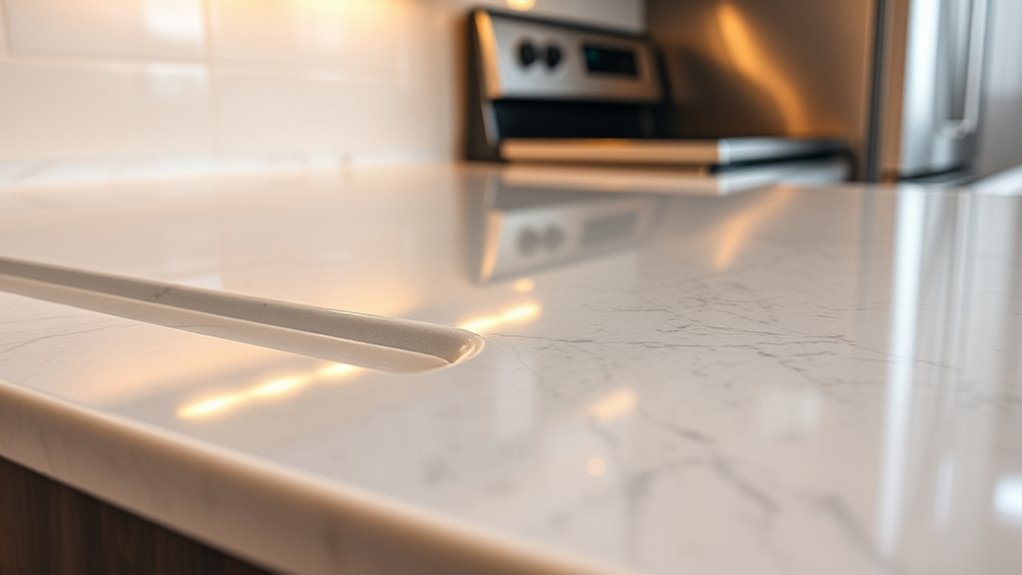

To seal stone countertops around appliances, start by cleaning thoroughly with a pH-neutral cleaner and drying the surface completely. Mask off nearby appliances with painter’s tape to protect against excess sealant, then apply a suitable sealant carefully along edges using a small brush or squeeze bottle. Smooth the sealant with a damp cloth, wipe away excess immediately, and allow it to cure for 24 to 48 hours. Learning proper techniques guarantees long-lasting protection — keep going to discover more helpful tips.

Get home appliances delivered free with Prime
- Fast, free delivery on millions of items
- Prime Video, Amazon Music and more included
- Member-only deals all year
Key Takeaways
- Mask off areas near appliances with painter’s tape to protect surfaces during sealant application.
- Use a small brush or squeeze bottle for precise, controlled sealant application along edges and corners.
- Ensure the countertop surface is thoroughly cleaned, dry, and free of debris before applying sealant around appliances.
- Smooth and remove excess sealant immediately to prevent smudges and ensure an even finish.
- Allow proper curing time (24-48 hours) without exposure to water or heat for optimal sealing around appliances.
As an affiliate, we earn on qualifying purchases.
Choosing the Right Sealant for Your Stone Surfaces

Have you ever wondered how to protect your stone countertops effectively? The key is choosing the right sealant. First, identify your stone type—granite, marble, or quartz—since each requires specific products. Look for sealants labeled specifically for your surface, ensuring they’re penetrating rather than topical. Penetrating sealants seep deep into the stone, providing long-lasting protection against stains and moisture, while topical sealants form a surface barrier. Consider your lifestyle—if you cook often or have kids, opt for a sealant with high durability and stain resistance. Always check the manufacturer’s recommendations and reviews. Applying the wrong sealant can damage your surface or diminish its appearance. So, take your time, do your research, and select a high-quality sealant designed for your specific stone to keep it looking pristine. Proper sealing techniques can make a significant difference in maintaining your countertops’ longevity and appearance.
Preparing Your Countertops Before Sealing
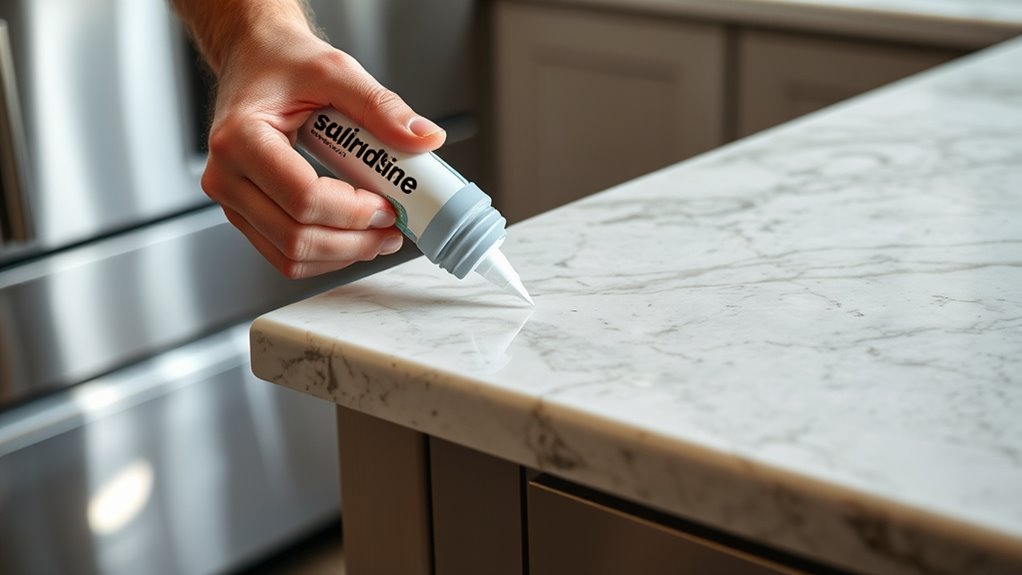
Before applying a sealant, preparing your countertops properly guarantees the best results and longevity. Start by cleaning the surface thoroughly with a gentle, pH-neutral cleaner to remove dirt, grease, and residues. Use a soft cloth or sponge to avoid scratching the stone. Once clean, dry the surface completely to ensure the sealant adheres evenly. Inspect for any stains or damage; address any cracks or chips beforehand, as sealing won’t fix these issues. If your countertops have a polished finish, consider lightly sanding the surface with a fine-grit pad to improve sealant absorption. Remove all dust and debris after sanding. Proper preparation creates a smooth, clean surface, ensuring the sealant penetrates effectively and provides lasting protection. Additionally, verifying that the surface is free of dust and debris helps maintain the sealant’s effectiveness over time. Using proper surface preparation techniques can further enhance the durability of your sealant application. Incorporating knowledge of sealant materials can assist in choosing the most compatible products for your stone type. To ensure optimal results, consider consulting brand-specific sealing instructions for your particular stone type.
Proper Application Techniques Around Appliances
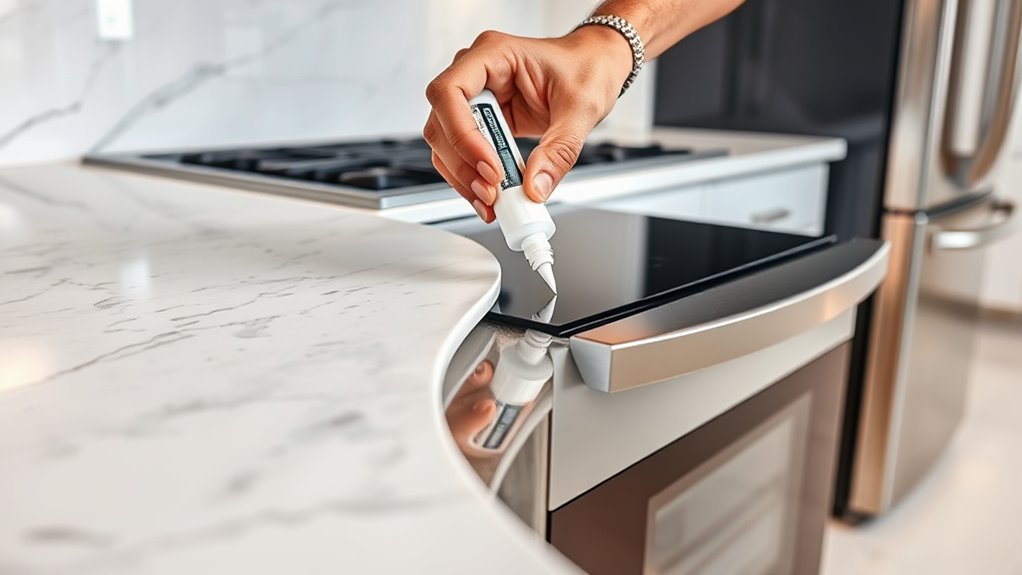
When sealing stone countertops around appliances, it’s essential to work carefully to prevent sealant from getting into appliance crevices or vents. Begin by masking off areas near appliances with painter’s tape to protect them from excess sealant. Use a small brush or a squeeze bottle to apply the sealant precisely along the edges of the countertop, staying close to the surface without overapplying. Smooth the sealant with a damp cloth or applicator, ensuring it fills gaps evenly. Wipe away any excess immediately to avoid smudges or buildup. Take your time around corners and tight spots, working slowly to maintain control. This careful application helps create a seamless, durable seal while reducing cleanup and the risk of sealant entering appliance vents or crevices. Additionally, understanding the proper application techniques can help prevent common issues like sealing failures or damage. Being mindful of sealant compatibility with your specific stone type is also crucial to ensure long-lasting results. It’s also beneficial to consult professional sealing services for complex or hard-to-reach areas to achieve optimal protection. Incorporating knowledge of retirement planning options can also help in budgeting for quality sealing products and professional services if needed.
Allowing Adequate Curing and Drying Time

Allowing sufficient curing and drying time is essential to guarantee your sealed countertops perform their best. After applying the sealant, give it enough time to set properly, usually 24 to 48 hours, depending on the product instructions. During this period, avoid using the countertops or exposing them to water, heat, or heavy objects. This waiting time allows the sealant to penetrate deeply and form a strong, durable barrier against moisture and stains. Rushing this process can compromise the seal’s effectiveness, leading to potential damage or staining over time. Make sure your space is well-ventilated to help the sealant cure evenly. Proper curing ensures your countertops remain protected and look great for years to come. Additionally, following manufacturer guidelines and industry best practices can further enhance the longevity of your sealant application. Being aware of AI vulnerabilities can help in developing more reliable safety measures for AI-related processes involved in manufacturing or quality control. Ensuring proper curing conditions is also vital to prevent issues like sealant failure, which could compromise your countertop protection.
Maintaining and Reapplying Sealant for Long-Term Protection
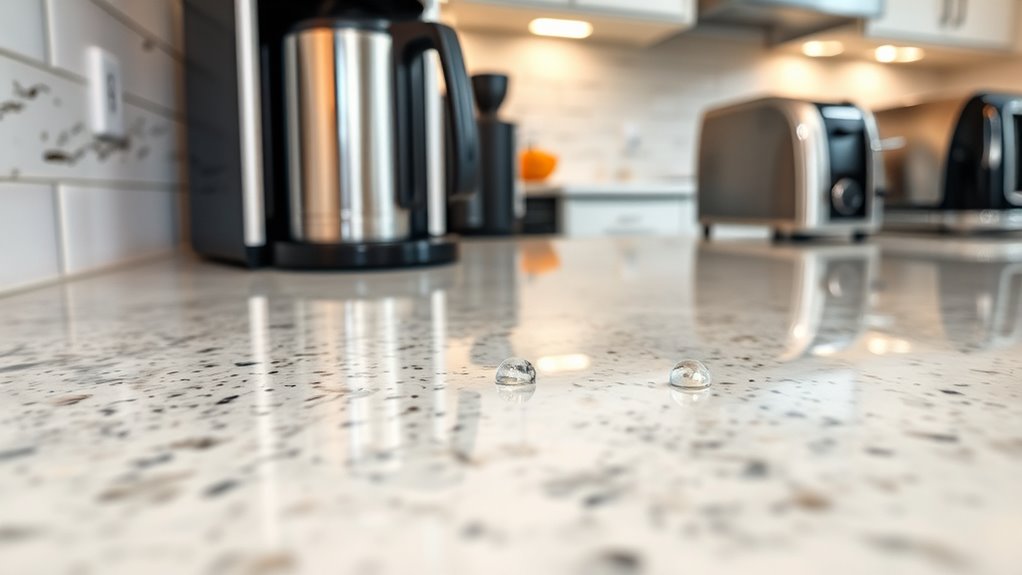
To guarantee your stone countertops stay protected over time, regular maintenance and timely reapplication of the sealant are essential. You should inspect your countertops every six to twelve months for signs of wear, such as dullness or stains that won’t come off easily. If you notice these issues, it’s time to reseal. Clean the surface thoroughly before applying a fresh coat of sealant, making sure it’s dry and free of debris. Follow the manufacturer’s instructions carefully to ensure proper absorption. Keep in mind that sealant isn’t permanent, so reapplying it periodically helps maintain resistance to stains, moisture, and damage. Proper application techniques also play a crucial role in achieving an even seal and optimal protection. Using appropriate tools and techniques can improve the overall sealing process and ensure a more durable finish. Regular sealing maintenance is key to extending your countertop’s lifespan and keeps it looking pristine for years to come. Additionally, understanding the sound healing science behind certain vibrations can inspire a mindful approach to routine care.
Frequently Asked Questions
How Often Should I Reseal Stone Countertops Around Appliances?
You should reseal your stone countertops every 1-3 years, depending on usage and the type of stone. Regularly check for signs of wear or stains to determine if resealing is needed sooner. For areas around appliances, it’s especially important to reseal more frequently, as spills and moisture can cause damage. Keep an eye on the surface, and when water no longer beads, it’s time to reseal.
Can Sealing Prevent Stains From Spilled Liquids?
Sealing your stone countertops can help prevent stains from spilled liquids, but it’s not foolproof. When sealed properly, a barrier forms that repels liquids, giving you more time to clean up spills before they stain. However, over time, seals can wear down, so regular resealing is essential. Keep your countertops protected by sealing them periodically, especially around appliances where spills are more common, to maintain their beauty and durability.
Are There Specific Sealants Recommended for Different Appliance Types?
When choosing sealants for your countertops around appliances, you should consider the specific material of your stone and the type of appliance. Some sealants work better with granite, while others suit quartz or marble. Always opt for a high-quality, food-safe sealant compatible with your countertop material. Follow the manufacturer’s instructions carefully, and reapply as recommended to guarantee maximum protection against stains and spills.
Is It Safe to Use Household Cleaners After Sealing?
You wonder if household cleaners are safe after sealing your countertop. While it might seem convenient, using strong cleaners can damage the sealant or affect its longevity. Instead, opt for gentle, pH-neutral cleaners to safeguard your sealant and countertop. Always check the manufacturer’s recommendations before using any cleaner. Taking these precautions ensures your sealed surface stays beautiful and durable, avoiding unnecessary damage or costly repairs down the line.
What Signs Indicate the Need for Resealing?
You should look for signs like stains or discoloration that won’t come off easily, which suggest your countertop’s seal has weakened. Water soaking in or spreading across the surface indicates insufficient sealing too. If you notice a dull or sticky feeling, it’s time to reseal. Regularly inspecting your countertop helps you catch these signs early, so you can maintain its beauty and durability.
Conclusion
So, there you have it—your secret weapon against stains and spills, all thanks to sealing your stone countertops around appliances. Just remember, neglecting this step is like leaving your precious countertops unguarded in a war zone. With a little effort and some sealant, you’ll keep your surfaces looking flawless and envy-inducing. Who knew saving time and money could be so glamorous? Now go forth and seal like a pro—your countertops will thank you.
Halloween Picks
halloween
As an affiliate, we earn on qualifying purchases.