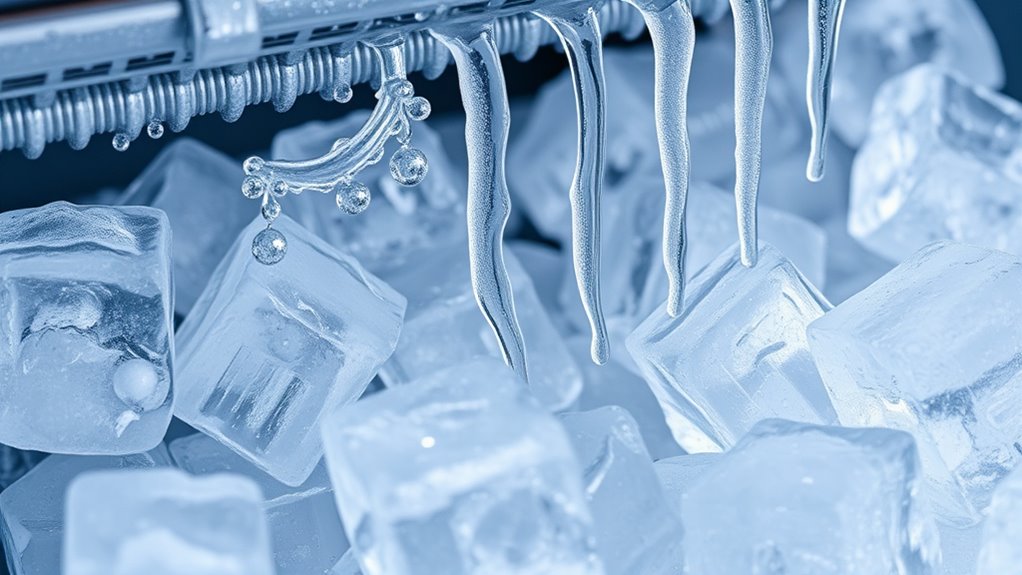

Ice makers and ice machines work by filtering water to remove impurities, then circulating it over a freezing surface like an evaporator plate. Sensors monitor water levels, ensuring proper flow and freezing at the right rate. Once the water solidifies into ice, an ejection mechanism releases it into a storage bin. Regular maintenance, like filter changes and cleaning, keeps everything running smoothly. If you want to understand each step in detail, there’s more to discover below.

Get home appliances delivered free with Prime
- Fast, free delivery on millions of items
- Prime Video, Amazon Music and more included
- Member-only deals all year
Key Takeaways
- Water is filtered to remove impurities, ensuring clear, high-quality ice production.
- Water enters the freezing chamber, where sensors monitor levels and distribute it evenly over the ice-forming surface.
- Refrigeration components like compressors and condensers cool the water, causing it to freeze into ice.
- Ice forms on the mold or evaporator plate, then ejection mechanisms release it into a storage bin.
- Regular maintenance, including filter replacement and coil cleaning, ensures optimal operation and ice quality.
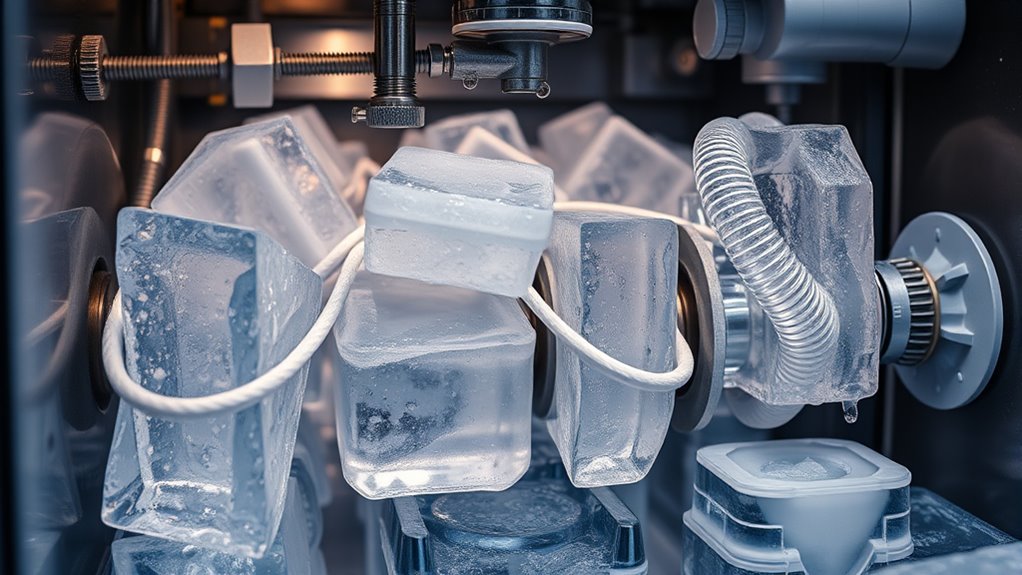
Have you ever wondered how those crisp, invigorating ice cubes appear so effortlessly in your freezer or commercial setting? The secret lies in the intricate mechanics of ice makers and ice machines, which rely heavily on a few core processes. At the heart of these systems is water filtration—an essential step that ensures the water used is clean, free of impurities, and produces clear, high-quality ice. Without proper water filtration, minerals, sediments, and contaminants can build up inside the machine, leading to cloudy ice, reduced efficiency, and potential damage. Regular maintenance procedures become indispensable here; they involve checking and replacing filters, cleaning coils, and descaling components to prevent mineral buildup and keep the system running smoothly. These routine steps extend the lifespan of your ice maker and guarantee the ice’s clarity and taste.
Once water enters the machine, it flows into a reservoir or directly into the freezing chamber, depending on the model. In many commercial units, sensors monitor the water level, ensuring there’s always enough to produce ice without overflowing. The freezing process begins when the water is evenly distributed over an ice-forming surface, such as an evaporator plate or mold. As the water cools, it solidifies into ice, often in the shape of cubes or flakes, depending on the machine design. The refrigeration system, which includes compressors and condensers, maintains a consistent low temperature, drawing heat away from the water and facilitating rapid freezing.
Water flows into the freezing chamber, where sensors monitor levels and the refrigeration system rapidly solidifies it into ice.
After the ice forms, it’s ejected from the mold by a mechanism like an auger or a rotating arm. In some machines, a water curtain helps rinse the ice clean before collection, removing any residual impurities. The ice then falls into a storage bin, where it’s kept cold and ready for use. Throughout this process, water filtration plays an indispensable role by removing minerals and impurities that could compromise the ice’s clarity and taste. If you neglect maintenance procedures—like cleaning the ice bin, inspecting the filtration system, or descaling the components—you risk clogging or damaging essential parts, which can lead to costly repairs and downtime.
In essence, understanding the mechanics of ice makers involves appreciating the seamless blend of water filtration, refrigeration, and mechanical ejection processes. Regular maintenance procedures ensure all these parts work harmoniously, producing pristine, invigorating ice each time. Your attention to these details guarantees not only the quality of the ice but also the longevity and efficiency of your machine, making every cube a testament to well-maintained technology.
commercial ice maker water filter
As an affiliate, we earn on qualifying purchases.
As an affiliate, we earn on qualifying purchases.
Frequently Asked Questions
How Energy-Efficient Are Modern Ice Makers Compared to Older Models?
Modern ice makers are more energy-efficient than older models, thanks to technological advancements. They use less energy for the same ice production, reducing overall energy consumption. These newer units often feature better insulation, smarter controls, and more efficient compressors, which help cut down on electricity use. By upgrading, you’ll save money on energy bills and lessen your environmental impact, making modern ice makers a smarter choice overall.
What Maintenance Is Required to Prolong Ice Machine Lifespan?
To prolong your ice machine’s lifespan, you should prioritize regular cleaning to prevent mineral buildup and mold. Additionally, maintain water filtration to keep ice clear and reduce internal corrosion. Check and replace filters as recommended, and inspect components for wear. Keeping your machine clean and ensuring water quality helps it run efficiently, reducing breakdowns and extending its service life.
Can Ice Makers Operate Effectively in Extremely Cold Environments?
In extremely cold environments, ice makers struggle with cold weather and insulation challenges, often failing to produce ice efficiently. For example, a remote lodge in Alaska found its machine freezing up due to low ambient temperatures, disrupting ice production. To operate effectively, you need proper insulation and heating solutions to prevent freezing components. Without these, your ice maker may not function reliably, especially in harsh, cold conditions.
What Are the Common Causes of Ice Machine Malfunctions?
You might face ice machine malfunctions due to clogged filters, which restrict water flow and reduce ice production. Compressor failures are also common, often caused by overheating or electrical issues, leading to complete shutdowns. Regularly cleaning filters and ensuring proper maintenance can prevent these problems. Keep an eye on the machine’s performance, and address issues promptly to avoid costly repairs and downtime.
How Do Different Types of Ice Affect Machine Performance?
Imagine each ice type as a different dance partner—some glide smoothly, others trip over themselves. Hard water promotes dense ice crystal formation, which can clog your machine and slow performance. Soft water creates clearer, more efficient ice, but if it’s too soft, it may cause uneven freezing. Different ice shapes influence airflow and cooling efficiency, so understanding their effects helps you keep your machine running smoothly and producing quality ice.
Conclusion
Now that you understand the intricate mechanics behind ice makers and ice machines, you’ll see them not just as simple appliances but as marvels of engineering magic. They create ice faster than you can say “refreshing drink,” transforming your everyday moments into frosty extravaganzas. With this knowledge, you’ll appreciate their genius and never underestimate their icy power again—these machines are nothing short of miraculous, turning water into shimmering, life-saving ice at a blink of an eye.
Fall Picks
fall essentials
As an affiliate, we earn on qualifying purchases.