
Microwave ovens work by using electromagnetic waves called microwaves, roughly at 2.45 gigahertz, to excite water, fats, and sugars in your food. These waves cause polar molecules to spin rapidly, creating friction that generates heat inside the food itself. This dielectric heating process heats food quickly and efficiently without needing external heat transfer. If you want to understand how this rapid and precise heating happens, there’s more to explore about the science behind microwave technology.
Key Takeaways
- Microwave ovens use a magnetron to generate electromagnetic waves at around 2.45 GHz, which penetrate food to produce heat.
- Microwave radiation interacts mainly with polar molecules like water, fats, and sugars, causing them to rapidly vibrate.
- The vibration of these molecules creates internal friction, transforming electromagnetic energy into heat through dielectric heating.
- This process heats food internally and quickly, as opposed to traditional conduction and convection methods.
- Factors like water content and dielectric properties influence how efficiently food absorbs microwave energy.

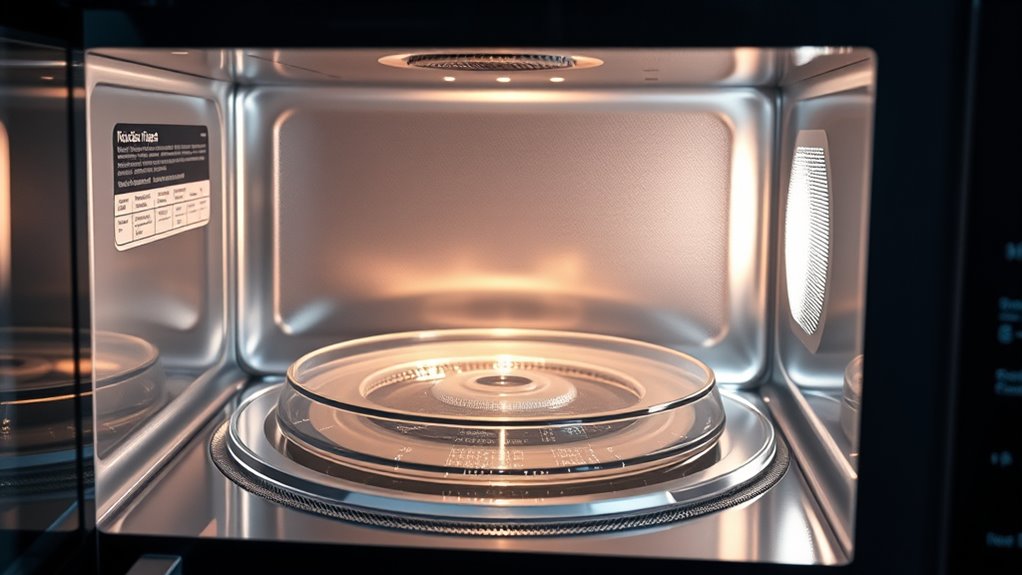
Have you ever wondered how microwave ovens heat your food so quickly? It all comes down to the fascinating science of microwave radiation and dielectric heating. When you press start, the microwave oven emits electromagnetic waves—specifically, microwave radiation—that penetrate the food. These waves are generated by a component called a magnetron, which converts electrical energy into microwave energy. Once inside, the microwave radiation interacts with the water, fats, and sugars in your food, causing molecules to vibrate rapidly. This vibration results in friction, which generates heat and cooks your meal from the inside out.
Microwave ovens heat food by causing water molecules to vibrate rapidly with electromagnetic waves.
This process is a perfect example of dielectric heating. Unlike conventional ovens that rely on conduction and convection to transfer heat from the outside in, microwave ovens directly heat the molecules within the food through dielectric heating. The key is in how microwave radiation affects polar molecules—those with a positive and negative end. Water molecules are polar, and when exposed to microwave radiation, they try to align themselves with the oscillating electromagnetic field. As the microwave frequency changes rapidly, these molecules constantly flip back and forth, creating internal friction that produces heat. This heat then spreads to the surrounding molecules, cooking the food quickly and evenly.
Because microwave radiation directly targets these polar molecules, the heating process happens much faster than traditional methods. You’ll notice that foods with high water content heat up more rapidly, which is why leftovers with moisture tend to warm evenly and swiftly. The dielectric properties of different materials affect how well they absorb microwave energy, which explains why some items heat unevenly or take longer. Manufacturers design microwave ovens to optimize the frequency of microwave radiation—usually around 2.45 gigahertz—to efficiently excite water molecules while minimizing energy loss.
In essence, microwave ovens leverage the principles of electromagnetic radiation and dielectric heating to deliver quick, efficient cooking. The microwave radiation energizes molecules inside your food, transforming electromagnetic energy into heat directly within the material. This direct heating process eliminates the need for lengthy heat transfer from external sources, making microwave ovens a convenient choice for fast meal preparation. So, next time you warm up your leftovers, remember that it’s this clever interplay of microwave radiation and dielectric heating that makes your food hot in seconds.
Frequently Asked Questions
Are Microwave Ovens Safe to Use With Metal Containers?
You shouldn’t use metal containers in microwave ovens because they can cause sparks and fires, compromising microwave safety. Metal reflects microwave energy, which can damage the appliance or create dangerous arcing. Always opt for microwave-safe containers like glass or microwave-safe plastics. To keep yourself safe, avoid metal altogether and follow manufacturer instructions for proper use, ensuring safe and efficient microwave operation every time.
Why Do Some Foods Heat Unevenly in a Microwave?
You might notice uneven heating in your microwave, and it’s because of microwave hotspots. These hotspots occur because microwaves bounce unevenly inside the oven, causing some areas to heat faster than others. Food with irregular shapes or uneven thickness also contributes to this. To improve results, stir or rotate your food regularly, ensuring even heating and reducing the chances of cold spots or overcooked edges.
Can Microwave Radiation Cause Long-Term Health Effects?
Microwave radiation exposure from your microwave oven doesn’t cause long-term health effects when used properly. The radiation is non-ionizing, meaning it doesn’t alter your DNA or cause cancer. You’re safe as long as you avoid operating the microwave with the door open or damaged. Regular maintenance and following manufacturer instructions minimize any risk, ensuring your long-term health stays protected from microwave radiation exposure.
How Do Inverter Microwave Ovens Differ From Traditional Models?
Think of inverter microwave ovens as the steady heartbeat of your kitchen, unlike traditional models that pulse like a flickering light. They use inverter technology to deliver consistent power, ensuring even cooking. This results in better power efficiency and precise heating. So, you get perfectly cooked meals without energy waste. Inverter microwaves truly adapt to your cooking needs, making them a smarter, more reliable choice for your household.
What Maintenance Is Required to Ensure Microwave Oven Safety?
To keep your microwave safe, follow regular cleaning routines to prevent food buildup that could cause fires or odors. Also, schedule electrical inspections periodically to guarantee all components work correctly and avoid potential hazards. Always unplug the microwave before cleaning or inspecting, and check the door seal and latch for damage. Proper maintenance helps extend the appliance’s lifespan and keeps your kitchen safe from electrical issues.
Conclusion
Now that you understand how microwave ovens use electromagnetic waves to heat food, you see how they’re both efficient and safe when used correctly. Imagine you’re reheating leftovers quickly for a family dinner, saving time without sacrificing flavor. Just like a busy parent, knowing the science behind your microwave helps you use it wisely and confidently. So next time you press start, remember you’re harnessing a fascinating science that makes your life easier!