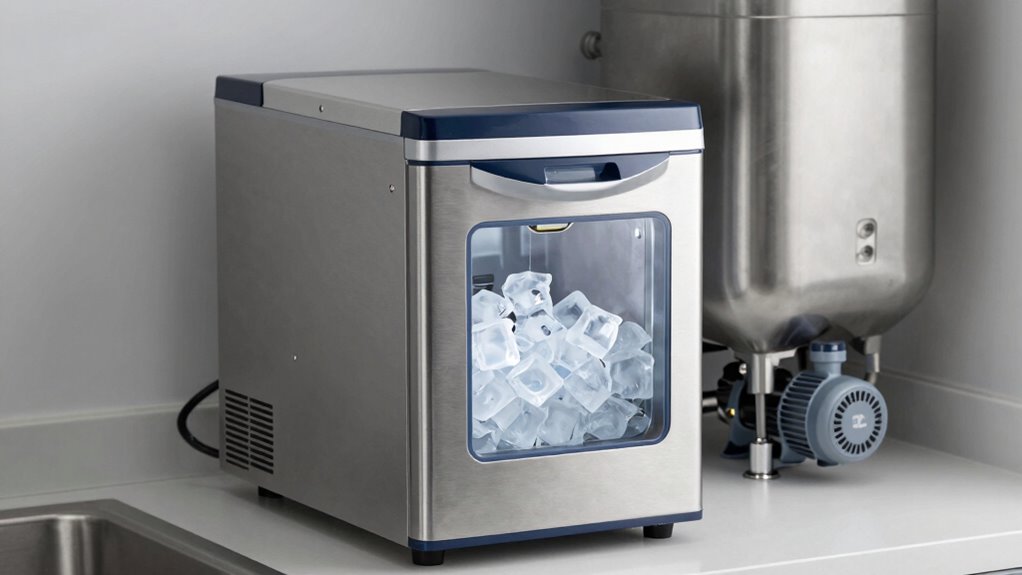
When choosing between a drain, pump, or tank for your undercounter ice maker, consider your space and water management needs. If you have a drain nearby, a direct drain connection is simple and low-maintenance. A pump works well if a drain isn’t easily accessible, pumping wastewater to a distant drain. A water tank is ideal for areas with strict drainage restrictions or limited plumbing options. To find the best fit for your setup, explore each option’s advantages as you continue.
Key Takeaways
- Choose a drain for continuous drainage, suitable for high-volume, permanent installations.
- Opt for a pump if the drain is located above the ice maker or gravity drainage isn’t feasible.
- Use a tank for portable or temporary setups where plumbing connections are unavailable or impractical.
- Consider maintenance ease: drains require less regular attention, pumps may need cleaning, tanks need manual refilling.
- Match your usage environment and setup flexibility to the appropriate drainage option for optimal efficiency.
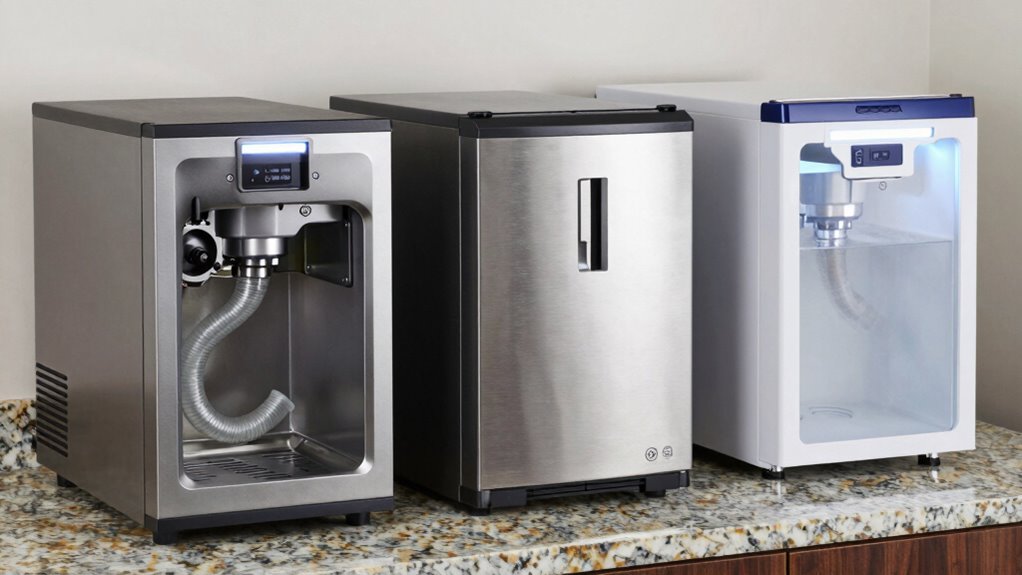
Undercounter ice makers are a convenient solution for anyone who wants a steady supply of ice without taking up valuable counter space. When choosing the right model, understanding its ice bin design is essential. The ice bin is where your ice is stored, and its design impacts both functionality and convenience. A well-designed bin ensures easy access and minimizes spillage, which is especially important if you frequently entertain or serve beverages. Some ice makers feature bins with a flip-top lid or a sliding door, allowing quick access while keeping the ice clean and protected from dust or debris. Additionally, the size of the bin determines how much ice you can store at once, so consider your typical usage to select a model that won’t require constant emptying or refilling. Proper insulation in the ice bin also contributes to energy efficiency by maintaining cold temperatures longer, reducing the workload on the compressor. As you compare options, pay attention to how each model balances ice bin design with energy-saving features, ensuring that you get a reliable supply of ice without unnecessary energy costs.
Another aspect to consider is how the ice maker’s design influences cleaning and maintenance. An accessible ice bin with smooth surfaces and minimal crevices makes it easier to clean regularly, preventing mold and bacteria buildup. Some models include features like removable bins or built-in cleaning modes, which further simplify maintenance. When you prioritize both ice bin design and energy efficiency, you’re making an investment that pays off in convenience, cost savings, and sustainability. Additionally, energy-efficient technology can help extend the lifespan of your unit and reduce ongoing operational costs.
Frequently Asked Questions
How Energy-Efficient Are Different Undercounter Ice Maker Models?
You’ll find that energy-efficient undercounter ice maker models use less power, thanks to advanced compressor technology and better insulation. These models typically have lower energy consumption and improved power efficiency, saving you money on electricity bills. Look for units with Energy Star ratings, as they meet strict efficiency standards. By choosing a more efficient model, you reduce your environmental impact and enjoy reliable ice production without wasting energy.
Can Undercounter Ice Makers Be Installed Outdoors Safely?
Think of installing your undercounter ice maker outdoors as launching a boat into the open sea—you need the right gear. Yes, some models are designed for outdoor installation, offering weather resistance to withstand the elements. Look for units with sealed components and durable casings. Check the manufacturer’s specifications to guarantee outdoor suitability, and consider installing under a covered area to extend its lifespan and keep ice production running smoothly.
What Is the Typical Lifespan of an Undercounter Ice Maker?
You can expect your undercounter ice maker to last about 5 to 10 years with proper maintenance and adherence to installation guidelines. Regularly clean and descale it, check water filters, and guarantee proper ventilation. Following manufacturer instructions helps extend its lifespan. Proper maintenance tips, like avoiding overloading and keeping it in a suitable environment, ensure your unit stays efficient and durable for years to come.
Are There Models That Produce Different Types of Ice?
Perfectly practical, yes! Many models produce diverse ice varieties, offering you options like nugget, crescent, or cube shapes to suit your needs. You’ll find appliances that excel at shaping specific ice types, enhancing your experience whether you’re serving cocktails or chilling drinks. So, when shopping, look for features highlighting ice shape and varieties—this way, you get exactly the ice you crave, crafted to your preference perfectly.
How Noisy Are Undercounter Ice Makers During Operation?
Undercounter ice makers are generally quiet, with noise levels typically ranging from 40 to 55 decibels. During operation, you might notice soft humming or clicking sounds, but they rarely disrupt your space. Modern models feature quieter operating sounds thanks to improved insulation and components. If noise is a concern, look for units labeled as “quiet” or “low noise,” ensuring your environment stays peaceful while you enjoy fresh ice.
Conclusion
Choosing the right undercounter ice maker depends on your space, usage, and maintenance preferences. Whether you opt for a drain, pump, or tank model, understanding their differences guarantees you get the best fit. Did you know that the global commercial ice maker market is expected to reach $4.2 billion by 2027? This highlights how essential reliable ice solutions are, whether for home or business. Make an informed choice, and you’ll enjoy fresh, convenient ice whenever you need it.