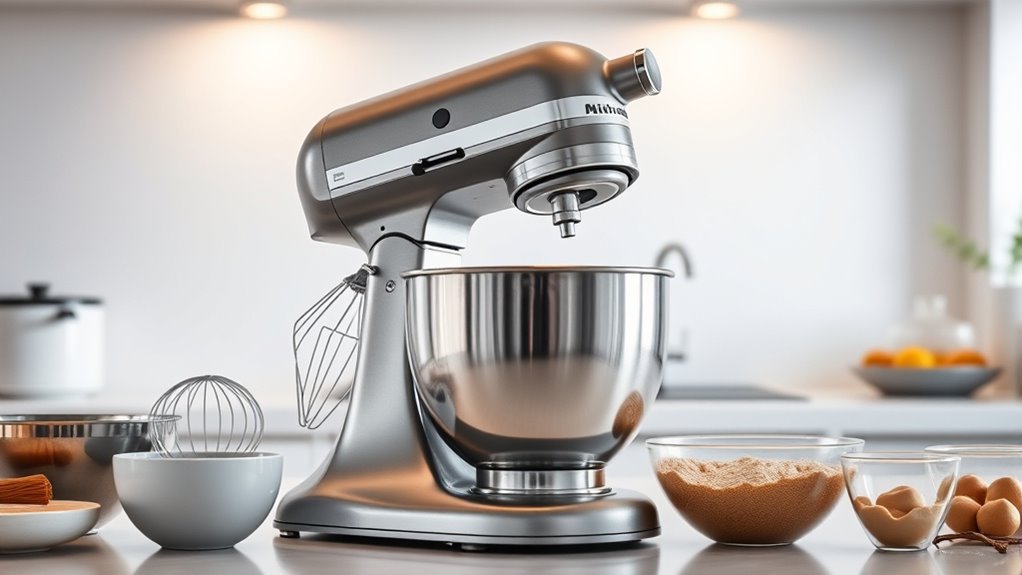

Stand mixers are versatile tools that, with the right attachments, can do much more than just mix batter. You can find paddles for creaming, whisks for whipping, and dough hooks for bread. Many models also offer extra attachments like pasta makers and meat grinders, letting you expand your cooking options easily. Proper use and maintenance will help your mixer last longer and perform better. Keep exploring to discover all the ways your stand mixer can help in your kitchen.
Key Takeaways
- Stand mixers offer various attachments like paddles, whisks, and dough hooks for diverse baking and cooking tasks.
- Attachments expand a stand mixer’s functionality beyond baking, including pasta making, meat grinding, and food processing.
- Proper maintenance of attachments ensures longevity, optimal performance, and prevents damage or corrosion.
- Using the correct attachment for specific tasks improves efficiency and consistency in recipes.
- Regular cleaning and proper storage of attachments help maintain the mixer’s performance over time.
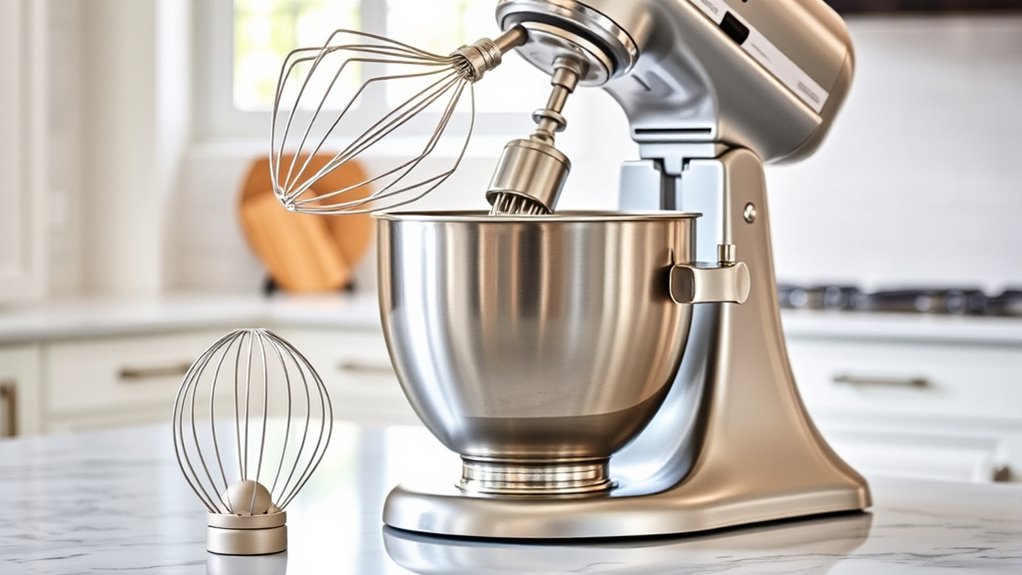
Have you ever wondered how professional bakers achieve perfectly mixed batters and doughs? The secret often lies in their stand mixers, which offer remarkable attachment versatility. Unlike basic hand mixers, a stand mixer can handle a wide range of tasks simply by switching attachments. Whether you’re whipping cream, kneading bread dough, or mixing cookie batter, there’s an attachment designed for each job. This adaptability makes stand mixers invaluable tools for both home cooks and seasoned bakers. With the right attachments, you can streamline your baking process, save time, and improve consistency.
The key to getting the most out of your stand mixer is understanding its attachments and how to maintain them. Most stand mixers come with a few standard attachments like the paddle, whisk, and dough hook. Each serves a specific purpose: the paddle is great for creaming butter and sugar or mixing cake batter, while the whisk excels at aerating ingredients like egg whites or heavy cream. The dough hook is essential for kneading bread or pizza dough efficiently. Beyond these, many brands offer additional attachments, such as pasta makers, meat grinders, or food processors, expanding the functionality of your mixer beyond baking. This attachment versatility allows you to tackle various culinary projects without needing separate appliances.
To keep your stand mixer running smoothly and guarantee each attachment performs at its best, regular maintenance is essential. After each use, wash attachments promptly with warm, soapy water to remove any residue that could cause buildup or corrosion. Check the attachment connections periodically for signs of wear or damage—loose or bent parts can impair performance or cause damage. Lubricate moving parts according to the manufacturer’s instructions, and make certain the mixer itself is kept clean and dust-free. Proper storage is also important: store attachments in a dry, safe place to prevent rust or damage. Additionally, following the maintenance tips provided in your mixer’s user manual will prolong its lifespan and maintain its efficiency, saving you money and frustration in the long run.
In essence, understanding the full potential of your stand mixer hinges on its attachment versatility and diligent maintenance. Investing time in learning how to switch and care for each attachment unlocks endless baking and cooking possibilities. With proper upkeep, your mixer will serve you reliably through countless recipes, from fluffy cakes to hearty bread. Embracing these aspects transforms your stand mixer from a simple kitchen gadget into a versatile, long-lasting culinary companion that makes your cooking experience more enjoyable and efficient.
stand mixer attachments set
As an affiliate, we earn on qualifying purchases.
As an affiliate, we earn on qualifying purchases.
Frequently Asked Questions
Can Stand Mixers Be Used for Kneading Gluten-Free Dough?
Yes, you can use stand mixers for kneading gluten-free dough. Since gluten-free dough tends to be stickier and less elastic, you should adjust your kneading techniques accordingly. Use the paddle attachment rather than the dough hook, and knead on a low speed to prevent overworking the dough. Keep an eye on consistency, adding more flour if needed, to guarantee your gluten-free dough develops the right texture.
What Safety Precautions Should I Follow When Using Attachments?
When using attachments, always prioritize attachment safety by securing them properly before turning on your mixer. Follow mixer precautions like unplugging the device before changing attachments and avoiding contact with moving parts. Keep your hands, utensils, or other objects away from attachments while in use to prevent accidents. Regularly inspect attachments for damage, and never force them into place. These steps help guarantee safe, effective operation of your mixer and its attachments.
Are Stand Mixers Suitable for Making Bread From Scratch?
Yes, stand mixers are perfect for making bread from scratch. They handle manual operation easily, allowing you to focus on kneading and mixing dough thoroughly. With electric power, your mixer can effortlessly mix and knead large batches, saving you time and effort. Just make certain you select the right attachment, like a dough hook, and follow safety precautions, especially when operating with power, to get the best results for your homemade bread.
How Do I Clean and Maintain Different Attachments Properly?
Did you know that regular cleaning maintains the lifespan of stand mixer attachments by up to 30%? To keep them in top shape, always wash attachments with warm water and mild detergent after use. Use cleaning tools like brushes for stubborn spots and dry thoroughly. Store attachments properly in designated attachment storage to prevent damage. Proper maintenance ensures your mixer performs well and lasts longer.
Can Stand Mixers Handle Large Batch Quantities Efficiently?
Yes, your stand mixer can handle large batches efficiently, making it perfect for big cooking projects or gatherings. To maximize efficiency, make certain you don’t overload the bowl and run the mixer at appropriate speeds. Use sturdy attachments like the dough hook or paddle for heavy mixtures. Taking these steps helps you work quickly and smoothly, saving time while achieving consistent results with large batches.
pasta maker attachment for stand mixer
As an affiliate, we earn on qualifying purchases.
As an affiliate, we earn on qualifying purchases.
Conclusion
Now that you know about stand mixer attachments and their uses, you’re ready to make your kitchen tasks easier and more fun. Think of your stand mixer as a trusty partner in the kitchen—like a Swiss Army knife, it’s versatile and always there when you need it. With the right attachments, you can whip, knead, and blend your way to delicious creations. So, grab your mixer and get ready to elevate your baking game!
stand mixer dough hook
As an affiliate, we earn on qualifying purchases.
As an affiliate, we earn on qualifying purchases.
electric meat grinder attachment
As an affiliate, we earn on qualifying purchases.
As an affiliate, we earn on qualifying purchases.