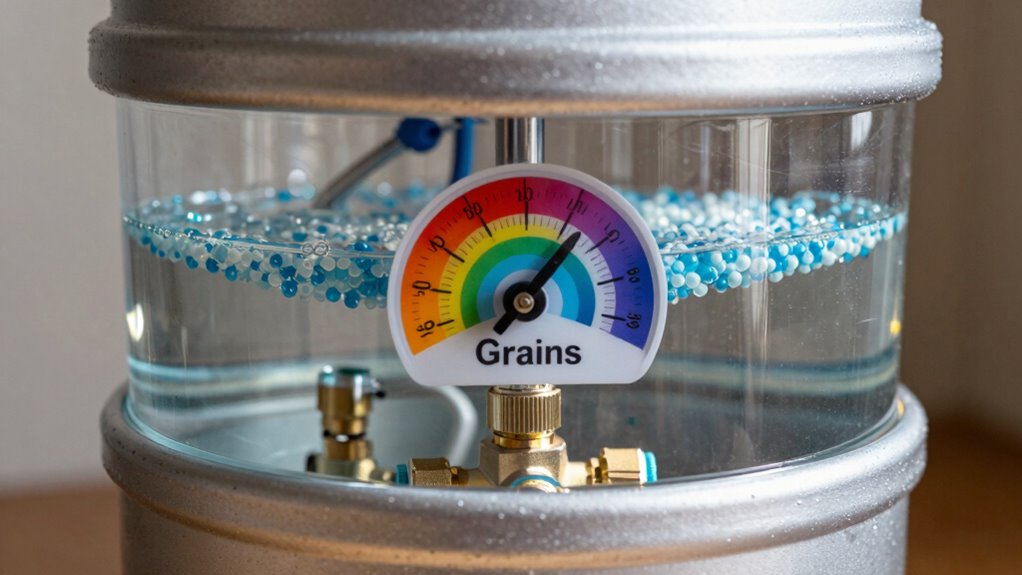

A grains rating shows how much mineral buildup a water softener can handle before needing regeneration. It measures the hardness in your water, in grains per gallon, helping you pick a unit that matches your home’s needs. The higher the grains, the harder your water and the more capacity your softener needs. Choosing the right grains guarantees your system works efficiently and lasts longer. Keep going to discover how this rating impacts your water quality even more.

Get home appliances delivered free with Prime
- Fast, free delivery on millions of items
- Prime Video, Amazon Music and more included
- Member-only deals all year
Key Takeaways
- The grains rating measures the amount of minerals, like calcium and magnesium, in water that a softener can remove.
- It indicates how hard your water is and helps choose a softener with the right capacity.
- A higher grains number means the softener can handle more minerals and harder water.
- Selecting the correct grains rating prevents quick saturation and extends the softener’s life.
- It ensures your water softener effectively reduces mineral buildup for better water quality.
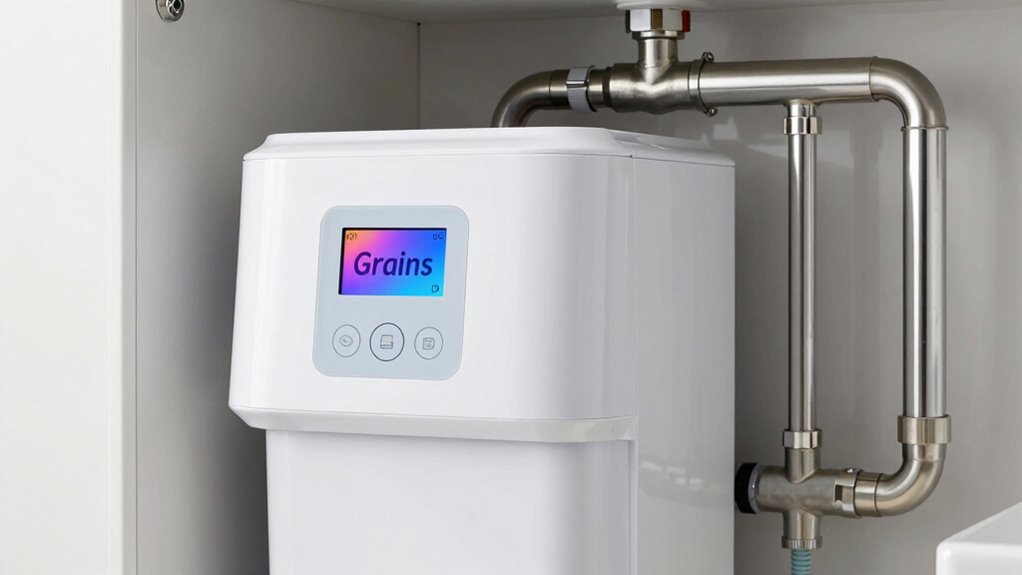
Ion exchange is the core technology behind most water softeners. It works by swapping out calcium and magnesium ions—the culprits behind hardness—for sodium or potassium ions, which don’t cause buildup or interfere with soap’s ability to lather. Basically, the water flows through a resin bed filled with tiny beads that attract and hold onto the hard minerals. Over time, these beads become saturated and need regeneration, usually with a salt solution, to restore their effectiveness. This process considerably reduces mineral buildup in your pipes, appliances, and on your skin, making your water feel softer and your cleaning more effective. Additionally, understanding the grains rating helps you select a system capable of handling your specific water hardness level effectively. The grains rating is a simple way to measure how hard your water is. It tells you how many grains of mineral content are present per gallon of water. For example, a water softener rated at 10 grains per gallon can remove enough minerals to make water much more manageable for everyday use. The higher the grains rating, the harder your water is, which means more minerals are present. Knowing your water’s grains helps you decide what size or capacity of water softener you need. If you have very hard water, a system with a higher grains capacity will be more effective at preventing mineral buildup and prolonging the life of your plumbing and appliances.
As an affiliate, we earn on qualifying purchases.
Frequently Asked Questions
How Often Should I Replace My Water Softener’s Resin?
You should replace your water softener’s resin every 8 to 10 years, depending on your maintenance schedule and water usage. Regular maintenance helps extend resin lifespan, so check for signs like reduced softening efficiency or increased salt usage. If these issues persist despite maintenance, it’s time to contemplate a resin replacement. Staying attentive to your system’s performance guarantees ideal softening and prolongs the resin’s effective life.
Can Water Softeners Remove All Types of Minerals?
You can’t expect your water softener to be a magic bullet for all minerals. While it does a great job removing calcium and magnesium, softener limitations mean it won’t eliminate other minerals like iron, manganese, or sulfur. Think of it as a helpful tool, but not a catch-all solution. For complete mineral removal, you might need additional treatment methods like filtration or specialized systems to tackle those stubborn minerals.
Is a Higher Grain Rating Always Better?
A higher grain rating isn’t always better; it depends on your water’s mineral levels. The grain size indicates how much mineral removal the softener can handle before needing regeneration. If your water has heavy mineral content, a higher grain rating helps guarantee effective softening and longer-lasting performance. However, for light mineral levels, a lower grain rating suffices, saving you money and maintenance. Choose a softener with a grain size that matches your water’s mineral removal needs.
How Do I Determine the Right Grain Capacity for My Home?
Think of your home’s water needs like a ship steering through rough seas. To choose the right grain capacity, consider your hardness levels—measured in grains per gallon—and household size. If your water is very hard and your family is large, opt for a higher capacity to prevent frequent regeneration. For smaller households or softer water, a lower capacity suffices. Balancing these factors ensures smooth sailing with your water softener.
Do Water Softeners Waste a Lot of Water During Regeneration?
Water softeners do use some water during the regeneration process, but modern models are designed to minimize water waste. Typically, they only use an additional few gallons each cycle, so it’s not excessive. The regeneration process is necessary to recharge the resin beads, ensuring your softener works efficiently. While there is some water waste involved, upgrading to a more efficient unit can reduce this further, saving you water and money.
Conclusion
So, now you’re armed with the magic of grains! Understanding this rating is like having a superhero power over hard water. With just a quick glance, you’ll know exactly how much trouble your water can cause—and how your softener will save the day. Say goodbye to scale buildup and soap scum, and hello to sparkling dishes and silky hair. It’s not just a softener; it’s your ultimate water-wielding hero in a tiny tank!
Halloween Picks
halloween
As an affiliate, we earn on qualifying purchases.