Switching to energy-efficient LED bulbs and smart lighting controls can markedly cut your electricity bills and lower your environmental impact. LEDs use a fraction of the energy of traditional bulbs and last much longer, saving you replacement costs. Smart controls, like timers and occupancy sensors, optimize usage by turning lights off when not needed or adjusting brightness based on natural light levels. Keep exploring to discover how combining these solutions maximizes savings and efficiency in your space.
Key Takeaways
- Switching to LED bulbs significantly reduces energy consumption and lowers replacement costs due to their long lifespan.
- Smart controls, such as timers and occupancy sensors, optimize lighting use by turning lights off when not needed.
- Integrating daylight harvesting systems allows natural light to adjust artificial lighting, saving energy during daytime.
- Automated dimming and scheduling features enhance energy efficiency while maintaining adequate illumination levels.
- Combining LED lighting with smart controls maximizes energy savings and reduces overall electricity costs.
Have you ever considered how much energy your lighting consumes and how you can reduce it? Lighting accounts for a significant portion of your energy bill, but there are effective ways to cut down on this usage without sacrificing brightness or comfort. One of the most impactful methods involves upgrading to energy-efficient options like LED bulbs and integrating smart controls. These solutions not only save you money but also help protect the environment by reducing your carbon footprint.
Start by replacing traditional incandescent or fluorescent bulbs with LED bulbs. LED technology uses a fraction of the energy and lasts much longer, so you spend less on replacements and lower your electricity bills. But to maximize savings, you should also explore incorporating solar powered fixtures where possible. Solar fixtures harness sunlight during the day, storing energy that powers your outdoor or even some indoor lighting at night. This shift to solar reduces dependence on grid electricity, especially beneficial if you live in sunny areas. Additionally, solar-powered fixtures often come with integrated sensors or timers, allowing you to automatically turn lights off during daylight hours or when they’re not needed, further decreasing unnecessary energy use.
Upgrade to LED and solar fixtures to cut energy use and save money.
Another highly effective strategy is daylight harvesting, which involves adjusting artificial lighting based on the amount of natural daylight available. When you utilize daylight harvesting systems, sensors detect sunlight levels and dim or turn off indoor lights accordingly. This smart technology ensures you’re not wasting energy lighting spaces that are already well-lit by natural light. It’s an intuitive way to make your lighting system more responsive and efficient, helping you save energy throughout the day. Combining daylight harvesting with LED lighting creates a powerful synergy: you get the brightness you need when you need it, without excess energy consumption.
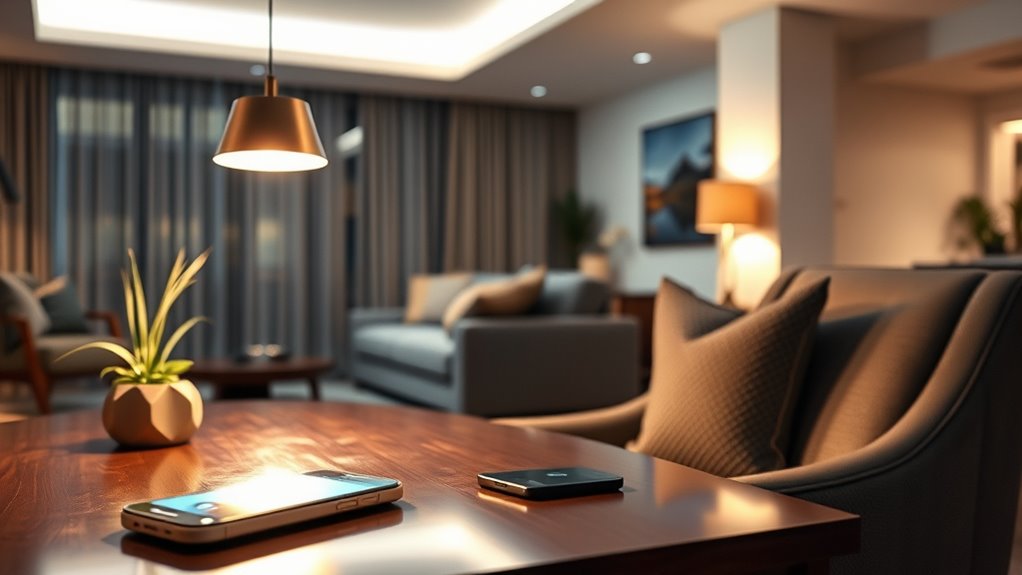
Implementing high-precision lighting controls can optimize your energy savings even further by tailoring lighting to your specific needs and habits. With programmable timers, occupancy sensors, and automated dimming, you gain full control over your lighting environment. You can set schedules to turn off or dim lights during specific times or when rooms are unoccupied, ensuring no electricity is wasted. These controls can be integrated with your existing smart home system, giving you remote access to adjust lighting from your phone or voice commands. This level of automation not only reduces energy consumption but also adds convenience and enhances your overall living or working experience.
Frequently Asked Questions
How Do LED Bulbs Compare in Lifespan to Traditional Bulbs?
You’ll find that LED bulbs have a much longer lifespan compared to traditional bulbs. With superior bulb longevity, LEDs often last 15,000 to 25,000 hours, whereas incandescent bulbs typically only last around 1,000 hours. This lifespan comparison shows that LEDs save you money in the long run, reducing replacements and maintenance. So, switching to LED bulbs means enjoying brighter, more durable lighting that keeps going much longer.
Can Smart Lighting Systems Be Integrated With Existing Home Automation?
Yes, you can integrate smart lighting systems with your existing home automation. You’ll enjoy voice control, allowing you to turn lights on or off effortlessly. Plus, energy monitoring features help you track your usage and save money. Most systems are compatible with popular smart home platforms, making setup straightforward. With integration, you get greater convenience and efficiency, all while enhancing your home’s smart technology capabilities.
Are LED Bulbs Safe for Outdoor Use in All Weather Conditions?
Yes, LED bulbs are generally safe for outdoor use in all weather conditions when they have proper weather resistance and UV durability. Look for bulbs specifically rated for outdoor environments, as they’re designed to withstand rain, snow, and sun exposure. These features prevent damage and ensure longevity. Always check the packaging for weather resistance ratings to confirm the LED bulbs are suitable for your outdoor lighting needs.
What Are the Initial Costs Versus Long-Term Savings of Smart Lighting?
Smart lighting costs more upfront due to installation and device expenses, but a thorough cost analysis shows significant long-term savings. You’ll benefit from enhanced energy efficiency, reducing your electricity bills over time. While initial investment may seem high, the energy efficiency of smart systems cuts ongoing costs. Ultimately, smart lighting offers a smart investment, saving you money in the long run while providing convenience and advanced control features.
Do Smart Controls Require Professional Installation or Can Homeowners Set Them Up?
You can usually set up smart controls yourself with DIY installation, saving money on professional setup. For example, Jane installed her smart lighting system in her living room using only a smartphone app, following simple instructions. However, if your wiring is complex or you’re uncertain, professional setup guarantees safety and proper functioning. Most smart controls are designed for easy DIY installation, but don’t hesitate to seek expert help if needed.
Conclusion
Switching to LED bulbs with smart controls can cut your energy use by up to 75%, making a huge difference in your bills and environmental impact. Imagine replacing just five traditional bulbs with LEDs—you could save enough energy annually to power your laptop for over 800 hours. By embracing these technology-driven solutions, you not only save money but also contribute to a greener planet. It’s a simple step that makes a big difference for your home and the environment.