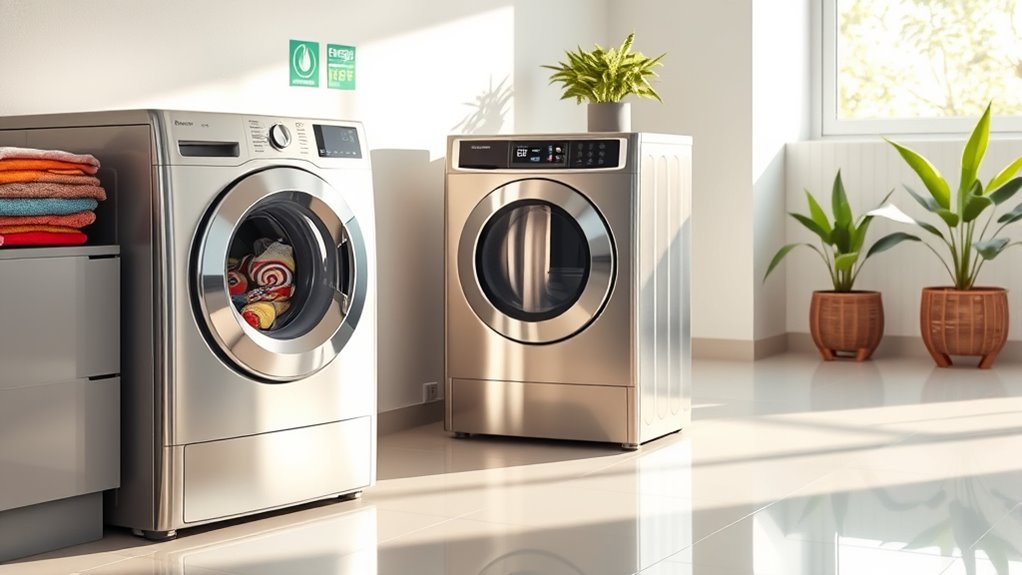
Switching to a heat pump dryer can cut your energy bills by up to 50%, saving you money over time. These dryers recycle heat, operate at lower temperatures, and use smarter sensors, making them more efficient than traditional models. They also help preserve your clothes and reduce environmental impact. If you want to discover how much you can save and the additional benefits, there’s more to explore below.
Key Takeaways
- Heat pump dryers consume up to 50% less energy than conventional dryers, significantly reducing household electricity bills.
- They recycle heat within the system, minimizing energy waste and decreasing overall power consumption.
- Lower operating temperatures prevent fabric damage, prolonging clothing lifespan and reducing replacement costs.
- Intelligent sensors optimize drying cycles, further conserving energy by avoiding unnecessary run time.
- Reduced energy use from heat pump dryers lowers greenhouse gas emissions, supporting environmental sustainability.
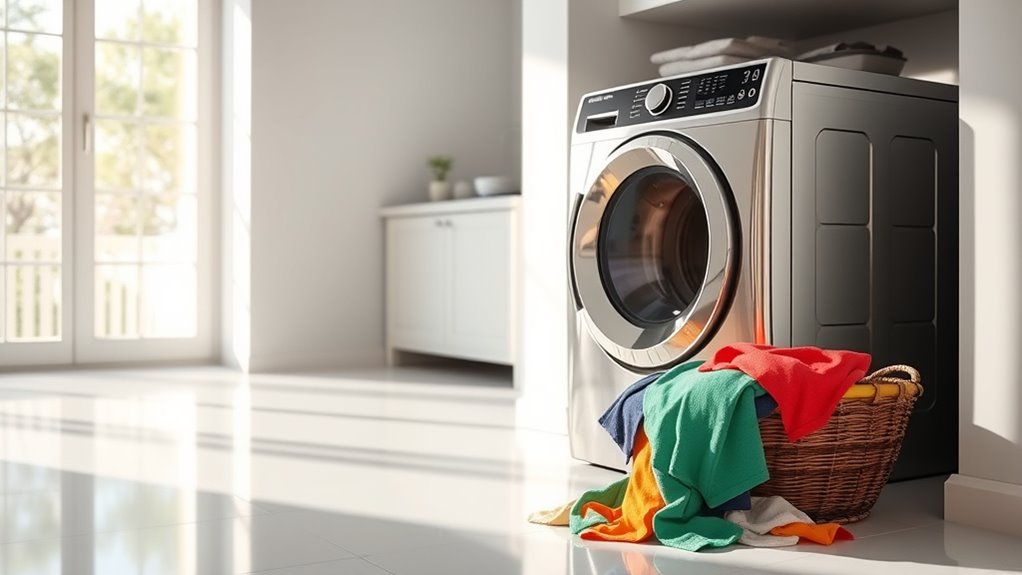
Switching to heat pump dryers can substantially cut your energy bills while helping the environment. Unlike traditional vented dryers that rely on electric resistance heating elements, heat pump dryers use a refrigeration cycle to dry clothes more efficiently. This technology enhances dryer efficiency by recycling heat within the system, meaning less energy is wasted during the drying process. As a result, you’ll notice a significant reduction in the amount of electricity your dryer consumes. This improved efficiency directly translates into lower utility bills, offering you considerable cost benefits over time.
Heat pump dryers cut energy bills by recycling heat, making drying more efficient and eco-friendly.
When you choose a heat pump dryer, you’re investing in a machine designed to maximize energy savings. Its advanced system uses a compressor and heat exchange coils to extract moisture from clothes at lower temperatures. This means that your laundry dries thoroughly without requiring the high heat levels that traditional dryers need, which in turn reduces energy consumption. Over the long run, the cost benefits become clear—these dryers use up to 50% less energy than conventional models. Although the initial purchase price might be higher, the energy savings quickly offset this expense, making heat pump dryers a smart financial choice for many households.
Another advantage is the gentle drying process, which helps preserve your clothes’ fabric integrity. Because heat pump dryers operate at lower temperatures, your garments experience less wear and tear, extending their lifespan. This adds another layer of cost benefits, as you’ll spend less on replacing damaged or worn-out clothing. Plus, since they don’t require external venting, heat pump dryers are more versatile and easier to install in various living spaces, reducing installation costs. They’re also more environmentally friendly, as their lower energy consumption means fewer greenhouse gas emissions from power plants, aligning your household with sustainable living practices.
In addition to saving energy and money, heat pump dryers often come with features that boost their overall dryer efficiency. Many models include sensors that detect when clothes are dry, preventing unnecessary running time. This intelligent operation further conserves energy, ensuring you only use what’s needed. Plus, their quiet operation makes them convenient for use anytime, whether you’re working, relaxing, or sleeping. Furthermore, the integration of electric bikes and other innovative technologies in household appliances is becoming more common, reflecting a broader trend toward sustainability. Altogether, switching to a heat pump dryer isn’t just an upgrade in appliance technology—it’s a smart way to reduce your carbon footprint while enjoying the financial benefits of lower energy bills and extended clothing lifespan. The combination of improved dryer efficiency and compelling cost benefits makes this an investment worth considering for anyone looking to save energy and money.
Frequently Asked Questions
How Long Do Heat Pump Dryers Typically Last?
A heat pump dryer typically lasts about 10 to 15 years, depending on usage and maintenance. Your dryer’s lifespan depends on durability factors like regular cleaning, proper ventilation, and avoiding overloading. To maximize durability, follow the manufacturer’s guidelines and schedule routine maintenance. With proper care, you can enjoy efficient drying and extend your dryer’s longevity, making it a reliable appliance for years to come.
Are Heat Pump Dryers Suitable for Large Families?
Yes, heat pump dryers are suitable for large families because of their energy efficiency and gentle drying process. They use less energy, helping you save on utility bills, and their compact design often fits well into limited storage space. Plus, they dry clothes carefully, reducing wear and tear. This makes them a practical choice for busy households needing reliable, eco-friendly drying solutions without sacrificing space or performance.
Can Heat Pump Dryers Be Installed in Any Laundry Room?
You can install heat pump dryers almost anywhere, as they’re incredibly flexible. Their installation flexibility means you don’t need a specialized setup, and they fit into most laundry rooms despite space requirements. Whether your laundry area is small or large, these dryers adapt easily, making them a game-changer. Their compact design and versatile installation options guarantee you can enjoy energy-efficient drying without rearranging your entire home.
Do Heat Pump Dryers Require Special Maintenance?
Yes, heat pump dryers require some maintenance to stay energy efficient. You’ll need to regularly clean the lint filter and check the condenser coils, as these help the dryer operate smoothly. While their maintenance requirements are generally minimal, keeping up with these tasks guarantees peak energy efficiency and prolongs the lifespan of your dryer. A little routine upkeep can make a big difference in maintaining your appliance’s performance.
How Do Heat Pump Dryers Perform in Humid Climates?
You might think humid climates would be a nightmare for heat pump dryers, but surprise! They actually handle humid climate challenges well, thanks to efficient condensation management. While excess moisture can be tricky, these dryers excel at removing humidity from your laundry without adding extra moisture to the air. So, in reality, a heat pump dryer can be a surprisingly smart choice, even when humidity levels are high.
Conclusion
Switching to a heat pump dryer can cut your energy use by up to 50%, saving you money and reducing your carbon footprint. Imagine saving enough energy to power your TV for months each year—it’s a game-changer! Not only do you get efficient drying, but you also do your part for the environment. So, consider making the switch—your wallet and the planet will thank you for it.