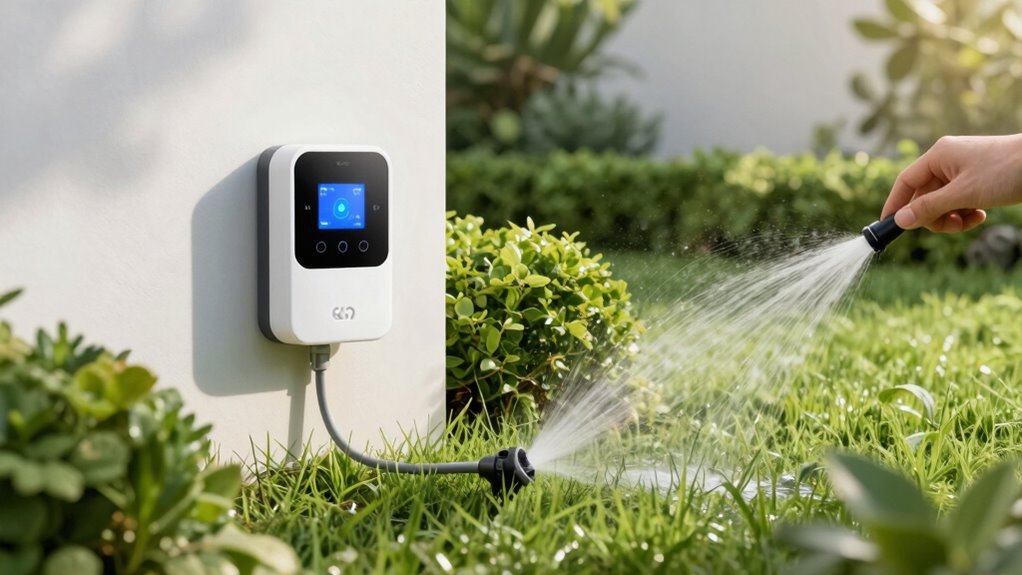

To effectively cut water waste with your smart sprinkler controller, you need to enable the rain sensor feature. This allows your system to automatically pause watering during rain or when moisture is detected, preventing overwatering and runoff. Properly integrating and customizing these sensors guarantees your system responds accurately to weather changes. If you enable these features, you’ll save water, lower bills, and support eco-friendly practices. Keep going to discover how to maximize these benefits.
Key Takeaways
- Enabling rain sensors allows controllers to automatically pause watering during or before rain, preventing overwatering.
- Proper system integration ensures rain sensors accurately communicate weather data, optimizing water savings.
- Adjusting schedules based on rain detection reduces unnecessary watering, conserving water and lowering bills.
- Weather-aware controllers adapt watering plans seasonally or with forecast data for maximum efficiency.
- Overall, activating rain sensors enhances system intelligence, promoting sustainable, eco-friendly irrigation practices.
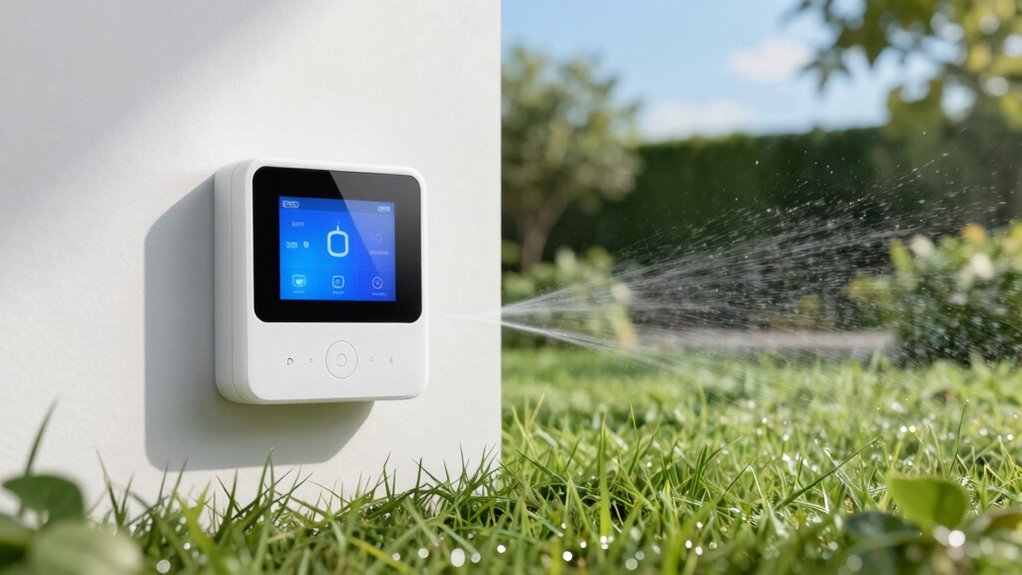
Smart sprinkler controllers are revolutionizing the way you water your lawn by offering automated, efficient, and customizable scheduling. With these devices, you no longer need to manually turn on and off your sprinklers or worry about forgetting to water your yard. Instead, you can set precise watering schedules that adapt to your lawn’s needs, saving you time and water alike. However, to truly maximize their efficiency and cut water waste, you need to enable features like rain sensors. These sensors detect when it’s raining or about to rain, automatically adjusting your watering schedule to prevent unnecessary watering. By doing so, you avoid wasting water during wet conditions, ensuring your lawn gets just the right amount without overdoing it.
Rain sensors are a crucial part of smart sprinkler controllers because they bring real-time weather responsiveness to your watering routine. Once integrated, your system can pause watering when rain is detected, then resume once conditions are dry. This prevents water runoff and reduces your water bills. Without this feature enabled, your controller might stick to a fixed schedule that doesn’t account for local weather changes, leading to overwatering during rainy periods. When you activate rain sensors, you’re essentially giving your sprinkler system a weather-aware intelligence, making it more eco-friendly and cost-effective. Proper system integration ensures your device functions optimally and maximizes water savings.
Rain sensors enable your sprinkler system to respond to weather, saving water and preventing runoff.
Adjusting your watering schedules based on weather conditions is another key aspect of efficient water use. Many smart controllers allow you to customize schedules that change depending on the season or upcoming weather forecasts. For example, you can set your system to water less frequently during cooler months or after rainfall. When rain sensors are enabled, your watering schedules automatically adapt, ensuring you’re not watering unnecessarily. This smart adjustment not only conserves water but also promotes healthier grass and plants, which thrive with just the right amount of moisture.
Frequently Asked Questions
Do Smart Sprinkler Controllers Work During Rainy Days Automatically?
Yes, smart sprinkler controllers work during rainy days automatically. They use rain sensors and weather integration to detect rainfall and adjust watering schedules accordingly. When it rains, your controller will skip or delay watering to prevent waste. You don’t have to do anything manually. This automation helps conserve water, keeps your lawn healthy, and reduces your water bill by responding intelligently to weather conditions.
How Much Can I Save on Water Bills Using a Smart Controller?
By embracing a smart sprinkler controller, you can enjoy significant cost savings on your water bills, potentially reducing expenses by up to 30%. This clever device promotes water conservation by adjusting watering schedules based on weather conditions, ensuring you don’t waste a drop. Over time, these savings add up, making your landscape greener and your wallet happier. It’s a smart way to be eco-friendly while keeping your costs in check.
Are Smart Sprinkler Controllers Compatible With Existing Irrigation Systems?
Yes, smart sprinkler controllers are generally compatible with existing irrigation systems, but compatibility concerns can arise depending on your setup. To guarantee smooth system integration, check the controller’s specifications and your system’s components. Many models work with standard wiring and common valve types, but some may require adapters or additional wiring. It’s best to review the manufacturer’s guidelines or consult an expert to confirm seamless compatibility before installation.
What Is the Typical Installation Process for a Smart Sprinkler Controller?
You start by checking compatibility considerations to guarantee the smart sprinkler controller fits your existing irrigation system. Then, turn off your water supply and remove the old controller. Follow installation steps to connect the wires to the new device, making sure they match the labels. Mount the controller in a suitable location, turn the water back on, and run a test cycle. Finally, configure your watering schedule through the app for maximum water savings.
Can Smart Controllers Be Controlled Remotely via Smartphone Apps?
Over 80% of smart sprinkler users control their systems remotely, making watering more efficient. Yes, smart controllers can be controlled via smartphone apps, offering seamless remote access. With app integration, you can adjust watering schedules, monitor water usage, and troubleshoot issues from anywhere. This convenience helps you save water and time, ensuring your lawn stays healthy while reducing waste effortlessly.
Conclusion
By enabling smart sprinkler controllers, you’re like a skilled conductor guiding a symphony—your garden thrives while water waste diminishes. These devices adapt to weather changes and soil conditions, making watering efficient and eco-friendly. Don’t let your efforts go to waste; harness technology to save water and nurture your landscape. When you turn on these controllers, you’re not just watering plants—you’re making a smart choice that benefits both your garden and the environment.