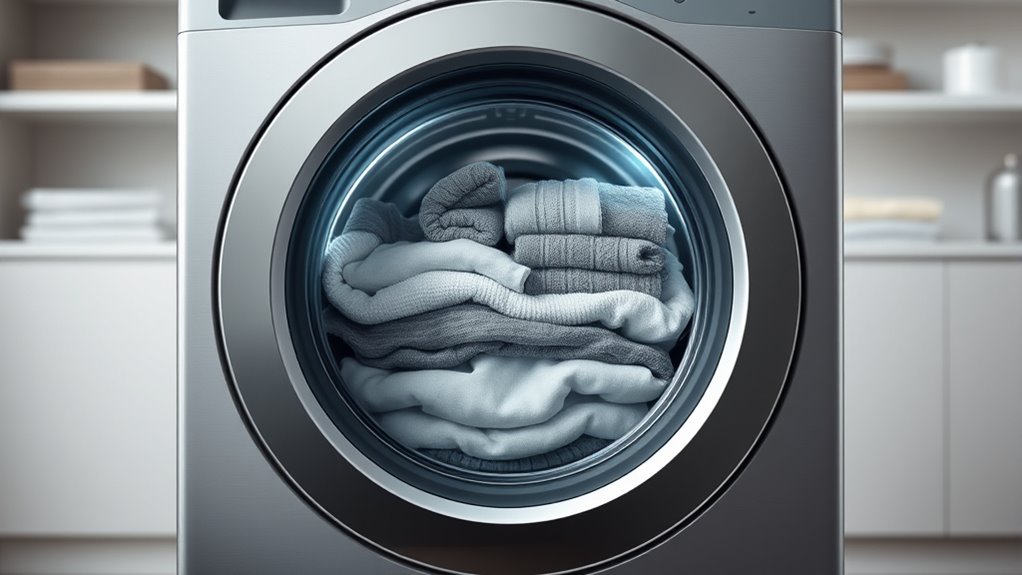

Proper load management helps your washing machine clean better, last longer, and run more efficiently. When you load it correctly, your machine can distribute detergent evenly, spin more effectively, and avoid unnecessary strain on its parts. Overloading or underloading can cause damage, noise, and poor cleaning results. Ensuring balanced, appropriate loads reduces wear and tear, saves energy, and prevents costly repairs. Keep up with these practices for peak performance—and there’s more to discover on how to perfect your laundry routine.
Key Takeaways
- Proper load management ensures effective cleaning and prevents damage to the washing machine.
- It promotes even detergent distribution, leading to better stain removal and cleaning results.
- Correct load sizes reduce stress on the motor and drum, extending machine lifespan.
- Balanced loads minimize vibrations, noise, and wear on machine components during operation.
- Properly distributed loads optimize spin cycle performance, resulting in drier clothes and energy efficiency.
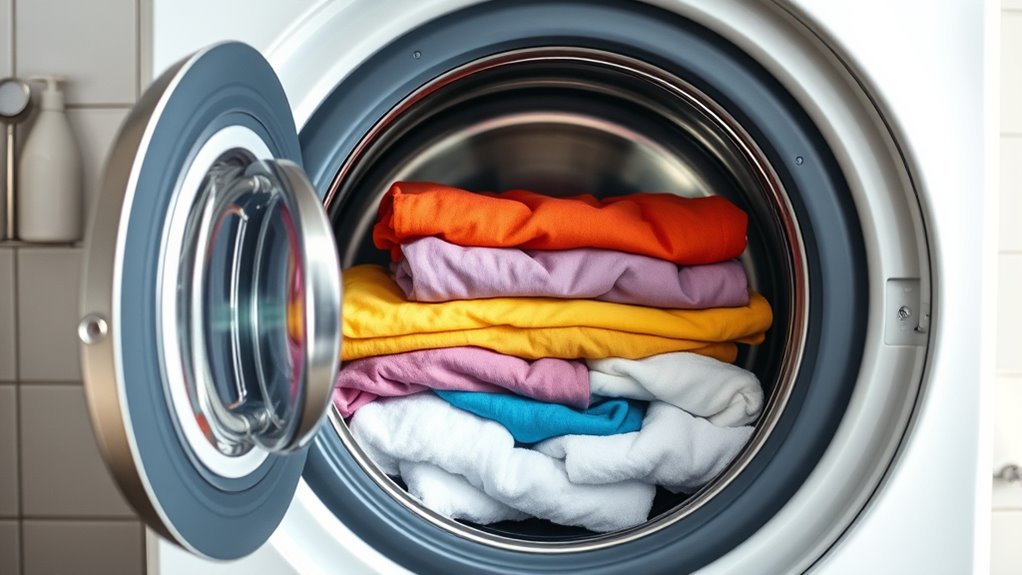
Proper load management on washing machines is vital to guarantee effective cleaning and prolong the appliance’s lifespan. When you load your laundry correctly, you help the machine work more efficiently, which means your clothes come out cleaner and your washer stays in good shape longer. One of the key factors influenced by proper load management is detergent efficiency. Overloading your machine can prevent detergent from distributing evenly across your laundry, leading to spots or insufficient cleaning. Conversely, underloading wastes water and energy, making your wash less effective and less economical. To maximize detergent efficiency, always follow the manufacturer’s guidelines for load size and consider using the right amount of detergent for the load’s weight and soil level. This guarantees your detergent works as intended, removing dirt and stains thoroughly without leaving residues or causing buildup inside the machine. Additionally, understanding the differences between SACC vs BTU can help you choose the most appropriate settings for optimal washing performance.
Another vital aspect affected by load management is spin cycle optimization. When you overload the washer, the clothes don’t have enough space to move freely during the spin cycle, which can result in uneven spinning. This not only leaves your clothes wetter than necessary but also puts extra strain on the motor and drum, risking damage over time. On the other hand, underloading can cause imbalance, leading to noisy operation and increased wear on components. To achieve maximum spin performance, load your washer so that clothes are distributed evenly around the agitator or drum. This balanced load allows the motor to operate smoothly, reducing wear and tear, and ensures your laundry exits the machine as dry as possible. Proper load management also helps prevent excessive vibrations and noise, making laundry day less disruptive.
Frequently Asked Questions
How Does Load Size Affect Energy Consumption?
When you adjust your load size correctly, you boost your washing machine’s energy efficiency. Overloading or underloading wastes energy because the machine works harder or runs more cycles. By practicing load optimization—filling the drum appropriately—you guarantee your washer uses just the right amount of energy for each cycle. This not only saves electricity but also prolongs your machine’s lifespan, making your laundry routine more eco-friendly and cost-effective.
Can Overloading Damage a Washing Machine?
Overloading your washing machine can cause significant damage. Studies show that 60% of repairs stem from overloading issues. When overloaded, the drum struggles to rotate properly, leading to excessive wear on the motor and suspension parts. This also results in uneven detergent distribution, reducing cleaning efficiency. Always stick to the recommended load size to prevent damage, guarantee effective detergent use, and extend your machine’s lifespan.
What Are the Signs of Improper Load Management?
You’ll notice improper load management when your clothes don’t come out clean, or the detergent isn’t fully rinsed away, reducing detergent efficiency. You might also see longer or uneven spin cycles, which hurt spin cycle effectiveness. Additionally, overloading causes excessive vibrations, loud noises, and potential damage to the machine. Always follow load size guidelines to guarantee your washing machine functions at its best, saving energy and extending its lifespan.
How Often Should I Balance Loads for Optimal Performance?
Imagine your laundry swirling smoothly like a well-choreographed dance. You should balance loads every few washes, especially if you notice uneven spin speed or detergent not rinsing out properly. Proper load balancing guarantees your machine maintains peak performance, preventing excessive wear. When loads are even, your washer spins faster and detergent works more efficiently, saving energy and extending its lifespan. Check regularly to keep everything running flawlessly.
Does Load Management Influence Washing Cycle Duration?
Yes, load management influences washing cycle duration. When you load your washer properly, it guarantees detergent efficiency and balanced spin cycle variations, which can make cycles shorter and more effective. Overloading causes longer cycles because the machine struggles to clean thoroughly, while underloading may shorten cycles but reduce efficiency. By managing your loads well, you help your washer operate at its best, saving time and ensuring better cleaning results.
Conclusion
By managing your laundry loads wisely, you guarantee your washing machine runs smoothly and lasts longer. Overloading or underloading can cause unnecessary wear, just like ancient chariots breaking down before reaching their destination. Think of proper load management as your modern chariot’s upkeep—preserving efficiency and preventing breakdowns. Remember, a well-maintained machine is your trusty steed for clean clothes, so don’t forget: a little care today keeps your laundry journey seamless tomorrow.