
To support HVAC efficiency with ceiling fans, set them to rotate clockwise in winter to push warm air down, and counterclockwise in summer to create a cooling breeze. Use fans to circulate air evenly, reducing the workload on your HVAC system. Keep blades clean and well-maintained, and place fans centrally for best airflow. Running fans along with your HVAC can lower energy bills and keep your home comfortable year-round; learn more to optimize your setup.
Key Takeaways
- Set ceiling fans to rotate clockwise in winter to push warm air downward and counterclockwise in summer for a cooling breeze.
- Use fans to circulate air effectively, reducing the workload on your HVAC system and enhancing overall efficiency.
- Regularly clean and maintain fan blades to ensure optimal airflow and prevent dust buildup.
- Position fans centrally in rooms or hallways to promote uniform air distribution and prevent hot or cold spots.
- Run fans at appropriate speeds and turn them off when rooms are unoccupied to save energy and support HVAC performance.
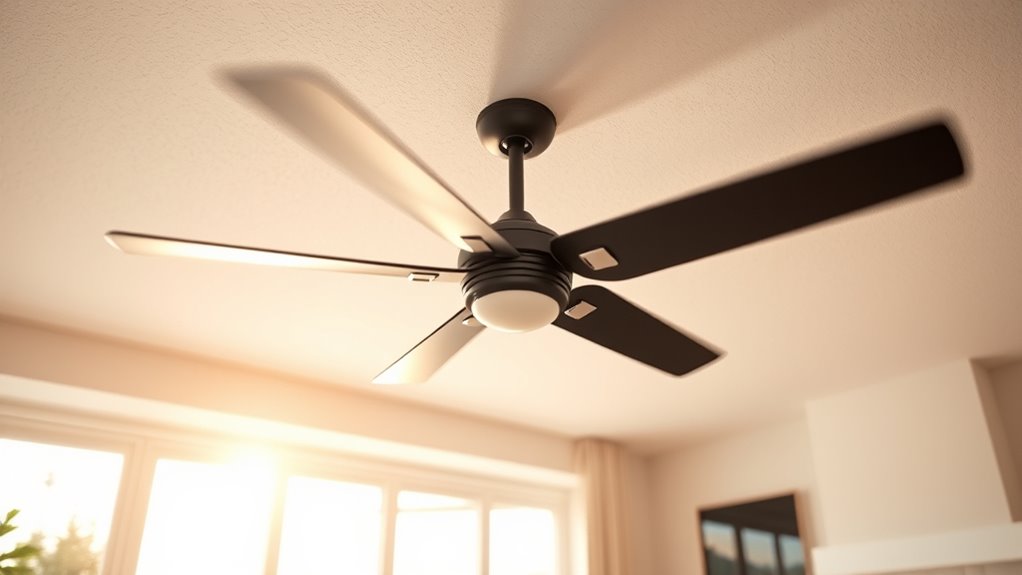
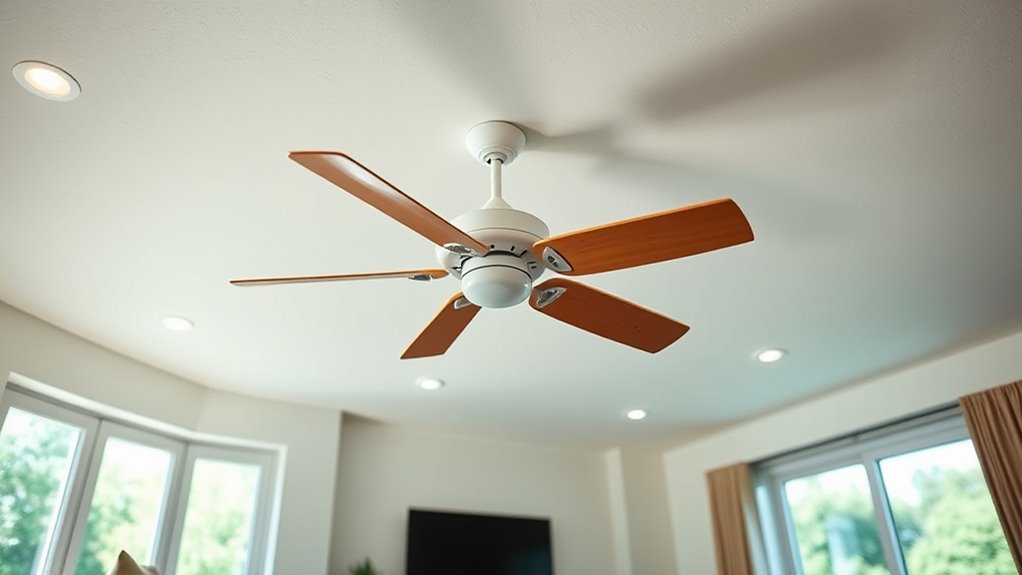
Ceiling fans can be a simple yet effective way to enhance your HVAC system’s efficiency. When used correctly, they help reduce your energy bills by supporting airflow optimization throughout your home. By circulating air more effectively, ceiling fans allow your cooling or heating system to work less hard, leading to noticeable energy savings. During warmer months, running ceiling fans in the right direction can make rooms feel cooler without lowering the thermostat, which means your AC doesn’t have to run as often. Conversely, in winter, reversing the fan’s direction helps distribute warm air that rises to the ceiling back down to occupy the living space, reducing the workload on your heater. This strategic use of ceiling fans ensures that your HVAC system isn’t overexerted, conserving energy and lowering utility costs.
Using ceiling fans correctly can boost HVAC efficiency and lower energy bills year-round.
To maximize these benefits, you should always ensure your ceiling fans are properly positioned and maintained. The blades should be clean and balanced, as dust and misalignment can hinder airflow and decrease efficiency. When operating your fan, set it to rotate clockwise in winter and counterclockwise in summer, aligning with seasonal needs for airflow direction. In summer, the fan should create a breeze that cools the skin without actually lowering the room temperature, making you feel more comfortable while allowing your air conditioning to run less frequently. During winter, reversing the fan’s blades gently pushes warm air down from the ceiling, helping to maintain a consistent temperature and reduce the strain on your heater. Additionally, selecting energy-efficient fan models can further enhance your home’s overall efficiency and reduce energy consumption.
Another tip for airflow optimization is to use ceiling fans in conjunction with your HVAC system rather than as a replacement. When your home is well-ventilated and the fans are running, your HVAC doesn’t need to work as hard to maintain a comfortable temperature. This synergy can lead to significant energy savings over time. Also, be mindful of the fan’s speed settings; running fans at higher speeds when necessary enhances airflow, but you can switch to lower speeds during milder weather or when fewer people are in the room to save even more energy.
Finally, consider the layout of your home and the placement of your ceiling fans. Installing fans in central locations in rooms or hallways ensures a more uniform airflow, preventing hot or cold spots that can cause your HVAC to turn on more frequently. Proper placement, combined with seasonal adjustments and regular maintenance, helps you get the most out of your ceiling fans, supporting your HVAC system’s efficiency, cutting energy costs, and keeping your home comfortable year-round. Regularly maintaining your fans by cleaning and inspecting the blades also plays a crucial role in ensuring optimal airflow and efficiency.
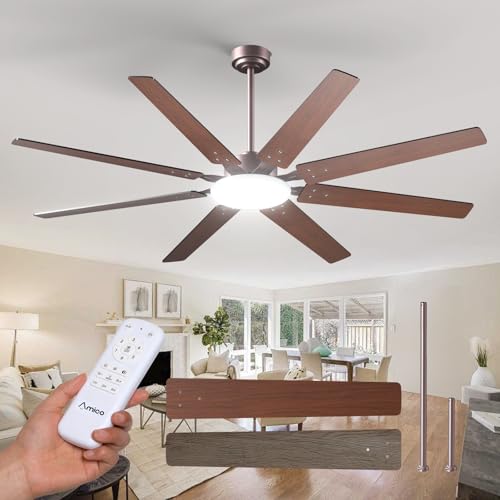
Amico 72 inch Farmhouse Bronze Ceiling Fan with Light, Large Energy Efficient Ceiling Fans with Remote, Reversible DC Motor, Dimmable 3CCT LED, Quiet Indoor/Outdoor for Living Room, Bedroom, Patio
Ceiling Fan with Light: Decorate your home with Amico ceiling fan! While bringing you coolness and comfort, it…
As an affiliate, we earn on qualifying purchases.
As an affiliate, we earn on qualifying purchases.
Frequently Asked Questions
Can Ceiling Fans Reduce Overall Energy Bills?
Yes, ceiling fans can reduce your overall energy bills by lowering your reliance on HVAC systems, leading to significant cost savings. When used properly, fans help circulate air efficiently, reducing the need for constant heating or cooling. This not only saves you money but also lessens your environmental impact by decreasing energy consumption. To maximize benefits, use fans in conjunction with your HVAC, especially during moderate weather.
How Do Ceiling Fans Impact HVAC System Lifespan?
Ceiling fans can positively impact your HVAC system’s lifespan by improving ventilation benefits and air circulation. When you use fans to help distribute cooled or heated air, your HVAC system doesn’t have to work as hard, reducing wear and tear. This lessens the strain on your equipment, potentially extending its lifespan. Keep fans running efficiently and regularly maintained to maximize these benefits and support your HVAC system’s longevity.
Are There Specific Fan Types Best for Efficiency?
Think of your ceiling fan as the engine of efficiency. To get the best performance, choose fans with aerodynamically designed blades that cut through the air smoothly. Look for models with high motor efficiency, which use less energy while spinning quietly. These features guarantee your fan moves air effectively, supporting your HVAC system and saving you money. Opt for fans with reversible blades for year-round comfort and maximized energy savings.
How Often Should Ceiling Fans Be Maintained?
You should maintain your ceiling fans at least once a year to keep them running efficiently. Regularly check the fan blade materials for dust and debris, which can reduce airflow, and clean them gently. If your fan has remote control features, ensure the batteries are fresh and the controls work properly. Proper maintenance helps maximize energy savings and prolongs your fan’s lifespan, guaranteeing ideal performance year-round.
Do Ceiling Fans Work Effectively in Large Rooms?
Sure, ceiling fans in large rooms are like your overenthusiastic aunt—trying their best but sometimes falling short. They can work effectively if you optimize ventilation patterns and fan placement, ensuring air circulates evenly. Position fans near the center and adjust speeds accordingly. Remember, a well-placed fan can make a big difference, transforming that cavernous space into a cozy haven—without breaking the bank or your patience.

Yoobao Modern Ceiling Fans with Lights and Remote, 6 Speeds & 3 Colors, Easy to Install, 25.6 inch DC Reversible Ceiling Fan Light for Summer Winter, Super Quiet for Bedroom Kitchen Office Patio
Easy to Install: Say goodbye to complicated setups! Our bedroom ceiling fan is designed for quick flush mount…
As an affiliate, we earn on qualifying purchases.
As an affiliate, we earn on qualifying purchases.
Conclusion
By using your ceiling fan wisely, you can give your HVAC system a much-needed break and keep your home comfortable. Think of your fan as a helpful breeze, gently guiding your energy savings in the right direction. When you turn it on in the summer or winter, you’re not just moving air—you’re creating a supportive team with your HVAC. Together, they’ll work smarter, keeping your home cozy and your bills in check.

Zavrski Ceiling Fan Cleaner Duster with 6 Ft/72'' Extension Pole High Ceiling Fan Blade Cleaning Tool Microfiber Duster Reusable Pads for Cleaning Ceiling Fan, Baseboard, Blind, Cobweb, Molding
【Multipurpose Household Cleaning Tool】Zavrski ceiling fan cleaner duster could be used to clean ceiling fan, baseboard, blinds, moldings,…
As an affiliate, we earn on qualifying purchases.
As an affiliate, we earn on qualifying purchases.
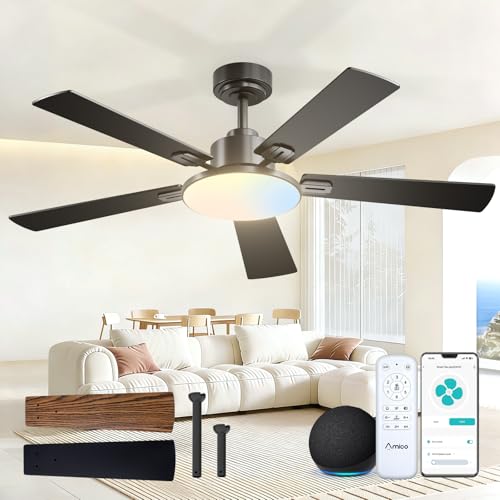
Amico Ceiling Fans with Lights, 52 inch Smart Ceiling Fan with Remote/APP/Alexa Control, Downrod Mount, Reversible DC Motor, 5 Blades, 6 Speeds, 3CCT, Dimmable, Noiseless, Bedroom, Living Room, Black
Smart Ceiling Fan with Lights and remote: This 52 inch ceiling fan with light features a downrod ceiling…
As an affiliate, we earn on qualifying purchases.
As an affiliate, we earn on qualifying purchases.