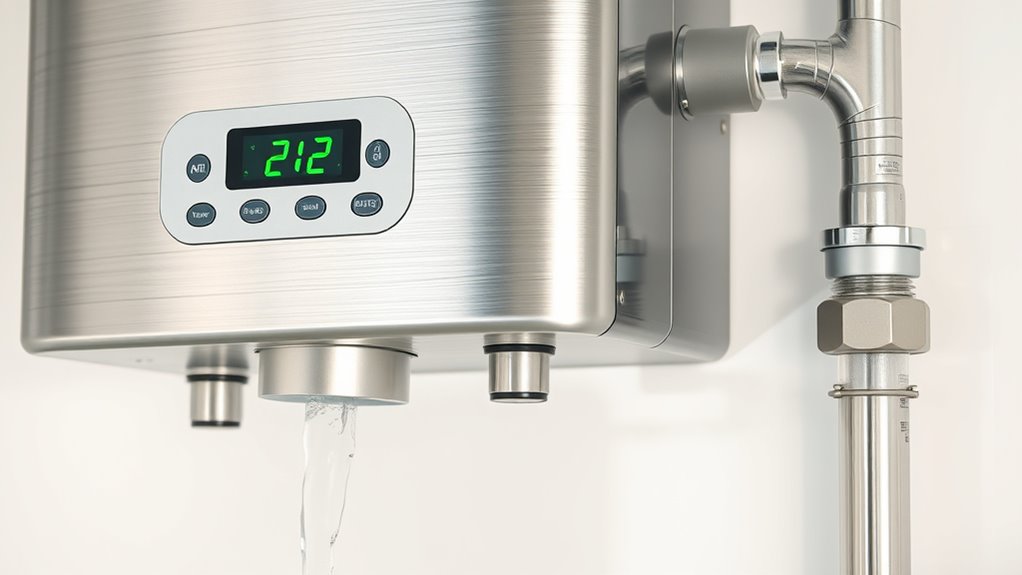

Understanding water heater energy factors helps you see how efficiently your unit minimizes heat loss and keeps hot water available longer. The key is insulation quality, which affects standby heat loss and overall energy use. Better insulation reduces the amount of energy needed to maintain water temperature, saving you money over time. By focusing on these factors, you can make smarter choices for your energy needs—stay with us to explore this topic in more detail.

Get home appliances delivered free with Prime
- Fast, free delivery on millions of items
- Prime Video, Amazon Music and more included
- Member-only deals all year
Key Takeaways
- Water heater energy factors (EF) measure overall efficiency, including standby heat loss and operational energy use.
- A higher EF indicates a more energy-efficient water heater with less heat loss and lower operating costs.
- EF accounts for both the energy to heat water and the standby heat loss over time.
- Proper insulation reduces standby heat loss, thereby improving the EF of a water heater.
- When comparing models, consider EF alongside insulation quality and tank design for optimal efficiency.
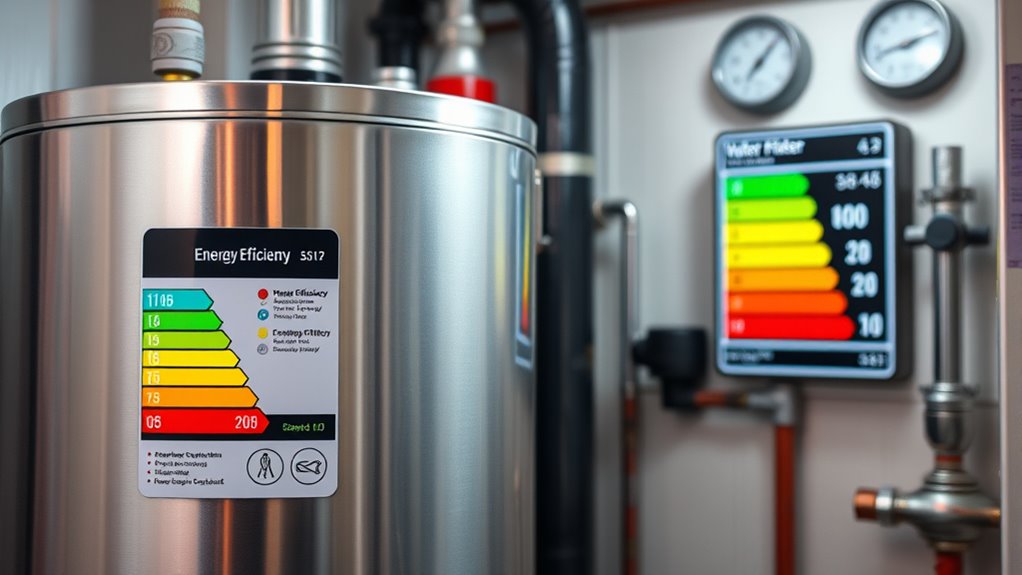
Have you ever wondered how efficiently your water heater converts energy into hot water? The answer lies in understanding the energy factors that determine its performance. One key aspect is tank insulation, which plays a vital role in minimizing standby heat loss. When your water heater isn’t actively heating water, heat can seep through the tank walls, wasting energy and increasing your utility bills. Well-insulated tanks help trap heat inside, ensuring that the water stays hot for longer periods without requiring continuous energy input. This reduces standby heat loss, making your water heater more efficient overall.
The better the tank insulation, the less energy you lose when the heater isn’t actively heating. This is especially important if you have a storage tank-style water heater, which holds hot water for extended periods. Without proper insulation, the heat gradually escapes, forcing the heater to work harder and consume more energy to maintain the desired temperature. In contrast, models with high-quality insulation keep hot water available longer and operate more efficiently, improving your energy factor.
Understanding standby heat loss is essential because it directly impacts your water heater’s energy efficiency. Even when you’re not using hot water, your heater still consumes energy to compensate for heat loss through the tank walls. That’s why selecting a unit with good insulation and low standby heat loss can lead to significant energy savings over time. When shopping for a water heater, check the insulation R-value and look for models designed to reduce standby heat loss. These features not only help conserve energy but also extend the lifespan of your appliance by reducing unnecessary strain on the heating elements.
Additionally, home furnishings such as properly insulated tanks and energy-efficient models can further enhance overall performance and savings. It’s important to recognize that energy factors don’t just depend on the heating technology but also on how well your unit retains heat. Tank insulation and standby heat loss are intertwined elements that influence overall energy efficiency. Better insulation means less energy needed to maintain water temperature, which translates into lower operating costs. Conversely, poorly insulated tanks waste energy, making your water heater less efficient and more costly to run. So, when evaluating different models, pay attention to how well they are insulated and how they address standby heat loss to ensure you’re making an energy-smart choice.
As an affiliate, we earn on qualifying purchases.
Frequently Asked Questions
How Does Installation Location Affect a Water Heater’s Energy Efficiency?
Your installation site greatly impacts your water heater’s energy efficiency. If you place it in a poorly insulated area or an unheated space, it loses heat faster, increasing energy consumption. Ensuring proper insulation quality around the unit helps retain heat, reducing energy use. Installing your water heater in a temperature-controlled, sheltered location minimizes heat loss and boosts efficiency, saving you money on energy bills over time.
Are Higher Energy Factor Models Always More Cost-Effective Long-Term?
Higher energy factor models can be more cost-effective long-term, but it depends on factors like tank insulation and energy rebates. If a high-efficiency water heater has good insulation, it loses less heat, saving you money. Plus, energy rebates can offset higher upfront costs, making these models more affordable initially and more economical over time. Always consider these factors alongside energy factors to find the best long-term value.
How Do Alternative Water Heating Methods Compare in Energy Efficiency?
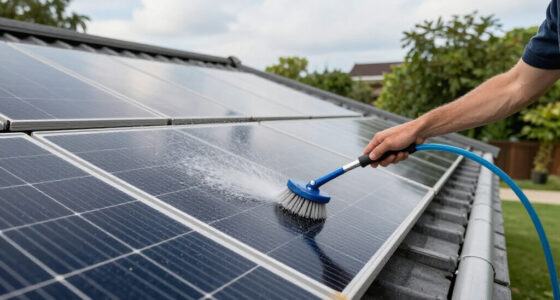
Alternative water heating methods are like different tools for a job—you choose based on efficiency. Solar power harnesses sunlight, making it highly efficient in sunny climates, while heat pumps extract heat from the air, offering excellent energy savings year-round. Both methods generally outperform traditional electric or gas heaters in energy efficiency, reducing your utility bills and carbon footprint over time. So, pick the one that fits your climate and energy goals best.
What Maintenance Practices Can Improve a Water Heater’s Energy Performance?
You can improve your water heater’s energy performance by regularly checking tank insulations and replacing damaged ones, which helps retain heat efficiently. Make sure to flush out sediment buildup through sediment removal, preventing insulation damage and maintaining ideal operation. Additionally, lowering the thermostat slightly can reduce energy use. These simple maintenance practices keep your water heater running smoothly, saving energy and extending its lifespan.
Does Water Usage Pattern Influence the Choice of Energy-Efficient Water Heater?
Your usage patterns and household size directly influence your choice of an energy-efficient water heater. If you have a large household or high water demand, you should opt for a unit with a higher capacity or tankless system to meet your needs effectively. Smaller households with lower usage benefit from smaller, more energy-efficient models. Matching your water usage habits ensures ideal performance and energy savings.
Conclusion
Think of your water heater’s energy factor like a car’s fuel efficiency—it tells you how much energy you get for each unit used. When I replaced mine, I found a model with a higher factor, and suddenly, my energy bill dropped. Just like choosing a more efficient vehicle saves you money and emissions, selecting a water heater with a better energy factor helps you save energy and cash. Make an informed choice, and enjoy the benefits!
Evergreen bestsellers Picks
bestsellers
As an affiliate, we earn on qualifying purchases.