
Using a smart thermostat helps you cut HVAC energy use by optimizing heating and cooling schedules based on your routines. It learns when you’re away or asleep and adjusts the system accordingly, saving energy without sacrificing comfort. You can set personalized temperatures and control them remotely, while zoning features focus on active areas. With detailed usage insights, you’ll find opportunities to boost efficiency even more—keep exploring to discover how to maximize your savings effectively.
Key Takeaways
- Smart thermostats optimize heating and cooling schedules based on learned routines, reducing unnecessary energy use.
- They enable zoning to focus climate control on occupied areas, preventing waste in unoccupied spaces.
- Remote control and automation features allow precise adjustments, enhancing energy efficiency and user comfort.
- Data insights help identify high energy consumption periods, guiding targeted improvements over time.
- Personalized scheduling and adaptive learning minimize manual programming, ensuring efficient and comfortable home climate management.

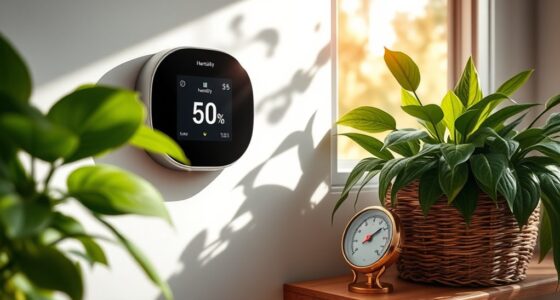
Smart thermostats offer an effective way to cut down your HVAC energy use by optimizing heating and cooling schedules. By learning your daily routines and adjusting temperatures accordingly, these devices help you achieve significant energy savings without sacrificing comfort. Instead of maintaining a constant temperature all day, a smart thermostat can lower the heat when you’re away or asleep and ramp it up just before you return or wake up. This targeted approach ensures your HVAC system runs only when needed, reducing wasteful energy consumption and lowering your utility bills.
Smart thermostats optimize heating and cooling schedules, saving energy without sacrificing comfort.
When it comes to user comfort, smart thermostats excel because they adapt to your preferences and habits. You can set personalized schedules, and many models allow remote control via smartphone apps, so you’re never out of the loop. If you’re coming home early or staying late, you can adjust the settings remotely, ensuring your space is always at the perfect temperature. Some smart thermostats even feature learning capabilities, meaning they analyze your habits over time and automatically refine their schedules. This means you don’t have to manually program your thermostat every season—your device takes care of it, providing a seamless balance between energy efficiency and comfort.
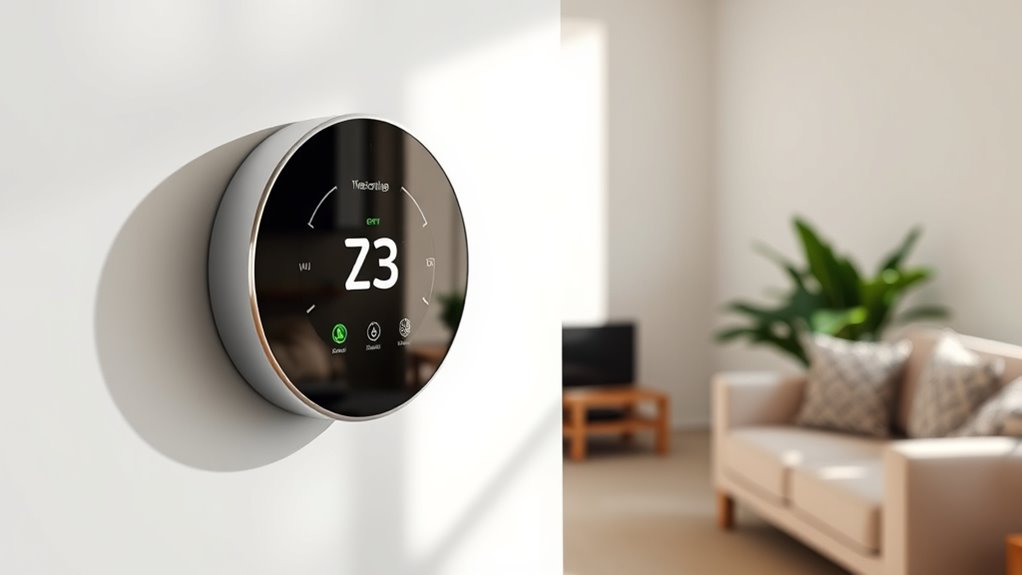
Another way smart thermostats enhance user comfort is through detailed climate control options. Many models allow you to set different zones within your home, so each room can be heated or cooled independently. This prevents wasting energy on unoccupied spaces and keeps your favorite rooms cozy. Additionally, smart thermostats often come with intuitive interfaces and clear displays, making it easy to review your energy use and adjust settings for ideal comfort. The integration with voice assistants and home automation systems further streamlines control, so you can change temperatures with simple voice commands or set schedules that align with your daily life.
Furthermore, smart thermostats contribute to long-term energy savings by providing insights into your heating and cooling patterns. You can see when your HVAC system is working hardest and identify ways to improve efficiency. Over time, this data helps you fine-tune your settings, ensuring you’re not over-heating or over-cooling your home. Advanced Techniques can guide you on optimizing your system further for maximum savings. The combination of personalized scheduling, remote control, and real-time data empowers you to make smarter choices about your energy use, leading to noticeable savings and a more comfortable living environment. Overall, investing in a smart thermostat means achieving a smarter, more efficient way to manage your home’s climate without compromising your comfort.
Frequently Asked Questions
How Do Smart Thermostats Integrate With Existing HVAC Systems?
Smart thermostats integrate with your existing HVAC system by matching system compatibility and following wiring requirements. You’ll need to check if your system supports the thermostat type, like central or heat pump systems. Then, follow the wiring instructions carefully, connecting the thermostat’s wires to your system’s terminals. Most smart thermostats come with detailed guides, making installation straightforward, so you can enjoy energy savings without hassle.
Are There Any Privacy Concerns With Smart Thermostat Data Collection?
You might worry about privacy risks with smart thermostat data collection, but manufacturers typically implement strong data security measures to protect your information. While your usage patterns and personal preferences are collected, reputable brands encrypt data and offer control over what’s shared. Stay vigilant by reviewing privacy policies and adjusting settings to limit data sharing, ensuring your privacy is maintained while enjoying the benefits of smart technology.
Can Smart Thermostats Be Controlled Remotely via Smartphones?
Imagine effortlessly managing your comfort—yes, smart thermostats can be controlled remotely via your smartphone. With remote access, you can adjust your home’s temperature from anywhere, whether you’re at work or on vacation. This convenience lets you optimize energy use and stay cozy without being tied to a wall. Simply connect your device, and you’ll enjoy seamless smartphone control, making home management smarter and more flexible.
What Is the Typical Cost Savings Associated With Smart Thermostats?
You can typically see cost savings of around 10-15% on your energy bills when using smart thermostats. They help reduce energy consumption by optimizing your HVAC system’s operation based on your schedule and preferences. As a result, you’ll enjoy lower energy bills and more efficient heating and cooling. Over time, these savings add up, making smart thermostats a smart investment for reducing your overall energy use.
Do Smart Thermostats Require Professional Installation or Can They Be DIY?
Ever wondered if installing a smart thermostat is a job you can handle yourself? You can definitely do a DIY installation if you’re comfortable with basic wiring and follow the instructions carefully. However, if your HVAC system is complex or you’re unsure, it’s best to seek professional assistance. This guarantees the thermostat is installed correctly, works efficiently, and avoids any potential damage or safety issues.
Conclusion
So, go ahead and embrace those smart thermostats. After all, who wouldn’t want their HVAC system to work smarter, not harder—especially when it practically does the thinking for you? Just sit back, enjoy the guilt-free comfort, and watch your energy bills shrink. Because, really, why sweat over savings when your thermostat’s got it all under control? It’s like giving your home a brain—minus the messy thinking.