Your heat pump water heater’s efficiency, measured by COP, depends heavily on the ambient air temperature. Warmer air boosts heat transfer, increasing COP and saving energy, while colder temperatures lower efficiency and challenge performance. Humidity, installation location, and daily temperature swings also impact COP, with frost cycles and refrigerant choices playing roles. For ideal performance, proper system design and considering climate conditions matter. Keep exploring, and you’ll discover how to maximize your system’s efficiency in varied environments.
Key Takeaways
- Higher ambient air temperatures increase heat pump COP by enhancing heat transfer efficiency.
- Cold climates lower COP, often between 1.6 and 2.7, due to reduced heat extraction from colder air.
- Modern cold climate models maintain at least 70% of heating capacity with COPs above 1.75 at low temperatures.
- Elevated humidity can slightly decrease inlet air temperature, impacting heat transfer and COP.
- Milder environments (>65°F) support higher COPs, boosting efficiency and reducing energy consumption.
Understanding the Coefficient of Performance (COP)
Understanding the Coefficient of Performance (COP) is essential for evaluating how efficiently a heat pump water heater works. COP measures the ratio of heat output to electrical energy input, showing how many units of heat you get per unit of electricity. For example, a heat pump with a 36,000 BTU heating capacity and a 3,000-watt input (about 10,236 BTU) has a COP of 3.5. A higher COP indicates better efficiency, meaning less energy is needed for the same heating performance. You can calculate COP by dividing heating capacity (in kW) by power consumption (also in kW). This metric helps you compare different models’ efficiency and potential energy savings, making it a crucial tool for choosing a cost-effective, environmentally friendly heat pump water heater. Efficiency metrics are vital for understanding overall system performance and long-term savings. Additionally, ambient conditions such as temperature can significantly influence the COP, affecting the heater’s efficiency in real-world scenarios.
How Ambient Air Temperature Influences COP
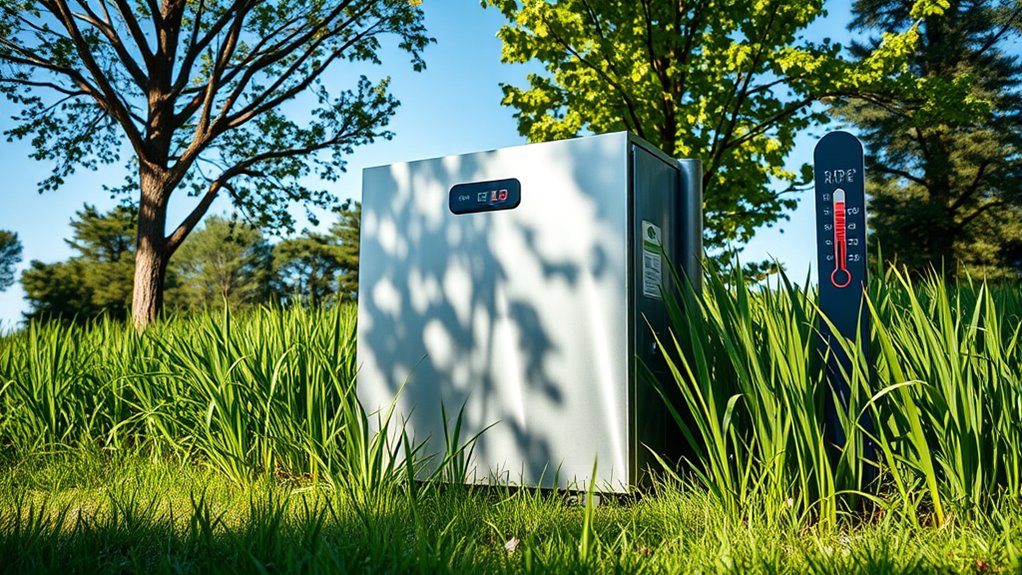
The ambient air temperature plays a crucial role in determining the efficiency of your heat pump water heater. When the air is warmer, it provides more heat energy for the system to transfer, increasing the COP. In colder climates, the average COP ranges from 2.99 to 3.59, reflecting reduced efficiency. Typically, a 28°F rise in inlet air temperature results in about a one-unit increase in COP, showing a direct relationship. In cold conditions, like 2°C, the COP can be at least 4, but efficiency drops as temperatures fall. Warmer ambient conditions and lower water temperatures improve performance. The system’s design and installation location also influence how much ambient air temperature affects efficiency, making climate considerations key to maximizing your heat pump’s performance. External air conditions significantly impact the system’s efficiency and should be carefully considered during installation. Additionally, understanding heat transfer principles can help optimize placement and operation for better efficiency. Recognizing local climate patterns can further assist in choosing the optimal system setup for your environment.
The Effect of Humidity on Heat Pump Efficiency
Humidity affects how well your heat pump extracts heat from the air, as moisture changes the heat transfer process. Higher humidity increases latent heat removal, which can boost dehumidification but may slightly lower efficiency. Understanding this balance helps you optimize your heat pump’s performance in different humidity conditions. Additionally, maintaining proper humidity levels can enhance overall system performance and longevity.
Humidity’s Heat Transfer Effect
Humidity directly influences how heat pump water heaters transfer heat from the air, affecting their overall efficiency. When the air is humid, moisture evaporates during operation, which can slightly lower the inlet air temperature but also reduces the sensible heat available for heating water. This process changes the heat transfer dynamics inside the system, often making it less effective at extracting thermal energy. During high humidity conditions, the system may operate longer to achieve the desired water temperature, increasing energy consumption. In well-sealed, conditioned spaces with good vapor barriers, humidity fluctuations have less impact on performance. Overall, increased ambient humidity can subtly decrease efficiency by interfering with heat transfer, especially in environments where moisture levels are high and ventilation is limited.
Moisture Impact on COP
Moisture condensation on the evaporator plays a crucial role in enhancing the heat pump’s efficiency when ambient humidity exceeds certain thresholds. When relative humidity surpasses about 66% in cooling mode or 73% in heating mode at 7°C, condensation occurs, releasing latent heat. This heat slows the air temperature decline and raises the refrigerant’s evaporator temperature and pressure, reducing the compressor’s workload. As a result, COP improves by approximately 2.4% in heating and 3.3% in cooling at 100% humidity. Higher condensation temperatures amplify these benefits. Additionally, proper condensate drainage is vital to prevent issues such as water buildup that could impair system performance. However, below these humidity thresholds, the impact on COP is minimal or nonexistent. Managing moisture levels and ensuring proper condensate drainage are essential to maximize efficiency gains from humidity-related condensation processes. Wrths
Comparing Indoor and Outdoor Installations
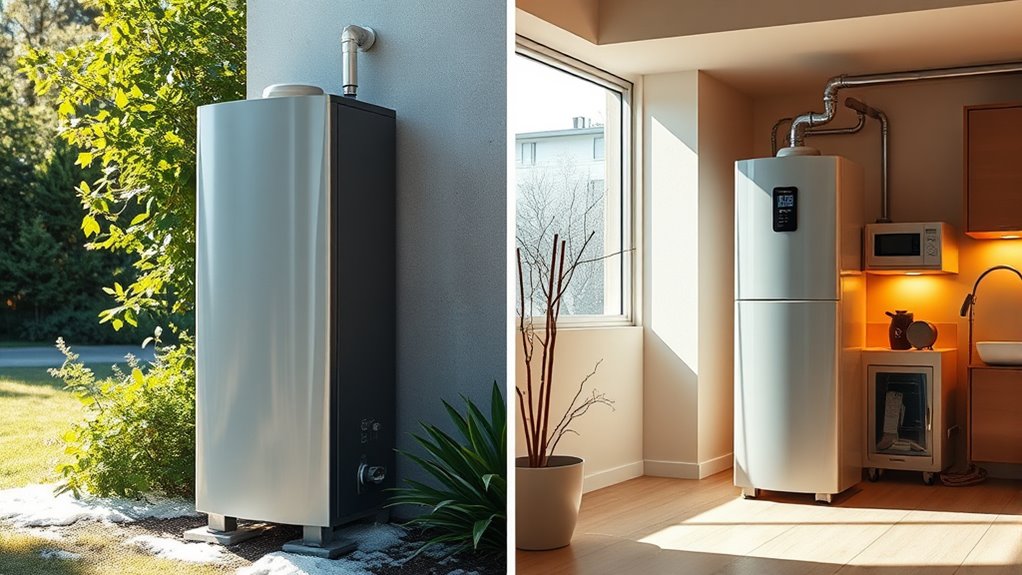
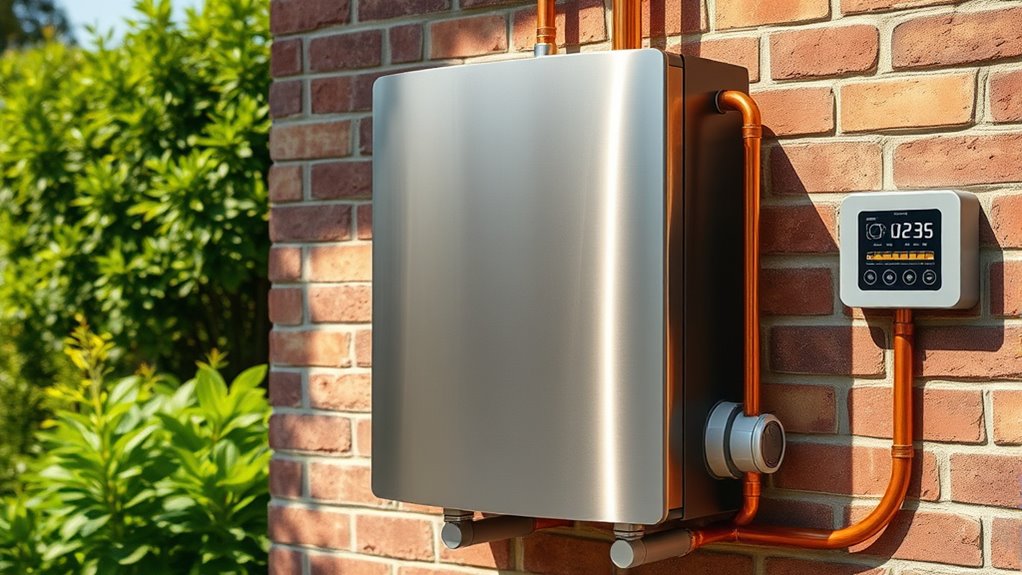
When choosing between indoor and outdoor installations for heat pump water heaters, your decision depends largely on space, climate, and convenience. Indoor setups are common in basements, garages, or utility rooms, offering a stable environment and easier access for maintenance. They require adequate space for airflow and are less exposed to weather, reducing long-term wear. Outdoor units are suitable for warmer climates, with ratings for extreme temperatures and features like defrost cycles. They involve additional costs for insulated piping and freeze protection. Outdoor installations keep noise outside the home and free up indoor space but may face local noise restrictions. Overall, indoor setups provide simplicity and protection, while outdoor units offer greater flexibility in location, especially where indoor space is limited or climate conditions favor outdoor placement. Additionally, selecting the appropriate installation type can influence the system’s efficiency, which is affected by factors like ambient temperature and insulation. Fan community insights can help visual language evolve and adapt to different installation scenarios.
COP Variations in Different Climate Zones
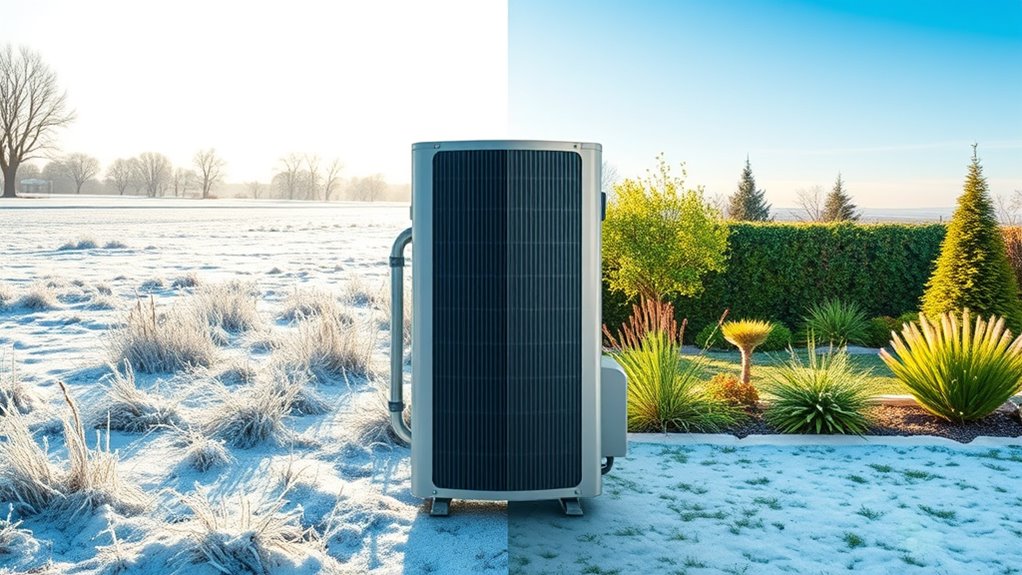
Your climate plays a key role in how efficiently your heat pump water heater performs. In colder zones, lower ambient temperatures reduce the COP and overall savings, while milder climates help maintain higher efficiency. Understanding these variations can help you optimize installation and energy savings effectively. Additionally, juice cleansing techniques can influence your overall energy levels and metabolic health, which indirectly impacts your ability to stay active and conserve energy at home. Recognizing relationship dynamics can also contribute to creating a more harmonious living environment, further supporting your energy efficiency goals.
Cold Climate Challenges
Have you ever wondered how cold weather impacts the efficiency of heat pump water heaters? When outdoor temperatures drop below 30 °F, COP values typically range between 1.6 and 2.7, with a median around 1.9 at 0 to 5 °F. While efficiency decreases as temperatures fall, many modern cold climate models still exceed the minimum ENERGY STAR COP of 1.75 at 5 °F, with some operating above 2.4. These units maintain at least 70% of their heating capacity at low temperatures, reducing reliance on backup resistance heat. Cold climate performance can be an excellent indicator of a heat pump’s suitability for harsh winter conditions. Advanced designs minimize defrost cycles and improve reliability during severe winters, even at -15 °F. Still, colder conditions challenge heat transfer, requiring more compressor effort and impacting overall efficiency—though they still outperform electric resistance heating considerably.
Milder Climate Benefits
In milder climates, heat pump water heaters (HPWHs) operate more efficiently due to higher ambient air temperatures and warmer inlet water, resulting in elevated COP values typically ranging from 2.0 to above 2.2. The consistent ambient temperatures above 65°F in these areas support better heat extraction, boosting performance by up to 15-20% compared to colder zones. Additionally, inlet water temperatures averaging around 64°F decrease the energy needed for heating, further improving efficiency. Installing HPWHs in conditioned spaces or unvented attics ensures stable conditions, minimizing COP variability. Proper installation planning can maximize these benefits and ensure optimal performance. Moreover, the ambient temperature plays a crucial role in heat pump efficiency, as higher temperatures allow for easier heat transfer and reduced energy consumption. Overall, these milder climate benefits lead to significant energy savings—often 60-80% compared to resistance heaters—and lower operating costs, making heat pump systems a cost-effective choice in such environments.
Impact of Daily Temperature Fluctuations and Defrost Cycles
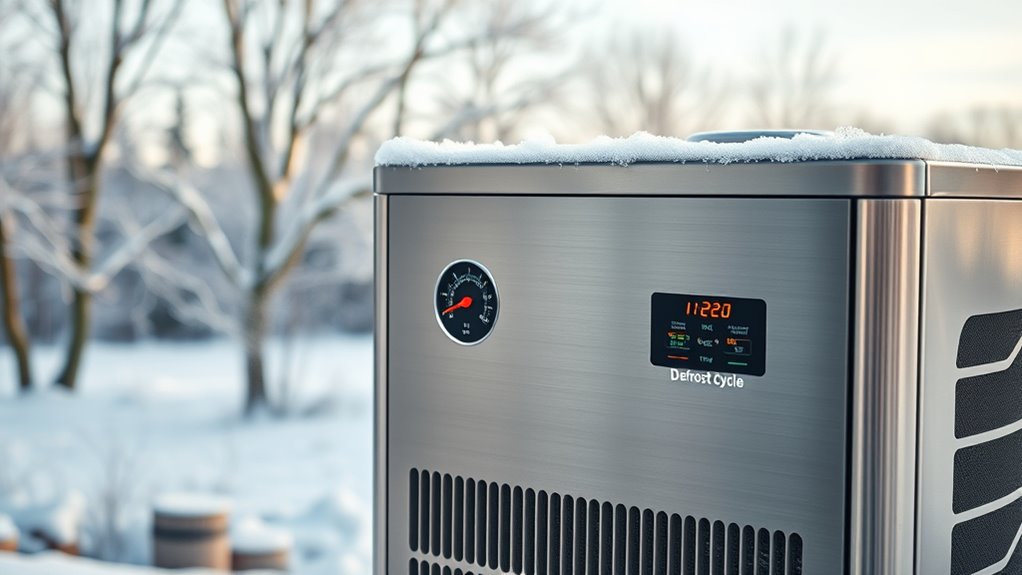
Daily temperature fluctuations markedly influence the performance of heat pump water heaters (HPWHs). When ambient temperatures drop, the COP decreases because the unit works harder to heat colder inlet water. Proper system placement can help mitigate some effects of temperature variability. Frequent daily swings cause the HPWH to cycle more often, increasing energy use and reducing efficiency. In colder conditions, the system relies more on electric resistance backup, further lowering overall COP. Frost buildup on the evaporator coil triggers defrost cycles, which temporarily reduce heating capacity and increase energy consumption. These cycles also slow water heating temporarily, affecting hot water availability. Proper placement and system design can help mitigate frost formation, but daily temperature variability remains a key factor in HPWH performance, impacting both energy use and operational consistency. Understanding ambient conditions is essential for optimizing system efficiency and longevity.
Optimizing System Design for Better COP
Optimizing system design plays a crucial role in improving the coefficient of performance (COP) of heat pump water heaters. You can enhance efficiency by implementing model predictive control that predicts occupant hot water use, optimizing heating cycles, and reducing unnecessary energy consumption. Evenly distributing water draws throughout the day maintains higher COP levels, while concentrated demands trigger auxiliary heating, lowering efficiency. Adjusting control logic to minimize resistive heating activation prevents compressor downtime and preserves COP. Increasing tank set points provides more hot water buffer, reducing resistive heating triggers and supporting compressor operation. Selecting low-GWP refrigerants like R513A and fine-tuning system components through simulation ensure better heat transfer and operational stability. Proper tank sizing and load matching further reduce cycling losses, maximizing overall system efficiency. Additionally, implementing easy cleanup procedures and routine maintenance can sustain optimal performance and prolong the lifespan of the system. Maintaining clean heat exchangers and compressor components is essential for consistent heat transfer, which directly impacts COP.
Future Technologies and Their Potential to Enhance COP

Future technologies are set to revolutionize the efficiency of heat pump water heaters, making them more capable of achieving higher COP values under diverse conditions. You’ll see innovations like variable speed compressors, which adapt to changing hot water demands and ambient conditions, boosting efficiency. Smart controls enable real-time adjustments, optimizing performance and reducing energy consumption. Integration with renewable sources, such as solar panels and batteries, enhances sustainability and efficiency, while CO2-based systems offer increased environmental benefits. Predictive sensors and thermal energy networks further improve operation by leveraging external data and multiple energy streams. As policies push for stricter standards, these advancements will help heat pump water heaters perform reliably across varied environments, driving widespread adoption and setting new benchmarks for energy efficiency and sustainability. Additionally, adaptive control systems are emerging to dynamically respond to fluctuating conditions, further enhancing performance and longevity.
Furthermore, ongoing research into thermal efficiency improvements promises to unlock even greater energy savings in the future.
Frequently Asked Questions
How Does the Size of a Heat Pump Water Heater Affect Its COP?
You’ll find that the size of your heat pump water heater directly impacts its COP. Larger units generally have higher heat transfer capacity, allowing them to heat water faster and operate more efficiently, especially under steady conditions. However, if oversized, they might short-cycle, reducing efficiency. Properly sizing your unit ensures it can absorb ambient heat effectively and maintain ideal performance, maximizing your energy savings.
What Maintenance Practices Can Improve Heat Pump COP Over Time?
You can improve your heat pump’s COP over time by regularly cleaning or replacing air filters to guarantee proper airflow. Keep condenser coils free of dust and debris for efficient heat exchange. Check refrigerant levels and system components for wear or leaks, and maintain ideal water flow with properly adjusted valves. Also, ensure good ventilation and insulation around pipes, and monitor ambient temperature to keep the system running efficiently.
How Do Different Refrigerants Impact the Efficiency of Heat Pump Water Heaters?
Imagine your heat pump operating smoothly, like a well-choreographed dance. Different refrigerants influence this performance by their ability to transfer heat efficiently. R134a offers decent efficiency but struggles in cold climates. R744 (CO2) excels in low temperatures, maintaining high COP. Hydrocarbons like R290 boost efficiency but require safety precautions. Choosing the right refrigerant tailored to your climate guarantees your water heater functions effectively, saving energy and reducing environmental impact.
Can Hybrid Systems Maintain High COP During Extreme Weather Conditions?
You can keep a hybrid system’s COP high during extreme weather if it’s designed with smart controls, good insulation, and auxiliary heating options. These features help the system adapt to cold temperatures, switching efficiently between heat pump and resistance modes. Proper maintenance and strategic operation also guarantee the system responds well to high demand, minimizing energy loss and maintaining better efficiency even in challenging weather conditions.
How Does the Placement of the Unit Influence Its Overall Efficiency and COP?
You should place your heat pump water heater in a conditioned space, like a basement or utility room, to maximize efficiency and COP. This environment keeps ambient temperatures higher, helping the unit extract heat more effectively. Avoid unconditioned areas like garages or cold basements, which lower COP and increase energy use. Proper placement guarantees better performance, lower operating costs, and longer lifespan for your system.
Conclusion
To get the most out of your heat pump water heater, understanding how ambient conditions impact COP is essential. By optimizing installation and considering climate factors, you can dramatically boost efficiency—making your system a powerhouse of energy savings. Think of it as releasing a supercharged engine that thrives in its environment. Stay proactive, adapt to changing conditions, and you’ll open the full potential of your heat pump, transforming your energy use into a game-changing force.