In home refrigeration, R‑290 and R‑600a are classified as flammable but are safely used within strict standards. Regulations like UL 60335-2-24 and European EN 378 set charge limits—generally around 150g—to reduce fire risks. Appliances feature safety controls, spark-proof parts, and require proper servicing by certified technicians following strict handling and ventilation procedures. These refrigerants offer significant environmental benefits with low GWP. Exploring these safety practices can help make certain of safe, eco-friendly cooling solutions in your home.
Key Takeaways
- R‑290 (Propane) and R‑600a (Isobutane) are classified as Flammability Class A3, requiring safety measures in home refrigeration.
- Regulations permit limited charges (e.g., 150-500g) with strict handling, storage, and leak detection procedures.
- Appliances feature safety safeguards like spark-proof components, sealed thermostats, and certified electrical parts to prevent ignition.
- Technician training and certification are essential for compliant, safe servicing of hydrocarbon refrigerants.
- Environmental benefits include low GWP (3 and 4), zero ozone depletion, and market growth driven by safety standards and eco-awareness.
Regulatory Frameworks Governing Flammable Refrigerants
Regulatory frameworks play a crucial role in ensuring the safe use of flammable refrigerants like R-290 and R-600a. Standards such as UL 60335-2-24 set safety requirements for household refrigerants, recently updated and adopted by regulators like the US EPA. The EPA’s SNAP program enforces safe handling practices and limits for hydrocarbons. European standards, like EN 378, establish charge limits and classify these refrigerants as Safety Class A3, with specific mass thresholds. Regulations also increase charge limits for small systems, reflecting improved safety assessments. Mandatory procedures, including evacuation protocols, help control non-condensable gases and reduce ignition risks. These frameworks emphasize compartment separation, leak detection, and minimized refrigerant volumes, ensuring flammable refrigerants are used responsibly and safely in residential applications. Additionally, advances in projector technology contribute to safer installation and maintenance practices for home systems.
Safety Classifications and Flammability Considerations
| Aspect | R‑290 (Propane) | R‑600a (Isobutane) |
|---|---|---|
| Flammability Class | A3 | A3 |
| LFL in air | ~2.1% | ~1.5% |
| Autoignition Temp | ~470°C | ~365°C |
| Vapour Density | 1.8 kg/m³ | 2.38 kg/m³ |
| Safety considerations | Both require proper ventilation due to their flammability risks. In addition, understanding their flammability classifications is essential for ensuring safe handling and storage. |
Charge Limits and Storage Guidelines
Have you ever wondered how much refrigerant you can safely store or use in a refrigeration system? International standards, like IEC 60335-2-89, now allow up to 500g of highly flammable refrigerants such as R‑290 and R‑600a in self-contained commercial units, but domestic limits remain around 150g. Safety depends heavily on room size and ventilation; larger spaces dilute leaks, reducing risk. For household appliances, storage is typically limited to about 150g, roughly 8g/m³ in a 20m³ room, to stay below flammability thresholds. Larger charges require specialized storage with proper ventilation and gas detection. Always follow safety labels and regulations to prevent leaks and manage flammability risks, especially in confined or enclosed spaces. Proper storage practices are essential to minimize hazards associated with high-flammability refrigerants. Additionally, flammability thresholds vary depending on the environment, making adherence to guidelines crucial.
Design and Technical Requirements for Appliances
To guarantee safe operation, you need to incorporate safeguards against flammable components, like spark-proof fans and certified electrical parts. Leak prevention strategies, such as sealed systems and clear refrigerant labeling, are essential to minimize fire risks. By following these design and technical requirements, you help protect both users and service personnel from potential hazards. Additionally, understanding potential pitfalls in adopting new payment technologies can inform safer practices and compliance measures. Incorporating industry standards on safety and compliance further ensures that appliances meet rigorous safety benchmarks and reduce liability risks.
Flammable Component Safeguards
Ensuring safety when using flammable refrigerants requires strict design and technical safeguards in appliance components. You must use spark-free fans inside compartments, even if blocked, to prevent ignition sources. Electrical connectors and lamp holders need to meet safety standards, ensuring no sparks can ignite flammable gases. Relays and components near compressors should comply with IEC 60079-15 or be installed where leaks won’t create flammable atmospheres. Thermal switches on fans must meet IEC 60079-15, or fans should be designed to operate without them. Additionally, electrical thermostats must have sealed switches or be electronic, suitable for hydrocarbon refrigerants. Proper safeguards like these minimize ignition risks, ensuring safe operation of appliances using R‑290 and R‑600a. Understanding safety standards helps in designing compliant and secure refrigeration appliances. Incorporating flammable refrigerant handling practices further enhances overall safety by reducing the potential for leaks and accidental ignitions.
Leak Prevention Strategies
How can appliance designers prevent refrigerant leaks effectively? First, they guarantee housings are robust and leak-resistant, reducing escape points. High-integrity seals, gaskets, and joints tested for compatibility with R-290 and R-600a prevent leaks under pressure and temperature changes. Electrical components near refrigerant circuits must be encapsulated or isolated to avoid sparks that could ignite leaks. Fans inside compartments should be spark-free, even if overloaded, to minimize ignition risks. Relays and thermal switches need to meet IEC 60079-15 standards for safe use with flammable refrigerants. Limiting charge sizes—up to 500 g—and clear labeling help reduce leak risk and inform safe installation. Regular leak detection, visual inspections, and compatible materials further strengthen leak prevention, ensuring appliance safety and reliability. Incorporating sound safety standards can further enhance leak prevention by ensuring components are designed to withstand operational stresses and environmental factors.
Servicing Protocols and Technicians’ Training
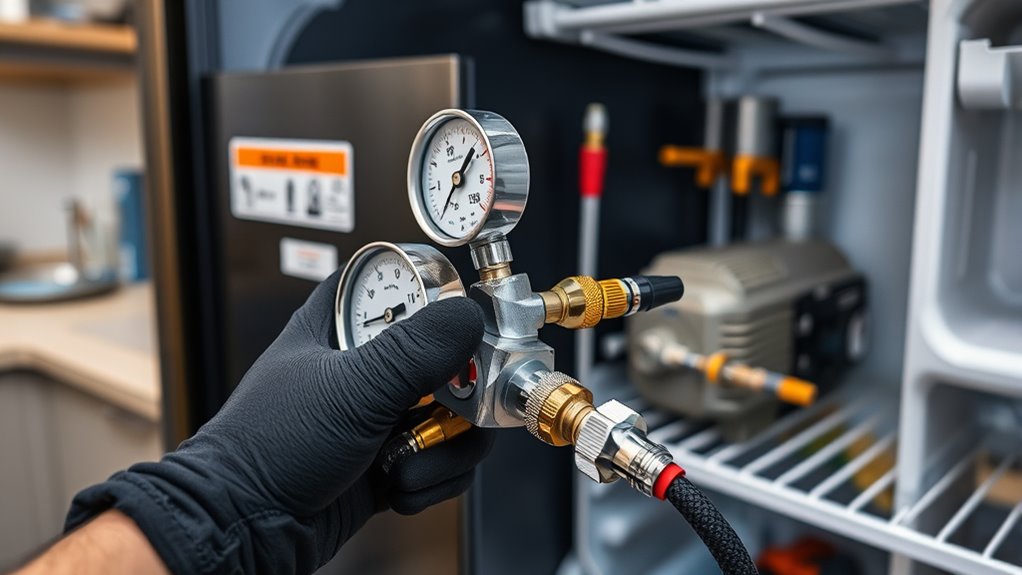
To guarantee safe refrigeration servicing, you need proper certification that verifies your skills with flammable refrigerants and handling procedures. Using the right safety equipment and following venting protocols helps prevent accidents during maintenance. Staying current with training requirements ensures you’re prepared to manage hazards effectively and comply with safety standards. Additionally, understanding Gold IRA rollovers can provide valuable insights into diversified and secure investment options to enhance your financial planning. Proper knowledge of best refrigerant practices is essential for maintaining safety and efficiency in handling R‑290 and R‑600a systems.
Specialized Technician Certification
Are you aware that specialized technician certification plays a crucial role in ensuring safe and effective servicing of hydrocarbon refrigerant systems? While small appliances with R-290 and R-600a currently don’t require mandatory certification for servicing or purchasing, specific training enhances safety and compliance.
You should consider programs focusing on:
- Safety protocols and handling procedures for hydrocarbons
- Compressor servicing and recovery techniques
- Regulations on charge size limits, like the 57-gram maximum
- Proper documentation for refrigerant purchase and service activities
- Understanding the mind-body connection in somatic therapy can improve your ability to manage stress during technical procedures. Additionally, a thorough knowledge of refrigerant safety standards can help prevent accidental releases and ensure proper system maintenance.
These certifications, although not federally mandated now, prepare you to perform critical tasks confidently. They also demonstrate your commitment to safety and adherence to evolving industry standards, especially as hydrocarbon refrigerants become more common in home refrigeration.
Handling and Venting Procedures
Handling and venting procedures for hydrocarbon refrigerants require strict adherence to safety protocols to prevent fires or explosions. Always recover or isolate R290 and R600a before servicing, avoiding venting into enclosed or low-ventilation areas, as these gases are heavier than air and can accumulate. When breaking into the system, follow standard procedures but take extra precautions: remove refrigerant safely, purge with inert gas like nitrogen, and evacuate thoroughly—doubling evacuation times for R600a. Regularly change vacuum pump oil and monitor vacuum levels down to 500 microns to ensure moisture removal. Use approved tools and avoid open flames, sparks, or smoking during servicing. Leak detection must involve combustible gas detectors, and systems should be tested with low-pressure nitrogen and vacuum holds before sealing. Additionally, proper handling of these refrigerants supports overall cognitive health, as exposure to toxic substances can impair mental function if safety protocols are neglected. It is also essential to ensure proper venting procedures are followed to prevent accidental release and ensure safety during maintenance.
Safety Equipment Requirements
Proper safety equipment is indispensable when servicing systems with flammable refrigerants like R-290 and R-600a. You must use spark-free tools to prevent ignition. Protective gear is critical, including flame-resistant gloves and eye protection, to guard against leaks or sparks. Electrical testing instruments should meet explosion-proof standards such as IEC 60079-15, guaranteeing safety in flammable atmospheres. Refrigerant charging and recovery equipment need specialized design to contain leaks and handle hydrocarbons safely. Ventilation devices are essential for rapidly clearing leaked refrigerants, reducing fire risk. To stay compliant, always:
- Use spark-free tools and equipment
- Wear flame-resistant gloves and eye protection
- Guarantee electrical tools meet explosion-proof standards
- Implement proper ventilation and leak containment protocols
Environmental Benefits and Market Adoption Trends
The shift toward environmentally friendly refrigerants is accelerating as low GWP options like R290 and R600a gain popularity. These refrigerants offer significant environmental benefits, including GWP values of 3 and 4, vastly lower than traditional options like R22 or R12. They also have zero ozone depletion potential and short atmospheric lifetimes, reducing greenhouse gas emissions. Market adoption is rising: R600a is favored for small appliances, while R290 is used in larger commercial systems. Increasing regulations and eco-conscious consumer demand drive this trend. Manufacturers are investing in hydrocarbon technology, supported by the ease of availability and production. The table below highlights key differences:
| Feature | R290 | R600a |
|---|---|---|
| GWP | 3 | 4 |
| Typical Use | Commercial systems | Small appliances |
| Flammability Class | A3 (mildly flammable) | A3 (mildly flammable) |
| Ozone Depletion Potential | Zero | Zero |
| Atmospheric Lifetime | Months | Months |
Additionally, ongoing research aims to optimize flammability safety measures, ensuring these refrigerants can be widely adopted without compromising safety standards. The development of safety standards and testing protocols is critical to facilitate broader acceptance and usage.
Future Directions in Safety Standards and Industry Practices
As safety standards evolve, regulatory frameworks are increasingly adapting to accommodate the use of flammable refrigerants like R-290 and R-600a. You’ll notice updates such as higher charge limits, with IEC allowing up to 500 grams in self-contained units, and standards like UL 60335-2-24 incorporating safer handling practices. The SNAP program now modifies use conditions to ensure safer applications in household appliances. Additionally, exemptions to venting prohibitions reduce environmental risks. To stay compliant, you should focus on:
- Following international standards like IEC and UL
- Ensuring technicians receive specialized training
- Implementing robust safety guidelines and risk assessments
- Developing clear emergency response plans
- Staying informed about cybersecurity vulnerabilities that could impact safety systems and device controls. Recognizing the importance of safety protocols and industry best practices is vital for maintaining secure and reliable refrigeration systems. These measures aim to enhance safety, promote industry confidence, and support broader adoption of flammable refrigerants in home refrigeration.
Frequently Asked Questions
How Do Flammable Refrigerants Impact Household Safety During Power Outages?
During power outages, flammable refrigerants can pose fire or explosion risks if leaks occur and accumulate near the floor. You should guarantee proper ventilation, avoid igniting sparks from electrical devices, and maintain your appliance to prevent leaks. Using systems with safety features and following handling protocols helps reduce risks. Stay vigilant about potential leaks, especially during outages, to keep your household safe from fire hazards.
What Are the Key Differences in Handling R-290 Versus R-600a?
Imagine you’re servicing a fridge using R-290, a highly flammable refrigerant. You need stricter safety precautions, like ensuring proper ventilation and explosion-proof electrical components, because R-290 has a higher flammability risk than R-600a. You should handle R-290 with extra care during charging and maintenance, always working in well-ventilated areas, while R-600a requires slightly less stringent safety measures, making it somewhat easier to manage safely.
Are There Specific Ventilation Requirements During Appliance Servicing?
During appliance servicing, you must guarantee the area is well-ventilated to prevent flammable gas buildup. Ventilate by discharging vacuum pump exhaust outdoors, and monitor for refrigerant leaks constantly. Limit opening the system to under 15 minutes to prevent moisture ingress. Use proper leak detectors and avoid ignition sources. Ventilation is critical for safety, so always prioritize adequate airflow and continuous refrigerant monitoring to minimize fire risks.
How Do Safety Standards Vary Globally for These Refrigerants?
Safety standards for R-290 and R-600a vary worldwide, mainly in charge size limits and safety protocols. You’ll find stricter regulations in the EU, capping refrigerant amounts at around 150 grams, and similar limits in the U.S. These standards demand careful system design, trained technicians, and safety measures like leak detection. Some regions are more conservative, requiring enhanced ventilation or additional safety features to manage flammability risks effectively.
What Innovations Are Emerging to Further Reduce Flammability Risks?
You can expect innovations like microchannel heat exchangers and system algorithms that precisely control refrigerant amounts, reducing flammability risks. Advanced leak detection with sensors and automatic shut-offs help catch leaks early. Safety engineering now includes spark-proof components and strategic circuit zones to limit ignition sources. Researchers are also developing blends with inert gases and flame-retardant additives, making refrigerants safer without sacrificing efficiency or environmental benefits.
Conclusion
By understanding safety standards for R-290 and R-600a, you hold the keys to a greener, safer home environment. Following regulations is like steering a ship through calm waters—avoiding storms and guaranteeing smooth sailing. As technology advances and industry practices evolve, your commitment to proper handling and maintenance ensures these eco-friendly refrigerants serve you well, turning the path toward sustainable refrigeration into a journey worth taking.