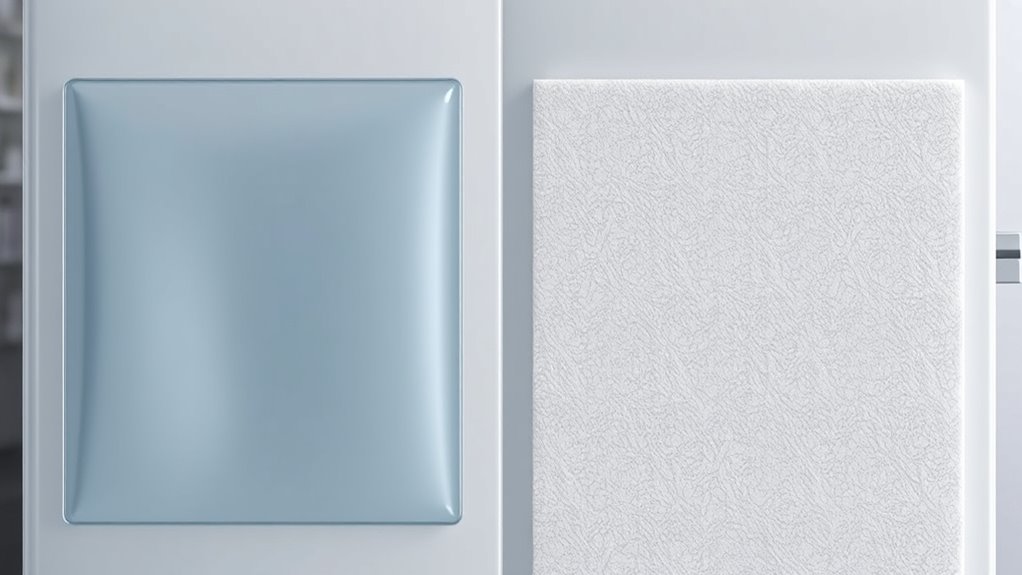

When choosing between vacuum panels and foam for refrigerator insulation, consider their thermal performance, durability, and installation needs. Vacuum panels offer higher R-values in thinner layers, saving space but are fragile and more costly to install. Foam insulates well, resists impacts, and is easier to handle and maintain over time. To make the best choice, explore how each option performs in real-world conditions and their long-term benefits.
Key Takeaways
- Vacuum panels offer higher R-values per inch, enabling thinner, space-saving insulation but are more fragile and sensitive to damage.
- Foam insulation provides durable, moisture-resistant, and impact-resistant performance with stable thermal properties over time.
- VIPs are costlier and require careful handling, while foam is more affordable, easier to install, and maintenance-friendly.
- Foam maintains consistent thermal resistance regardless of environmental conditions, whereas VIPs risk performance decline if vacuum is compromised.
- For long-term reliability and impact resistance, foam insulation is generally more practical in refrigerator applications.
Comparing Thermal Insulation Effectiveness and Efficiency

How do different insulation materials compare in their ability to reduce heat transfer and improve energy efficiency in refrigerators? Vacuum insulation panels (VIPs) outperform conventional foam, with thermal resistances around R-40 per inch, compared to foam’s R-5 to R-8.06 per inch. VIPs have very low thermal conductivity due to vacuum and micro-pore insulation, minimizing heat transfer. Installing VIPs can cut energy consumption by up to 21%, even when covering just part of the surface. They also require much less space, thanks to their thin profile, which preserves storage capacity. Foam insulations need thicker panels, reducing internal volume. Overall, VIPs offer superior thermal performance, lower energy use, and space efficiency, making them a more effective choice for improving refrigerator energy efficiency and reducing operational costs. Vacuum insulation panels achieve significantly higher thermal resistance, further enhancing energy savings and performance. Additionally, advancements in insulation technology continue to improve the affordability and practicality of VIPs for consumer appliances. For example, ongoing innovations in micro-pore insulation help lower manufacturing costs and expand their adoption.
Structural Strength and Mechanical Durability

The strength of your refrigerator’s insulation determines how well it withstands impacts and external forces over time. You need to take into account how well the materials integrate into the overall structure to prevent failures. Stronger, more durable insulation helps ensure your appliance remains reliable and protected against everyday wear and tear. Additionally, materials like PU foam with microcell technology offer enhanced structural integrity and mechanical durability, making them more resistant to deformation and damage under various conditions due to their unique production process. Properly assessing material durability can further extend the lifespan of your refrigerator’s insulation and improve overall performance. Implementing secure vendor reliability assessments can further protect against potential material failures over the lifespan of the insulation.
Impact Resistance and Durability
Impact resistance and durability are critical factors in selecting refrigerator insulation, as they determine how well the materials withstand physical stresses over time. Vacuum insulation panels (VIPs) are fragile; their rigid cores can crack under impact, risking vacuum loss and performance decline. They require careful handling and protective layers but remain vulnerable to punctures. In contrast, foam insulations like polyurethane are more flexible and absorb shocks better. They maintain structural integrity after impacts and resist cracking or shrinking during thermal cycling. Here’s what you should consider:
- VIP cores are brittle and susceptible to cracking
- Foam panels absorb shocks and resist impact damage
- VIPs require delicate handling to avoid damage
- Foam maintains performance after minor impacts
- Recycling foam is easier than VIPs
- Impact resistance of different materials is a key factor in insulation durability.
Choosing the right insulation depends on durability needs and impact risks. Understanding the impact resistance of different materials can help in making an informed decision about insulation durability.
Structural Integration Strength
Foam insulation, such as polyurethane, plays a crucial role in providing structural strength within refrigerators by bonding the inner and outer panels, creating a unified, durable frame. It typically varies between 5 mm and 20 mm, with about 15 mm offering sufficient support to maintain insulation space and wall integrity. Voids or uneven filling weaken the structure, reducing durability. Foam forms a continuous, fused panel that integrates framing and metal, helping it withstand environmental loads. Different foam types, like polyurethane and extruded polystyrene, influence strength and insulation performance, with polyurethane favored for bonding strength. While vacuum panels lack inherent load-bearing capacity, foam supports VIPs, compensating for their fragility. This synergy ensures the overall structure remains robust against mechanical stresses and environmental pressures. Additionally, the mechanical durability of foam insulation is enhanced by proper installation techniques, ensuring long-term performance and resistance to operational stresses. Proper installation methods are essential to maximize foam’s structural benefits and prevent potential weaknesses over time.
Installation Challenges and Coverage Flexibility

Installing vacuum insulated panels (VIPs) presents notable challenges because their fragile vacuum seals demand careful handling and precise fitting. Any piercing or damage can cause vacuum loss, compromising insulation. Their fixed thickness and dimensions make field modifications difficult, limiting flexibility. Attaching hardware or penetrations risks breaching the vacuum envelope, complicating retrofit projects. It’s essential to have trained personnel who understand VIP fragility and sealing requirements to prevent performance issues. Proper sealing and alignment are critical; even minor air ingress drastically reduces insulation efficiency. Handling and installation require meticulous care to maintain vacuum integrity and ensure optimal insulation performance. Additionally, understanding the design limitations of VIPs helps prevent installation errors that could lead to vacuum failure.
Longevity, Maintenance, and Long-Term Performance
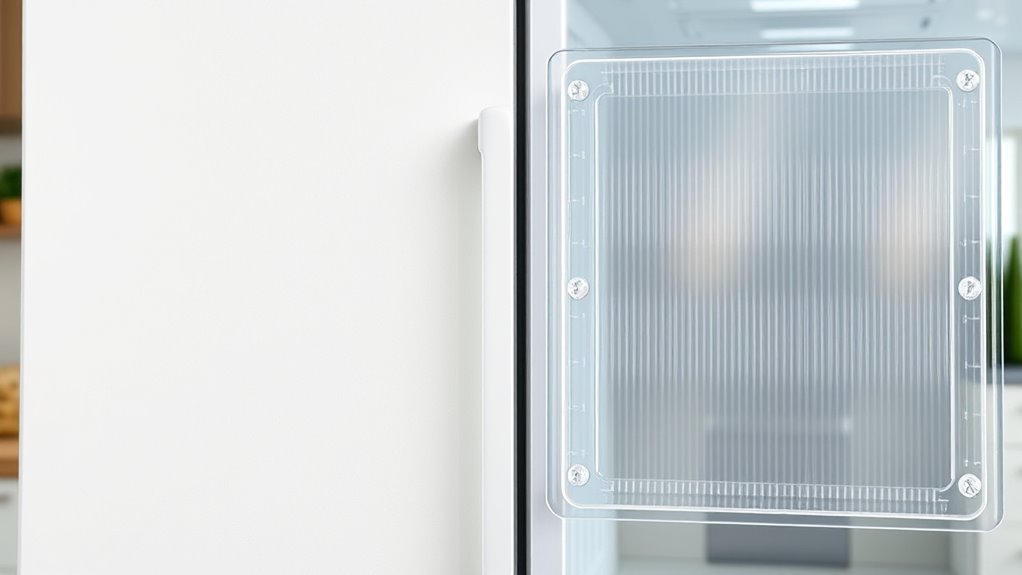
Maintaining long-term insulation performance requires understanding the durability differences between vacuum insulated panels (VIPs) and foam-based systems. VIPs depend on a sealed vacuum, which can fail silently if punctured, causing rapid insulation loss. Foam insulation, like polyurethane in SIPs, is more resilient, enduring stress and environmental factors better. VIPs demand careful handling and ongoing monitoring to prevent damage and vacuum loss, increasing maintenance complexity. Foam panels generally require less upkeep and retain their R-values over time, resisting moisture and mechanical wear. The inherent structural resilience of foam panels makes them more suitable for long-term applications in variable conditions. The table below compares their longevity and performance:
| Aspect | VIPs | Foam Panels | Notes |
|---|---|---|---|
| Puncture Resistance | Low | High | Foam withstands physical stress better |
| Maintenance | High (monitoring/damage prevention) | Low | Foam needs minimal ongoing care |
| Long-term R-value stability | Declines if vacuum lost | Remains stable over years | Foam retains thermal performance over time |
| Environmental durability | Sensitive to moisture, punctures | Resistant to humidity and chemicals | Foam better in varied conditions |
| Lifespan | Shorter, unless protected | Longer, with less intervention | Foam offers more consistent long-term performance |
Cost Considerations and Application Suitability
When choosing insulation for your refrigerator, you need to weigh initial costs against long-term savings and performance. VIPs offer superior insulation in small spaces but come with higher manufacturing and material expenses, making them best suited for specialized applications. Conversely, foam insulation provides a cost-effective, reliable option for most standard designs, aligning with typical production demands and environments. Additionally, considering best insulation materials can help you determine the most suitable choice for your specific needs and budget. For example, understanding the thermal properties of these materials can further inform your decision-making process.
Cost Efficiency Factors
Choosing the right insulation for a refrigerator involves balancing upfront costs with long-term savings, making cost considerations essential. Vacuum panels (VIPs) are pricier upfront, costing $15 to $40 per square meter, but offer superior thermal performance. Foam insulation is cheaper but less efficient, which can lead to higher energy bills over time. Consider these factors:
- High initial investment in VIPs vs. lower foam costs
- Increased manufacturing costs for VIP production lines
- Potential installation expenses, like structural modifications
- Energy savings from VIPs reducing long-term operating costs
- Scalability and volume production impact on VIP costs
While VIPs demand higher upfront spending, their energy efficiency can offset costs over the appliance’s lifespan. Assess your application’s needs to determine if the long-term benefits justify the initial investment. Additionally, understanding thermal conductivity is crucial in evaluating insulation performance and making an informed choice. Furthermore, advancements in manufacturing techniques are gradually reducing VIP costs, making them more accessible for various applications.
Application Environment Match
Selecting the right insulation depends heavily on your application’s environment and performance requirements. VIPs offer high thermal resistance in thin layers, making them ideal for compact or space-constrained units like small coolers or medical transport refrigeration. They’re lightweight and customizable but fragile, so they suit environments with minimal impact risks. Foam insulation, on the other hand, provides robust structural support, making it suitable for large commercial units, walk-in coolers, or environments with mechanical stresses. Foam panels are easier to handle and integrate into existing structures, offering durability and resistance to vibrations and impacts. If space savings and high efficiency are priorities, VIPs excel, but for environments demanding physical resilience, foam insulation remains the better choice. Your application’s physical demands and space limitations guide the optimal selection. Additionally, understanding application environment match is crucial for selecting an insulation material that balances cost and performance effectively. Considering energy efficiency ratings can help ensure that the chosen insulation aligns with your long-term operational goals.
Long-term Investment Value
While the application environment guides what insulation type works best physically, considering the long-term investment involves analyzing costs over the lifespan of your refrigeration unit. Vacuum panels (VIPs) have higher initial costs due to specialized manufacturing and customization, often adding several hundred dollars per unit. Foam insulation, like polyurethane or XPS, offers lower upfront expenses and easier installation.
Think about these factors:
- VIPs deliver superior thermal resistance, reducing energy bills over time.
- They are more suitable for high-value, space-constrained applications.
- Foam insulation is durable, easily repaired, and less prone to damage.
- VIPs can become costly if punctured or sealed, requiring panel replacement.
- Long-term savings from energy efficiency may offset higher initial costs, but only in specific scenarios.
Real-World Performance and Practical Impacts
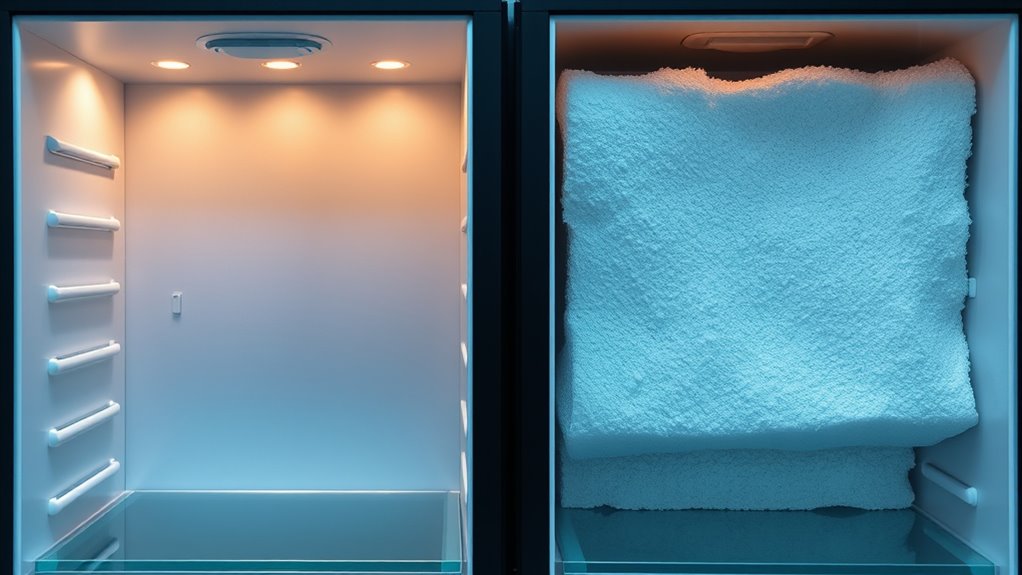
Vacuum insulation panels (VIPs) deliver exceptional thermal performance in real-world applications, substantially reducing energy consumption and expanding usable space in refrigerators and freezers. Their R-values of around R40 per inch vastly outperform foam’s R5, enabling thinner walls and more interior volume. However, VIPs are vulnerable to damage; any puncture compromises vacuum integrity, leading to sudden insulation loss. Foam insulation, especially polyurethane, resists mechanical stresses and environmental factors better, maintaining performance longer. Handling and repairing VIPs are more complex and costly, whereas foam panels are more durable and easier to replace. The table below compares their key impacts:
| Feature | VIPs | Foam Insulation | Practical Implication |
|---|---|---|---|
| Thermal Conductivity | 8x lower than foam | Higher, about R5 per inch | Lower energy use, thinner walls |
| Damage Resistance | Susceptible to punctures | More robust | Better durability in rough environments |
| Installation & Repair | Complex, costly if damaged | Easier and cheaper | Lower maintenance costs |
Additionally, advances in insulation technology are continuously improving the durability and cost-effectiveness of both materials. Moreover, ongoing research aims to develop more resilient VIPs, which could mitigate current vulnerabilities and expand their practical applications.
Frequently Asked Questions
How Do Vacuum Panels Impact Overall Refrigerator Weight and Portability?
Vacuum panels make your refrigerator lighter and more portable by reducing insulation thickness and overall weight. Their thinner, high-performance design signifies less bulk, easier movement, and better space efficiency. You’ll find it simpler to transport and handle these units, especially in tight spaces or mobile environments. Plus, their durability ensures long-term portability without sacrificing insulation quality, making your refrigerator more convenient for everyday use or on-the-go needs.
Can Vacuum Panels Be Repaired if Damaged During Installation or Use?
Honestly, repairing vacuum panels isn’t like fixing a leaky faucet. If they get damaged during installation or use, you probably can’t fix them easily because of their delicate structure and vacuum loss. You’d need specialized tools and expertise, making repairs costly and complex. It’s better to prevent damage with careful handling, as repairing vacuum panels isn’t practical—they’re more like a high-tech, fragile Fabergé egg than a piece of simple foam insulation.
What Environmental Factors Affect the Long-Term Performance of Foam Insulation?
You should know that environmental factors like moisture, temperature fluctuations, UV exposure, and humidity profoundly impact foam insulation’s long-term performance. Moisture can cause mold and reduce R-value, while UV light degrades the foam over time. Temperature cycling leads to cracks, and high humidity can accelerate deterioration. Proper installation, protection from UV, and ventilation help mitigate these effects, ensuring your foam insulation remains effective longer.
Are There Specific Maintenance Routines to Ensure Vacuum Panel Integrity?
You should regularly inspect vacuum panels for damage, like dents or cracks, and check seals to guarantee they’re intact. Use gentle cleaning methods, avoiding harsh chemicals, and keep the panels free from dust without applying high-pressure air. Handle the refrigerator carefully during maintenance, and schedule professional inspections to catch early signs of vacuum loss. Replacing damaged panels promptly helps maintain insulation performance and prolongs the lifespan of your refrigerator.
How Does Insulation Choice Influence Refrigerator Noise Levels?
You’ll find that insulation choice surprisingly impacts your fridge’s noise levels more than you’d think. Vacuum panels, with their high efficiency and slim design, often make your appliance quieter by reducing mechanical strain and vibration. Foam insulation, while decent thermally, doesn’t dampen noise as effectively. So, if you crave a quieter fridge, opting for vacuum insulation not only boosts energy efficiency but also keeps the noise down, making your kitchen more peaceful.
Conclusion
Choosing between vacuum panels and foam insulation means balancing efficiency, strength, and cost. You’ll weigh the sleek, high-performance vacuum panels that offer top-tier insulation against the flexible, budget-friendly foam options that suit most needs. As you consider longevity and installation, picture your refrigerator as a fortress of cold—strong, efficient, and built to last. Ultimately, your choice shapes your kitchen’s comfort, savings, and peace of mind—making every chill a reminder of smart, lasting decisions.