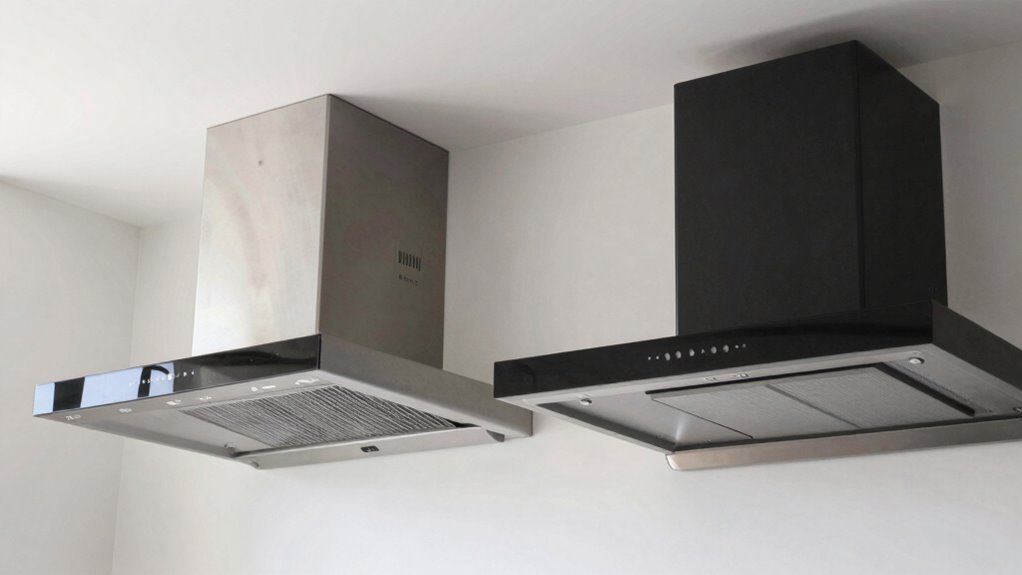
If you want effective odor and pollutant removal, ducted hoods usually work better because they vent air outside, especially for heavy cooking. Ductless models are easier to install and great for small spaces or apartments but rely on filters and aren’t as efficient with strong odors. Your choice depends on your kitchen setup and budget. To learn more about which option fits your needs best, keep exploring the differences in real-life use.
Key Takeaways
- Ducted hoods effectively remove smoke and odors outside, providing better air quality for heavy cooking needs.
- Ductless hoods are easier to install and suitable for spaces where ductwork isn’t feasible or practical.
- Ducted systems generally use less energy and have lower ongoing costs compared to ductless units.
- Ductless hoods require regular filter replacements to maintain air quality, adding ongoing maintenance costs.
- The best choice depends on kitchen setup, budget, and whether high odor removal or ease of installation is a priority.

When choosing a range hood for your kitchen, understanding the differences between ducted and ductless options is essential. These choices directly impact your air quality and energy efficiency, so knowing how each functions helps you make an informed decision. Ducted hoods vent cooking fumes, smoke, and odors outside through ductwork, which means they effectively remove airborne contaminants from your kitchen. This often results in better air quality because pollutants are expelled rather than just filtered. On the other hand, ductless hoods, also known as recirculating hoods, use filters—usually charcoal—to clean the air before releasing it back into the room. While they are easier to install and require no ductwork, they may not be as effective in maintaining ideal air quality, especially in kitchens with heavy cooking or strong odors.
Energy efficiency is another critical factor to consider. Ducted hoods tend to be more energy-efficient because they remove pollutants directly outside, reducing the workload on your HVAC system. They often require less power to operate since the air is vented away, not filtered and recirculated. Conversely, ductless hoods rely on filters that need regular replacement, which can add to ongoing costs and slightly increase energy consumption. The motor in a ductless unit runs longer to compensate for the filtration process, so you might see higher energy use over time. If you’re concerned about energy bills or want an eco-friendlier kitchen setup, a ducted system generally makes more sense.
Installation plays a role in your decision too. Ducted hoods require proper ductwork and vents, which can be complex and costly to install if your kitchen isn’t already set up for it. Ductless hoods are more flexible—they can be installed almost anywhere because they don’t need external venting. This makes them appealing for apartment living or spaces where adding ductwork isn’t feasible. However, remember that their effectiveness in improving air quality is limited by the quality and maintenance of the filters.
Frequently Asked Questions
How Do Ducted and Ductless Hoods Compare in Energy Efficiency?
Ducted hoods generally use less energy because they vent air outside, reducing the workload on your kitchen’s ventilation system. Ductless hoods rely on filters, which can increase energy consumption due to their frequent need for replacement and cleaning. When considering ventilation efficiency, ducted hoods typically outperform ductless models, providing better air removal and maintaining cleaner air quality, making them more energy-efficient choices for long-term use.
Can Ductless Hoods Effectively Remove Smoke and Odors?
Ductless hoods can effectively improve air quality and control odors, but their effectiveness depends on the filter quality and ventilation system. They trap smoke and odors using activated carbon filters, which help reduce smells in your kitchen. However, for the best odor control and air quality improvement, ducted hoods usually perform better by venting pollutants outside. If you prioritize odor removal, consider your kitchen size and cooking habits when choosing.
What Is the Maintenance Difference Between Ducted and Ductless Hoods?
Did you know that ductless hoods require filter replacements every 1 to 3 months? You’ll find that maintenance differs markedly between ducted and ductless hoods. With ductless models, you need to regularly clean or replace filters to keep odors at bay, which means more frequent cleaning. Ducted hoods typically need less maintenance, as they vent outside and don’t rely on filters, making them easier to care for overall.
Are Ductless Hoods Suitable for All Kitchen Sizes?
Ductless hoods are suitable for small to medium kitchens, especially if space constraints limit your options. They work well in compact areas because they don’t require ductwork, making installation easier. However, in larger kitchens, ductless hoods may struggle with air quality, as they recirculate air instead of venting it outside. Consider your kitchen size carefully to determine if a ductless hood fits your needs.
How Do Installation Costs Differ Between Ducted and Ductless Systems?
Installation costs differ between ducted and ductless systems mainly due to installation complexity and aesthetic considerations. Ducted hoods usually cost more because they require ductwork, vent placement, and more extensive installation efforts. Ductless hoods are simpler and less invasive, leading to lower costs. If you prioritize a clean look and easier setup, ductless might save you money upfront. However, keep in mind that ducted systems often provide better ventilation efficiency.
Conclusion
Ultimately, choosing between ducted and ductless hoods is like selecting the right key for a lock—you need what fits your space and needs. A ducted hood acts as a clear stream, flushing out pollutants and keeping your kitchen fresh. A ductless one is more like a filtering mirror, trapping odors within. Know your space and priorities, and you’ll find the perfect fit—your kitchen’s true key to harmony.