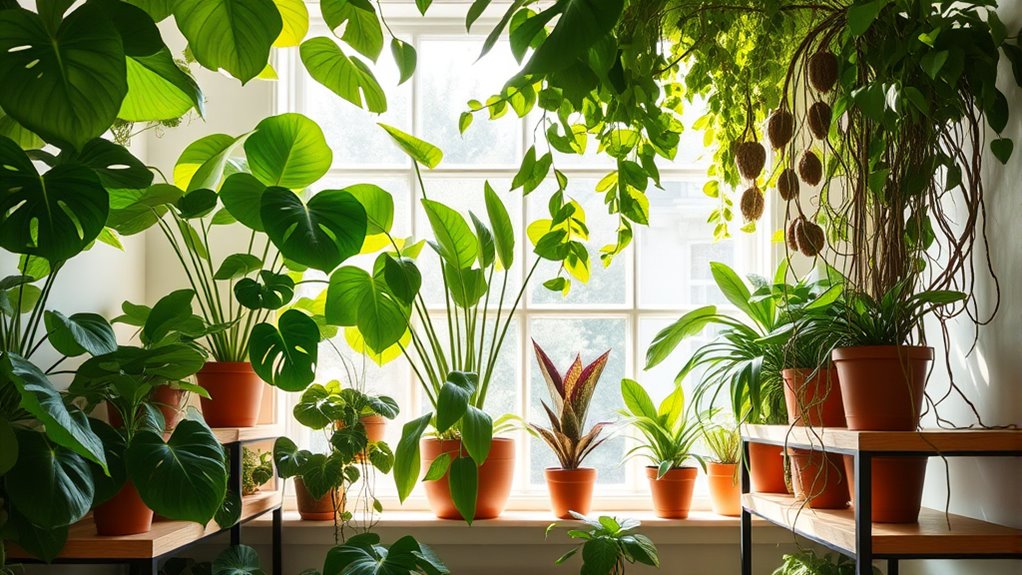

Indoor plants help you breathe cleaner air by filtering out pollutants and releasing oxygen. They absorb toxins like formaldehyde, benzene, and trichloroethylene through their leaves and roots, reducing indoor air pollution. Plants like snake plants and pothos are easy to care for and highly effective. Plus, they boost humidity and create a relaxing atmosphere. Keep exploring to discover how you can maximize their air-purifying benefits in your space.

Get home appliances delivered free with Prime
- Fast, free delivery on millions of items
- Prime Video, Amazon Music and more included
- Member-only deals all year
Key Takeaways
- Indoor plants absorb airborne pollutants through their leaves and roots, filtering toxins like formaldehyde and benzene.
- They release oxygen and increase humidity, improving overall indoor air quality and making environments more comfortable.
- Plants such as snake plants and pothos actively remove toxins, reducing health issues like headaches and respiratory problems.
- They naturally purify the air without the need for mechanical air filtration systems.
- Strategically placing indoor plants near pollution sources enhances their air-cleaning effectiveness.
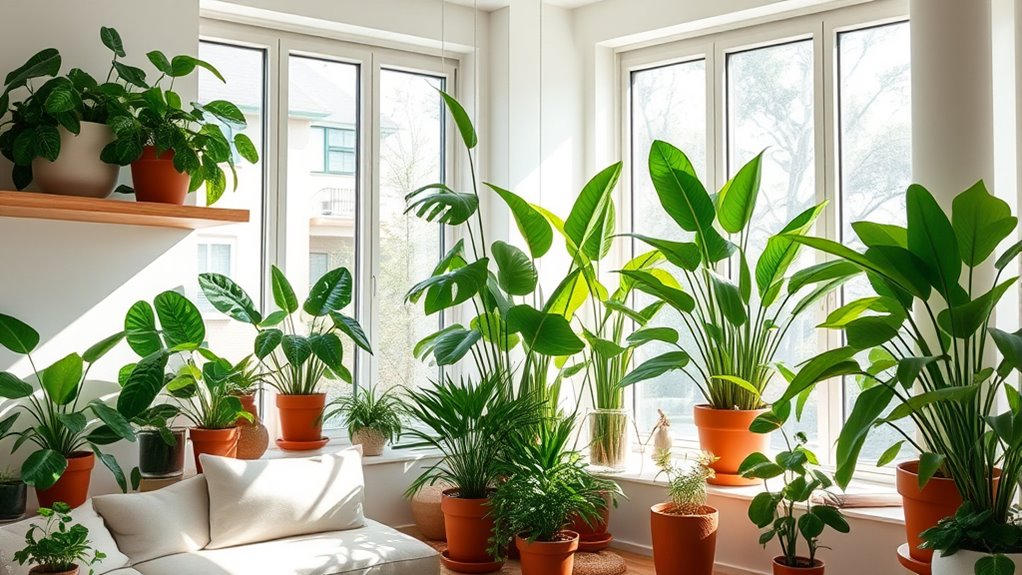
Indoor plants not only brighten up your living space but also actively improve the air you breathe. When you bring houseplants into your home, you’re not just adding a touch of nature; you’re also harnessing their natural ability to clean the air. Different plant species possess unique properties that contribute to air purification, making your environment healthier and more pleasant. By selecting the right plants, you can create a space that promotes well-being and reduces indoor pollutants.
Indoor plants enhance your space and naturally purify the air you breathe.
Many popular plant species, such as the snake plant, pothos, and peace lily, are especially effective at filtering toxins from the air. These plants work by absorbing pollutants like formaldehyde, benzene, and trichloroethylene through their leaves and roots. As a result, they help mitigate common indoor air contaminants that can cause headaches, allergies, or respiratory issues. You may notice that your home feels fresher and your breathing becomes easier when you have these plants around. Their ability to actively filter airborne chemicals is a key reason why indoor plants are increasingly recommended for homes and offices alike.
Air purification is a natural process that these plants facilitate, and you don’t need special equipment or expensive filters to benefit from it. Simply choosing plant species known for their air-cleaning qualities makes a significant difference. For example, the snake plant, also called mother-in-law’s tongue, is hardy and requires minimal maintenance, yet it effectively removes toxins and releases oxygen at night. The peace lily not only filters out pollutants but also adds humidity to dry indoor environments, which can help reduce respiratory discomfort. Pothos, with its easy-care nature, can thrive in low light and still purify the air efficiently. By incorporating these plant species into your living or working space, you actively enhance air quality without any effort beyond regular watering and care.
It’s important to understand that the benefits of indoor plants extend beyond air purification. They also increase humidity, which can be beneficial during dry seasons, and reduce stress, creating a more relaxed atmosphere. When you select plant species for their air-cleaning abilities, you’re investing in both your health and comfort. Remember to position your plants strategically—near sources of pollution or in rooms where you spend the most time—to maximize their air-purifying effects. With a little effort and the right choices, your indoor environment can become a healthier, more invigorating space to live and work.
In the end, the right plant species do more than just look good—they actively participate in cleaning the air you breathe. Embracing indoor plants for air purification is a simple yet effective way to improve your indoor air quality naturally, contributing to better health and overall well-being.
Products Worth Considering

LEVOIT Vital 200S-P Smart Air Purifier for Large Rooms
Google Nest Cam Indoor Security Camera, 3-Pack

Levoit Core 400S-P Smart Air Purifier for Large Rooms
As an affiliate, we earn on qualifying purchases.
Frequently Asked Questions
Do All Indoor Plants Improve Air Quality Equally?
Not all indoor plants improve air quality equally. Different plant species vary in their ability to purify air through air purification. Some plants, like the snake plant or pothos, excel at filtering toxins and releasing oxygen, while others have a lesser impact. When choosing plants for better air quality, focus on species known for their air purification benefits, and you’ll see more noticeable improvements in your home’s air.
How Many Indoor Plants Are Needed to Make a Difference?
Think of indoor plants as tiny air purifiers—just a few can make a difference. You’ll need around 2-4 plants per 100 square feet, depending on plant size and maintenance. Regular plant maintenance, like watering and cleaning leaves, boosts air purification methods. To truly improve air quality, space them strategically, ensuring proper airflow and avoiding overcrowding, so each plant can work efficiently.
Can Indoor Plants Remove All Indoor Air Pollutants?
Indoor plants can’t remove all air pollutants, but they considerably improve air purification. Different plant species, like snake plants and pothos, target specific toxins effectively. You should include a variety of these plants to maximize benefits, but don’t rely solely on them for complete air cleaning. Regular ventilation and reducing pollution sources are still essential. By choosing the right plant species, you enhance air purification and create a healthier indoor environment.
Are There Specific Plants Best for Allergy Sufferers?
Ever wondered if some plants are safer for allergy sufferers? Yes, certain plants, like the snake plant or pothos, are less likely to trigger allergies. But beware of allergenic varieties, which can pose plant allergy risks. To enjoy cleaner air without allergy worries, choose low-allergen options and keep an eye on your body’s reactions. Wouldn’t you prefer a lush, healthy space free from sneezing fits?
How Often Should Indoor Plants Be Cleaned or Replaced?
You should clean your indoor plants once a month to remove dust and prevent pests, and replace them if they outgrow their space or show signs of disease. Stick to a consistent watering schedule to keep them healthy, and monitor for pests regularly as part of pest management. If plants become unhealthy despite care, consider replacing them to maintain your indoor air quality and overall plant health.
Conclusion
So, don’t dismiss indoor plants as mere decoration. They actively improve your air quality by filtering toxins and increasing humidity, creating a healthier living space. While some might worry about the maintenance, choosing easy-to-care-for plants makes it simple. Incorporating a few greenery pieces not only elevates your home’s aesthetic but also contributes profoundly to your well-being. Embrace these natural air purifiers—you’ll notice the difference in both your environment and your health.