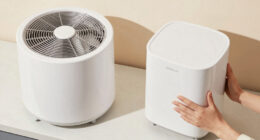
To prevent mold in washers and humidifiers, guarantee proper airflow and moisture control. Regularly clean and dry your appliances after each use, including door seals and detergent dispensers. Keep indoor humidity below 50% by using dehumidifiers or ventilation fans, and avoid leaving wet items or water in appliances for long periods. Consistently maintaining cleanliness and airflow helps keep these appliances mold-free—discover more tips to keep your appliances in top shape.
Key Takeaways
- Ensure proper air circulation by leaving doors or lids open after use to dry out moist surfaces.
- Regularly clean and dry washers and humidifiers, including drums, seals, and water tanks.
- Maintain indoor humidity below 50%, ideally around 30-40%, to inhibit mold growth.
- Use distilled water in humidifiers and run monthly cleaning cycles with vinegar or mold removers.
- Store appliances in well-ventilated areas and promptly address any musty odors or visible mold.
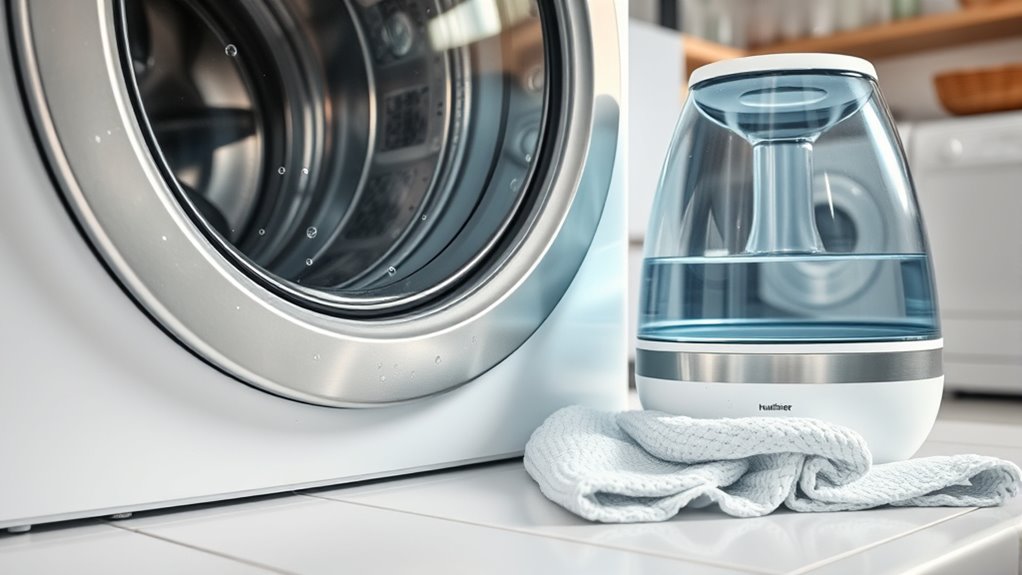
Mold can quickly take hold in your home if moisture and humidity are not kept in check. This is especially true inside appliances like washers and humidifiers, where damp environments provide the perfect breeding ground for mold spores. To prevent this, you need to focus on strategies that promote proper air circulation and moisture control. Good air flow helps dry out moist surfaces, making it harder for mold to settle and grow. When you leave doors or lids open after using your washer or humidifier, you allow fresh air to circulate, which accelerates drying and reduces humidity levels. Additionally, placing your appliances in well-ventilated areas can considerably cut down on lingering moisture that encourages mold growth.
Proper air circulation and moisture control prevent mold in appliances like washers and humidifiers.
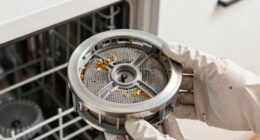
Moisture control is essential in preventing mold buildup. Regularly cleaning and drying your appliances after each use minimizes residual dampness. For washers, run a maintenance cycle with hot water and vinegar or a commercial cleaning solution once a month to eliminate soap scum and mold spores. Wipe down the drum, door seals, and detergent dispensers thoroughly, since these areas tend to trap moisture and debris. For humidifiers, empty the water tank daily, dry all parts completely, and clean the device according to the manufacturer’s instructions to prevent mold from establishing itself. Using distilled water instead of tap water can also help reduce mineral deposits and mold-friendly environments. Proper appliance maintenance is key to ongoing mold prevention.
Another effective step is to control the humidity levels in your home. Keep indoor humidity below 50%, ideally around 30-40%. Use a dehumidifier in damp spaces like basements or laundry rooms, especially during humid seasons. This reduces overall moisture in the air, making it less likely for mold to thrive inside your appliances. Vent your laundry area with exhaust fans or open windows when possible to improve air circulation and moisture escape. Avoid leaving wet clothes in the washer for extended periods, as damp conditions promote mold growth.
Finally, invest in appliance covers or shields if you’re storing your washer or humidifier in a less ventilated space. These help prevent dust and moisture from settling on surfaces. Regular checks for mold or musty odors can alert you to problems early. If you spot mold growth, clean affected areas immediately with a mixture of water and bleach or a commercial mold remover, ensuring you wear gloves and proper ventilation during cleaning. By prioritizing air circulation and moisture control, you create an environment that discourages mold from taking hold, keeping your appliances clean, safe, and functioning efficiently.
washer mold remover
As an affiliate, we earn on qualifying purchases.
As an affiliate, we earn on qualifying purchases.
Frequently Asked Questions
Can Mold in Washers Cause Health Issues?
Yes, mold in washers can cause health issues like allergies, respiratory problems, and skin irritation. When you neglect appliance maintenance, mold spores can spread through your laundry and air. To protect yourself, follow mold prevention strategies like cleaning your washer regularly, leaving the door open after use, and using proper detergents. Staying vigilant helps keep your home healthy and mold-free.
Are There Natural Remedies to Prevent Mold Growth?
Yes, there are natural remedies for mold prevention. You can use white vinegar or tea tree oil to inhibit mold growth in washers and humidifiers. Regularly wiping down surfaces with vinegar helps eliminate mold spores, while adding a few drops of tea tree oil to the water creates an antifungal barrier. These natural remedies are safe, effective, and environmentally friendly, helping you maintain a mold-free environment without harsh chemicals.
How Often Should I Replace Humidifier Filters?
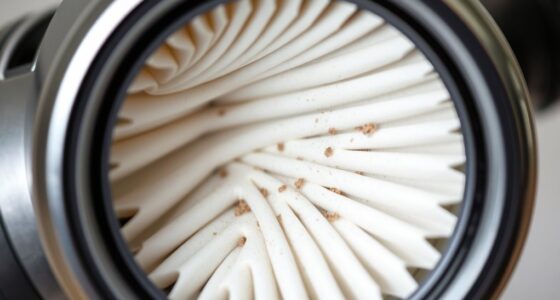
You should replace your humidifier filter every 1 to 3 months to guarantee ideal humidifier maintenance. Regular filter replacement prevents mold growth and maintains air quality, as many believe that waiting longer can lead to mold buildup. Stick to the filter replacement schedule recommended by your humidifier’s manufacturer, and check it frequently during heavy use or dry seasons. This simple step keeps your humidifier clean and safe to use.
What Are the Best Storage Practices for Washers and Humidifiers?
For proper storage, guarantee your washers and humidifiers are completely dry before putting them away. Use ventilation techniques by storing them in a cool, dry, well-ventilated area to prevent moisture buildup. Keep the lids and doors slightly open to promote airflow, reducing mold risks. Regularly clean and inspect your appliances before storage, and avoid sealing them tightly, so moisture doesn’t get trapped inside.
Does Using Vinegar Effectively Prevent Mold Buildup?
Using vinegar can be a helpful tool in your mold prevention methods, but it’s not a magic bullet. Vinegar’s effectiveness lies in its ability to kill mold spores and break down residues that cause mold growth. However, to truly keep mold at bay, you should also keep your washer and humidifier dry, clean regularly, and make sure proper ventilation. Think of vinegar as one piece of the puzzle, not the whole picture.
humidifier cleaning tablets
As an affiliate, we earn on qualifying purchases.
As an affiliate, we earn on qualifying purchases.
Conclusion
To keep mold far, far away, you must stay vigilant—never leave your washer or humidifier damp, always dry every nook and cranny, and empty water tanks daily. Think of mold as an unstoppable army trying to invade your space; with consistent cleaning and proper maintenance, you can be the fortress that keeps them out. Stay committed, stay vigilant, and mold won’t stand a chance—your home will stay fresh, pure, and mold-free forever!
dehumidifier for laundry room
As an affiliate, we earn on qualifying purchases.
As an affiliate, we earn on qualifying purchases.
washer door seal cleaner
As an affiliate, we earn on qualifying purchases.
As an affiliate, we earn on qualifying purchases.