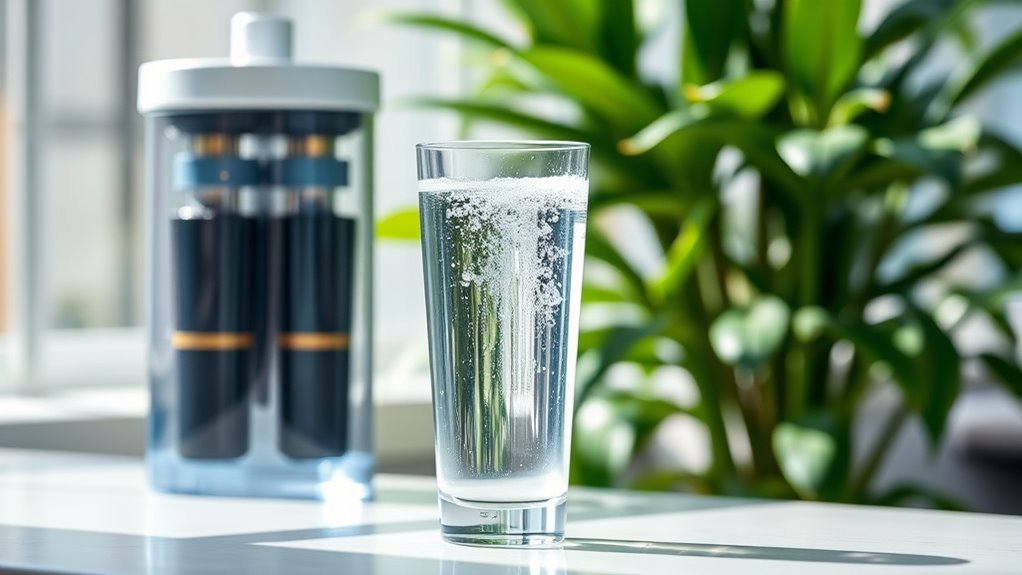

Using a water filtration system helps you drink cleaner, safer water by removing harmful contaminants like chlorine, lead, bacteria, and viruses. It enhances taste and odor, reducing your exposure to substances linked to health issues over time. Regular maintenance ensures peak performance and water purity, supporting your overall health. Staying on top of filter changes keeps your system effective and your water safe. Discover how proper filtration can elevate your health and well-being with more insights ahead.
Key Takeaways
- Removes harmful contaminants like lead, bacteria, and VOCs, reducing health risks over time.
- Eliminates chlorine and improves water taste, encouraging increased water consumption for better hydration.
- Reduces exposure to carcinogens formed by chlorine, supporting long-term health.
- Effectively targets bacteria and viruses, lowering the risk of waterborne illnesses.
- Promotes overall well-being by providing cleaner, safer drinking water daily.
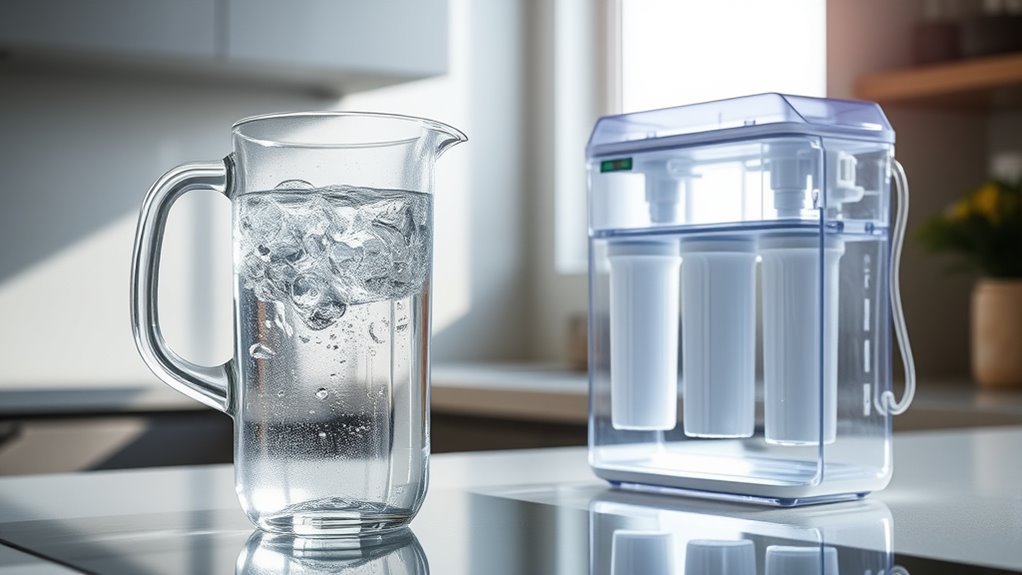
Water filtration systems offer a simple yet effective way to improve the quality of your drinking water. When you choose a system, you’re investing in your health by removing contaminants and impurities that can harm your body over time. Modern filtration units utilize advanced purification technology, which guarantees that your water is not only clean but also safe to drink. These systems typically combine multiple filtration stages, such as activated carbon filters, reverse osmosis membranes, or UV sterilization, each targeting specific pollutants like chlorine, lead, bacteria, and volatile organic compounds. This layered approach ensures thorough removal of harmful substances, giving you peace of mind with every glass.
Water filters improve taste and safety by removing contaminants through advanced multi-stage purification technology.
To keep your water filtration system functioning at its best, regular filter maintenance is essential. Over time, filters accumulate dirt, sediments, and other impurities, which can diminish their effectiveness. If you neglect to replace or clean the filters as recommended, you risk allowing contaminants to bypass the filtration process, potentially compromising your health. Staying diligent with filter maintenance not only guarantees your water remains pure but also extends the lifespan of your system. Many units feature indicator lights or alerts that notify you when it’s time for a filter change, making maintenance straightforward. Remember, timely replacement of filters maintains the integrity of the purification technology and guarantees consistent water quality.
Choosing a filtration system that emphasizes robust purification technology means you’re directly reducing your exposure to harmful substances that could cause health issues over time. For example, removing chlorine improves taste and odor, but it also reduces potential carcinogens linked to chlorinated water. Eliminating lead is vital, especially if your city’s water supply has aging pipes. Bacteria and viruses are also targeted effectively by UV sterilization or other disinfecting methods, decreasing the risk of waterborne illnesses. By understanding how these purification technologies work and committing to regular filter maintenance, you’re actively protecting your health and that of your family.
Incorporating a water filtration system into your daily routine is a proactive step toward a healthier lifestyle. It’s a simple upgrade that offers significant benefits—better taste, improved safety, and peace of mind. Keep in mind that the effectiveness of your system relies heavily on proper maintenance, so stay attentive to filter replacement schedules. When you prioritize these practices, you ensure your water remains pure, safe, and enjoyable every day. With the right filtration technology and consistent upkeep, you can confidently hydrate knowing you’re doing everything possible to support your well-being.
Frequently Asked Questions
How Often Should I Replace My Water Filter?
You should replace your water filter every 6 to 12 months, depending on your filter type and usage. Regular maintenance tips include checking for signs of clogging or reduced flow, especially with carbon or reverse osmosis filters. Keep an eye on your filter’s lifespan, and follow the manufacturer’s recommendations. For best results, replace your filter promptly to maintain water quality and guarantee your filtration system functions effectively.
Are Water Filtration Systems Effective Against All Contaminants?
Like a knight’s armor, water filtration systems protect you, but they aren’t invincible. They’re effective against many contaminant types, including bacteria, chlorine, and heavy metals, thanks to advanced filtration technologies. However, they might not catch every tiny or chemical contaminant. Be aware of your system’s specifications, and consider additional treatments if your water source has specific or complex pollutants. Always check what contaminants your filter can target to stay safe.
Do Filtration Systems Remove Beneficial Minerals From Water?
Filtration systems typically remove harmful contaminants while retaining beneficial minerals, thanks to advanced filters designed for mineral retention. This process guarantees your water maintains its natural mineral content, which supports health. Additionally, filtration enhances the taste of your water by reducing chlorine and other odors. So, you get cleaner, better-tasting water without sacrificing essential minerals, making your drinking experience both healthier and more enjoyable.
Can I Install a Filtration System Myself?
Yes, you can install a filtration system yourself with DIY installation, but it depends on your skill level and the system’s complexity. Many systems come with detailed instructions, making DIY feasible. However, for peak performance and to avoid mistakes, you might prefer professional assistance. Hiring a plumber ensures proper setup, especially if plumbing modifications are needed, providing peace of mind and reliable filtration from the start.
What Is the Typical Lifespan of Different Filtration Units?
Think of your filtration units as trusted guardians with varying lifespans. Typically, a carbon filter lasts 6 to 12 months, while reverse osmosis membranes can serve 2 to 3 years with proper care. To extend their filter lifespan, follow maintenance tips like regular replacements and cleaning. Staying attentive to signs of wear keeps your water pure, ensuring your filtration system remains a steadfast protector of health and clarity.
Conclusion
By choosing a water filtration system, you not only improve your health but also enjoy cleaner, great-tasting water every day. It’s funny how a simple step like filtering your water can make such a big difference—reducing contaminants and boosting your well-being. When you realize how easy it is to upgrade your drinking water, it’s almost like the universe is nudging you toward a healthier lifestyle. So why wait? Start filtering today and see the benefits unfold.