TL;DR

Get home appliances delivered free with Prime
- Fast, free delivery on millions of items
- Prime Video, Amazon Music and more included
- Member-only deals all year
A Veranda report outlines six bathroom design directions its interviewed designers expect to gain traction in 2027: bespoke storage, more expressive hardware, layered lighting, patterned tile, less utilitarian room design and smart technology. These are designers’ predictions, not verified industry-wide forecasts or confirmed sales trends.
Designers interviewed by Veranda predict that bathrooms in 2027 will pair more individualized design with practical upgrades, including custom storage, layered lighting and smart fixtures. The report identifies six anticipated directions, but they are professional forecasts rather than measured evidence that homeowners or the wider industry have adopted them.
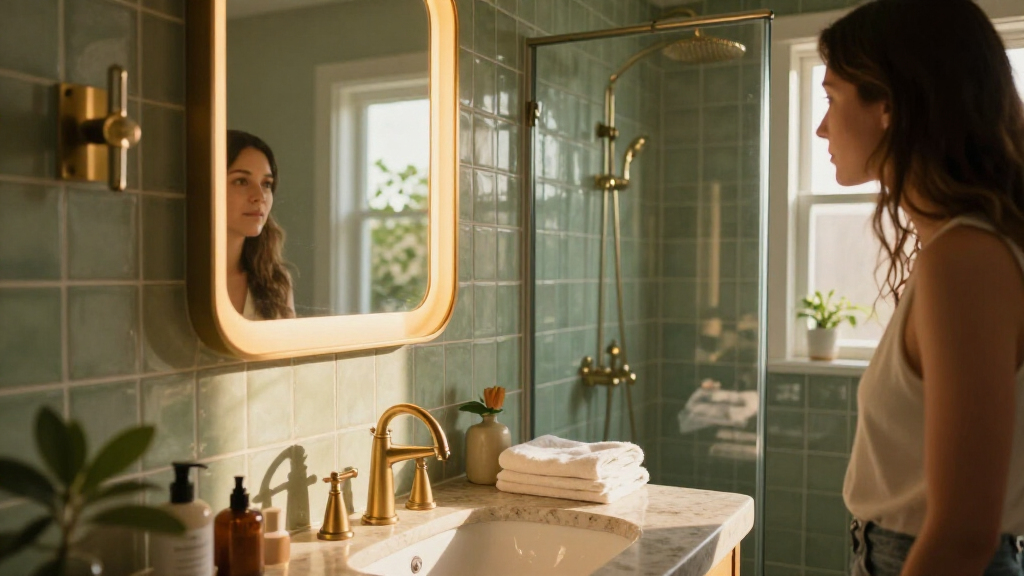
The six predictions are bespoke cabinetry and storage, standout hardware, multiple lighting sources, patterned tile floors, a shift away from purely utilitarian design, and smart technology. Together, they point toward bathrooms designed to reflect a household’s style while making everyday routines easier, according to the designers quoted in the report.
Rachel Cannon, founder and principal designer of Rachel Cannon Limited, describes a move toward fully custom cabinetry organized around how clients use the room. Gina Elkins, founder and principal of Studio Casa Vita, says clients want dedicated places for products and tools, including docking drawers with outlets, storage for hair tools, and accessible spaces for towels and makeup essentials.
The other predictions involve visible design choices and convenience features. Cannon says clients are becoming more adventurous with cabinet hardware and tile layouts, while Elkins advocates lighting for different tasks and times of day. Elkins also cites automated shower controls, smart toilet functions, touch-free faucets, and motorized window coverings as technologies clients are requesting.
Design Meets Daily Bathroom Routines
The predictions matter to homeowners planning a renovation because they connect appearance with how a bathroom works. Custom drawers and dedicated storage may make frequently used items easier to find; task, ambient and nighttime lighting can serve different needs; and thoughtful separation of vanity and wet areas can change how the room functions. These are design goals described by the interviewed professionals, not guaranteed outcomes for every project.
The report also suggests a broader shift in how designers approach bathrooms: rather than treating them only as practical spaces, they are incorporating materials and details found elsewhere in a home. Patterned floors, mixed hardware finishes, warmer paint and decorative lighting can give the room a more personal character. For readers weighing a remodel, the list offers ideas to discuss with a designer, but it does not establish which choices will add resale value or fit every budget.
Some recommendations involve more than selecting finishes. Built-in cabinetry, electrical outlets in drawers, lighting, plumbing fixtures and motorized shades may require coordination among trades and should be planned for the room’s layout and applicable local requirements. The forecast is best read as a set of possibilities, not a checklist homeowners need to follow.
As an affiliate, we earn on qualifying purchases.
Six Directions Behind the Forecast
Veranda’s article frames its list around designers’ observations of client requests and recent projects. Elkins says trends can reflect new materials, storage ideas and functional approaches, while Cannon points to clients’ choices in cabinetry, hardware and tile. The report does not provide survey results, sales figures or a defined sample of projects, so it cannot show how widespread these preferences are.
On finishes, Cannon describes using familiar tile materials in less conventional arrangements, such as herringbone or offset brick patterns. She also recounts a second-home floor featuring white-and-coffee-colored plaid tile and mentions colored stars, diamonds, stripes and borders in otherwise neutral schemes. The examples illustrate the forecast; they do not establish that any one pattern is becoming dominant.
Elkins describes bathrooms with distinct vanity and wet zones, sometimes divided by cased openings, and a change from wood flooring near the vanity to stone in wet areas. Her examples also include stained wood, warmer paint, trim and ceiling treatments. For lighting, she recommends more than a single mirror fixture, citing vanity lamps, toe-kick lighting and a night light near a water closet.
““By incorporating customized organizational systems, we can maximize every inch and make the bathroom feel more intuitive, efficient, and personal.””
— Rachel Cannon, founder and principal designer of Rachel Cannon Limited, as quoted by Veranda
How Broad Are These Design Shifts?
The report presents designer observations and forecasts, not a representative survey of homeowners, product sales data or a market analysis. It does not quantify how many clients are requesting each feature, how quickly adoption may grow, or whether the six predictions will prove accurate in 2027.
It is also unclear what the changes may cost or how they might affect resale value. Custom cabinetry, new lighting circuits and smart plumbing fixtures can vary widely by project, and the article provides no price comparisons or return-on-investment estimates. Practical constraints—including room size, existing wiring and plumbing, accessibility needs and local building rules—may shape which ideas are suitable.
Homeowners Weigh Choices in 2027
The next step for homeowners is to decide which ideas address their own needs rather than treating the forecast as a required renovation plan. Designers and contractors can help assess storage, lighting and fixture choices against a room’s layout, budget and existing systems. For work involving electrical or plumbing changes, homeowners should use qualified professionals and check applicable local permits and codes.
Veranda’s list offers no follow-up data or scheduled milestone to confirm whether the predictions take hold. Their broader reach will become clearer only through future project examples, homeowner demand and industry reporting. For now, the confirmed development is the publication of six designers’ expectations for 2027, not proof of an established market-wide trend.
Key Questions
What six bathroom trends does the report predict for 2027?
The list includes custom cabinetry and storage, expressive hardware, layered lighting, patterned tile floors, bathrooms designed to feel less utilitarian, and smart technology.
Are these confirmed trends across the housing market?
No. They are predictions from designers interviewed by Veranda. The report does not include market-wide survey results or sales figures to measure how common the features are.
What does layered bathroom lighting involve?
Elkins describes combining lighting for tasks such as makeup with softer nighttime illumination and decorative sources. Examples in the report include vanity lamps, toe-kick lighting and a night light near a water closet.
Which smart bathroom features does the report mention?
Elkins cites automated shower controls, smart toilet functions and touch-free faucets, as well as motorized shades or drapery. The report does not compare products, prices or adoption rates.
Source: rss
Cold & flu season Picks
humidifiers
As an affiliate, we earn on qualifying purchases.