
TL;DR

Get home appliances delivered free with Prime
- Fast, free delivery on millions of items
- Prime Video, Amazon Music and more included
- Member-only deals all year
A home without a traditional chimney may still be able to accommodate a wood-burning stove, using a properly installed twin-wall flue routed through the roof or outside. The source report says installations typically cost about £1,500 to £4,000, but the right option depends on the property, regulations and installation route. Bioethanol and electric stoves are alternatives where a flue is not practical.
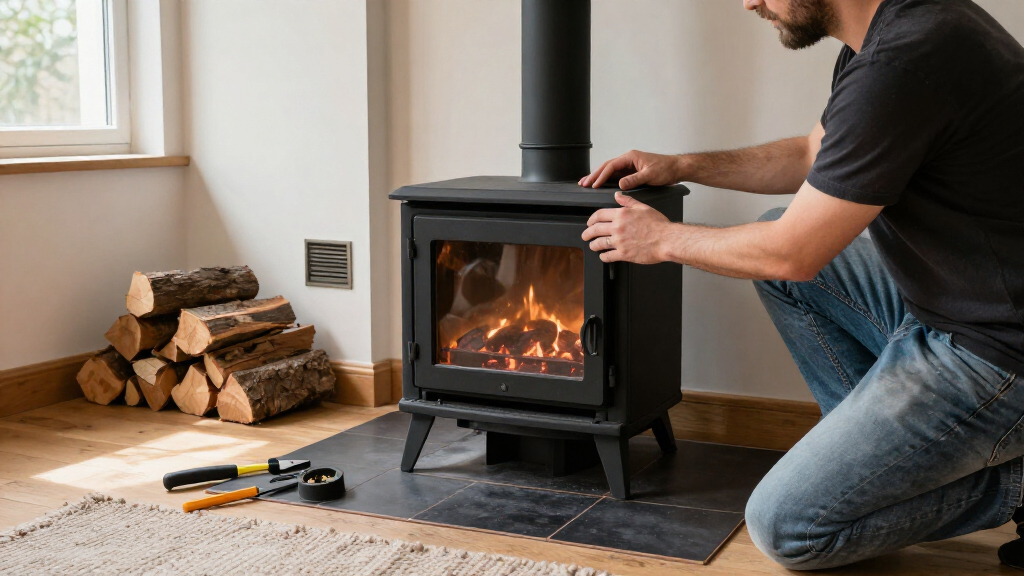
Homeowners without a traditional chimney may still be able to install a wood-burning stove by fitting a twin-wall flue to carry smoke safely outside, according to an Ideal Home report. The route can run through the house and exit via the roof, or travel up the building’s exterior, but the installation must meet applicable building regulations and suit the property.
A twin-wall flue uses two metal tubes with insulation between them and functions as an alternative smoke outlet. The report quotes Adam Leah, founder and director of Direct Stoves, describing it as a common solution for homes without chimneys. A flue can pass through internal rooms or a loft before reaching the roof, or be installed externally along the wall.
The choice involves trade-offs. An internal route may retain heat more effectively, but can require more work inside the home. An external flue may involve less interior disruption and can be simpler where an internal route is difficult. The report also describes a false chimney structure as an option for enclosing the flue and creating a chimney-breast appearance.
Cost and installation time vary. Adam Pederson, managing director at Topstak, estimates a typical installation at £1,500 to £4,000 including labour, depending on the length and complexity of the flue. He says the work generally involves a certified installer, such as a HETAS-registered engineer, who surveys the route, installs the system and issues a Building Regulations compliance certificate. The report says many installations take a day, though the time for a specific project may differ.
Flue Choices Affect Cost and Siting
The information could widen the options for people who want a wood-burning stove but live in a home without an existing chimney. It also makes clear that no chimney does not mean no flue: smoke still needs a safe route out, and the feasibility of that route can affect where the stove goes, how much work is needed and the final cost.
Homeowners should treat the quoted £1,500–£4,000 range as an estimate, not a guaranteed price. A survey is needed to assess the building, route, clearances and suitable termination point. The report notes that listed properties and homes in conservation areas may face planning considerations, so a technically possible installation may still require additional checks.
As an affiliate, we earn on qualifying purchases.
Two Flue Routes, Different Trade-Offs
The report distinguishes between an internal flue, which runs through the home and exits at the roof, and an external flue, which passes through a wall and rises outside. It cites Arada director Jon Butterworth as saying an exposed flue needs a minimum height of 4.5 metres, whether internal or external. That figure is attributed to the report and should be checked against the system’s specifications and rules applicable to a particular installation.
Other details depend on the building. The report says the material at the flue’s termination point must be suitable for the flue and flashing kit. It identifies wood, metal and brick as possible suitable materials, while warning that glass and plastic are not. The exact route and clearances from combustible materials are also factors to assess before choosing a stove position.
Where adding a flue is not feasible, the report presents bioethanol fires as a separate option. They burn liquid fuel rather than wood and, according to Butterworth, do not require a chimney or flue because they produce no smoke, soot or ash. The report cautions that they generally produce less heat than wood or multi-fuel stoves and may cost more per kilowatt-hour than seasoned logs. It also mentions electric stoves as an alternative, but the supplied text gives no further details on their performance or costs.
“A twin-wall flue system is the go-to solution for wood-burning stove installation in a home without a chimney.”
— Adam Leah, founder and director of Direct Stoves, quoted by Ideal Home
Property Checks Set the Limits
The report does not establish whether a particular home can take a twin-wall flue. That depends on a survey of the building and proposed route, including clearance from combustible materials, suitable roof or wall penetrations, the flue’s termination point and any planning constraints. It also does not give a project-specific quote or confirm that the stated height and cost figures apply to every installation.
No specific property, local authority decision or installation has been assessed in the source material. The report’s estimates and expert comments are general guidance, not a substitute for checking current regulations and obtaining advice from a qualified installer. It also provides no detailed comparison of the running costs or heating performance of electric stove alternatives.
Arrange a Survey Before Choosing
Anyone considering a wood-burning stove can ask a qualified installer to assess the home and propose an internal or external flue route. The homeowner should request a written quote that explains the expected work, clearances, materials and certification, and check whether planning permission or other approvals may apply, particularly for a listed building or a home in a conservation area.
After that assessment, the decision is whether the cost, installation work and heating performance suit the household. If a compliant flue route is not practical, the alternatives described in the report include bioethanol and electric stoves, each with different heat output and installation needs. The source provides no announced policy change or scheduled follow-up; the next step is a property-specific assessment.
Key Questions
Can a wood-burning stove be installed without a traditional chimney?
Possibly. The report says a twin-wall flue can carry smoke outside, but the building and proposed route must meet applicable requirements.
How much does a twin-wall flue installation cost?
The report cites an estimated range of £1,500 to £4,000 including labour. The price depends on the route’s length and complexity, so a survey and quote are needed.
Can the flue run up the outside of the house?
Yes. The report describes an external flue running up the building’s exterior as one possible route. Whether it suits a home depends on its layout, materials, clearances and any planning considerations.
What can I use if a flue cannot be installed?
The report discusses bioethanol and electric stoves as alternatives. Bioethanol fires do not require a chimney or flue, but the source says they generally provide less heat than wood-burning stoves and can cost more to fuel.
Source: rss
Halloween Picks
halloween
As an affiliate, we earn on qualifying purchases.